
Hair Fall Exposed: Top 8 common reasons to Hair Fall
8 most common reasons of hair fall all over the world
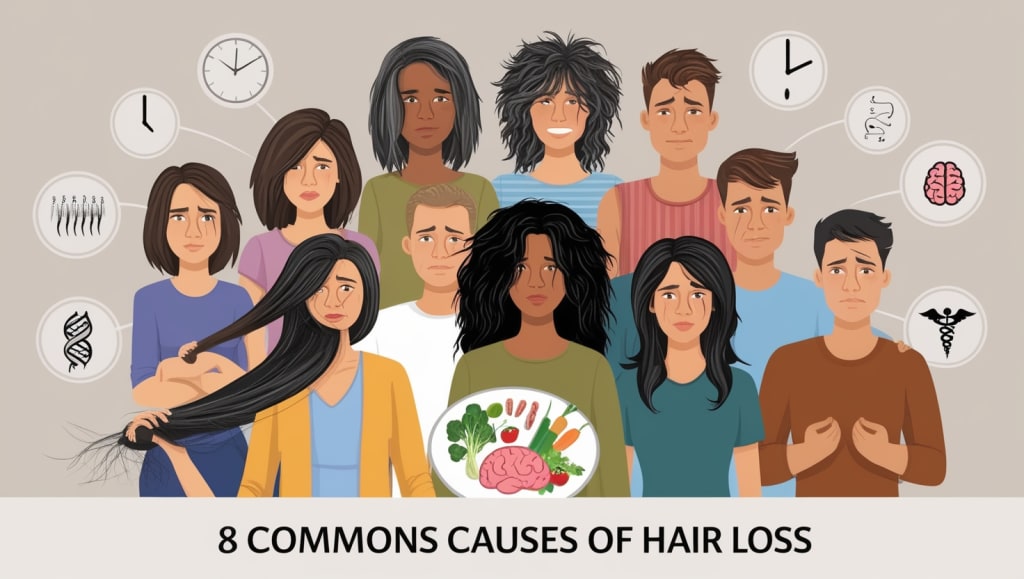
All over the world millions of people suffer from hair loss problem. Extreme hair loss can be painful and typically signals more serious issues, even if 50 to 100 hairs falling out per day is common. The first step to having healthy, gorgeous hair again is realizing the problems. The top eight common reasons of hair loss will be identified in this article, along with practical ways for dealing with them, whether you're already experiencing thinning hair or just want to avoid it.
Let's examine the factors that cause your hair loss as well as their hair fall solutions.
1. **Stress: The Silent Hair Thief**
Stress has an impact on both your hair and mental health. Telogen effluvium, a condition in which more hair follicles shed prematurely, can be brought on by emotional or physical stress. Strict dieting, major life events, and even surgery can exacerbate this condition.
**How to Avoid Stress-Related Hair Loss:**
Make use of techniques that reduce stress, such yoga, meditation, or deep breathing. These methods help in reducing the stress hormone cortisol levels.
To release endorphins, which are naturally occurring stress relievers, schedule frequent exercise.
Maintain a regular sleep schedule to promote both physical and mental healing.
Effective stress management can help you feel better overall and offer your hair a better chance at growing properly.
2. **Nutritional Deficiencies: The Building Blocks of Hair Health**
Healthy hair is built on a foundation of nutrients. Hair follicles might become weaker and more vulnerable to shedding if essential vitamins and minerals like biotin, iron, zinc, and vitamins D and E are not present. Individuals who adhere to restrictive diets, such as vegetarians and vegans, are more likely to have nutritional deficiencies.
**The nutritionist Advice to Enhance Hair Health**
Keep up a nutritious diet full of leafy greens, eggs, nuts, seeds, and fatty seafood like salmon. These foods provide the nutrients needed to encourage the growth of hair.
Consult your physician about the appropriateness of taking supplements such as iron or biotin if you feel deficient.
Drink enough of water because it promotes the health of your scalp and the life of your hair in general.
3. **Hormonal Imbalances: A Common Culprit**
Your hair can be significantly impacted by hormonal changes. For instance, hormonal changes during pregnancy, the postpartum period, or aging often cause hair loss in women. The hair growth cycle can also be disturbed by thyroid disorders and polycystic ovary syndrome (PCOS).
**Hormonal Hair Loss Management:**
See a physician for a precise diagnosis and course of therapy if you think you may have a hormonal imbalance.
Consume whole grains, soy, and flaxseeds to assist your body naturally balance hormones.
Use hair care products labeled "gentle" or "sulfate-free," since harsh chemicals might cause sensitive scalps to lose hair more quickly.
4. **Genetic Predisposition: Inherited Hair Loss**
You may develop androgenetic alopecia, sometimes referred to as male or female pattern baldness, if your hair loss is inherited. This type of hair loss typically exhibits a distinct pattern, like a receding hairline or thinning around the head.
**Genetic Hair Loss Treatment:**
Consider utilizing FDA-approved treatments like finasteride or minoxidil to slow the progression of genetic hair loss.
See a trichologist or dermatologist for a customized course of treatment.
Select hairstyles, including as shorter cuts or layered looks, that minimize the appearance of thinning.
Early therapy may help you retain more of your hair, even though genetic hair loss cannot be completely avoided.
5. **Harsh Hair Treatments: Beauty at a Cost**
Over time, tight hairstyles, chemical treatments, and frequent use of heat styling tools can all harm your hair. Separate ends and weaker strands might result from excessive blow-drying, straightening, or curling. In the meantime, the hair's natural oils may be depleted by chemical treatments like bleaching, style, or coloring, leaving it brittle.
**How to Avoid Hair Treatment Damage:**
Always use a heat protector before styling, and use heat-styling tools sparingly.
Select plant-based or ammonia-free hair dyes to reduce your exposure to chemicals.
Choose loose hairstyles over tight braids and ponytails to give your hair an escape.
6. **Medical Conditions and Medications**
Medical conditions include autoimmune disorders like alopecia areata, infections of the scalp, or long-term conditions like diabetes can occasionally result in hair loss. Additionally, hair thinning may be a negative effect of several drugs, such as those for depression, high blood pressure, or cancer.
**Medically Induced Hair Loss: What to Do:**
Discuss alternative or supportive therapies with your doctor if you believe that your medication is contributing to your hair loss.
To prevent further harm, treat scalp infections as soon as possible.
Depending on the situation at hand, use medicated shampoos or products that have been advised by dermatologists.
7. **Environmental Factors: Pollution and Sun Damage**
UV rays, chemicals, and pollution can all eventually weaken your hair. Excessive sun exposure can result in dryness and hardness, and pollution particles can build up on the scalp, obstructing hair follicles.
**How to Keep Your Hair Safe from Environmental Damage:**
Use a scarf, cap, or UV-protective spray to shield your hair when you're outside.
Wash your hair frequently with a mild, clarifying shampoo to get rid of pollutants and debris.
Try using conditioners or hair masks with natural oils like coconut or argan for added moisture and protection.
8. **Age and Natural Aging Process**
Our hair naturally thins and grows more slowly as we get older. Changes in the hair development cycle and a decrease in the scalp's oil production are partly to blame for this. As they age, both men and women may notice that their hair gets thinner or more delicate.
**Aging Hair Maintenance:**
Make use of advanced hair care products, which often include strengthening and moisturizing ingredients.
For better blood flow and hair growth, massage your scalp often.
Consume a diet rich in antioxidants, healthy fats, and proteins to slow down the aging process.
Hair loss is a complicated issue brought on by environmental, genetic, and lifestyle factors. Many causes can be successfully addressed, but some, like aging or heredity, cannot be avoided. Simple but consistent actions—like using silky shampoo, eating a diet high in nutrients, and lowering stress.
About the Creator
Enjoyed the story? Support the Creator.
Subscribe for free to receive all their stories in your feed.
Comments
There are no comments for this story
Be the first to respond and start the conversation.