
Green Tea for Weight Loss: What the Evidence Really Says
A gentle look at what green tea can and can’t do for weight loss, with an easy recipe to enjoy along the way.

Green tea has gained a bit of a reputation as a "fat burner." While it is a healthy, low-calorie beverage, there isn't sufficient evidence to suggest that it will cause you to lose a significant amount of weight.
This doesn't preclude you from drinking it, of course. If you like the flavor of green tea, you can consume it in lieu of coffee with milk, soft drinks, or another calorically dense beverage. Just don't view it as a weight loss aid in itself.
For more tea-focused information, visit our weight loss tea guide.
What's in green tea?
Green tea is produced from the leaves of the Camellia Sinensis shrub. Like black and oolong teas, the leaves are treated and dried differently to give rise to various flavors and phytochemical content.
Like other teas, it contains a quantity of caffeine and polyphenols, specifically, catechins.
There is one catechin, EGCG, which is widely touted in weight loss circles. Some in vivo effects of caffeine and catechins on metabolic rate or lipolysis have been identified, but this doesn't translate to clinically relevant weight loss.
Note that this differs from the effects that may be observed from green tea extracts or supplements, which cannot be extrapolated back to the consumption of a simple cup of green tea.
Does green tea help with weight loss?
There is limited and inconclusive data regarding the effect of green tea on body mass or weight.
One systematic review and meta-analysis of the effect of green tea preparations in overweight or obese humans found negligible impact on weight (mean difference 0.04 kg; p=0.97) when compared to placebo or control. The analysis included non-Japanese data only; Japanese studies were excluded due to high heterogeneity. Therefore, it was concluded that weight loss, if present, was likely to be minimal.
A recent (2024) umbrella review of trials looking at tea and coffee consumption and weight loss found green tea to be associated with a small reduction in body mass. The certainty of evidence was, however, graded as low-to-very low, so these findings should not be interpreted to indicate a predictable response in individuals.
Similarly, data for green tea extracts or supplements must be interpreted cautiously. For example, in a meta-analysis, green tea catechins + caffeine resulted in approximately 1.38 kg greater weight loss versus caffeine only over ~12 weeks, and slightly less compared to placebo. Again, these results are not indicative of what would happen in a real-world setting with a standard cup of green tea.
Overall, the evidence does not support green tea as a weight loss agent or "fat burner." Furthermore, if there is a marginal reduction in weight observed in studies, it cannot necessarily be applied to all individuals and depends on many factors, including the green tea product or dose consumed, length of intervention, accompanying lifestyle modifications, etc.
So why is green tea believed to "burn" fat?
As noted above, both caffeine and catechins can exert some effect on metabolic rate or lipolysis. However, these transient effects are unlikely to drive clinically significant reductions in body fat over time, particularly if confounded by other behaviors affecting energy balance (e.g., reduced sleep, increased hunger or food intake, decreased physical activity, disease states or medications, etc.).
Many media or industry sources will extrapolate from this to claim that green tea increases your "metabolism." They rarely, if ever, contextualize this to any degree of actual fat or weight loss, nor refer to clinical trial data in humans.
Role of green tea in weight loss
As described above, if you drink green tea as a substitute for another calorically dense drink, you can lower your energy intake and potentially assist with weight loss. You can drink green tea hot or iced, and with or without sweeteners (which will increase the caloric content accordingly).
You can find more tea-related information in our weight loss tea guide.
However, it should not be considered a replacement for food as part of a sustained weight loss program. Incorporating adequate energy-dense foods, exercise, sleep, etc., into your lifestyle will be more beneficial in the long term. Speak to your GP or dietitian if you have any medical conditions or medications that may influence your body weight.
Quick and easy green tea recipe
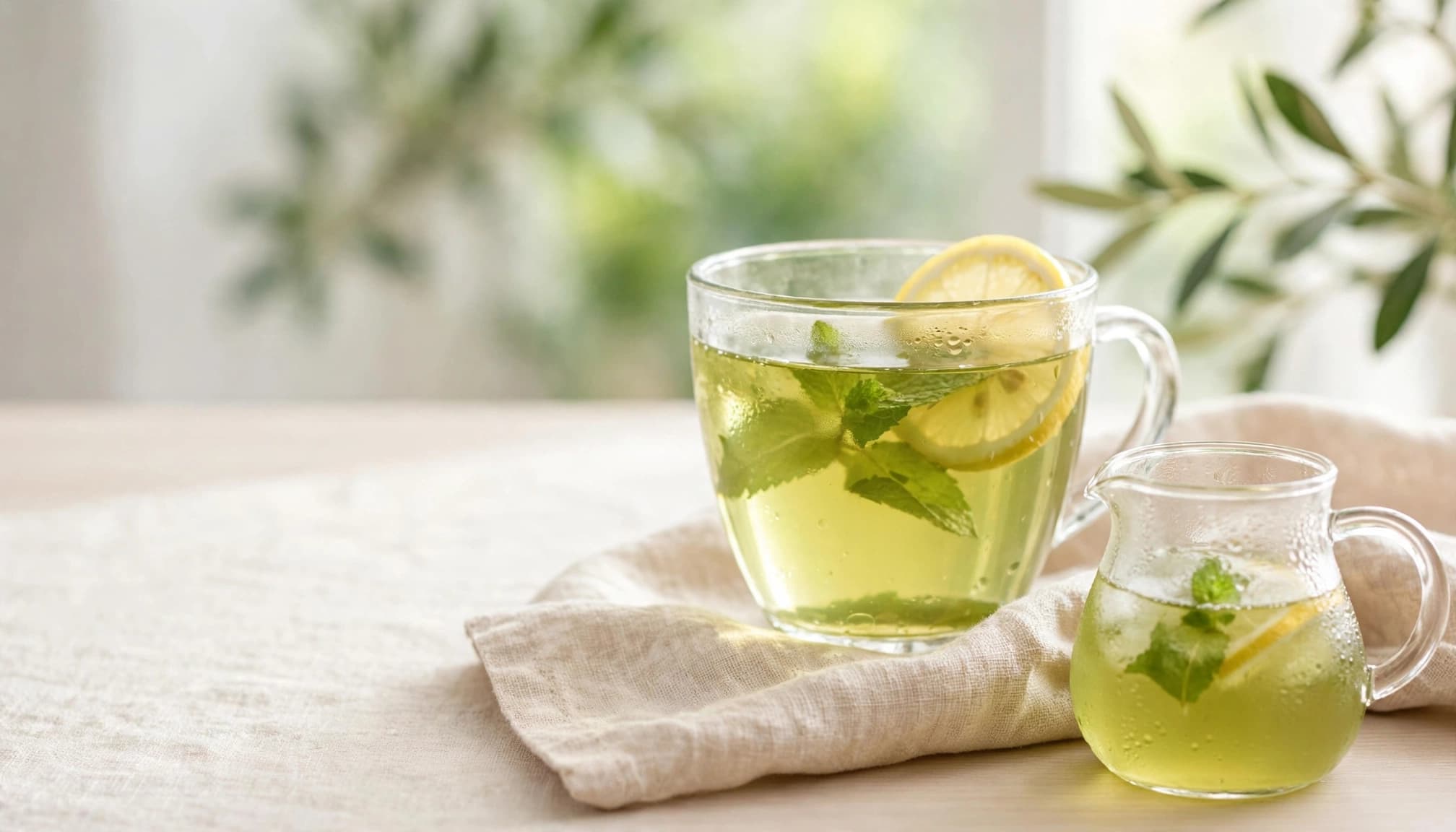
The following recipe will yield 1 serving of unsweetened lemon-mint iced or hot green tea.
Ingredients
1 x green tea sachet (~2.5g loose leaf equivalent)
250mL hot water
2-3 mint leaves
1 slice of lemon
Optional: Ice
Method
Brew green tea according to instructions on the packet.
Remove tea sachet or loose leaf and add mint & lemon.
Serve hot or allow to cool and pour over ice.
Add honey or sweetener to taste if desired (note this will add to the calorie count).
You can enjoy this recipe as is or add some additional flavorings to suit your preference.
Is green tea safe to drink?
Green tea is largely deemed to be safe as a food or beverage product for the majority of people. As with other caffeinated beverages, it contains a certain quantity of caffeine. The FDA advises that consumption of <400mg of caffeine per day is unlikely to elicit adverse health consequences in the majority of adults (but is not a recommended limit for any individual). Higher intakes of caffeine may lead to insomnia, agitation, palpitations, etc.
Individuals who are caffeine-sensitive or have concerns regarding caffeine intake may wish to restrict their green tea intake or avoid it in the latter half of the day. Pregnant or lactating women or those with medical conditions should consult their healthcare provider on suitable levels of caffeine or green tea for them.
Of note, rare cases of hepatotoxicity have been associated with green tea extract products (typically in tablet form), as reported by NCCIH. Therefore, appropriate care should be taken if consuming a green tea extract for weight loss purposes (speak to your doctor or pharmacist prior to use, avoid if you are on any medications or have any hepatic conditions, discontinue and seek medical attention if you develop concerning signs or symptoms).
Take home message
Green tea can be enjoyed as a low-calorie beverage in place of other drinks, particularly if no sweeteners are added. There is limited data to support it having any role in facilitating fat or weight loss. It is best enjoyed as a tasty drink rather than a panacea for weight loss!
See our other resources and speak to a dietitian for more information on strategies that can help you achieve sustainable weight loss.
About the Creator
Enjoyed the story? Support the Creator.
Subscribe for free to receive all their stories in your feed.
Comments
There are no comments for this story
Be the first to respond and start the conversation.