
Google Pixel 11: The Quiet Upgrade That Could Actually Improve Daily Use
Early signals suggest better efficiency, smarter AI, and fewer gimmicks but not the dramatic leap people expect.

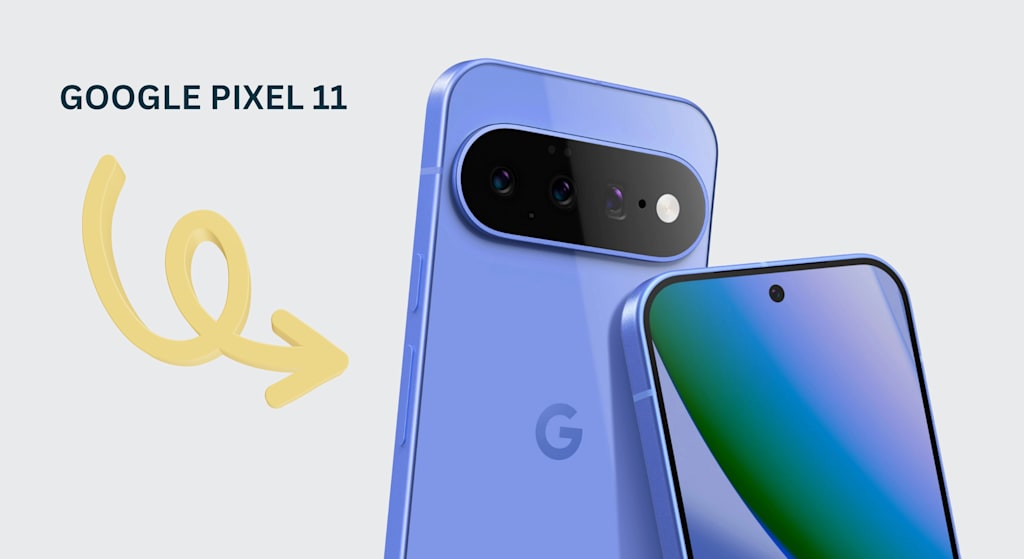
Majority of smartphone releases attempt to impress you within the first five minutes.
The upcoming Google Pixel 11 doesn’t look like it’s aiming for that.
Rather, it is proving to be more of a refinement: a machine aimed at resolving minor yet nagging issues that plague everyday usage.
That may not make headlines- but it can tend to create a more positive long-term experience.
The Background: Pixel Phones are already good enough.
The Pixel devices have found their place in a definite identity over the past few generations:
Clean Android experience
Strong computational photography
Quick, regular updates of software.
The thing is that they also have had their regular flaws:
Battery inconsistency
Overload thermo throttling.
Lagging performance on a par with best competitors.
The Pixel 11 seems to address precisely those concerns, not with the flashy features, but by enhancing the base.
Performance: Not Fast, but Stable.
The Pixel 11 will likely employ another generation of the Google custom Tensor chip.
Paper-wise, you will find:
Faster CPU and GPU
Improved AI processing
Better efficiency
However, the issue is whether Google remedies the chronic performance issue.
Previous Tensor chips were:
Quick enough to use on an everyday basis.
However, irregular in the course of long-term use (gaming, video, multitasking)
When the Pixel 11 delivers:
Reduced heat when loaded.
Stable frame rates.it would be a more significant upgrade than crude benchmark gains.
Better battery efficiency
…it would be a more meaningful upgrade than raw benchmark gains.
AI: At last Become Practical (Not a Demo)
Google has led the way with AI features over the years- not necessarily usability.
With Pixel 11, there will be more integration into your daily activities:
Real-time call summaries
More intelligent voice typing and rewriting.
Cross-app context-sensitive recommendations.
This time perhaps the difference is refinement.
Rather than introducing new features, Google probably is concentrating on:
Making existing AI faster
Reducing delays
Improving accuracy
Since at this moment the greatest matter is not ability, but confidence.
When users are not able to trust AI all the time they cease to use it.
Camera: Revolution, Not Revolution.
Pixel cameras already have one of the most reliable.
The Pixel 11 is likely to concentrate on:
Improved image processing
Better low-light consistency
Natural skin tones are more natural.
You might also see:
Faster shot processing
Better video stabilization
Minor enhancements in zoom quality.
In practical terms:
You will not suddenly start making better-looking photos, you will just achieve better results more regularly, without making it as hard.
Style: Common, A little genteel.
Google has developed a well-known design language:
Bar camera on the back.
Minimal, clean aesthetic
Comfortable in-hand feel
It is likely to be retained in the Pixel 11, where:
Slightly thinner bezels
Minor weight adjustments
Small ergonomic tweaks
No radical redesign.
and that is, indeed, likely the correct decision.
The Upgrade That Matters Most: Battery Life.
Battery life is one of the aspects that Pixel users have always been complaining about.
The Pixel 11 can enhance this by:
More effective chip design.
Improved background process management.
More intelligent adaptive battery.
A real-world difference of 1015% would be noticeable.
No excitement--but all worth a lot.
The Bigger Picture: Google Is Rectifying Its Weaknesses.
Google does not have to re-invent its phones, unlike some of its competitors.
It needs to fix:
Heat
Battery
Performance consistency
The Pixel 11 appears to be a direct answer to it.
This implies that there must be a change of course:
From experimentation
To stabilization
And that is normally an indication of a maturing product.
What the Pixel 11 Is (and Isn’t)
What it is:
A refinement-focused upgrade
More robust in reality consistency.
Developed based on functional AI enhancements.
What it isn’t:
Significant design modification.
A radical hardware change.
An update you have to install as of now.
Should You Wait to Get It?
It is up to your expectations.
In case you need more reliability and battery life → should be considered.
In case you desire a totally new experience → this will not provide that.
In case you have a new Pixel already → the changes can be perceived as incremental.
Final Thought
The most interesting thing about the Google Pixel 11 isn’t what it adds.
It is that which it attempts to mend.
Google appears to be looking at something not as flashy as upgrades in a market full of flashy upgrades, yet more important:
Consistency. Stability. Trust.
And should it nail those down, the Pixel 11 may turn out to be one of the most useful smartphones of the generation--albeit one that never feels funky on day one.
About the Creator
abualyaanart
I write thoughtful, experience-driven stories about technology, digital life, and how modern tools quietly shape the way we think, work, and live.
I believe good technology should support life
Abualyaanart
Enjoyed the story? Support the Creator.
Subscribe for free to receive all their stories in your feed.
Comments
There are no comments for this story
Be the first to respond and start the conversation.