
Future Technology and Emerging Technology: The Breakthroughs Quietly Rebuilding Your World
The most important technologies of the next decade are not just shiny gadgets...

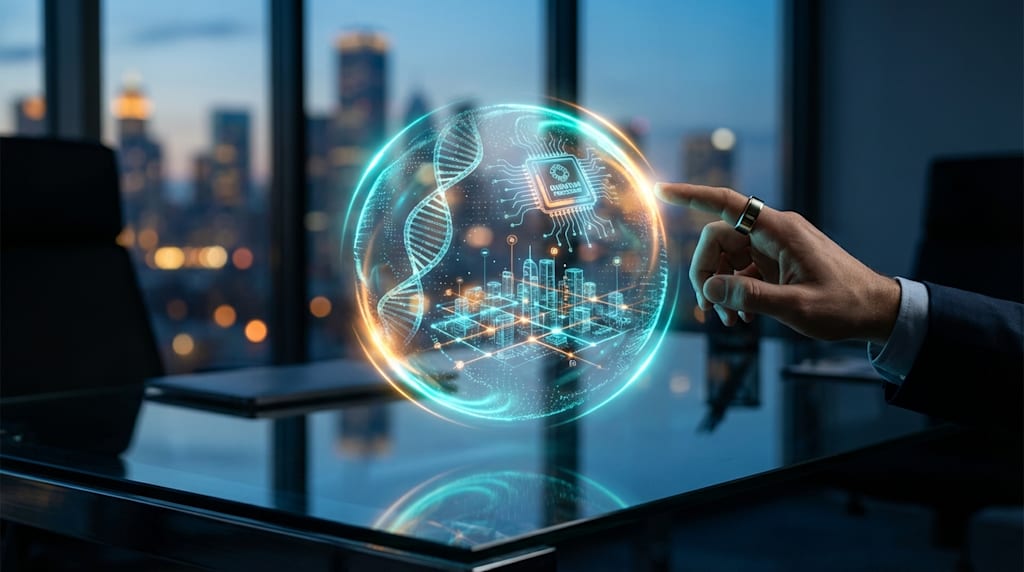
Your world does not change only when a giant invention appears on a stage with dramatic music and a glossy product video. It changes quietly first. A tool gets faster. A sensor gets cheaper. A model becomes more accurate. A battery lasts longer. Then one day you wake up and realize your industry, your job, your customers, and your habits are playing by a different set of rules.
That is why future technology matters so much right now. The most important technologies of the next decade are not just shiny gadgets for tech enthusiasts. They are the systems that will shape how you work, travel, learn, shop, heal, build companies, protect data, and even make everyday decisions.
Why Future Technology Matters Right Now
Most people think about technology as a series of products. A better phone. A smarter car. A faster laptop. That view is too small. The deeper story is that emerging technology changes systems, not just devices.
Take a simple example. When maps moved from paper to smartphones, the change was not just convenience. It reshaped local business discovery, delivery logistics, tourism, ride-sharing, and how people think about distance itself. Technology rarely stays in the lane where it starts.
That is exactly what is happening now across AI, robotics, biotech, clean energy, advanced computing, and connected infrastructure. These fields are no longer isolated science projects. They are blending together, feeding each other, and accelerating faster because progress in one domain now lifts the others.
What Counts as Emerging Technology
The phrase sounds broad because it is broad. Emerging technology usually refers to innovations that are still developing, scaling, or moving from research into real-world use. These technologies often start expensive, misunderstood, or limited to early adopters before becoming commercially practical.
Not every trendy product qualifies. A flashy app with a strong marketing budget is not automatically emerging technology. The term fits better when a technology changes what humans or systems can actually do, not just how a product is packaged.
A useful filter looks like this:
- It enables new capabilities, not just minor convenience.
- It is gaining momentum in research, funding, or adoption.
- It has the power to reshape industries or behavior.
- It still carries uncertainty around regulation, cost, or maturity.
- It creates new business models, not just new features.
That is why fields like quantum, synthetic biology, AI infrastructure, AR interfaces, advanced batteries, and autonomous systems keep showing up in serious future-tech conversations. They do not merely improve current tools. They open doors that were previously shut.
Artificial Intelligence Is the Main Force Multiplier
If one technology is acting like jet fuel for everything else, it is artificial intelligence. AI does not live in one category anymore. It now acts like a layer that improves search, coding, logistics, customer service, medicine, manufacturing, finance, media, agriculture, and cybersecurity.
What makes AI different from many older software waves is that it can handle language, pattern recognition, prediction, optimization, and decision support at a scale humans cannot match alone. That gives companies a new kind of leverage. They can analyze more data, automate more tasks, personalize more experiences, and move faster with smaller teams.
Imagine running an e-commerce brand ten years ago. You needed separate people for analytics, product descriptions, support responses, ad variations, forecasting, and segmentation. Now one smart AI stack can assist with all of them. AI does not remove the need for judgment, but it massively reduces the drag created by repetitive mental work.
This is also why AI boosts other emerging technologies. Robots become more adaptive when AI improves perception and decision-making. Drug discovery speeds up when AI models can predict molecular behavior. Smart cities become more efficient when AI helps interpret sensor data in real time. AI is not the whole future. It is the accelerator pedal.
Robotics and Automation Are Leaving the Factory
When people hear robotics, they often imagine giant industrial arms welding car frames in sealed manufacturing plants. That version still exists, but the story has grown far beyond it. Modern robotics is moving into warehouses, hospitals, agriculture, defense, logistics, retail, field maintenance, and even home assistance.
The key shift is flexibility. Older robots were rigid. They performed one task in one environment. Newer robotic systems combine sensors, machine vision, edge computing, and AI models to adapt more intelligently. That makes them useful in messier, more unpredictable spaces.
A warehouse robot today does more than move boxes. It can navigate dynamic environments, work around humans, and optimize route efficiency. Agricultural robots can identify crop health, detect weeds, and assist with precision farming. Service robots in healthcare can transport supplies, sanitize rooms, or support repetitive administrative flows. Robotics is becoming less about spectacle and more about practical labor multiplication.
This matters for business because labor shortages, rising wage pressure, and demand volatility are pushing companies to automate wherever repetitive tasks eat margins. It matters for society because the shape of work changes when machines can do more than fixed physical repetition.
Quantum Computing Could Rewrite Problem Solving
Quantum computing is one of the most overhyped and misunderstood topics in emerging technology, but it still deserves your attention. Not because it will replace every laptop or phone. It will not. It matters because it could solve certain categories of problems that are painfully difficult for classical computers.
Traditional computers work with bits that represent either 0 or 1. Quantum systems use qubits, which behave differently and allow for more complex computational states. That sounds abstract until you look at the possible outcomes. Problems involving molecular simulation, optimization, cryptography, material science, and complex logistics may eventually be handled in radically new ways.
Think of it like this. A classical computer often searches through a maze by moving through pathways step by step. A quantum approach, at least in theory, handles the maze with a very different logic that may shorten the path for certain problem types. Quantum computing is not magic, but it is a serious attempt to escape the limits of current architectures.
You should not expect mainstream businesses to run all operations on quantum hardware soon. The field still faces stability, error correction, cost, and scaling challenges. Still, its long-term significance is hard to ignore, especially in chemistry, finance, defense, and advanced research.
Biotechnology Is Rewriting Health and Human Capability
Biotech is one of the most important future-technology categories because it deals directly with life itself. This includes gene editing, synthetic biology, personalized medicine, regenerative treatments, advanced diagnostics, bioinformatics, and engineered organisms.
What makes biotechnology so powerful is that it turns biology into something increasingly measurable, programmable, and optimizable. That is a huge shift. For a long time, medicine often worked by observation, trial, and broad treatment categories. The future is moving toward far more tailored intervention.
Picture a world where cancer detection happens earlier because sensors and AI-driven diagnostics spot subtle molecular changes. Picture treatments designed around your exact genetic profile instead of a one-size-fits-many approach. Picture engineered microbes helping manufacture materials, fuels, or medicines more efficiently than traditional industrial methods. Biotech is not only about hospitals. It reaches into agriculture, manufacturing, food systems, and environmental repair.
This field also raises serious ethical questions. Gene editing, reproductive interventions, biological data ownership, and enhancement technologies force society into difficult conversations. The science moves fast. Public understanding, law, and policy often move much slower.
Extended Reality and Spatial Interfaces Change How You Use Information
For years, people treated virtual reality and augmented reality like niche entertainment tools. That narrow view missed the larger transition. The more important story is spatial computing, where digital content stops living only on flat screens and starts appearing around you in physical space.
This shift affects work, training, retail, education, design, field service, healthcare, and entertainment. An engineer can inspect a digital twin of a machine before it is built. A surgeon can visualize anatomy in 3D space before a procedure. A shopper can preview furniture at home before buying. A technician can receive guided repair instructions without taking their hands off the task. Spatial interfaces make information feel situated instead of detached.
That matters because interfaces shape behavior. A phone requires you to stop, hold, tap, and look down. A good AR system can surface information while you remain engaged with your environment. That changes attention patterns, workflows, and commercial design.
The challenge is that hardware still needs improvement in comfort, battery life, style, and social acceptance. Even so, the long-term direction is clear. Screens are gradually escaping the rectangle.
Clean Energy, Climate Tech, and Advanced Materials Will Define the Real Infrastructure Race
A lot of future-tech discussions get trapped in software because software is easy to demo. Infrastructure technologies are less glamorous on social media, but they may matter far more over the next twenty years. Clean energy, grid modernization, battery innovation, carbon systems, water technologies, and advanced materials all sit in this category.
Why does this matter so much? Because every digital breakthrough still sits on physical foundations. AI data centers need electricity. Electric vehicles need batteries. Smart cities need reliable grids. Aerospace, medical, and manufacturing breakthroughs often depend on new materials with better strength, conductivity, or thermal behavior.
Advanced materials sound boring until you see what they unlock:
- Lighter vehicles with better efficiency.
- Better batteries with higher energy density.
- Stronger medical implants.
- Smarter semiconductors.
- More durable solar technologies.
- Cleaner industrial processes.
Climate tech also moves from optional branding into hard necessity. Businesses, governments, and cities now face pressure to use energy more intelligently, reduce waste, and build resilience against environmental stress. Energy technology is not just about saving the planet in a vague moral sense. It is about economics, national security, supply stability, and industrial competitiveness.
Smart Cities, IoT, and Connected Infrastructure Bring the Physical World Online
The Internet of Things used to sound like a buzzword for putting Wi-Fi in your refrigerator. The serious version is much bigger. Connected sensors, devices, machines, cameras, meters, vehicles, and infrastructure systems can create real-time visibility into how physical systems behave.
That opens up major benefits. Cities can optimize traffic flow, monitor air quality, manage street lighting more intelligently, reduce utility waste, and respond faster to disruptions. Factories can track machine performance before breakdowns happen. Farms can monitor soil, weather, and irrigation conditions more precisely. Buildings can adjust energy use based on occupancy and environment.
The real power appears when data becomes actionable. A sensor alone changes nothing. A connected system that interprets the data and triggers better decisions changes a lot. Connected infrastructure can reduce waste, cut downtime, improve maintenance, and make physical systems less blind.
This also creates new vulnerabilities. Every connected object can become an attack surface. That means IoT growth must be paired with much stronger cybersecurity, identity control, and device governance. A smart city with weak security is not smart. It is exposed.
Cybersecurity Becomes Even More Important in an Automated World
Every new layer of digital capability creates a new layer of risk. As future technology spreads across health, finance, mobility, manufacturing, homes, cities, and supply chains, cybersecurity becomes less like an IT department issue and more like a core survival issue.
The old model of defending a few company laptops and a private server room is gone. Modern systems stretch across cloud platforms, mobile devices, APIs, AI tools, sensors, third-party vendors, remote workers, and autonomous processes. Attack surfaces multiply fast.
This becomes even more serious when machines make decisions or control physical assets. If an attacker breaches a content system, the damage may be reputational or financial. If they breach connected infrastructure, medical devices, industrial machinery, or autonomous logistics, the consequences become physical. Cybersecurity in the future is not just about protecting files. It is about protecting trust, continuity, safety, and control.
This is why zero-trust architecture, identity security, AI-driven threat detection, hardware-level protections, and resilient system design are moving from technical preferences to business essentials. The more automated the world becomes, the more dangerous a weak security model gets.
How Future Technology Will Change Work, Business, and Everyday Life
Most readers eventually ask the same blunt question: what does all this actually change for me? The answer depends on where you sit, but the overall impact is hard to miss. Work becomes more software-assisted, more data-driven, and more unevenly distributed between human judgment and machine execution.
For workers, routine tasks keep shrinking. That applies to physical labor, administrative workflows, analysis, support, scheduling, documentation, forecasting, and media production. The valuable human skills rise higher up the ladder: taste, strategy, judgment, trust-building, systems thinking, negotiation, ethical reasoning, and creative direction.
For businesses, the winners will be the ones that adapt faster without becoming reckless. New technologies create growth, but they also create chaos when implemented badly. Buying trendy tools without rethinking workflow is like putting a jet engine on a bicycle. Business value comes from integration, not novelty.
For everyday life, the shifts may feel gradual at first:
- Smarter healthcare and earlier diagnostics.
- More personalized learning systems.
- Faster digital services.
- Better navigation and translation tools.
- Cleaner transportation and energy use.
- More proactive maintenance in homes and cities.
- More invisible automation in shopping and support.
The bigger pattern is this: the future will not arrive as one single invention. It will arrive as many systems getting quietly smarter at the same time.
Frequently Asked Questions
What is the difference between future technology and emerging technology?
Future technology is a broad phrase that describes technologies likely to shape the years ahead. Emerging technology usually refers to innovations that are still developing, scaling, or moving from research into real-world adoption.
Which emerging technologies will have the biggest impact?
Artificial intelligence, robotics, biotechnology, quantum computing, clean energy systems, advanced materials, spatial computing, and connected infrastructure are among the technologies most likely to reshape industries and daily life.
Why is AI considered the most important future technology?
AI acts like a multiplier across many sectors. It improves decision-making, automation, prediction, personalization, research, and optimization, which allows it to strengthen many other technologies at the same time.
Will emerging technology replace human jobs?
Some tasks will absolutely be automated, especially repetitive and predictable ones. But new technology also creates new roles, new industries, and greater demand for skills related to strategy, design, oversight, communication, and technical adaptation.
Is quantum computing going to replace regular computers?
No. Quantum computing is better understood as a specialized tool for certain problem types rather than a total replacement for classical computing. Traditional systems will still handle most everyday computing tasks.
How will future technology affect healthcare?
Healthcare will likely become more predictive, personalized, data-rich, and automation-assisted. Advances in diagnostics, biotechnology, AI models, remote monitoring, and treatment design could make care faster, more precise, and more tailored to individuals.
What are smart cities in simple terms?
Smart cities use connected infrastructure, sensors, software, and analytics to manage physical systems such as traffic, energy, water, safety, and public services more efficiently.
Why does cybersecurity matter more as technology advances?
Because every connected system creates a possible entry point for misuse or attack. As automation spreads into critical business and physical systems, weak security becomes more damaging and harder to recover from.
Which industries should pay closest attention to emerging technology?
Healthcare, finance, logistics, education, manufacturing, energy, retail, agriculture, cybersecurity, transportation, and media all face major shifts from emerging technologies.
How should businesses prepare for future technology?
Start with business problems, not hype. Audit workflows, identify friction points, train teams, strengthen data and security foundations, run small pilots, and build systems that can evolve instead of locking into rigid short-term tools.
About the Creator
John Arthor
seasoned researcher and AI specialist with a proven track record of success in natural language processing & machine learning. With a deep understanding of cutting-edge AI technologies.
Enjoyed the story? Support the Creator.
Subscribe for free to receive all their stories in your feed.
Comments
There are no comments for this story
Be the first to respond and start the conversation.