
Effective Tips to Control Allergy Symptoms
Reduce triggers and breathe easier daily

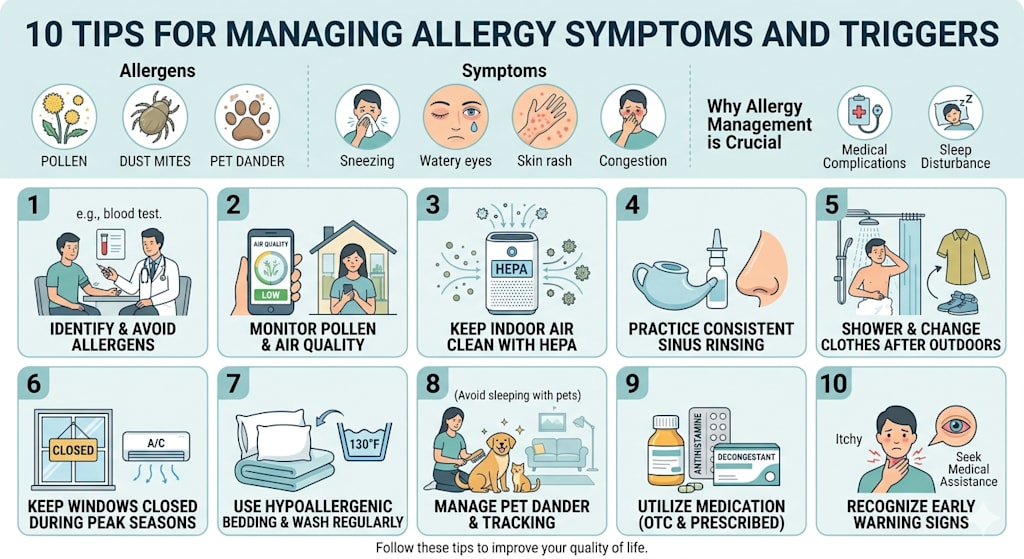
10 Tips for Managing Allergy Symptoms and Triggers
Right from seasonal changes and environmental factors triggering allergy symptoms, insect venoms, pet dander, certain foods and substances, and many such allergens can cause discomforts. Watery eyes, sneezing fits, congestion, fever, skin reactions such as itching / rash/ hives/ swelling / redness, etc. are some of the allergy responses due to overactive immune system that takes an active stand to fight the ‘foreign’ item.
In this blog, we will take you through some simple ways to manage allergy symptoms and triggers to make your life more comfortable.
Why is Allergy Management Crucial?
Not managing allergy symptoms on time can lead to medical complications, even turning out to be life-threatening. For instance, untreated nasal passage constriction can cause suffocation and death. Sinus or ear infections can result in asthma, while a stuffy nose can cause chronic allergic rhinitis.
Allergic reactions may affect you physically but simultaneously cause cognitive decline, sleep disturbance, irritability, brain fog, stress, and a lot more. That is the reason treating allergy symptoms is important.
The Impact of Seasonal and Environmental Irritants
Seasonal triggers include ragweed, tree pollen, flowers, etc., while environmental irritants are dust mites, pet dander, mold, etc. The constant exposure to allergens activates the histamine response, causing inflammation and other problems.
Tips for Managing Allergy Symptoms and Triggers
Here are the top 10 tips to manage allergy triggers and symptoms:
1. Identify and Avoid Specific Allergens
You may not be aware of what you are allergic to. But you can visit an allergy-specialist for a blood test and additional diagnosis to understand the possible allergen affecting you. The healthcare professional may enquire about specific reactions or noticeable traits to allergy-causing materials to understand the allergy symptoms and triggers better.
2. Monitor Local Pollen and Air Quality Counts
You can use digital apps to keep a check on the air quality index and pollen index daily to see if the count is high. If yes, then limit your time outdoors to avoid exposure, especially in hours when pollen is easily released in air.
3. Keep Indoor Air Clean With HEPA Filters
High-Efficiency Particulate Air (HEPA) filters are effective to keep the air clean indoors. Some are as good as to eliminate 99.97% of particles, with size as little as 0.3 microns from getting inside the house. Such air purifiers can reduce the allergen effect indoors.
4. Practice Consistent Sinus Rinsing
To clean the allergens from nasal passages, you should use nasal rinse containing saline. It makes the pollen grains expulsion easier by making the mucus thin before a reaction occurs. Use sterile or distilled water to clean the nose.
5. Shower and Change Clothes After Outdoor Activity
It is possible for allergens such as dust mites, pollen, etc. to attach to the clothing and body surface (skin and hair), if you have spent great time exposed to the triggers. So, as soon as you are home, dispose of the clothes to the washing space, and grab a shower to avoid transferring the allergens anywhere inside and coming in contact with them.
6. Keep Windows Closed During Peak Seasons
During seasons when you are susceptible to allergies, keep the windows closed and shield against any holes in the doors / walls, etc. to reduce the allergens entering in the house. Use air conditioning and air purifiers for further safety to clear out outdoor allergens from your home.
7. Use Hypoallergenic Bedding and Wash Regularly
Dust mites easily settle on pillows, bedding, and linen. So, look for hypoallergenic bedding to prevent the allergen from clinging to the surface. Wash these linens regularly, at least once a week in 130°F or 60°C hot water. This will eradicate remaining mites as well as skin cells they seek for nutrition support.
8. Manage Pet Dander and Outdoor Tracking
Loving your furry companions should never be a hindrance because of pet dander allergy. So, keep your pet’s fur clean and clear out shed fur regularly from your house to limit coming in touch with the particles. Avoid too close contact with the fur as possible, especially sleep separately than with your pet.
9. Utilize Over-The-Counter or Prescribed Medications
Several OTC medicines as well as those on prescription are available to handle allergic reactions. These include nasal corticosteroid to deal with inflamed air and nasal passages, antihistamine to fight the allergy symptoms, and decongestants to temporarily do away with swelling and constriction. The type of allergy medicine will depend on the allergen, severity of symptoms, and other factors.
10. Recognize Early Warning Signs of a Flare-Up
Some of the allergic reaction signs include itchy, dry, or choked throat or mouth, difficulty breathing, skin or facial redness / rashes/ swelling / itchiness, watery / itchy / burning eyes, nasal congestion, body inflammation, etc. If you are aware about the allergy or not, but these reactions occur without any explanation, treat these as warning signs, and seek medical assistance.
Conclusion
Not every person kFFFFFFFFFnows what they are allergic to and the allergy response they may experience. But if you suspect an allergy, speak to a healthcare professional and follow the above-mentioned tips to manage allergy symptoms and triggers for an improved quality of life.
About the Creator
William Goodwin
Bluepillsrx is a trusted online pharmacy that provides medications for ED, PE, and fertility issues, helping restore confidence and intimacy. Good health matters for both men and women.
Enjoyed the story? Support the Creator.
Subscribe for free to receive all their stories in your feed.
Comments
There are no comments for this story
Be the first to respond and start the conversation.