
**Do Successful People Really Wake Up Early **
Or Is That Just a Good Story?

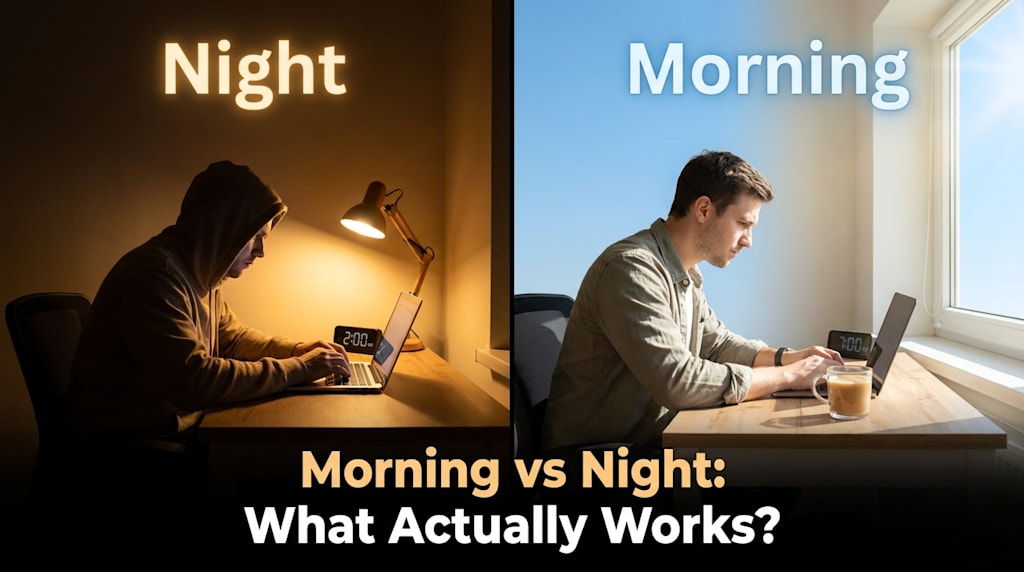
**Do Successful People Really Wake Up Early — Or Is That Just a Good Story?**
I've heard this one my whole life.
Wake up early, get ahead. Simple as that. And for a while I actually believed it. Set my alarm for 5 AM, dragged myself out of bed feeling vaguely heroic, made coffee, sat down — and proceeded to scroll my phone for forty minutes before doing anything useful.
So much for that theory.
The early morning success thing is everywhere right now. Books, podcasts, YouTube channels — everyone seems to have a 4:30 AM routine and strong opinions about it. But the more I've looked into it, the more I think we've turned a fairly ordinary habit into something it was never meant to be.
---
**Where This Idea Even Came From**
Early rising wasn't always a productivity philosophy. It was just practical.
Before electricity, before artificial lighting, you worked when the sun was up. Farmers, traders, craftsmen — they rose early because their work depended on daylight. It wasn't a mindset. It was just how things worked.
Somewhere along the way that practical necessity got repackaged into a virtue. And once business magazines started running profiles of CEOs who wake up at 4:45 AM, it hardened into something that feels almost like a rule.
Tim Cook apparently starts his day very early. Same with various other executives you'll find mentioned in these articles. But here's the thing nobody says out loud — those people don't succeed *because* they wake up early. They wake up early because their jobs are enormous and their days need to start somewhere. The schedule serves the workload. It didn't create the success.
That's a pretty important distinction that tends to get lost.
---
**Why Mornings Can Feel So Good (For Some People)**
There is something genuinely nice about early mornings. I'll give the routine-promoters that much.
The house is quiet. Your phone hasn't exploded yet. Nobody is emailing you about anything. There's a stillness that's hard to find later in the day once everything starts moving.
For a lot of people, that environment naturally helps them focus. Add in the fact that your brain has just had hours of rest, and it makes sense that thinking feels cleaner, writing feels easier, problems feel more solvable.
But — and this is the part that always gets skipped — not everyone's brain works this way.
Sleep scientists talk about something called chronotypes, which is essentially your body's natural preference for when it wants to be active. Some people are genuinely wired to be sharp in the morning. Others hit their stride at 10 PM. Neither is wrong. Neither is laziness. It's just biology doing what biology does.
Forcing a night owl into a 5 AM routine doesn't make them more productive. It mostly just makes them tired and resentful.
---
**The Problem With Turning a Habit Into a Formula**
Self-improvement culture has a tendency to do this — take something that works for some people in some contexts and turn it into a universal rule.
Waking up early joins a long list of habits that got this treatment. Cold showers. Journaling. Intermittent fasting. Meditation. All genuinely useful for certain people. All completely oversold as things everyone must do to be successful.
Here's what actually matters: skill, consistency, focus, making good decisions under pressure, showing up when you don't feel like it. None of those things happen because your alarm went off at 5 AM.
I've seen people wake up early every single day and accomplish very little. I've also seen people work irregular hours and build remarkable things. The time on the clock wasn't the deciding factor in either case.
What I've noticed — and I think this holds up pretty broadly — is that the people who get things done tend to know what their most important work actually is, and they protect some amount of time for it consistently. When that time happens to fall in the morning, great. When it doesn't, that's fine too.
---
**The Copying Problem**
This is where I think a lot of people genuinely go wrong.
You read about a CEO's morning routine. It sounds incredible — workout at 5, journaling at 6, deep work block from 7 to 9, emails after that. So you try to replicate it exactly.
For about three days it feels amazing. You feel disciplined and intentional and like your life is finally organized.
Then something disrupts it — a late night, a sick kid, a deadline that kept you up — and the whole thing falls apart. And then comes the familiar conclusion: *I just don't have the discipline for this.*
But that's usually not the real problem. The problem is that you borrowed someone else's system without accounting for your own life.
A CEO has staff, a structured schedule, and probably hasn't done their own grocery shopping in years. A student in Lahore dealing with load shedding, shared living space, and family obligations at night is operating in a completely different reality. A freelancer with irregular client deadlines doesn't have the same shape of day as someone running a corporation.
Routines work when they're built around your actual life. Not someone else's highlight reel.
---
**What's Actually Worth Taking From All This**
I don't want to completely dismiss early mornings either — that would be its own kind of overstatement.
If you're someone who genuinely functions well in the morning, and your mornings happen to be quiet and uninterrupted, then yeah — use that time. Even an hour of focused work before the noise starts can compound into something meaningful over weeks and months.
The useful question isn't "should I wake up early?" It's "when do I actually think clearly, and am I protecting that time or wasting it?"
For some people the answer is 6 AM. For others it's 11 PM. What matters is that you know your answer and you're not letting that window disappear into things that don't matter.
---
**The Actual Point**
Success — whatever that means for you — doesn't come from waking up at the right time. It comes from doing the right things consistently over a long period, in a way that's sustainable for who you actually are.
The early morning stuff is a detail. A useful detail for some. Completely irrelevant for others.
What separates people who make progress from people who stay stuck isn't usually their alarm setting. It's whether they've figured out what matters, built some kind of system around it, and kept showing up even when it's inconvenient.
That can happen at 5 AM. It can happen at midnight. It can happen in a quiet house before anyone else wakes up, or late at night when everyone else has gone to sleep.
The clock is honestly the least interesting part of the story.

About the Creator
M.Changer
Diving deep into the human experience,I explore hidden thoughts, echoes of emotion, and untold stories. Tired of surface-level narratives?Crave insights that challenge and resonate?You've found your next rabbit hole. Discover something new.
Enjoyed the story? Support the Creator.
Subscribe for free to receive all their stories in your feed.
Comments
There are no comments for this story
Be the first to respond and start the conversation.