
COVID Protection with Supplements, Part 2 of 2
The Scientific Evidence


Weighing the Evidence
When looking at the evidence for or against any natural substances, we first have to acknowledge the general paucity of information available. There are many possible reasons for this. One that cannot be dismissed is the lack of funding available for natural treatments as the funders generally cannot patent and profit from natural products. Typically, research in botanical medicine seeks to isolate components from the plant that can then be modified and thus patented. This lack of funding dramatically reduces the number of scientists willing or able to accurately assess the effects of these substances. Another reason for the lack of public health support for supplementation is that research funded by profit-based medical organizations consistently yield biased positive results, biased policy, and biased treatment recommendations (see for example here, here, and here).
Current prevention and treatment guidelines from the US National Institutes of Health can be found here. There is no standard pharmacological treatment known to be effective against the most deadly symptom of COVID, severe respiratory distress or organ failure secondary to respiratory distress. The only supplements mentioned in these treatment guidelines are vitamin C, vitamin, D, and zinc, with the NIH saying there is not enough evidence yet to recommend them.
It is fair to ask what is considered evidence. The gold standard research method used to be the randomized clinical trial. Now the gold standard is a meta-analysis, which combines the results of multiple studies. The meta-analysis method of research is widely misused to create the results desired. A recent meta-analysis of studies looking at the possible effects of C, D, and zinc supplements on COVID found no evidence they reduced COVID deaths, though they did show vitamin D might lead to shorter hospital stays. One of the authors said, “If you don't medically need these supplements, don't take them thinking they're protective against COVID-19. They're not going to prevent you from getting it and they're not going to prevent you from dying."
I’ll share only two quick critiques of the study above. First, the treatments typically began long after the development of symptoms and after the people were hospitalized. We know treatment is more effective when begun immediately upon exposure or after first symptom development. Second, the doses given were in most cases small or pathetically small. We have to wonder why. Research documents a clear dose response from many of these supplements. More works better. The studies showing the best results in this meta-analysis still used only half the doses recommended here. For example, one of the studies included in the meta-analysis above treated hospitalized patients showing moderate to severe symptoms (mean 12 days after symptom onset) with 12 g of vitamin C the first day and 6 g each of the next 4 days. They reported 1 person of 46 in the treatment group died (2.2%) and 5 people of 30 in the control group died (16.7%). This level of C supplementation is still far below the treatment dose and duration recommended here.
That said, there has been substantial research on many natural medicines, but much less in relation to COVID. There are numerous clinical trials in which natural treatments are given to human participants and measured for effectiveness against COVID, but almost all of them are very small, meaning the results may be unreliable, and/or they are not yet completed. This leaves us with strong evidence supporting the general effects of these medicines, but less information on how these effects play out against this particular disease. We will make do with the information that is currently available.
Evidence for Combined Supplements
In a high-level review of the research done on the value of nutritional supplements in preventing and treating COVID, the authors report, “Micronutrients such as vitamin C, D, zinc, and selenium play roles in antioxidant, anti-inflammatory, antithrombotic, antiviral, and immuno-modulatory functions and are useful in both innate and adaptive immunity. …Despite the diversity of studies and the lack of randomized clinical trials and prospective cohorts, there is evidence of the potential protective and therapeutic roles of vitamin C, D, zinc, and selenium in COVID-19.”
Prevention. A review of systematic reviews shows consistent support for the preventative role of vitamins C and D, zinc, and melatonin in strengthening the immune system against Covid and in reducing the inflammatory processes of Covid once contracted.
A recent small study looked at the effects of a supplementation protocol very similar to that outlined in this paper. Of the 113 participants, all with multiple exposures to people with COVID during the study period, 53 received supplements and 60 did not. Three people allocated to the treatment group did not follow the recommended protocol, so for analysis they were moved to the control group. At 20 weeks, 2 people in the supplement group (4.0%) had developed flu-like symptoms that were tested and found to be non-COVID related. At the same point, 12 people (19.0%) in the control group developed flu-like symptoms, of whom 9 tested positive for COVID.
Let me say that again:
- 0 COVID infections out of 50 people taking the supplements (0.0%)
- 9 COVID infections out of 63 people not taking the supplements (14.3%)
Here is the combination of supplements used in the study:
- 25 mg zinc
- 10 drops of Quina™ (on average; the quina-bark extract may be titrated, as tolerated by some subjects, starting at 1 drop then building up to 8-16 drops daily. The larger doses may be taken as two 4-8 drop half-doses twice daily)
- 400 mg quercetin [improves zinc uptake]
- 1000 mg vitamin C
- 1000 IU (25 mg) vitamin D3
- 400 IU vitamin E
- 500 mg l-lysine.
My take on the study and results is that zinc plays a critical role in reducing COVID risk. I think the vitamin C dose is too low, and the authors don’t mention whether the C was in a liposomal coating, which dramatically improves absorption. Based on other studies I would also add moderate supplementation of selenium and melatonin.
This is a small-scale study and the participants self-selected to receive or not receive the treatments. Both factors reduce confidence in the results; but the dramatic difference in outcomes between the two groups increases confidence that these supplements do in fact reduce infection risk.
Treatment. Another small study looked at treatment safety and symptom progression in a group of 30 COVID patients with mild to moderate symptoms who followed a naturopathic protocol similar to the protocol recommended here. Of the 30 participants, only 1 needed to be hospitalized and none died. The one who needed to be hospitalized did not begin the treatment until after symptoms had been present for 28 days. The naturopathic treatments included bone broth, herbs, probiotics, magnesium chloride, and vitamins A and K in addition to the supplements recommended on page 2. The authors reported no side effects or adverse events. They found quicker treatment after the first symptoms was strongly correlated with shorter symptom duration.
The benefits of early treatment have also been found in conventional COVID care, though this is still not standard practice. Usually people with a positive diagnosis, even with symptoms, are told to quarantine at home, given no care recommendations, and told to “wait and see if the symptoms get worse.” When early treatment was provided to more than 1000 COVID-positive patients using widely available natural and generic medications, the authors of this paper wrote, “To date, of those who followed this protocol, we are unaware of a single COVID-19-related death, or of a single patient who has required pressure ventilation in an intensive care unit.” A summary of the treatment plan is available here. Their treatment plan includes use of vitamins C and D along with zinc as 3 of the 5 first-line medications.
Vitamin C
According to the US National Institutes of Health, vitamin C is a powerful antioxidant that contributes to overall heath, is required for many physiological processes, and helps maintain organismic homeostasis. It is crucial to multiple areas of immune system functioning. Vitamin C has been found to effectively prevent and or treat multiple diseases, including some respiratory infections, and has been found to block some of the chemical processes required for the Covid virus to replicate.
Doctors working with Covid patients in China at the start of the outbreak observed many patients had better medical outcomes when they used vitamin C supplements. These observations were so consistent they initiated a clinical trial to test the effectiveness of high dose IV vitamin C as a stand-alone treatment. Unfortunately, the trial did not enroll enough people and was stopped. Their study registration includes a body of literature showing vitamin C has positive treatment effects on a wide range of Covid related symptoms.
Intravenous vitamin C was being used by doctors in a chain of 23 hospitals in New York for their most seriously ill Covid patients. Patients were given 1,500 mg four times per day. This is still less than the dosage used in China, but NY pulmonologist Dr. Weber said, “The patients who received vitamin C did significantly better than those who did not get vitamin C. It helps a tremendous amount, but it is not highlighted because it’s not a sexy drug.”
The Covid virus belongs to the same coronavirus family as cold and flu viruses, and produces similar symptoms once infected. Supplementation of vitamin C has been found to reduce the risk of cold infections by half when the person experienced significant physical stress. Keep in mind that psychological stress leads to physical stress. Vitamin C has also been found to reduce symptom severity and the duration of colds and flus, and to reduce the risk of flu infection.
Dr. Hemilä of the University of Helsinki performed the most recent complete analysis of the available research on Vitamin C. Her work shows there is a strong dose response relationship, that is, the higher the vitamin C dose, the stronger the beneficial effects. When discussing the results of her analysis, Dr. Hemilä concludes that "given the consistent effect of vitamin C on the duration of colds, and its safety and low cost, it would be worthwhile for individual common cold patients to test whether therapeutic 8 g/day vitamin C is beneficial for them. Self-dosing of vitamin C must be started as soon as possible after the onset of common cold symptoms to be most effective."
Many people with severe Covid symptoms experience respiratory distress requiring admission to a hospital’s intensive care unit (ICU) and mechanical ventilation. A meta-analysis of 6 studies found oral administration of 1-3 grams of vitamin C reduced length of stays in the ICU by 8.6%. The combined results from three studies show that vitamin C administration reduced the duration of mechanical ventilation by 18.2%. Remember that per Dr. Hemilä’s report, these results were found with very low, almost non-therapeutic doses.
Individual reports by alternative health practitioners show high-dose vitamin C (up to 50 grams per day) administered through an IV can stop and reverse disease progression, even once the cytokine storm has begun in the lungs. Contrarily, a small clinical trial found no important differences in conventional treatment including hydroxychloroquine and adding 6 grams of IV vitamin C to that combination conventional treatment.
Dosage. Vitamin C is inexpensive and carries very little risk of harm, even at higher dosing levels. If you choose to supplement with vitamin C as a preventive, you might want to start with 2 grams a day administered orally, preferably using a buffered or liposomal form (see the Delivery section below). That should be sufficient to strengthen your immune system. Take the supplements on first waking, 30 minutes before a meal, or more than 2 hours after a meal. If you choose to use a higher dose of regular vitamin C, pay attention to when you begin to develop gastric distress or diarrhea then reduce the dose until those symptoms disappear.
To use vitamin C supplementation as a treatment for colds or flus (remember we still have the flu going around), the best results have been obtained by administering 8-12 g (8,000-12,000 mg) immediately upon appearance of the first symptoms, then continuing that dose daily until the symptoms subside. You may want to keep a supply of liposomal vitamin C on hand to allow you to deliver this high of a dose without unwanted side effects.
Delivery. The goal with most supplements is to have the nutrient delivered to all tissues throughout the body. This is accomplished primarily through the blood circulatory system. There are three ways of taking vitamin C: standard vitamin C orally, liposomal vitamin C orally, and liquid vitamin C intravenously. These three methods produce widely varying bioavailability of the vitamin, that is, how much of the vitamin taken in actually gets used by the body.
Standard vitamin C, orally – This is the method most people use and are familiar with. The vitamin is ingested and the digestive system is responsible for absorbing the vitamin and carrying it to the bloodstream. But there are problems.
Many low-cost vitamin manufacturers pack the vitamin in pills using binders that are not easily dissolved in the digestive system, so some or most of the pill itself passes through undigested and gets evacuated. Higher quality vitamins dissolve more completely, making more of the vitamin available. Powdered vitamins tend to dissolve even more completely, but the powdered products also tend to be loaded with sugar which is not something you want to add to your diet.
The second issue is absorption. Vitamin C requires specialized cells in the small intestine to carry it through the intestinal walls and into the bloodstream. There are only so many of these cells. Once they’ve carried about 200 mg of C into the bloodstream, the amount they transport drops off rapidly so they start transporting only about 50% of the rest of the ingested vitamin C. This percentage continues to drop as more vitamin C is ingested, leadign to increasingly diminished absorption with increased consumption.
Liposomal vitamin C, orally – Liposomal vitamin C is manufactured with a layer of fat around the vitamin molecules, which essentially mimics the action of the specialized transport cells. This allows almost all of the ingested vitamin to move across the intestinal walls and into the bloodstream, no matter the amount ingested. Because absorption is no longer limited by the availability of the transport cells, there are no diminishing returns with increased consumption. This increased absorption also eliminates the water absorption, stomach upset, and diarrhea associated with taking regular vitamin C.
Liquid vitamin C, intravenously – Intravenous administration bypasses the gastrointestinal (GI) tract and delivers vitamin C directly to the bloodstream. The upper limit dosing of 2 g/day mentioned below is based on the potential development of diarrhea due to vitamin C sitting in the GI tract and not being absorbed. There is no safety limit yet identified for IV administration. IV administration of vitamin C can only be performed by healthcare professionals, and several clinical trials using this treatment have been completed. The FDA has not approved high-dose vitamin C for treatment in cancer or other conditions.
Safety. The Food and Nutrition Board of the US Institute of Medicine set the current recommended intake and safety levels for vitamin C in 2000. Their report says “the evidence of adverse effects due to intakes of vitamin C supplements is at this time limited to osmotic diarrhea and gastrointestinal disturbances which are self-limiting.” They set the Tolerable Upper Intake Levels (ULs) for adults for vitamin C at 2,000 mg/day based on the adverse effect of osmotic diarrhea.
Both diarrhea and gastric distress occur only with oral delivery of standard vitamin C. Diarrhea is caused by unabsorbed vitamin C attracting water to it in the intestines. This can be countered by taking a form of vitamin C that is absorbed more fully. Gastric distress, which can be felt as stomach pain, cramping, or nausea, is primarily caused by the high acidity of the vitamin (ascorbic acid). This can be countered by lowering the dose or by using a product that is buffered. Buffering means using a second compound to reduce the acidity of the vitamin C, usually in the form of calcium ascorbate or rose hips.
The Food and Nutrition board also recommended that men with any form of kidney disease not take more than 2,000 mg/day to avoid risk of developing kidney stones. This risk has not been found in women (IOM report above)
Pregnant women should not take more than 2,000 mg/day to avoid even the remote possibility of fetal harm. Such harms have not been found in any clinical study, but there have been anecdotal and isolated reports of harm.
Five years after the Institute of Medicine report above was published, a complete review of vitamin C safety studies and clinical trials found “dietary supplements of vitamins E and C are safe for the general population. …Many clinical trials with these vitamins have involved subjects with various diseases, and no consistent pattern of adverse effects has occurred at any intake.”
Vitamin D3
Vitamin D3 is both a nutrient present in some foods and a hormone produced by our bodies through exposure to sunlight. It plays a critical role in immune function. Vitamin D deficiency is widespread, especially among older adults, people with darker skin tones, and those living in areas of the world with less sunlight exposure. Overall, about 40% of the US population is deficient, defined as having a blood level lower than 20 ng/mL. Vitamin D serves many roles in the body and is necessary for healthy functioning of multiple systems. Partly due to its many actions, there are conflicting findings as to its effectiveness in preventing or treating the flu. These conflicting findings continue when researchers focus more on its effects on COVID.
A 2022 review of published literature on vitamin D and COVID reports, “Current evidence suggests that taking a vitamin D supplement to maintain [normal, healthy levels], can help reduce the risk of COVID-19 and its severe outcomes, including mortality.” Clinical and laboratory evidence indicates vitamin D operates in two main ways against COVID. First, it increases immune system function in killing off viruses and clearing existing viruses from host cells; and second it reduces the inflammatory processes produced by COVID infection and helps directly reduce the “cytokine storm” implicated in the severe acute respiratory distress that causes so many COVID deaths.
Prevention. An early summary of COVID research on vitamin D as a preventative and treatment concluded “Despite limitations and remaining uncertainties, accumulating evidence strongly supports widespread vitamin D supplementation, in particular of high-risk populations, as well as high-dose supplementation of those infected.” A systematic review found a strong association between lower vitamin D levels and higher risk of infection. A large-scale study found low vitamin D levels associated with a 77% increase in risk of COVID infection. Later research by the same team found black people with normative healthy levels of vitamin D (target range 30 to 39.9 ng/mL) were infected at rates more than 2.6x higher than those with D levels higher than the identified “healthy” levels. Increased D levels led to increased protection, but this pattern was found only among the study’s black participants. No additional protection was found among white participants beyond those obtained by having normal healthy levels.
Treatment. Having healthy or high levels of vitamin D when first infected may influence the course of the disease. According to a study in Israel, patients with deficient vitamin D levels were 14 times more likely to have a severe or critical case of COVID-19. Those deficient in vitamin D showed a mortality rate of 25.6%, while those with healthy or higher levels had a mortality rate of only 2.3%.
Not all research demonstrates protective effects for initially high vitamin D levels, and similar study designs sometimes yield conflicting results. A retrospective study of 148 hospitalized COVID patients found no difference in fatality rates between those with high or low levels of a vitamin D metabolite (which indicates D levels). Another retrospective study of 287 hospitalized patients found higher vitamin D levels associated with decreased mortality among those over 65 years old and those under 65 who were not obese.
A randomized control trial used a single injection of 100,000 IU of cholecalciferol (one of the hormone forms of vitamin D3) shortly after hospitalization for COVID. They found no difference in length of hospitalization, admission to ICU, or mortality rate. They did find that people with healthy or high levels of vitamin D on admission had less respiratory distress, shorter stays, fewer ICU admissions, and fewer deaths.
As a stand-alone treatment for symptomatic COVID, the picture becomes slightly more clear. Early in the pandemic, vitamin D oral supplements were used in a randomized control clinical trial with hospitalized COVID patients. The authors report that “Of 50 patients treated with calcifediol [the body’s form of vitamin D], one required admission to the ICU (2%), while of 26 untreated patients, 13 required admission (50%)”.
A very large study (26,000+ people) by the US Veteran’s Administration, Duke University, and Harvard University looked at the effects on mortality of treating Covid patients with corticosteroids (CRT) and or vitamin D. CRTs are a common treatment for the inflammation causing Covid’s acute respiratory distress. The study found hospitalized patients given CRT alone had a 33% increase in mortality compared with those not given CRT (17.0% vs 12.7%). Because the inflammatory process is known to burn through vitamin D stores, it makes sense that those who received vitamin D in combination with CRT showed better outcomes (9.1% mortality), with a slightly lower mortality rate than those receiving neither treatment. What may be unexpected though, is the hospitalized patients receiving only vitamin D as a treatment, with no CRT, showed the best results with only a 5.7% mortality rate. Vitamin D reduced deaths by more than half and the standard treatment increased deaths by a third.
A very conservative systematic review was performed of all clinical trials using vitamin D as a treatment where the outcome measured was ICU admissions and/or deaths. The study found a trend toward improved clinical outcomes with supplementation, and the evidence was especially strong when the supplements were delivered after hospitalization. What this paper did not answer is what doses delivered with what frequency yield the best results. The dosages used in the 13 included studies varied widely.
Less conservative but still rigorous systematic reviews, meaning they include more of the clinical trials that have been run and published in medical journals, found more than just a trend toward better outcomes. In the 43 studies that tracked mortality, they report a 76% improvement in mortality rates when treatments began soon after symptom development. When treatment began well after symptom onset, say with moderate to severe symptoms, supplementation with vitamin D led to a 48% improvement in mortality rates.
Dosage. Current dose recommendation for adults is to supplement 600-800 international units (IU) of vitamin D daily. This level is designed only to ensure proper movement of calcium in the body to maintain bone health. Current recommendations for healthy immune function range from 1,000 to 4,000 IU per day, depending on current blood serum levels. The Endocrine Society recommends doses of 50,000 IU of weekly vitamin D (equivalent to ~ 6,600 IU daily) for 8 weeks to treat vitamin D deficiency.
If you have not been supplementing vitamin D3, you could start with 10,000 IU/day for 3 weeks. Once you’ve reached immune-enhancing levels, then take 4,000 IU/day thereafter for protection. For treatment, take 10,000 IU per day.
Blood levels of less than 20 nanograms per mL (ng/mL) of 25-hydroxyvitamin D [25(OH)D] are considered deficient for bone health and this is still used as the benchmark. Because of that limited perspective, you will often find sources online recommending levels of 20-30 ng/mL as optimal. We have to also recognize these earlier recommendations are based on norms of white adult populations in the United States. As seen in some of the COVID trials, much higher levels are needed for black populations. There are also differences based on age, sun exposure, diets, and how far away from the equator the person lives.
Current best recommendations for whole person health, including immune function and reduced cancer risks, are in the 30-60 ng/mL range, with many recommending 50-66 ng/mL as ideal.
Safety. Vitamin D is considered very safe. A healthy person would need to take very large doses for an extended period of time to reach vitamin D toxicity. Vitamin D supplementation may lead to dry mouth or headaches. It can also increase blood calcium, which can cause anxiety, confusion, heart problems, kidney problems, and muscle weakness.
Zinc
Zinc is essential for immune function. Zinc deficiency is surprisingly common, increases with age, and increases the risk of viral infections. Besides its protective immune-support role, zinc also acts as a direct antiviral through multiple chemical mechanisms. Zinc has been shown to protect lung tissue, prevent pathogen entry, and rebalance dysregulated antiviral and inflammatory responses. A 2010 study found that zinc combined with ionophores (see quercetin below) effectively shut down replication of the SARS-coronavirus, a close cousin of the Covid coronavirus. Zinc has long been recommended to treat the common cold, which is also often caused by coronaviruses. A high quality meta-analysis found supplementing with zinc alone reduced symptoms and duration of colds from the usual 7 days down to only 4 days.
Because of these and other studies, it was recommended at the start of Covid to include zinc as part of an overall prevention and treatment plan. A clinical study of hospitalized Covid patients found a direct correlation between lower zinc levels and increased symptom severity. Another group used zinc as a treatment for four hospitalized Covid patients. They reported “All four patients experienced significant improvement in objective and symptomatic disease measures after one day of high dose therapy.” A third study found hospitalized Covid patients given supplemental zinc led to more people being discharged home, and reduced ICU admissions, need for artificial ventilation, and overall Covid mortality.
Dosage. The recommended daily allowance (RDA) for zinc in adults is 11 mg/day for men and 8 mg/day for women. This is for baseline metabolism, not for strengthening the immune system. There are also no separate recommendations for seniors, even though they are known to consistently have lower zinc levels in their bodies. The upper level of regular zinc supplementation not likely to produce negative effects on calcium and copper levels is 40 mg/day in healthy adults. Some treatments call for using up to 200 mg per day of zinc to assist with wound healing while monitoring calcium levels.
For strengthening the immune system against Covid infection, a good range is to take 15-30 mg/day, depending on age and health status. For treating Covid, you could increase your intake to 40-150 mg/day, perhaps best delivered through lozenges, depending on your age and the severity of symptoms. Continue for 3-5 days after symptoms stop.
Delivery. Zinc is found in many foods and common vitamin/mineral supplements. Zinc is also commonly available in lozenges, sometimes combined with other vitamins, minerals, or herbs, and marketed as a treatment for colds. This method of delivery can be handy for treating Covid. The lozenges come in doses of 5-20 mg each. Look for supplements containing zinc picolinate or zinc gluconate. Zinc gluconate worked better in one study than zinc acetate. Do not be misled by some labels reading zinc in the product name but then elsewhere say they are homeopathic. Homeopathic zinc does not contain zinc. Also avoid lozenges that contain elderberry in combination with zinc. See why in the “Words of Caution” section at the end of the first article in this series.
Safety. Do not use zinc in nasal sprays as they may lead to loss of sense of smell. There are no records of zinc toxicity occurring through eating foods containing zinc. Acute zinc toxicity can usually be induced by ingestion of more than 200 mg of zinc in a single day (in adults). Zinc toxicity may result in gastric distress, nausea, dizziness, and disorientation. Because of how the body processes zinc, high zinc levels may lead to reduced levels of copper, iron, and magnesium.
Quercetin
Quercetin is a plant pigment bioflavonoid found in many foods, especially in blueberries and red onions. Quercetin acts as an anti-oxidant and anti-inflammatory, with immune-enhancing and anti-viral actions as well. Most relevant to this discussion however, is that it serves as a zinc ionophore, meaning it helps transport the zinc molecule across cell membranes so the cell can make use of the zinc. This action dramatically increases the anti-viral activities of zinc.
Quercetin in combination with vitamin C was recommended for Covid prevention and treatment near the start of the epidemic. Quercetin demonstrates a strong affinity for binding with the Covid proteins and receptor sites, indicating it may block virus binding and infection of host cells. Laboratory studies show multiple pathways by which quercetin itself reduces and modulates the inflammatory actions leading to severe respiratory distress. Parts of quercetin specifically block entry of the SARS coronavirus from entering host cells. It has strong evidence for effectiveness against related cold and flu viruses, along with quite a few other viruses. A preliminary study of front line healthcare workers regularly exposed to patients with Covid found 1 person of 71 who took quercetin with vitamin C and bromelain tested positive for Covid during the 3 month study period, while 9 of 42 people who did not use the supplements tested positive.
Dosage. The usual recommended dose of quercetin is 75-250 mg, taken once or twice per day. A daily dose of 350-500mg provides better protective effects against infection. Do not exceed 500 mg per day. For treatment, increase the dose to 500-1,000 mg/day.
Delivery. Quercetin supplements may be purchased in capsule, pill, and powder form. They seem to be equally well absorbed by the body. It can also be delivered intravenously.
Safety. While quercetin has produced negative effects in the lab at even moderate doses, these effects have not been observed in animal or human studies with much higher doses. Three human trials using doses ranging from 3 to 1,000 mg per day for months at a time found no adverse effects (see p. 2194 of this paper for sources). There are some reports of temporary damage to kidney function at doses of more than 1 g per day.
Generally, side effects are rare and mild, especially as quercetin is found naturally in many foods. These effects may include headaches, nausea, and tingling sensations. Pregnant women, breastfeeding women, and people with kidney disease should avoid higher dose supplements.
Selenium
Selenium, like zinc, plays a role in immune function. Many studies show selenium deficiency lowers immune function and selenium supplementation increases immune function. Both population-based studies and clinical trials show it has anti-viral and anti-bacterial properties. It is notably active against RNA viruses, of which the Covid virus is one.
Selenium deficiency has been associated with increased rates of infection. In 2015, Harvard researcher Boguslaw Lipinski described the chemical interactions by which healthy selenium levels could significantly and substantially reduces infection risk for Covid types of viruses. In this paper he wrote, “It is suggested that this inexpensive and readily available food supplement can be an ultimate inhibitor of Ebola and other enveloped viral infections” (p. 319). He refers here to Ebola, SARS, and other enveloped viruses, which are similar in structure and function to the Covid virus. They are all RNA enveloped coronaviruses.
The respiratory syncytial virus (RSV) is very similar in structure and function to the Covid virus. They are both enveloped viruses with a phospholipid bilayer membrane, both have protein spikes on their surface by which they inject themselves into the host cell, and both cause respiratory infections. An interesting study from China used selenium to treat patients with severe RSV-caused respiratory tract infections (remember, Covid infects the respiratory tract). These were all very young children. Those who received modest selenium supplementation recovered significantly faster than children who did not, and several markers of immune function were improved in that group as well.
Contrarily, a small, low-quality study found that hospitalized Covid patients with moderate symptoms had lower serum selenium levels than hospitalized patients with severe symptoms. This result has not been found elsewhere.
Dosage. The Recommended Daily Allowance for selenium is 55 micrograms (mcg) per day for adults, with a recommended Upper Limit of 400 mcg per day. There are many different forms of selenium available as supplements, not all of which are easily used by the body. Look for supplements containing either selenomethionine or methylselenocysteine as these are both readily absorbed by the body.
You may want to aim for a combined selenium intake of 200-300 mcg per day for protective effects. Factor in the amount of selenium you get from all sources, including food and supplements. For Covid treatment, increase your selenium intake to 300-600 mcg per day, including food sources. Selenium does display a dose response (more selenium, more benefit). Three to six Brazil nuts per day should suffice. Do not take this amount for longer than two weeks.
Many daily multivitamins include low doses of selenium in their formulas. Time your selenium intake to not overlap with vitamin C intake as ascorbic acid interferes with proper metabolism of selenium. A few hours separation should suffice.
Delivery. Food sources of selenium are generally well absorbed and tolerated. Brazil nuts contain the highest density of selenium in any food (see table below). A clinical study found that eating two Brazil nuts a day was as effective as taking 100 mcg of selenomethionine in producing healthy selenium levels and enhanced antioxidant activity. This study also found wide variation in the selenium content of individual nuts, but said the content averaged out over time.
Here is a list of foods high in selenium:
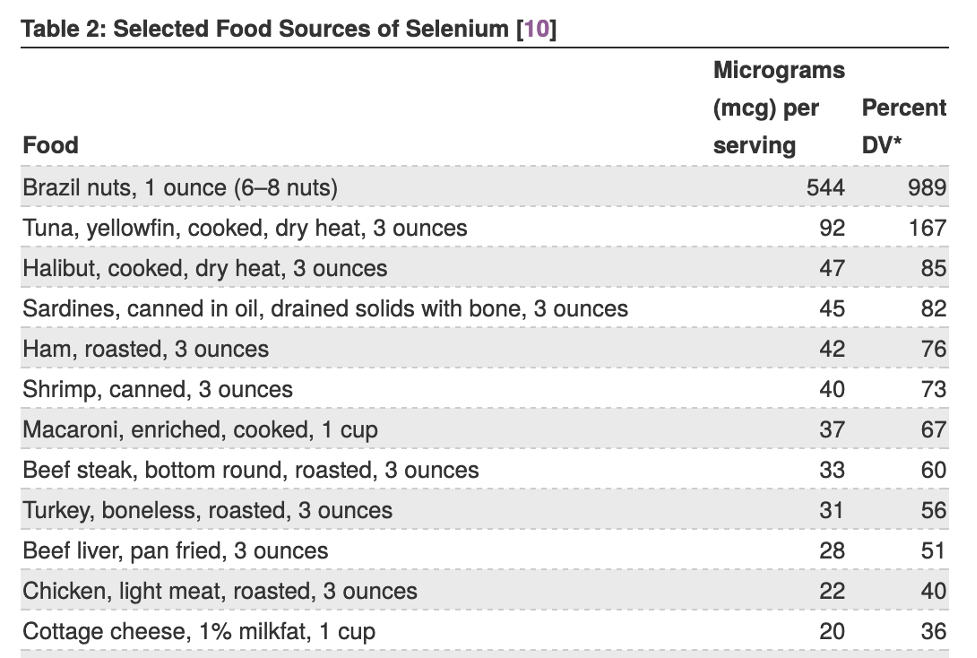
The full table can be found here.
Safety. The Food and Nutrition Board of the US Institute of Medicine set the current Tolerable Upper Intake Level for selenium at 400 mcg per day. They based this amount on the level at which most people would not experience selenosis. According to the US Office of Dietary Supplements, “early indicators of excess intake are a garlic odor in the breath and a metallic taste in the mouth.” Selenosis is indicated by brittle or loss of hair and nails, and fatigue. Doses much higher than 400 mcg per day have been used in medical research and seem to be well tolerated for short duration treatments, but are not recommended for longer duration supplementation.
Melatonin
Dr. Lipinski, who described the chemical pathways by which selenium effectively blocks infection by coronaviruses, also suggested melatonin could synergistically enhance that effect (p. 321). Melatonin is a hormone with powerful anti-inflammatory, anti-viral, anti-oxidant, and immune-enhancing properties, besides perhaps being better-known for its role in regulating our sleep/wake cycle.
Recall from the selenium discussion the similarities in structure, action, and effects between the RSV virus and the coronavirus causing Covid. Both viruses create powerful inflammatory activity in the lungs referred to as a “cytokine storm.” A study found that melatonin by itself interrupted and dramatically reduced this deadly lung inflammation among animals infected with the RSV virus. The authors wrote that melatonin may serve as “a novel therapeutic agent in virus-induced pulmonary infection.” This is in addition to a separate scientific review of the literature which found melatonin showed therapeutic potential against the H1N1 flu virus, which is also a coronavirus, and that it has synergistically enhanced the performance of other anti-viral drugs.
There are multiple chemical pathways by which melatonin has been documented to improve a wide range of Covid related symptoms, including several studies showing dramatic reductions in the strength of the cytokine storms implicated in many Covid deaths. Here is another article documenting specific actions against severe acute respiratory distress.
Dosage. Melatonin is usually sold in pills to be swallowed, and sometimes sold as products that dissolve under the tongue or in the cheek (sublingual or buccal administration). These latter methods bypass the digestive system and deliver the hormone directly into the bloodstream more rapidly than does oral administration.
Doses of 0.5 to 5 mg are commonly recommended for treating sleep disorders. Many studies report a dose response relationship in which more melatonin produces more effect. A low dose is considered to be in the range of 2-5 mg/day, and 10 mg is considered moderate to high. You might want to consider a daily dose in the 5-10 mg range for activation of the chemical blockade, and higher doses should you display any symptoms of infection. Much higher doses have been used in medical studies to good effect, but are not necessarily needed to bring about the desired synergistic action.
Melatonin induces sleepiness. Oral administration usually takes about an hour to produce its effects, so melatonin should be taken about one hour before your usual bedtime. Because it is also a powerful regulator of the sleep/wake cycle, it should be taken at the same time every day, even if you plan to stay awake beyond your usual bedtime.
Safety. The US FDA does not regulate or set standards for the use of melatonin as a supplement. This also means they don’t oversee quality control by manufacturers. A 2017 study tested the content of 31 melatonin products sold over the counter. They found that the actual melatonin content varied more than 10% from what the label indicated for 22 of the products, varying from 83% less to 465% more than labeled content. Similar variances were found between different lots of the same brand as between different brands. As well, 8 of the products were found to contain serotonin, which can be harmful even at low levels.
Melatonin is often used to improve the quality of sleep, so drowsiness is an expected effect. Although driving a vehicle within a few hours of supplementing with melatonin is not recommended, clinical studies using doses as high as 100 mg found no changes in reaction times or driving performance.
A review of clinical trials from 1990-2010 using melatonin in doses ranging from 0.1 to 300 mg found that “although in a few cases melatonin seems to aggravate some conditions, the vast majority of studies document the very low toxicity of melatonin over a wide range of doses.” An earlier study gave people 1 g (1,000 mg) per day for a month and reported no adverse effects.
A 2016 study titled “The Safety of Melatonin in Humans” found “only mild adverse effects, such as dizziness, headache, nausea and sleepiness have been reported. No studies have indicated that exogenous melatonin should induce any serious adverse effects.”
About the Creator
Michelle Fauver
Michelle is a professor and researcher in the areas of consciousness studies and integrative medicine. Her life's work is finding answers to the question, "How can we help more people heal, more effectively?"
Enjoyed the story? Support the Creator.
Subscribe for free to receive all their stories in your feed.
Comments
There are no comments for this story
Be the first to respond and start the conversation.