
ASUS' new laptop lineup finally kills the budget-versus-premium divide
For years, laptop buyers faced a frustrating choice: pay a premium for an all-metal chassis or settle for plastic to save money. ASUS has just shattered that divide at Computex 2026, announcing that high-end features—including all-aluminum bodies and next-gen AI processors—will now be standard across its entire laptop lineup, from budget-friendly Vivobooks to business-focused ExpertBooks.

The Taiwanese tech giant unveiled eight new laptops and one gaming desktop at the annual trade show in Taipei. But the real headline isn’t any single device—it’s the sweeping democratization of premium features that ASUS claims will finally end the era of “plastic feeling cheap.”
The New ASUS Laptop Lineup Announced at Computex 2026
ASUS introduced the following devices:
Consumer Lineup:
ASUS Vivobook S14
ASUS Vivobook S14 Flip
ASUS Vivobook S16
ASUS Vivobook S16 Flip
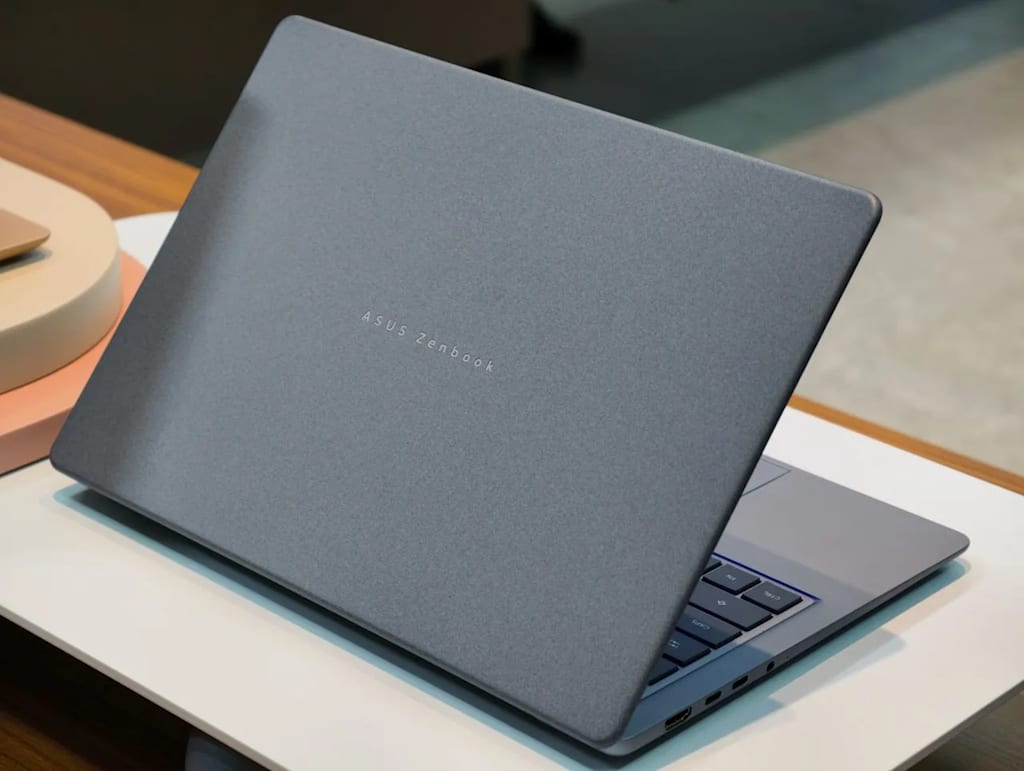
ASUS Zenbook 14
Business Lineup:
ASUS ExpertBook B5 Flip G2
ASUS ExpertBook P5 (Intel)
ASUS ExpertBook PM5 (AMD)
Desktop:
ASUS TUF Gaming Desktop T700
No More Plastic: Aluminum Becomes the Standard
Historically, ASUS reserved its sleek, all-metal designs for the flagship Zenbook series. The popular Vivobook line—despite being a best-seller for students and casual users—featured plastic chassis that felt noticeably less premium. That trade-off was acceptable given the lower price point, but ASUS has now decided that the compromise is no longer necessary.
The new Vivobook S14 and S16 models are now constructed entirely from aluminum, providing a premium appearance that rivals laptops costing hundreds more. ASUS indicates that this change is intended to improve durability (metal resists cracks and flex better than plastic) and support environmental commitments, as aluminum is more easily recycled than mixed-material plastics.
The Vivobook S14 and S16 also have flip variants (the S14 Flip and S16 Flip), perfect for users who want a 2-in-1 convertible experience with a touchscreen and tablet mode. Both maintain the all-metal construction, meaning even budget-conscious buyers who want a flexible device no longer have to sacrifice build quality.
Zenbook 14: The Flagship Gets Even Better
The new ASUS Zenbook 14 takes the spotlight as the premium flagship. It features an ultra-lightweight all-aluminum chassis available in three colors. More importantly, ASUS is offering an unprecedented level of processor choice:
- Snapdragon X series (ARM-based, for battery life)
- Intel Core Ultra (for performance and compatibility)
- AMD Ryzen AI 400 (for integrated AI acceleration)
This flexibility allows customers to choose the processor that best fits their needs without changing the laptop’s premium feel or design language.
Agentic AI: One Workflow to Rule Them All
Beyond hardware, ASUS lifted the curtain on its new agentic AI platform—a software layer designed to be flexible, easy to use, and customizable to your workflow. Its biggest unique selling point (USP) is consolidation: instead of juggling multiple AI assistants for different contexts, users can switch between work, life, and travel assistants all within a single interface.
Perhaps most impressively, users can control the balance of cloud versus local processing by specifying how many tokens they want to use. This gives privacy-conscious users the option to keep sensitive data on-device while offloading heavier tasks to the cloud. It also allows those with limited internet connectivity to prioritize local processing.
Business Users Get a Major Upgrade Too
ASUS hasn’t forgotten its large professional fanbase. The new ExpertBook B5 Flip G2 is a 14-inch convertible featuring:
- All-aluminum chassis (formerly plastic or mixed materials on previous ExpertBooks)
- Garaged stylus (always available, never lost)
- 50% longer battery life compared to the previous generation
- Post-quantum cryptography security features (future-proofing against quantum computer attacks)
ASUS also refreshed the ExpertBook P5 G2 (Intel) and PM5 (AMD) with enhanced security and post-quantum cryptography support. These business laptops now offer the same premium build quality as consumer flagships, closing the gap between “work laptop” and “personal premium device.”
Missing Details: Pricing and Release Dates
Currently, ASUS has not announced specific pricing or release dates for the new lineup. Given the all-aluminum construction across the board, prices may increase slightly compared to previous plastic-based Vivobook models. However, ASUS has not indicated that the Vivobook line will move upmarket in price—suggesting the company is absorbing some of the cost to remain competitive.
Historically, ASUS announces pricing closer to the retail launch, typically 4-8 weeks after Computex. That would place availability in late summer or early fall 2026.
Final Thoughts: A Bold Move That Could Reshape the Market
ASUS’s decision to make premium materials standard across its entire lineup is a bold gamble. It challenges the industry’s long-held assumption that budget laptops must feel cheap. If successful, competitors like Acer, HP, and Dell may be forced to follow suit—finally ending the budget-versus-premium divide for good.
For now, ASUS has drawn a clear line in the sand: no more plastic compromises. Whether you’re buying a $500 Vivobook or a $1,500 Zenbook, you’ll get the same all-metal build quality. That’s a win for every laptop buyer.
About the Creator
Desmond Kay
love to write.
I pour passion into every line I write, hoping to spark emotion, thought, and connection.
Join me on this creative journey — subscribe and let’s explore the beauty of words together. 🖋️📚
Enjoyed the story? Support the Creator.
Subscribe for free to receive all their stories in your feed.
Comments
There are no comments for this story
Be the first to respond and start the conversation.