
Alopecia Areata
Decoding the Enigmatic Autoimmune Hair Loss Disorder

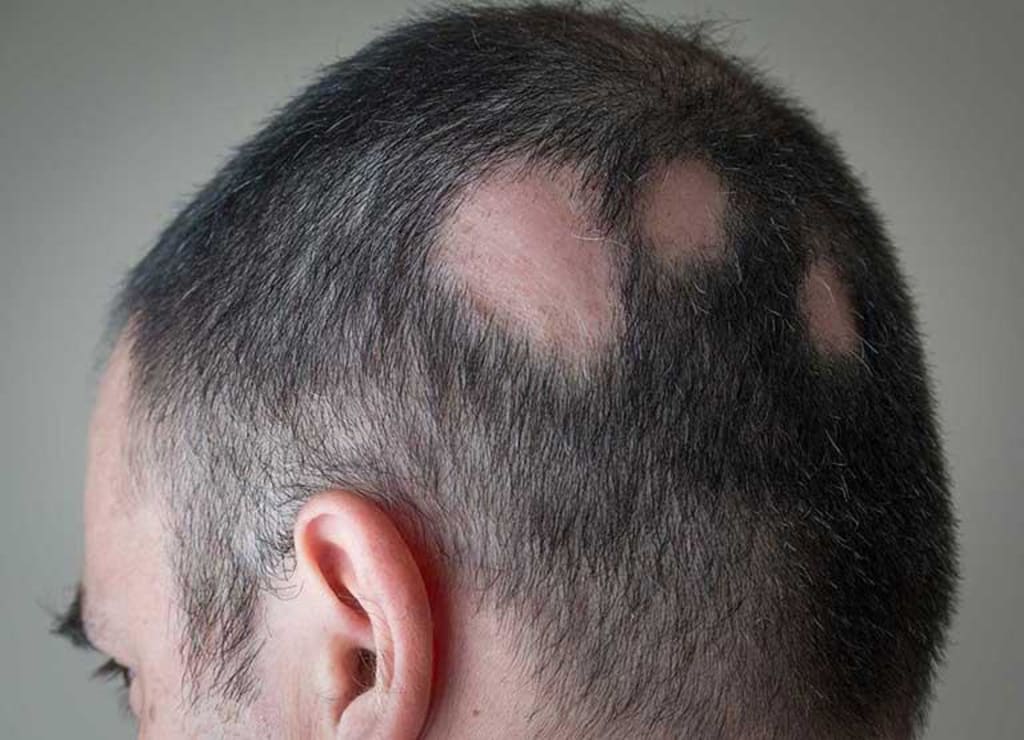
Alopecia areata, a prevalent autoimmune disorder characterized by unpredictable hair loss, affects a substantial number of individuals worldwide. With an estimated 6.8 million people in the United States and 147 million people globally grappling with this condition, understanding its causes, symptoms, diagnosis, and potential treatments is crucial.
Before continuing to read the article we would like to offer you a totally FREE E-Book about Hair Loss and how to stop it. Follow this link to get it!
Alopecia areata typically presents as the sudden onset of hair loss in small, coin-sized patches, primarily on the scalp. While these patches can be limited in number, the disorder has the potential to affect larger areas, leading to conditions like alopecia totalis, which involves complete hair loss on the scalp, or alopecia universalis, characterized by hair loss across the entire body.
This perplexing disorder can strike individuals of any age, gender, or race, although most cases manifest before the age of 30. The exact cause of alopecia areata remains uncertain, but researchers believe there is a genetic predisposition as it tends to run in families. Approximately one in five people with the disorder have a family member who also suffers from alopecia areata. Additionally, individuals with a family history of alopecia areata often have a personal or family history of other autoimmune disorders, such as atopy, thyroiditis, and vitiligo.
Regrettably, there is currently no known cure for alopecia areata. However, various forms of treatment can help promote hair regrowth. The most common approach involves the use of corticosteroids, potent anti-inflammatory drugs that can suppress the immune system. These corticosteroids can be administered through local injections, topical application in the form of ointments, or orally.
In addition to corticosteroids, healthcare professionals may prescribe other medications that either stimulate hair growth or impact the immune system. Examples include Minoxidil, Anthralin, SADBE, and DPCP. While these treatments may aid in hair regrowth, they are not capable of preventing the development of new bald patches.
For individuals with alopecia areata, the emotional impact can be significant. Although the condition does not cause direct physical illness and is not contagious, it can be challenging to adapt to the changes in appearance. As a result, addressing the emotional aspect of hair loss is vital. Support groups and counseling services are available to provide individuals with opportunities to share their experiences, thoughts, and feelings, and to seek guidance on coping with the psychological effects of the condition.
Some parallels have been drawn between alopecia areata and vitiligo, another autoimmune disorder characterized by the body’s attack on melanin-producing cells, resulting in the development of white patches. Research suggests that these conditions may share similar pathogenic mechanisms, immune cell types, cytokines, and genetic risk factors. Consequently, advancements in the treatment or prevention of one condition may have implications for the other.
While much remains to be explored, preliminary research in animals indicates that quercetin, a naturally occurring bioflavonoid found in fruits and vegetables, shows promise in protecting against the development of alopecia areata and potentially treating existing hair loss. However, further research is necessary before considering quercetin as a viable treatment option for alopecia areata.
The exact triggers for the onset of alopecia areata are not yet fully understood. Current knowledge suggests that the condition arises when white blood cells mistakenly target and attack the cells in hair follicles, leading to their shrinkage and inhibition of hair production. Although the precise reasons behind these immune system alterations remain unknown, there is evidence supporting a genetic component. Stress is often cited as a potential factor, but scientific evidence in favor of stress as a direct cause is limited, with recent studies leaning toward a genetic link.
Exploring the impact of race and ethnicity on alopecia areata reveals interesting insights. While it was previously believed to affect all races equally, recent research suggests variations in occurrence. For instance, studies indicate that African American and Hispanic females may have a higher lifetime occurrence compared to white females, while Asian individuals exhibit a lower risk compared to their white counterparts. Extensive analysis of data from registries and studies underscores the need for further research into the patterns, determinants, and pathophysiological factors of alopecia areata, taking into account environmental, behavioral, genetic, socioeconomic factors, and access to healthcare.
Given the limited efficacy of conventional treatments, there is growing interest in natural remedies for alopecia areata. However, scientific evidence supporting these alternative treatments remains scarce. Home remedies such as rubbing onion or garlic juice, cooled green tea, almond oil, rosemary oil, honey, or coconut milk onto the scalp are often suggested, but their effectiveness lacks substantiation. Alternative therapies like acupuncture and aromatherapy are also occasionally pursued, despite a dearth of scientific support.
The primary symptom of alopecia areata is the presence of patchy hair loss, which can manifest suddenly, over the course of a few days or weeks. Itching or burning sensations may precede hair loss in the affected areas. Notably, the hair follicles remain intact, allowing for potential regrowth if the inflammation subsides. Many individuals who experience only a few patches of hair loss achieve spontaneous and complete recovery without intervention.
Approximately 30% of those with alopecia areata will encounter more extensive hair loss or enter a recurring cycle of hair loss and regrowth. Moreover, about 10% of affected individuals may progress to alopecia totalis or alopecia universalis, involving complete hair loss on the scalp or across the entire body, respectively. The disorder can also affect the nails, with changes like pinpoint dents, white spots and lines, roughness, loss of shine, thinning, splitting, and the growth of white hair in affected areas.
Diagnosing alopecia areata is generally straightforward, as doctors can often identify the condition based on visible symptoms. They may examine the degree of hair loss and analyze hair samples from affected areas under a microscope. In cases where diagnosis is challenging or other autoimmune diseases need to be ruled out, a skin biopsy or blood test may be performed.
The distinctive symptoms associated with alopecia areata facilitate a prompt and accurate diagnosis in most cases. However, ongoing research is essential to uncover the underlying mechanisms, improve diagnostic techniques, and develop more effective treatments for this perplexing disorder.
GET YOUR FREE E-BOOK ON HAIR LOSS NOW: CLICK HERE
About the Creator
Enjoyed the story? Support the Creator.
Subscribe for free to receive all their stories in your feed.
Comments
There are no comments for this story
Be the first to respond and start the conversation.