
A Guide On Adult Lazy Eye Treatment
Adult Lazy Eye Treatment
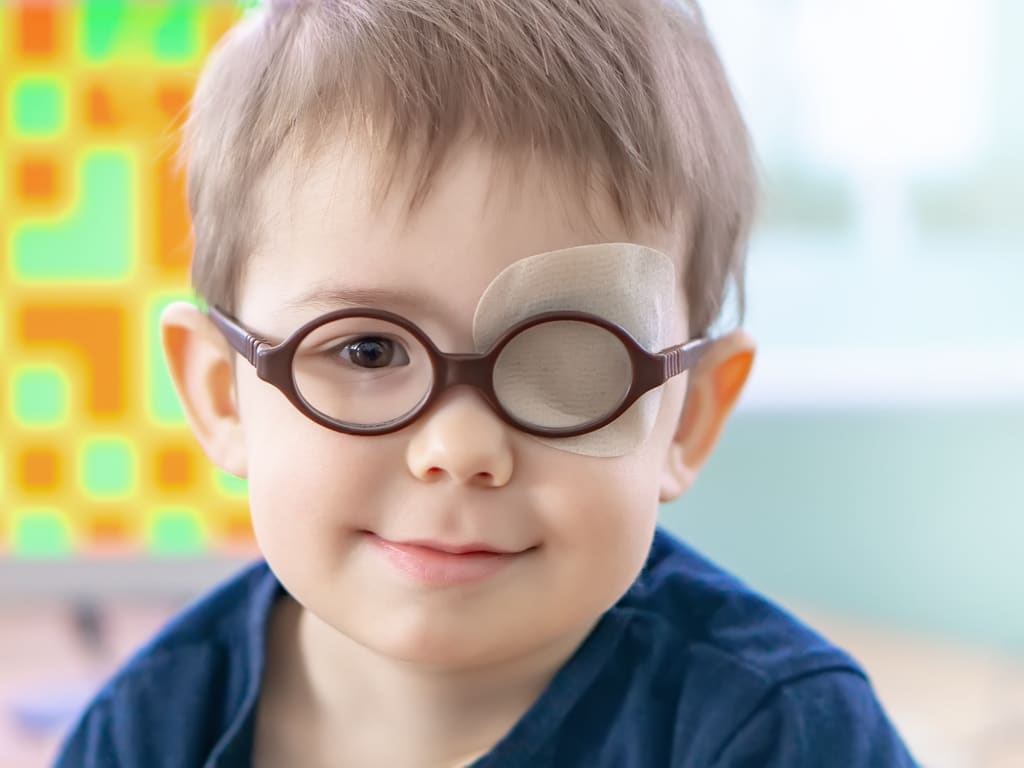
Lazy Eye - What's Going On Here?
Lazy eye, or Amblyopia, is a condition that causes unfortunate vision (visual keenness), normally in one eye, and for the most part influences around three out of every 100 individuals.
The non-logical term for amblyopia is lazy eye. This condition results from the unfortunate advancement of eye joining, or eyes cooperating. The advancement gets affected during the fundamental season of the underlying 7-8 years of life. This significant vision ability engages the two eyes to collaborate and cooperate, zeroing in on a similar point. Exactly when they don't, it prompts one or the two eyes not to see plainly.
Furthermore, as the mind doesn't foster the ability to see obviously in one or two eyes, the eyes of a person with amblyopia can't be improved with glasses alone. The visual cortex is the piece of the cerebrum answerable for this capability.
Numerous people get mistaken for "lazy endless eye turn (on occasion called "crossed eyes"). This regularly happens when one eye centers around a point and the other eye glances an alternate way. An eye turn is an alternate condition called "strabismus." An individual could have amblyopia paying little mind to eye turn, and all patients with eye turn don't have lazy eyes.
Why Does Lazy Eye Occur?
In many instances of amblyopia, one eye just doesn’t see as plainly as the other.
The lazy eye creates because of strange visual encounters at beginning of your life (an essential season of the underlying 7-8 years of life) that changes the nerve pathways between the cerebrum and a slender layer of tissue (retina) at the back of the eye. The more vulnerable eye gets fewer visual signs. Additionally, over the long haul, the eyes' capacity to cooperate decreases, and the mind smothers or neglects input from the more vulnerable eye.
Anything that obscures a youth's vision or makes the eyes cross or turn out can cause a lazy eye. Because of this foggy vision, the mind has stifled the data in a solitary eye. This antagonistically influences the advancement of clear vision.
Regularly, the psyche gets two pictures at fairly various places, and it consolidates them to make a 3D picture, called binocular vision. Nonetheless, that isn't what is going on with amblyopia.
The concealment of data from one eye unfavorably impacts the advancement of binocular vision. Hence, it seems like one eye thoroughly takes care of seeing. Hence, the other eye is depicted as "lazy."
What Purposes Behind The Lazy Eye?
A lazy eye can be brought about by any eye condition that disrupts the youngster's seeing from one or two eyes.
• Muscle awkwardness (strabismus amblyopia): The unevenness in the muscles that position the eyes is the most notable justification behind lazy eyes. This irregularity can make the eyes cross in or end up, and it gets them far from coordinating.
• The distinction in the sharpness of vision between the eyes (refractive amblyopia): A massive contrast in the powers in each eye, regularly because of farsightedness, yet at times because of myopia or a lopsided surface curve of the eye (astigmatism), can cause lazy eye. Glasses or contact focal points are generally used to resolve these refractive issues. In specific young people, lazy eye is brought about by a mix of strabismus and refractive issues.
• It's anything but an exceptionally normal condition, however, happens when children are brought into the world with waterfalls. Assuming that the condition is left untreated past 6-10 weeks old enough, there is a high opportunity that a lazy eye creates in the eye or eyes that had the waterfall.
Lazy Eye In Adults: Side Effects
• Decreased visual records-for instance, while driving a vehicle, one may not see the other vehicle digging out from a deficit till it almost surpasses
• Eye strain
• They could foster tactile exotropia (squint)
Customary Lazy Eye Treatment
By and large, the lazy eye is treated by fixing. In this, the more grounded eye is just covered so the more fragile eye is constrained to work or see. The impacted visual focuses of the mind are consequently invigorated by this constrained seeing.
This type of treatment has the issue that it doesn't zero in on creating binocular vision. With the fix, visual improvement happened, however, was thusly confined by age.
What Is The Confusion About The Lazy Eye Amendment For Adults?
For quite a while, it has been felt that mainly young people younger than 9-10 years could be successfully treated for amblyopia (lazy eye). This implies that the lazy eye treatment was by and large not given to more seasoned kids. Consequently, this off-track judgment was up until this point, that the conventional treatment of fixing was not strong past this age.
Adult Lazy Eye Treatment
For quite a while it was acknowledged that amblyopia was only treatable in kids, that too for youngsters who are 10 years old or more youthful. Regardless, this isn't exactly the circumstance. Numerous adults can get results from amblyopia treatment, as each quilt is unique.
In light of the cerebrum's pliancy, the visual system, which contains the brain, eyes, and visual pathways, can be retrained.
For amblyopia, binocular vision is the underlying driver, and that should be explicitly retrained.
The two pictures the eyes see can't be combined into one picture when the patient has poor binocular vision. Nonetheless, on account of the pliancy of the mind, this needn't bother with to be long-lasting.
While treatment is best when it's given at an early age, it is yet conceivable at whatever stage in life to retrain the visual system, restore binocular vision, and right amblyopia.
The Most Effective Method To Fix A Lazy Eye In Adults
Amblyopia (lazy eye) in adults could require one or these treatment approaches relying on the singular analysis:
• Vision treatment: Vision treatment is a progression of exercises and activities that help a person with working on their visual abilities. Because of amblyopia, vision treatment fosters a person's binocular vision. This is the best treatment as it watches out for the fundamental reason for amblyopia.
• Glasses: Focal points might be recommended to assist with working on binocular vision. The right focal point solution is basic, as having a remedy that helps binocular vision is fundamental.
• Eye fixing: at times, impeding the typical eye with extraordinary focal points, an eye fix, or eye drops might be endorsed to compel the more fragile eye to work well.
Are There Lazy Eye Activities For Adults?
The best treatment for the condition is an individualized program of optometric vision treatment supervised by a formative optometrist.
The best treatment for the condition is an individualized program of optometric vision treatment coordinated by a formative optometrist.
Recuperating From The Adult Lazy Eye: Make The Following Stride
Contingent upon the level of the earnestness of the amblyopia, it can call for extensive investment to treat. Remember, the cycle is switching a long period of concealment.
While it's plausible to deal with in adults, amblyopia treatment requires inspiration and responsibility as it normally requires more investment to treat than in adolescents.
The uplifting news for adults with amblyopia is that there is unquestionably an opportunity for additional improvement of vision. Furthermore, each case is different so every patient should be assessed through a useful vision test.
It is unequivocally exhorted that you talk with a formative optometrist to figure out what treatments are accessible to you.
About the Creator
Enjoyed the story? Support the Creator.
Subscribe for free to receive all their stories in your feed.
Comments
There are no comments for this story
Be the first to respond and start the conversation.