
Why Visual Content Matters More Than Ever in Digital Marketing
How Images, Videos, and AI-Powered Design Tools Are Changing the Way Brands Connect With Audiences
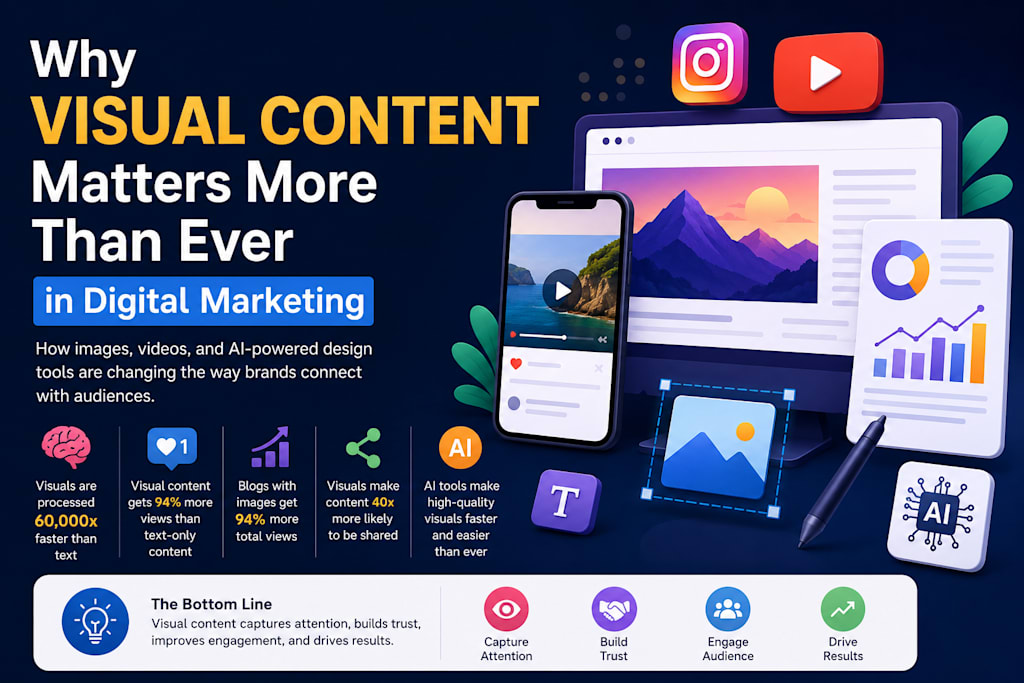
The internet has become increasingly visual. Every day, people scroll through thousands of pieces of content across social media platforms, websites, emails, and search engines. In this crowded digital environment, grabbing attention has become one of the biggest challenges for marketers, creators, and business owners.
While written content remains important, visual content has emerged as one of the most powerful tools for capturing audience interest and communicating messages quickly. Images, videos, infographics, animations, and interactive graphics help brands stand out in ways that text alone often cannot.
As technology continues to evolve, visual marketing is becoming even more accessible. Businesses of all sizes can now create professional-looking graphics and videos without hiring large creative teams. The rise of artificial intelligence has further accelerated this trend by making content creation faster, easier, and more affordable.
Understanding why visual content matters and how it influences audience behavior is becoming essential for anyone involved in digital marketing.
Why Humans Process Visuals Faster Than Text
The human brain is naturally wired to respond to visual information. Long before written language existed, humans relied on visual cues to understand their environment, recognize danger, and communicate ideas.
Modern neuroscience continues to demonstrate that the human brain processes visual information remarkably fast, helping explain why visuals often capture attention more effectively than text. When people encounter an image, they can often understand its message within seconds. Reading and interpreting written content requires more cognitive effort and time.
This preference for visuals affects how people consume digital content today. Users scrolling through social media feeds or browsing websites often decide within moments whether something is worth their attention.
Visuals can:
- Communicate complex information quickly
- Improve memory retention
- Trigger emotional responses
- Increase engagement
- Enhance understanding
For marketers, this means visual content serves as a shortcut to audience attention. A compelling image can communicate a message before a visitor reads a single word.
This does not diminish the importance of quality writing. Instead, visuals and text work best together, creating a more engaging and effective communication experience.
The Role of Visual Content in Social Media Engagement
Social media platforms have played a major role in shaping today's visual-first digital culture.
Platforms such as Instagram, TikTok, Pinterest, YouTube, and even LinkedIn increasingly prioritize visual content because users interact with it more frequently. According to various marketing engagement statistics, images and videos frequently receive higher engagement rates than text-only posts.
Several factors contribute to this trend.
Visuals Stop the Scroll
Users are constantly exposed to new content while scrolling through feeds. Strong visuals help interrupt this behavior and encourage people to pause long enough to engage with a post.
Video Continues to Dominate
Short-form video content has become one of the most effective ways to reach audiences online. Videos combine motion, sound, storytelling, and visual elements, making them highly engaging.
Many businesses now use video for:
- Product demonstrations
- Educational content
- Customer testimonials
- Behind-the-scenes insights
- Brand storytelling
- Better Shareability
People are often more likely to share visually appealing content than plain text updates. When users share content, brands gain additional exposure without spending more on advertising.
As competition for attention continues to increase, visual content remains one of the strongest tools for driving social media growth and engagement.
How Visuals Improve Blog Performance
Blogging remains a valuable digital marketing strategy, but audience expectations have changed.
Years ago, readers might have been willing to consume large blocks of uninterrupted text. Today, readers prefer content that is visually organized and easy to navigate.
Adding visuals to blog posts offers several advantages.
Improved Readability
Images break up long sections of text, making articles feel less intimidating. Readers can scan content more easily and stay engaged for longer periods.
Increased Time on Page
Relevant visuals encourage visitors to spend more time exploring content. Longer engagement signals can contribute to better user experiences and potentially support search engine performance.
Better Understanding
Complex topics become easier to understand when supported by diagrams, charts, screenshots, or illustrations.
Enhanced Brand Identity
Consistent visual elements help strengthen brand recognition. Readers begin associating specific colors, styles, and design approaches with a particular creator or business.
For content creators, visuals are no longer optional additions. They have become essential components of effective blog design and audience engagement.
Why Small Businesses Can No Longer Ignore Visual Marketing
Visual marketing was once considered a luxury reserved for larger companies with dedicated design departments. That is no longer the case.
Today's consumers expect visual experiences regardless of a company's size.
A small local business competing against larger brands can benefit significantly from quality visual content. Professional images, branded graphics, and engaging videos help establish credibility and trust.
Visual marketing supports small businesses by:
- Improving online visibility
- Building stronger brand recognition
- Creating more engaging social media content
- Supporting customer education
- Increasing conversion opportunities
Consumers often form first impressions within seconds. A website filled with outdated graphics or poor-quality images can negatively affect how potential customers perceive a business.
Fortunately, modern design tools have dramatically lowered the barriers to creating professional visuals.
The Rise of AI-Powered Design Tools
Artificial intelligence has become one of the most influential developments in content creation.
AI-powered design tools allow users to generate graphics, illustrations, marketing materials, and visual concepts with minimal technical expertise. Tasks that once required specialized design skills can now be completed much faster.
These tools offer several advantages:
Faster Content Production
AI can help generate visual ideas quickly, reducing the time required for brainstorming and design development.
Increased Accessibility
Individuals without formal design training can create professional-looking content using intuitive interfaces and automated design features.
Cost Efficiency
Businesses can often produce more content without significantly increasing creative budgets.
Creative Inspiration
AI-generated concepts can help marketers overcome creative blocks and explore new visual directions.
Rather than replacing human creativity, many professionals use AI as a collaborative tool that enhances productivity and expands creative possibilities.
How Creators Can Make an AI Image or AI Picture Generator Part of Their Workflow
Artificial intelligence is increasingly becoming part of modern content creation workflows.
Many marketers, bloggers, and creators now use tools that help them make an AI image or AI picture generator part of their creative process. These tools can assist with concept development, blog illustrations, social media graphics, advertising visuals, and presentation assets.
There are several practical ways creators can integrate AI-generated visuals into their workflow:
Idea Generation
AI can help transform written concepts into visual drafts, making it easier to explore creative directions before investing significant time in design work.
Supporting Blog Content
Custom illustrations can enhance articles by providing unique visual elements that support key ideas and improve reader engagement.
Social Media Content Creation
AI-generated visuals can help maintain consistent posting schedules by reducing content production bottlenecks.
Marketing Campaign Development
Creative teams can use AI-generated concepts during brainstorming sessions to visualize campaign ideas more efficiently.
Rapid Prototyping
Before finalizing professional designs, creators can test multiple visual approaches and gather feedback more quickly.
When used thoughtfully, AI-generated visuals can complement traditional design workflows and improve overall content production efficiency.
Challenges and Limitations of AI-Generated Visuals
Despite their advantages, AI-generated visuals are not without challenges.
Understanding these limitations is important for maintaining quality and credibility.
Authenticity Concerns
Audiences increasingly value authenticity. Overreliance on AI-generated visuals may sometimes create content that feels generic or disconnected from real experiences.
Accuracy Issues
AI-generated images can occasionally produce visual inconsistencies, unrealistic details, or factual inaccuracies.
Copyright and Usage Considerations
Different AI tools have different licensing terms. Creators should understand how generated content can be used commercially and ensure compliance with platform policies.
Brand Consistency
AI-generated visuals may not always align perfectly with established brand guidelines. Human review remains essential.
Ethical Considerations
The use of AI in creative industries continues to raise questions about originality, ownership, and responsible content creation.
For these reasons, many successful marketers combine AI-generated assets with human oversight to ensure quality, accuracy, and brand alignment.
The Future of Visual Content Marketing
Visual content is expected to play an even greater role in digital marketing over the coming years.
Several trends are likely to shape the future:
More Personalized Visual Experiences
Advances in artificial intelligence may allow brands to deliver customized visual content tailored to individual audience preferences.
Interactive Content Growth
Interactive visuals, augmented reality experiences, and immersive storytelling formats are likely to become more common.
Increased Video Consumption
Video continues to dominate digital engagement, and future innovations may further expand its influence.
AI-Assisted Creative Workflows
Rather than replacing designers and creators, AI will likely become a standard tool that supports content production across industries.
Stronger Focus on Authenticity
As AI-generated content becomes more widespread, audiences may place greater value on originality, transparency, and genuine human storytelling.
Businesses that adapt to these evolving trends will be better positioned to maintain audience attention and build meaningful connections.
Conclusion
Visual content has become one of the most powerful forces in digital marketing. Images, videos, graphics, and interactive experiences help brands communicate messages faster, improve engagement, and create memorable customer experiences.
The growing popularity of social media, changing consumer behavior, and advances in artificial intelligence have accelerated the shift toward visual-first communication. Businesses and creators who embrace visual marketing can strengthen their online presence, improve content performance, and better connect with their audiences.
At the same time, success requires more than simply producing visuals. Effective visual marketing combines creativity, strategy, authenticity, and audience understanding.
As technology continues to evolve, one thing remains clear: visual content is no longer just an enhancement to digital marketing—it has become an essential part of how brands communicate in the modern digital landscape.
About the Creator
Jordan
Link Builder and outreach executive.
Enjoyed the story? Support the Creator.
Subscribe for free to receive all their stories in your feed.
Comments