
Why Can’t Chinese People Speak English Well?
This article explains the real reasons why many Chinese people struggle to speak English, even after years of studying it


When you travel in China, have you ever felt confused — because literally everywhere you go, you find that almost no one speaks English at all?

Press enter or click to view image in full size
So why does this happen? Why is traveling in China so difficult? Why does a country with 1.4 billion people barely have anyone who can speak English?
Let me give you a little background about myself — it might help you understand why.
I have lived in China for almost 21 years. Before I turned 19, I couldn’t say a single word in English. But after two years of self-study, I managed to become fluent. So why couldn’t I speak any English before I was 19?
Here’s the truth: in China, you don’t need to speak English to find a job. You don’t need to speak English to survive. You don’t even need it to enjoy your life.
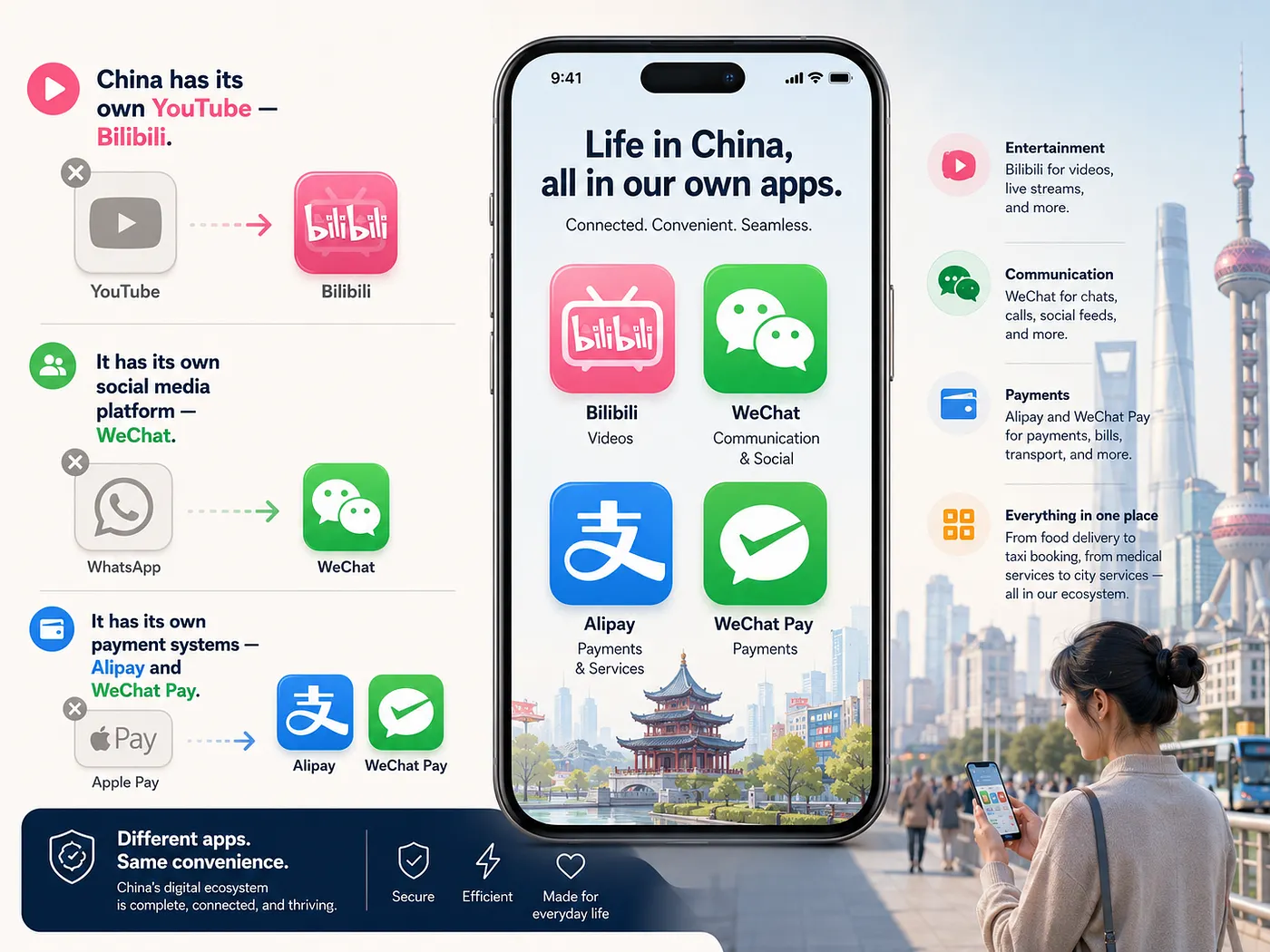
China has its own YouTube — Bilibili. It has its own social media platform — WeChat. You don’t need to download WhatsApp. It has its own payment systems — Alipay and WeChat Pay. You don’t need Apple Pay. Everything in China is so convenient.
Press enter or click to view image in full size
China is not a tourism-oriented country like Japan, Thailand, or Vietnam.
So when you walk on the streets of a tier-2 or tier-3 city, you’ll barely see any foreigners. If you live in Shanghai or Beijing, that’s a different story — you can meet many foreigners there. But for most people, there is very little chance to use English in real life. So they don’t find the language useful — unless they work for a company that requires English.
China’s English Education System
Now, about China’s English education system — based on my memory as a student in middle school and high school, teachers always made us memorize vocabulary, practice listening, and practice writing. But they never focused on speaking.

Press enter or click to view image in full size
That’s why Chinese students are usually good at listening, reading, and writing, but not speaking.
We even have a term for this in Chinese: “哑巴英语” — mute English. We often use it to laugh at ourselves.
But why did I eventually decide to learn English, unlike most other Chinese people? And I think this is the key to understanding why most Chinese can’t speak English.
The answer is: they don’t realize how important English is.
Become a Medium member
They’ve never gained any real benefit from it.
There’s a saying in China: “English skill plus any other skill is more powerful than a degree from a 985 or 211 university.” I don’t know if that’s completely true, but it does help those who have both a skill and some English — it opens doors for them.
For example, if you’re a local taxi driver with driving skills, and you can also speak English — that’s extremely rare in China. When a foreigner takes your ride, they might be amazed and even give you a tip.
Or if you work in tech — say, at a software company — you have computer skills. Once you know English, you can work for American clients and earn in dollars instead of RMB. And 1 USD equals about 7 RMB — so your work becomes more valuable.
My First Trip to Singapore
Two years ago, I traveled to Singapore for the first time.
Back then, I realized that it seemed like everyone from every country could speak English — except the Chinese.
For me, ordering food was difficult. Taking the bus was difficult. Everywhere I went, I felt painful — because I couldn’t speak English.
So after I returned to China, I was determined to change.
I learned English through YouTube videos, through games, through TV shows…
And two years of self-study turned out to be far more effective than 12 years of studying English textbooks in school.
If I had only relied on school, I would never have mastered the language.
The Reward System
There’s something called a reward system: if you learn English and find that it rewards you, you’ll keep going.
For example, every time I speak English with foreigners, they admire me — they say my accent is perfect. I feel a sense of satisfaction. That makes me want to keep studying.
That’s the reward.
But let’s go back to the students studying in school. They never feel rewarded — only a score on an exam paper.
But what happens after they graduate?
Does that reward still exist?
About the Creator
kobe_change
if you like my content you can support me
https://buymeacoffee.com/kobe05
Enjoyed the story? Support the Creator.
Subscribe for free to receive all their stories in your feed.
Comments
There are no comments for this story
Be the first to respond and start the conversation.