
What to Send and When: Press Release Examples by Type That Landed Coverage
In this guide, we break down 9 press release formats that actually land coverage, with real examples, timing tips, and structure advice to help you share the right story, the right way.

We were working with a fintech company that had just closed a $6M seed round. Big milestone. The founder knew it needed press, but didn’t stop to think about how to share it. She grabbed a generic template, dropped in a quote, and hit send, without thinking about whether it was the good press release examples by type for the news she was sharing.
Nothing landed.
It wasn’t bad news—it was the wrong format. And that’s a common mistake. Teams often treat all press releases the same, when in reality, there are specific structures, tones, and timing that work better for certain types of announcements.
In this guide, we break down the 9 press release examples by types, and show you what to send, when to send it, and how to write it in a way that actually lands coverage.
9 Press Release Examples by Type—And the Best Time to Use Each One
Writing a PR that actually gets picked up starts with choosing the right press release type. From product launches to executive hires and crisis responses, each format serves a specific purpose—and timing is everything. Use the wrong structure, and your story gets ignored.
If you're announcing something big or just keeping your brand visible, these examples show you what to send and when to send it. Let’s break them down.
1. General News & Company Announcements
Some announcements are meant to show the world you’re growing. You raised a round. Opened a new office. Launched in a new market. These are classic general news press release types—big, directional updates that signal momentum and give people a reason to care about your next move.
But the story has to be told the right way. See example of press release from Revolv3.
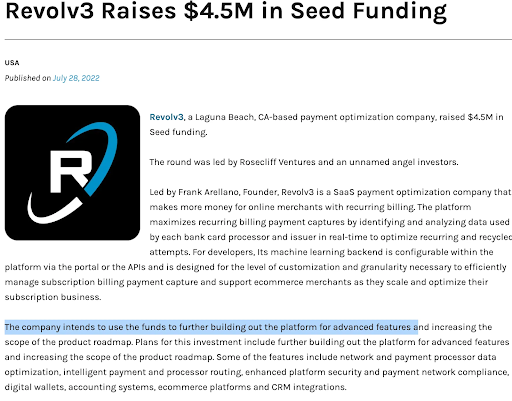
So we helped them rewrite it—same announcement, new shape. This time, it opened with the raise and what it unlocked: expansion plans, hiring goals, and product improvements. We added a quote from the CEO about what the market shift meant, and we wrapped it in the language of opportunity, not internal celebration. Within two days, the story landed coverage on two fintech sites and a newsletter with 80,000 readers.
An event press release is one of the most misunderstood press release types, because most teams think a date and a headline are enough. But if you want media coverage (or actual turnout), you need a story, not just a schedule. See example of it from Web Summit.
A few weeks after the funding round, our client was planning a small in-person demo to showcase the upcoming product roadmap. Investors, partners, and early customers were invited—but the team barely promoted it. They treated it like a calendar note, not a public moment.
The original release read like a vague update: “We’re hosting a product showcase at our HQ. Join us to learn more.” No theme, no guest names, no reason to attend. They thought their funding buzz would carry it. It didn’t.
We stepped in and helped rewrite it as a proper event press release. The headline teased the why: “X Startup to Unveil New AI Feature Helping Small Clinics Cut Admin Time in Half.” The first line confirmed the what and when, followed by speaker highlights, attendee value, and media RSVP instructions. That rewrite earned them two local tech write-ups, five RSVPs from press, and a packed room.
The lesson? A general announcement only works when it connects the milestone to movement. It’s not just about what happened. It’s about what changes now—for your customers, your investors, and your industry.
2. Event Press Releases
An event press release is one of the most misunderstood press release types, because most teams think a date and a headline are enough. But if you want media coverage (or actual turnout), you need a story, not just a schedule. See example of it from Web Summit.
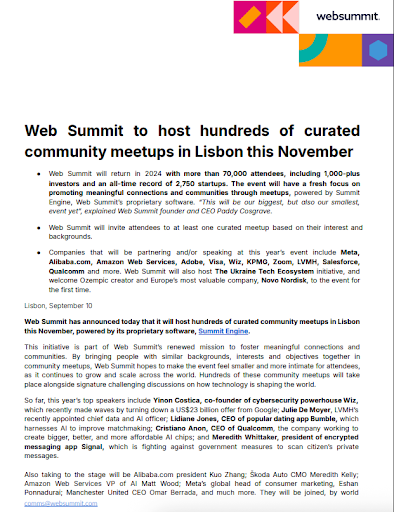
Source: https://websummit.com/wp-media/2024/10/Web-Summit-2024-First-Look-press-release.pdf
The original release read like a vague update: “We’re hosting a product showcase at our HQ. Join us to learn more.” No theme, no guest names, no reason to attend. They thought their funding buzz would carry it. It didn’t.
We stepped in and helped rewrite it as a proper event press release. The headline teased the why: “X Startup to Unveil New AI Feature Helping Small Clinics Cut Admin Time in Half.” The first line confirmed the what and when, followed by speaker highlights, attendee value, and media RSVP instructions. That rewrite earned them two local tech write-ups, five RSVPs from press, and a packed room.
3. Crisis Communications Press Releases
A crisis press release is for when something goes wrong, and silence isn’t an option. It’s not about spin. It’s about clarity, accountability, and speed. See an example of it from Okta.
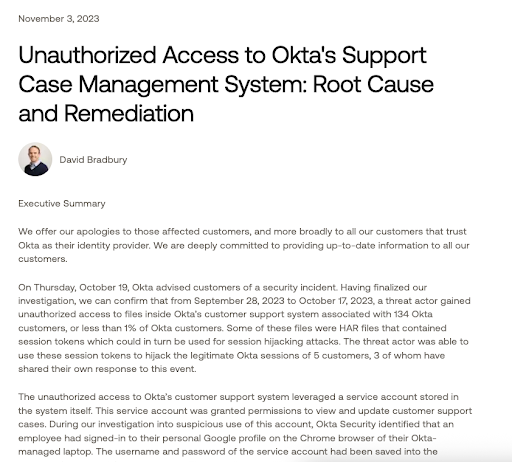
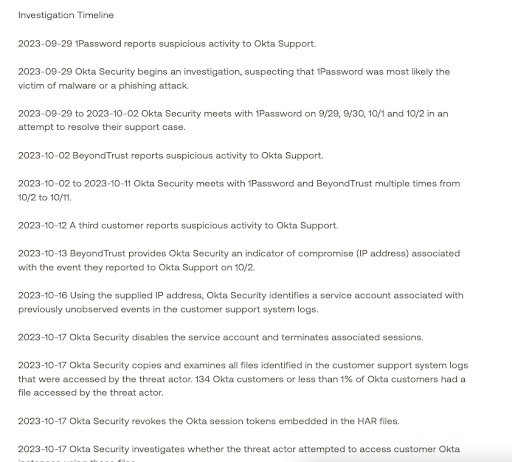
Source: https://sec.okta.com/articles/2023/11/unauthorized-access-oktas-support-case-management-system-root-cause/
About a month after their funding announcement, our startup faced a hiccup: a bug in a new feature rollout accidentally exposed limited user data—nothing critical, but enough to raise concern among early adopters.
The team’s instinct was to send out a tweet and move on. But that’s not what a crisis demands. We advised them to issue a proper crisis press release: a timestamped statement explaining what happened, what data was (and wasn’t) affected, what they did immediately, and how they’ll prevent it from happening again. It was short, calm, factual—and backed by a direct quote from the CTO.
Users appreciated the transparency, and the press didn’t sensationalize it. One tech journalist even called it “a masterclass in owning your mistake early.”
4. Charity or Social Impact Press Releases
A charity or social impact press release isn’t just about what your company supports—it’s about what action you’re taking, and why it matters now. This is one of the most effective press release types for building brand trust, if it’s done with sincerity and focus. See example of press release of Patagonia.
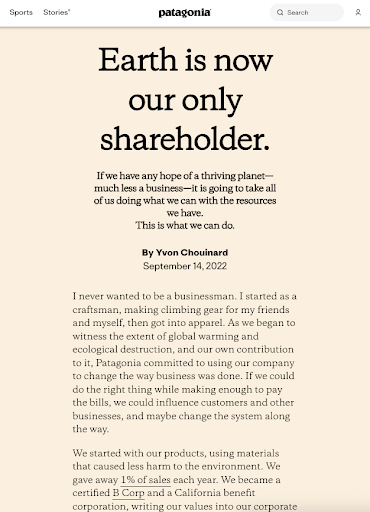
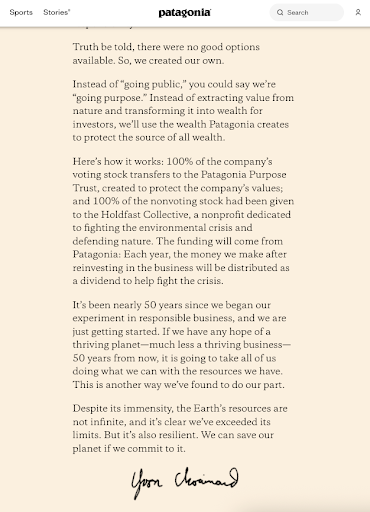
Source: https://www.patagonia.com/ownership
A charity or social impact press release isn’t just about what your company supports—it’s about what action you’re taking, and why it matters now. This is one of the most effective press release types for building brand trust, if it’s done with sincerity and focus. See example of press release of Patagonia.
One of our clients before wanted to give back. Their founders had always been vocal about closing access gaps in mental health tech, so they partnered with a nonprofit to offer their platform free for select community clinics. A great initiative—but they nearly skipped the press release, thinking it would feel self-promotional.
We helped them reframe it. The story wasn’t “Look what we’re doing.” It was: “Here’s a real issue we’re trying to help fix, and here’s how.” The press release focused on the scale of the access problem, explained the partnership terms, and offered quotes from both sides—founder and nonprofit leader. It landed a feature in a health equity blog, and the nonprofit got a spike in donations that week.
When framed well, social impact stories travel far, especially when they align with your brand’s purpose.
5. New Hire Press Releases
A new hire press release is more than a welcome message, it’s a signal. It tells the market (and your competitors) where you’re heading, who you’re betting on, and what’s about to change. See example of Intel.

Source: https://newsroom.intel.com/corporate/intel-appoints-lip-bu-tan-chief-executive-officer\
One company made a key leadership move: they brought in a former VP from a major healthtech player to lead operations. The hire was strategic, but again, their first instinct was to skip the press release entirely. “Do people really care?” the founder asked.
Short answer: yes—if it’s positioned correctly.
We helped them shape a new hire release that wasn’t just about the résumé. It framed the hire as a growth milestone. The headline tied her arrival to scale (“Startup X Hires Industry Vet to Lead Expansion After $6M Raise”), and the body highlighted what she’d done before and what she was being brought in to do. The press release gave the media a narrative: funding → talent → scaling.
And it worked. The story was picked up by a local business journal and reposted on LinkedIn by three industry recruiters. Not bad for a personnel update.
6. Product Launch or Improvement Press Releases
A product launch press release is your chance to show what your product does, what problem it solves, and why it matters right now. Among all press release types, this one has to be the clearest on benefits.
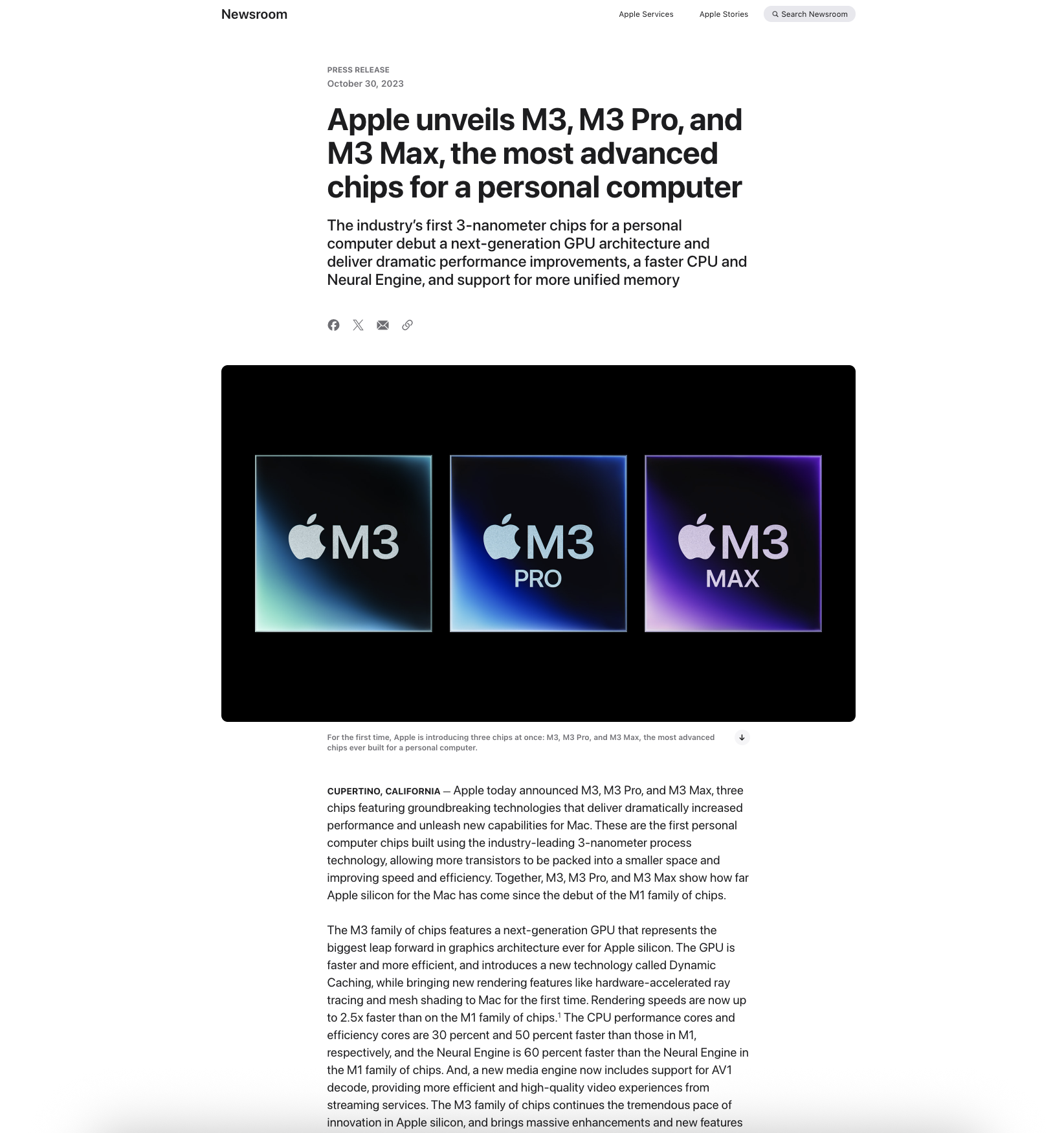
When one company was finally ready to release the new feature they’d been teasing: an AI-powered scheduling tool for clinics. The product was great. But the first draft of the press release read like internal release notes—technical, wordy, and missing the big picture. See example of Apple above.
We rebuilt it around clarity and impact. The headline focused on the benefit, not the feature: “Startup X Launches AI Scheduler to Save Clinics Hours of Admin Every Week.” The lead explained the broader pain point (burnout in small healthcare teams), the body showed how the tool worked in real-world terms, and a strong CEO quote brought the vision home.
A journalist from a digital health outlet responded the same day: “Clear, useful, and newsworthy.”
7. Award Press Releases
An award press release should feel like recognition, not self-congratulation. The goal is to share your win in a way that builds credibility, not ego. National Geographic did it well.
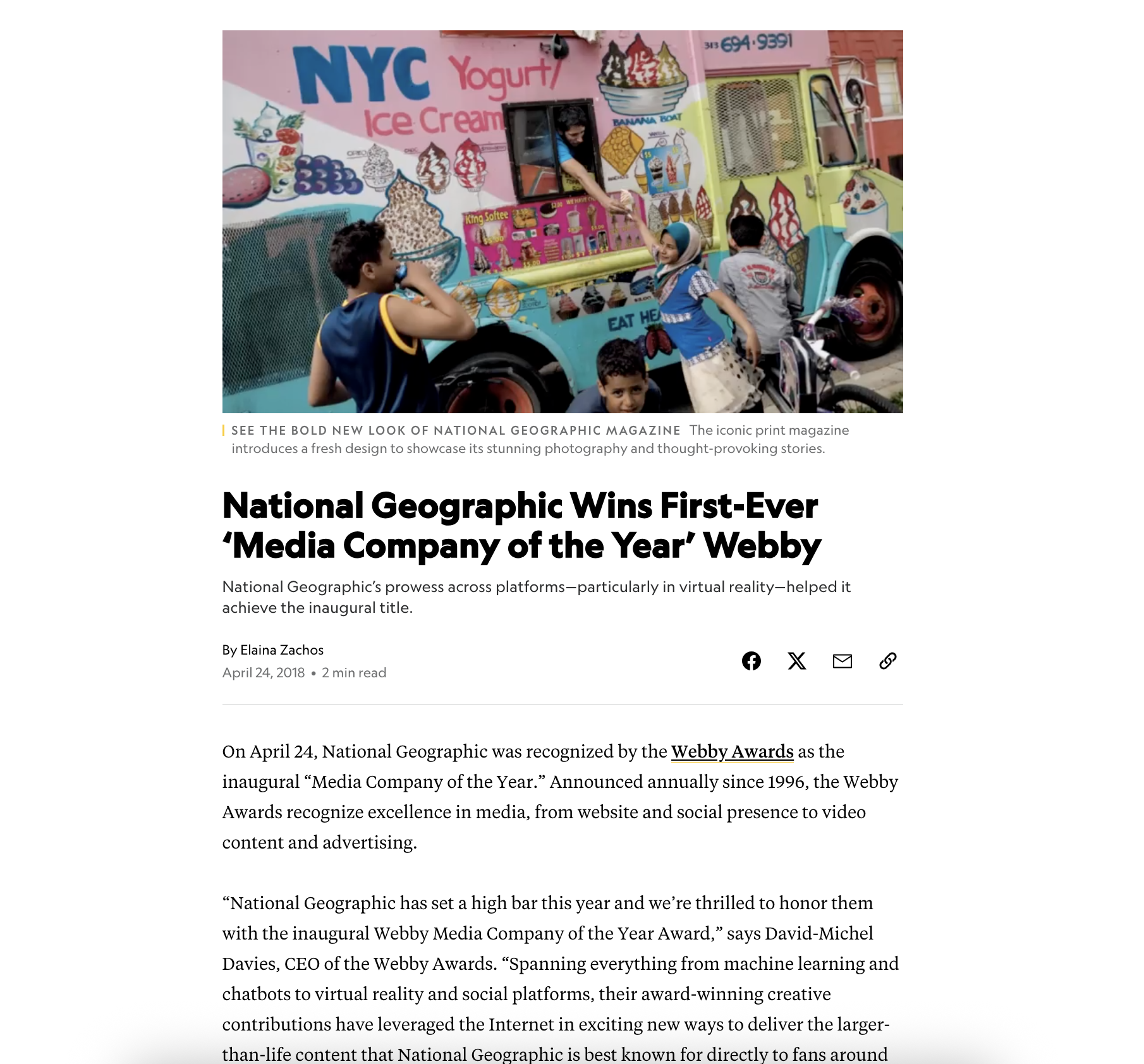
Source: https://www.nationalgeographic.com/culture/article/media-company-of-the-year-award-webby-spd
The most effective award releases lead with the why: why this award matters, why your team earned it, and what it says about your product, culture, or performance. Start with the recognition, cite the awarding body, and explain the context in plain terms—especially if the audience may not be familiar with the award itself.
What doesn’t work? A release that reads like a trophy shelf. Long lists of past wins, recycled mission statements, or vague buzzwords will lose attention fast. Keep it specific and timely. If possible, include a quote from the awarding organization—not just from your CEO.
8. Merger, Acquisition & Partnership Press Releases
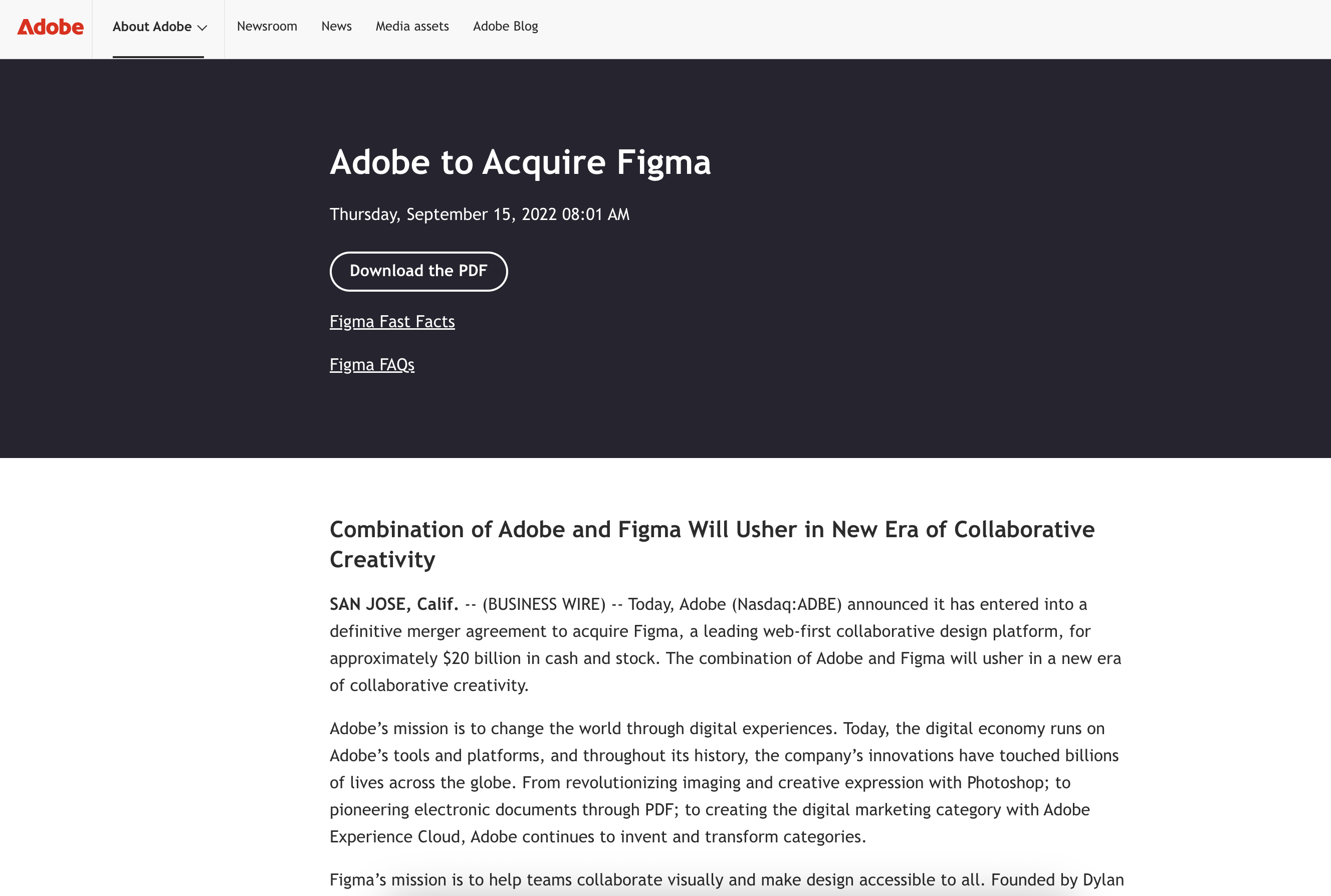
Source: https://news.adobe.com/assets/downloads/pdfs/2022/09/09152022adobetoacquirefigma.pdf
A merger, acquisition, or partnership press release needs to do one thing above all: clarify change. These are high-stakes announcements where your audience includes not just journalists, but also investors, employees, customers, and competitors.
That means you can’t afford confusion. The best M&A releases start with the big picture—what’s happening, who’s involved, and what it means. Then they zoom in: the strategic reason behind the move, what each party brings to the table, and how it affects customers or operations.
For partnerships, highlight the mutual value. Avoid vague phrases like “synergy” or “alignment.” Instead, say what each company is contributing and what the outcome will be. Bonus points if you can connect it to a shared customer problem or new market opportunity.
9. Embargoed Press Releases
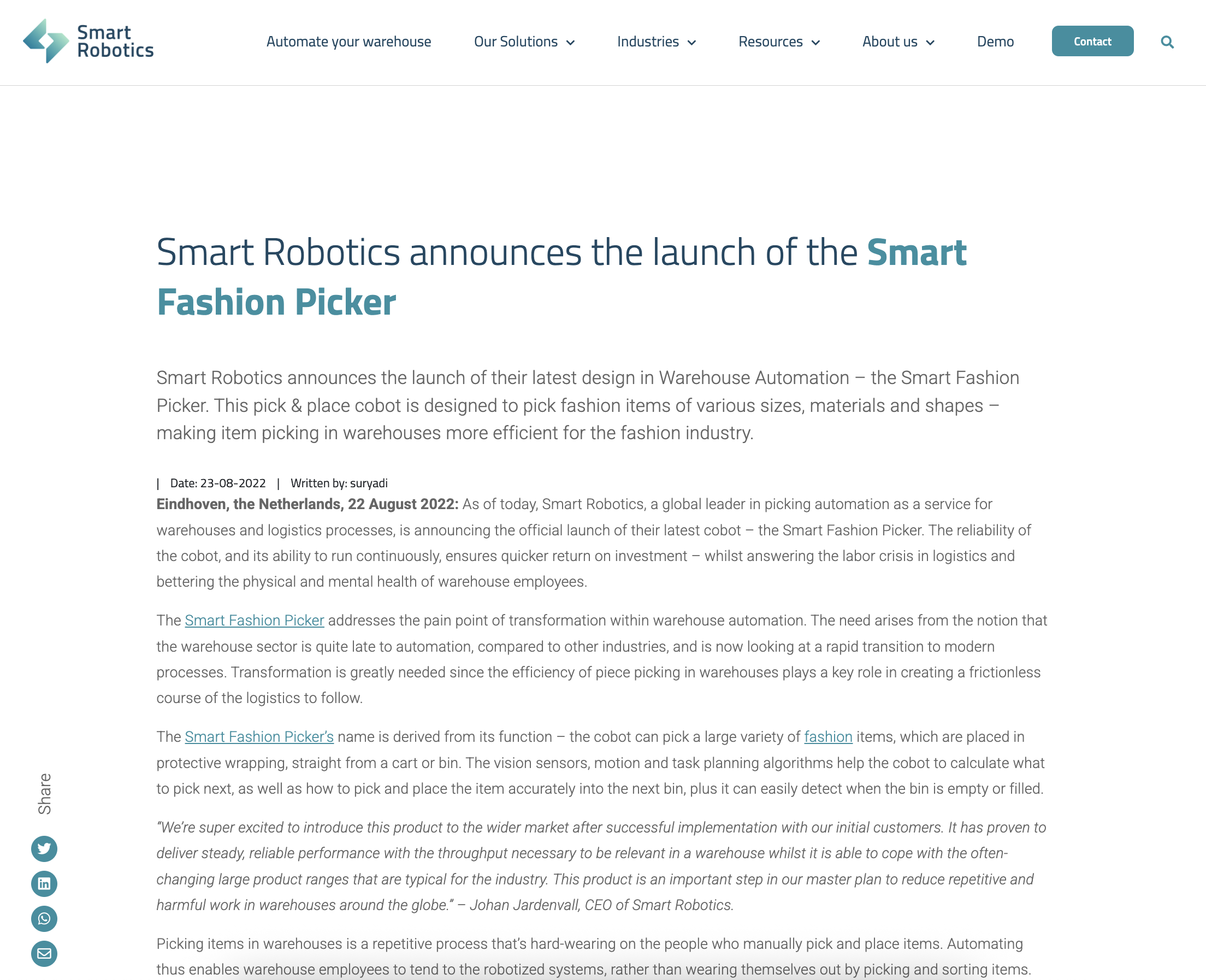
Source: https://smart-robotics.io/news/launch-smart-fashion-picker/
An embargoed press release gives journalists early access to your news—with an agreed date and time for when they can publish. It’s not used often, but when timed right, it can lead to stronger coverage with more thoughtful reporting.
This press release type works best for sensitive announcements, complex product rollouts, or news that needs context—things like regulatory approvals, earnings, or scientific research. By offering early access, you give journalists time to ask questions, do interviews, and prepare richer stories.
But it only works if there’s trust. Never send an embargoed press release to a wide list. Handpick relevant contacts, include a clear embargo label (“EMBARGOED UNTIL: [Date/Time]”), and follow up to confirm interest before sending details. Breaking an embargo can damage relationships fast—so only offer it when it adds real value.
When to Send Press Release To Land Coverage
There’s no universal best time to send a press release, as it depends on the story, the format, the audience, and the news cycle. Send too early, and you risk losing relevance. Send too late, and someone else controls the narrative. Each with their ideal send window of how timing helped land coverage.
- General News Announcements: Send once internal alignment is locked and you're ready to go public. Aim for early in the week (Tues–Wed) and avoid Fridays.
- Event Press Releases: Send 2–3 weeks before the event, with a reminder 2–3 days out. Include RSVP details and what makes the event worth covering.
- Crisis Communications: Send immediately once the facts are confirmed. Transparency and speed matter more than polish.
- Charity or Social Impact Releases: Time it around action or awareness days like Giving Tuesday or Mental Health Week.
- New Hire Announcements: Send 1–2 weeks after onboarding, with quotes and context. Tie the hire to strategy or growth.
- Product Launch or Feature Updates: Send on launch day or under embargo 24–48 hours prior. Focus on the benefit, not just the feature.
- Award Press Releases: Send within 24–48 hours of receiving the award. Emphasize why the award matters.
- Mergers, Acquisitions & Partnerships: Send once the deal is finalized and everyone’s aligned. Focus on outcomes, not legal terms.
- Embargoed Press Releases: Send to select media 2–5 days before the announcement with a clear embargo time. Only use when advance prep adds value.
Conclusion: What Most Teams Get Wrong
Same format. Every time. No matter the story. A funding announcement written like a feature update. A new hire is treated like a launch. A crisis patched together like a blog post. It’s not that the news isn’t good, but the structure doesn’t fit the message.
That’s the gap in most PR strategies. Too much focus on what to announce, not enough on how to shape it. But when your strategy includes the right press release types, and you match format to story, you make it easier for journalists to say yes.
Not sure which type fits your news? Start with the outcome you want, coverage, attendance, clarity, and match your format to that. Contact PRLab and let’s get your next announcement right
About the Creator
Matias Rodsevich
I'm the founder of PRLab, an award-winning B2B tech PR agency with offices in Amsterdam, Austin, and across Europe. I'm also the author of The PR Paradox, a hands-on guide for startups looking to make media work for them.
Enjoyed the story? Support the Creator.
Subscribe for free to receive all their stories in your feed.
Comments
There are no comments for this story
Be the first to respond and start the conversation.