
What Interior Designers Should Know About Millwork Drafting Before Starting a Fit-Out
A practical, real-world guide to millwork detailing, coordination, and execution for modern interior fit-out projects in the UK, USA, and beyond

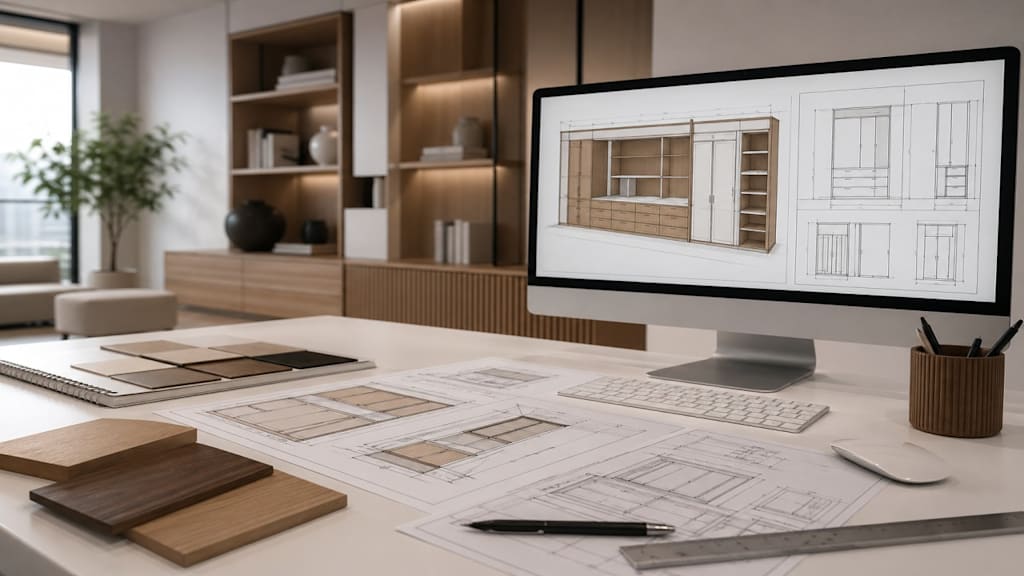
Interior design often begins with inspiration textures, colors, layouts, and experiences. But when it comes to fit-out projects, success depends on something far less glamorous yet absolutely critical: precision in execution.
That precision is largely driven by how well millwork is documented.
From custom cabinetry to detailed wall paneling, millwork elements shape both the functionality and identity of a space. However, without clear and accurate documentation, even the most creative concepts can break down during construction.
This is where millwork drafting services become essential not as a support function, but as a core part of project success.
Why Does Millwork Drafting Matter So Much in Fit-Out Projects?
Millwork drafting is the technical translation of design ideas into buildable instructions. It ensures that everyone involved designers, fabricators, contractors works with the same understanding.
A report by McKinsey highlights that productivity in construction has historically grown at a very slow rate, often due to inefficiencies in planning and coordination. One recurring issue is incomplete or unclear technical documentation.
In practical terms, poor millwork drafting can lead to:
- Misaligned installations
- Incorrect material usage
- Site rework and delays
- Budget overruns
On the other hand, detailed and accurate millwork detail drawings reduce uncertainty and help teams execute designs exactly as intended.
What Are Millwork Details in Interior Design?
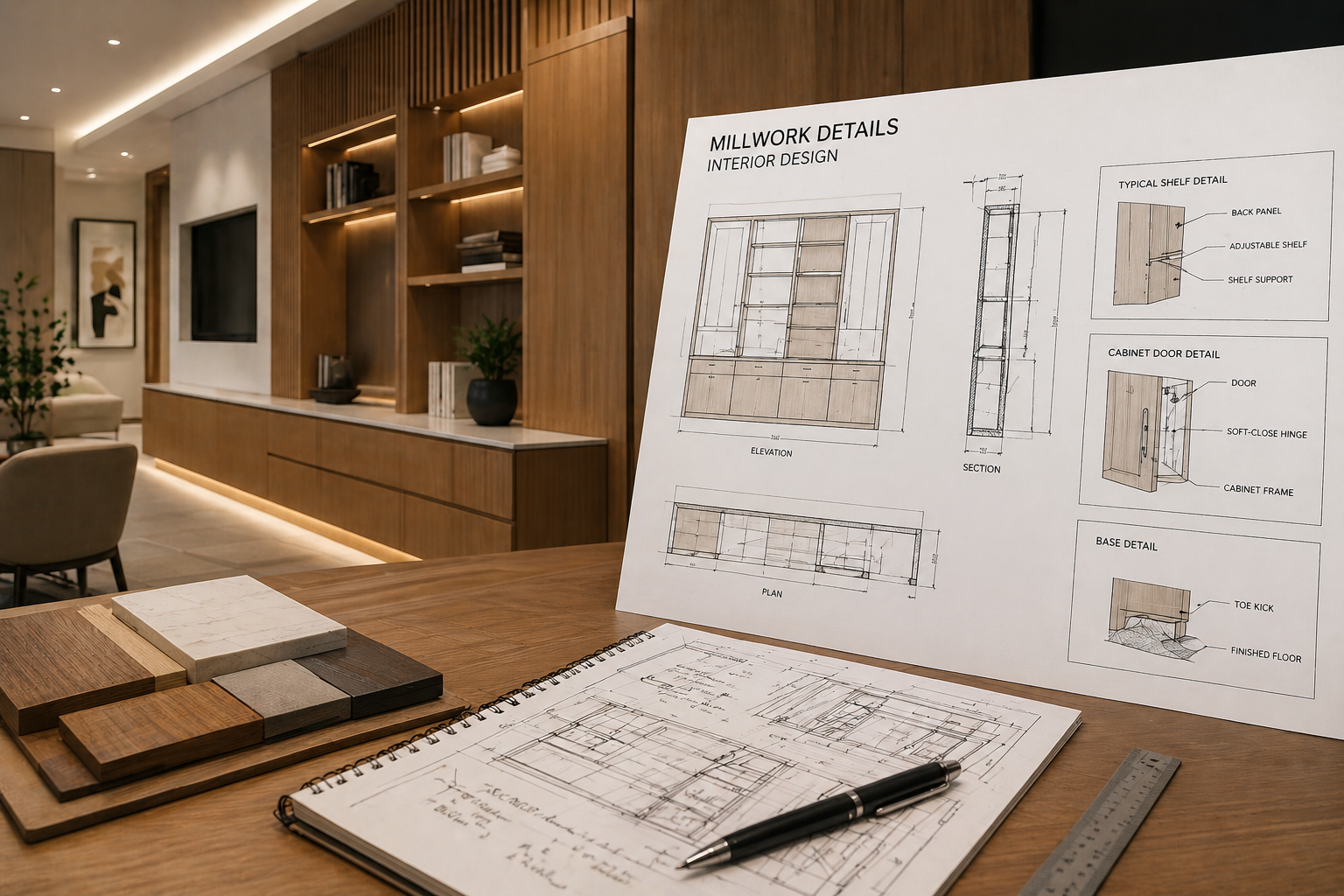
Millwork refers to custom-made wooden or engineered components that are built specifically for a space. These elements are not off-the-shelf they are designed, fabricated, and installed based on project requirements.
Common examples include:
- Built-in wardrobes and storage units
- Kitchen cabinetry and islands
- Decorative wall paneling
- Reception desks and retail fixtures
- Doors, trims, and moldings
When designers talk about millwork details interior design, they are referring to the precise documentation that defines how these elements are constructed and installed.
These details typically include:
- Exact dimensions
- Material specifications
- Finishes and textures
- Joinery methods
- Hardware placement
Without these details, execution becomes inconsistent and highly dependent on interpretation.
What Should a Good Millwork Drawing Include?
A strong set of millwork drawings goes far beyond basic layouts. It provides clarity at every stage from fabrication to installation.
Key components of effective millwork detail drawings:
1. Plan, Elevation, and Section Views
These show how the element fits within the overall space and how different parts relate to each other.
2. Joinery Details
Clear instructions on how components connect, ensuring durability and proper assembly.
3. Material and Finish Specifications
Defines wood types, laminates, veneers, coatings, and edge treatments.
4. Hardware Information
Details about hinges, handles, drawer systems, and fittings.
5. Dimensions and Tolerances
Precise measurements reduce the need for adjustments on-site.
In more advanced workflows, drawings may also include CNC-ready data, allowing direct integration with digital fabrication processes.
How Does Millwork Drafting Affect Project Cost and Timeline?
Many teams underestimate how much drafting quality impacts the overall project.
According to research from the Construction Industry Institute (CII), projects with strong pre-construction planning and documentation can significantly reduce rework and improve cost efficiency.
Here’s how millwork drafting influences outcomes:
- Fewer errors: Clear drawings prevent misinterpretation
- Better procurement: Accurate specifications reduce material waste
- Faster fabrication: Workshops can proceed without delays
- Improved coordination: Aligns multiple stakeholders
In high-cost markets like London or New York, even small delays can escalate quickly. Investing time in detailed drafting early often saves both time and money later.
What Are the Latest Trends in Millwork Drafting?

The drafting landscape is evolving rapidly, especially in the UK and USA, where digital transformation is reshaping construction workflows.
1. BIM Integration
Millwork is increasingly being modeled within Building Information Modeling (BIM) environments, allowing better coordination with structural and MEP systems.
2. Digital Fabrication and CNC
Drawings are now directly linked to manufacturing, reducing manual intervention and improving accuracy.
3. Sustainable Material Planning
Designers are prioritizing eco-friendly materials in response to environmental regulations and client expectations.
4. Cloud-Based Collaboration
Teams across locations can collaborate in real time, reducing communication gaps.
5. Parametric Design
Flexible design systems allow millwork elements to adapt quickly to changing dimensions or requirements.
These trends highlight a shift from static drafting to more integrated, intelligent workflows.
What Happens If Millwork Drafting Is Overlooked?
Skipping detailed drafting or rushing through it can create serious challenges during execution.
Common issues include:
- Contractors interpreting designs differently
- Inconsistent finishes across installations
- Unexpected clashes with electrical or plumbing systems
- Increased site modifications
- Project delays and cost overruns
In competitive markets, such issues not only affect budgets but also impact client satisfaction and long-term reputation.
Should Interior Designers Consider Outsourcing Drafting Work?
Many design firms today collaborate with external drafting teams to manage workload and access specialized expertise.
Working with a millwork drafting services company can offer:
- Faster turnaround times
- Access to experienced drafters
- Scalability for larger projects
- Exposure to international standards
According to Deloitte’s Global Outsourcing Survey, a large percentage of businesses outsource to improve efficiency and service quality not just to reduce costs.
For interior designers handling multiple projects, this approach can provide flexibility without compromising quality.
How Can Designers Ensure Better Collaboration with Drafting Teams?
Even the best drawings require strong communication to be effective.
Practical tips for smoother collaboration:
- Share clear design intent and references early
- Review drawings at key project stages
- Use cloud platforms for real-time updates
- Align on materials and finishes from the start
- Maintain a structured approval process
Good collaboration ensures that the final output reflects the original design vision accurately.
What Role Does Technology Play in Modern Millwork Drafting?
Technology is transforming how millwork is designed, documented, and executed.
Key innovations include:
- AI-assisted drafting tools for faster detailing
- 3D visualization for better client understanding
- Laser scanning for accurate site measurements
- Digital twins for long-term asset management
These tools not only improve accuracy but also enhance decision-making and client communication.
Final Thoughts
Millwork drafting may not always be visible in the final design, but its impact is everywhere from how seamlessly cabinets align to how efficiently a space functions.
For interior designers working on fit-out projects, especially in demanding markets like the UK and USA, understanding the fundamentals of millwork documentation is essential.
Clear, detailed, and well-coordinated drawings:
- Reduce risks
- Improve execution quality
- Save time and cost
- Strengthen collaboration across teams
As projects become more complex and timelines tighter, investing in proper drafting whether in-house or through experienced partners can make a meaningful difference.
Many design teams today work alongside specialized CAD professionals to ensure their ideas translate smoothly into reality, combining creativity with technical precision.
About the Creator
Shalin Designs
Shalin Designs is a leading CAD design and drafting service provider company. We serve product design, CAD drafting services, 3D CAD modeling, or sheet metal design and we specialize in all engineering design services.
Enjoyed the story? Support the Creator.
Subscribe for free to receive all their stories in your feed.
Comments
There are no comments for this story
Be the first to respond and start the conversation.