
What I Said Because I Loved Him
He's 32 and settled. She's 19 and still becoming. I said something. He stopped calling.
My brother Owen has always known what he wants. That's the thing about him — the quality I admired growing up and occasionally envied in my twenties, when I was still revising my own life in rough draft. He bought a house at twenty-eight and painted every room before he moved in. He's been with his company long enough that his name means something there. At thirty-two he talks about marriage and children the way other people talk about things they've already half-decided — not dreams, exactly, just the next items on a list.
I'm twenty-eight. I know how far that feels from nineteen.
Her name is Bria. Three months ago Owen started mentioning her — casually at first, then more, then with the particular quality of frequency that tells you someone has moved from peripheral to central in a person's life. When I met her, she was warm and open in the way people are when they haven't yet accumulated enough disappointment to become guarded. She's genuinely sweet. I want to be clear about that because it matters: I wasn't looking for reasons to dismiss her.
But she's nineteen. She's still in the stage of life where the important questions — what work she wants to do, who she wants to become, whether she can sustain herself independently — are entirely open. She's never lived alone. She hasn't had a serious job, the kind where you learn what you can endure and what you can't. She's still being shaped by experiences she hasn't had yet, which is not a flaw, just where she is. It's where I was at nineteen. It's where most people are.
Owen, by contrast, is assembled. He knows his answer to every question Bria is still forming.
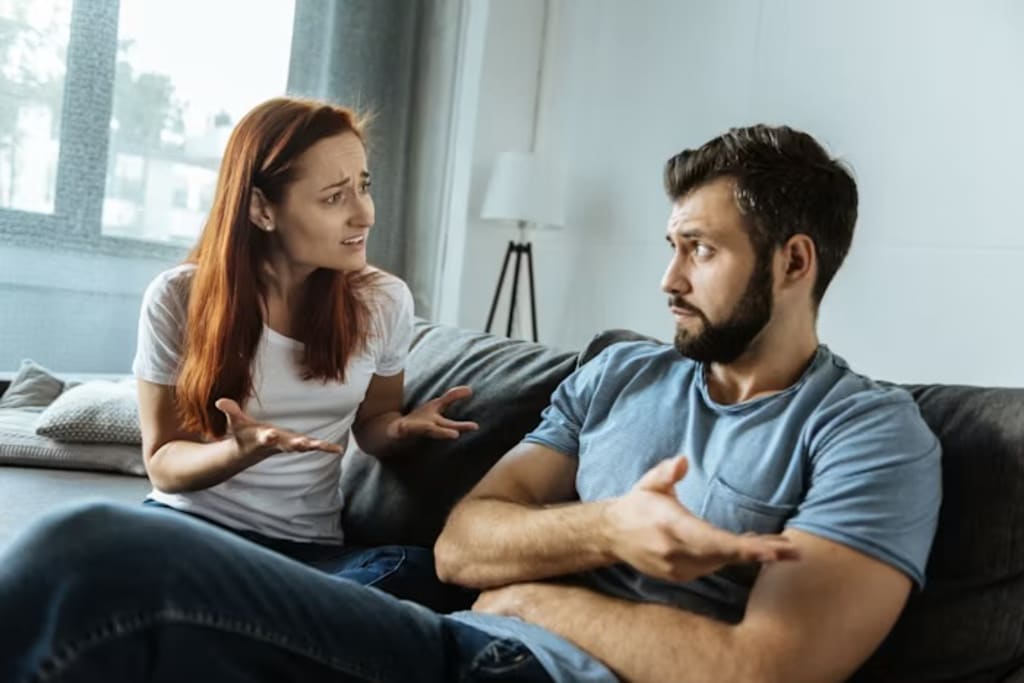
I brought it up on a Sunday, at his kitchen table, which felt like the right place — familiar, neutral, the space where we've always been honest with each other. I told him I was worried. Not about Bria's character, not about his feelings, but about the math of it: a man who is ready for the permanent things sitting across from someone who hasn't yet had the life that makes a person ready. I told him I thought he was going to end up hurting her, or she him, simply because they were standing in different places. That the gap between them wasn't only the years.
He looked at me for a long moment before he said anything.
Then he told me it was none of my business. That I was being judgmental. That he was happy and that happiness was sufficient justification. His voice didn't rise, which in some ways was worse — it had the flatness of a door closing, a considered withdrawal rather than an angry one. Before I left, he said something about trust, about how I was supposed to be on his side.
That was two weeks ago. He's been mostly quiet since. The kind of quiet that isn't distance yet but is practicing for it.
I've been sitting with the question of whether I was wrong to say anything. There are days when I'm confident in my reasoning — that love sometimes means naming the thing the other person can't see yet, that silence in the face of real concern is its own kind of failure. And there are days when I look at it differently: a twenty-eight-year-old woman deciding she knows better than her brother what his happiness should look like, wrapping concern around a preference, calling it care when maybe it was something closer to control.
Both versions feel partially true, which is uncomfortable.
The part I can't fully resolve is that I wasn't only worried about Owen. I was worried about Bria too — about the version of this that ends with her at twenty-two, having organized her earliest adult years around a life that outpaced her own becoming. That's a real thing that happens. But she's an adult, and Owen's an adult, and neither of them asked me to stand between them and a decision they made together.
He told me he was happy. Maybe that should have been the end of it.
I keep coming back to the kitchen table, the flatness in his voice, the drive home where I replayed every sentence trying to find the better version of what I'd said. I don't think I was careless. I'm not sure I was kind.
Is there a way to love someone and also know when to leave them alone with the life they're choosing — and is it wisdom or failure when you can't find it?
About the Creator
Bertyl Kently
Personal essays about family, boundaries, and the moments that shape us
Enjoyed the story? Support the Creator.
Subscribe for free to receive all their stories in your feed.
Comments
There are no comments for this story
Be the first to respond and start the conversation.