
What Gets Thrown Away
She loads her plate, eats a third, and bins the rest. Every time. I made her a plate instead. Now I'm the villain.
Growing up, you didn't waste food in our house. That wasn't a philosophy anyone articulated — it was just the atmosphere, the same way certain things become true in families without ever being said aloud. You took what you could finish. If your eyes were bigger than your stomach, you heard about it. By the time I was old enough to host dinners of my own, the instinct was so deep it had stopped feeling like a rule and started feeling like who I am.
I organize the family dinners. Have for years. I like doing it — the logistics, the cooking, the specific satisfaction of a table where everyone has what they need. My sister and her husband come with their kids, including their fifteen-year-old daughter Nadia, who has been in my life since she was a baby and who I love without qualification. I want that on the record before anything else.
But Nadia wastes food. Not occasionally, not on a bad night. Every single time.
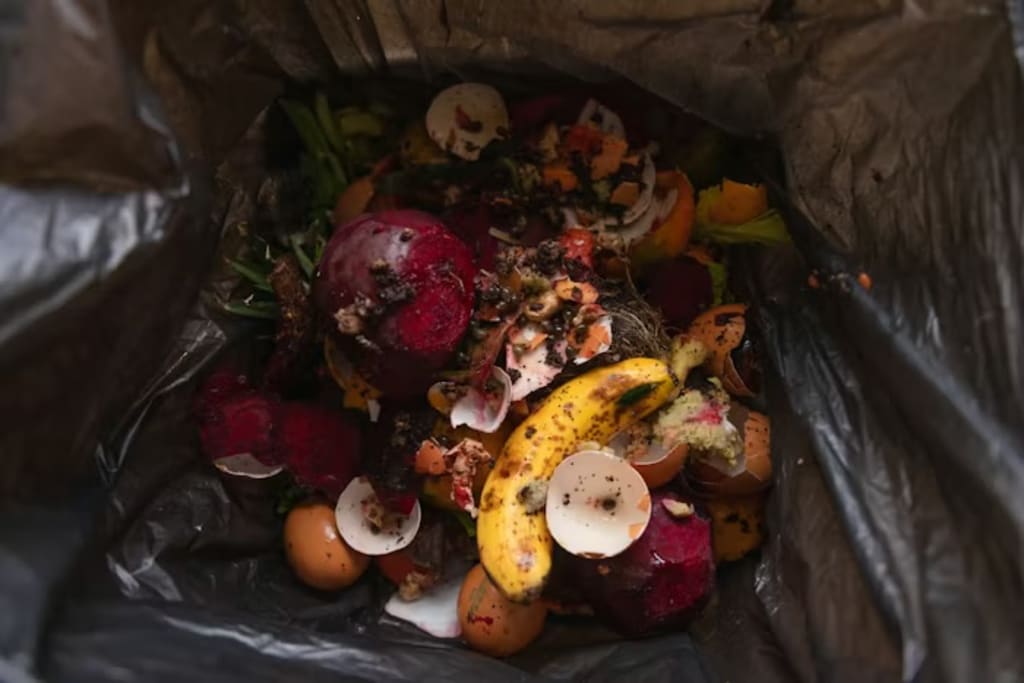
She loads her plate past any reasonable capacity, eats perhaps a third of it, and the rest goes in the trash. I've watched her scrape serving spoons clean onto a plate she has no intention of finishing. At one dinner she took two slices of cake — helped herself to both, set them side by side — ate one completely, scraped the frosting off the second, and threw the remaining cake away. Good cake, from a bakery, and it went in the bin like it was nothing.
I raised it with my sister and her husband more than once. Gently the first time, more directly after that. I suggested packing the leftovers so the food at least went somewhere. They told me that was a good idea and they'd start doing that. They didn't. Their explanation, eventually, was that Nadia doesn't like leftovers, and that she clears her plate — by which they meant she empties the contents into the trash and rinses the dish, which is not what I mean when I say that phrase.
The dinner before last, I made a decision. When we sat down, I handed Nadia a plate I'd served for her — a reasonable, full portion, nothing stingy about it. I told her she could always go back for more once she'd finished. She said "oh" and accepted it without incident.
The next day my sister texted me. She said I had humiliated Nadia by treating her differently from the other teenagers at the table, that I'd implied she was greedy, that she'd been upset about it afterward. I read the message twice, trying to locate the humiliation in what I'd done, and couldn't find it. I'd given her a plate of food. I'd told her she could have more.
The dinner this past Saturday was the first time we'd all been together since. I said nothing about plates or portions — I'd decided to let it go, to not make the evening about it. But my brother-in-law had apparently decided differently. Every time one of his kids went into the kitchen — for a drink, for seconds, for anything — he made a point of asking them loudly whether they'd gotten my permission, whether they'd taken more than I allowed, whether their uncle had approved their choices. He did it with a smile. He did it enough times that the kids started to look at me strangely.
When I pulled my sister aside and asked what was happening, she said: "This is what you wanted, right?"
I've been sitting with that sentence since.
What I wanted was for a teenager not to scrape edible food into the garbage at every family meal I cook and serve. What I wanted was for her parents, when I raised it repeatedly, to do something about it rather than explain it away. What I wanted, maybe, was to not be the only person at the table who seemed to think this was worth caring about.
Instead I'm the bad guy. The one who made a fifteen-year-old feel singled out for something her parents excused for years. The one whose values, instilled so deeply they're reflexive, apparently don't translate to a family dinner table anymore.
I don't think I was wrong to care about waste. I'm less certain about how I handled it, whether handing her a plate in front of everyone was the right expression of a right instinct, or whether I turned a private frustration into a public moment she'll remember differently than I do.
So I'm asking genuinely: when you're the only one who speaks up about something, and it still goes wrong — were you the problem, or just the messenger?
About the Creator
Bertyl Kently
Personal essays about family, boundaries, and the moments that shape us
Enjoyed the story? Support the Creator.
Subscribe for free to receive all their stories in your feed.
Comments
There are no comments for this story
Be the first to respond and start the conversation.