
What Does ICL Mean on TikTok? (Here's the Honest Answer)
The complete breakdown of ICL — what it means, where it came from, and why Gen Z can't stop using it

You're scrolling through TikTok at midnight, probably when you should be sleeping and you see a comment that says something like:
"ICL this song just ruined me."
Or maybe a creator drops it in their caption:
"ICL I was not ready for that plot twist."
And you're sitting there thinking… what does ICL mean, exactly?
Don't worry. You're not alone. TikTok slang moves so fast that even regular users miss things. ICL is one of those terms that quietly went mainstream, people started using it everywhere, and nobody stopped to explain it. Let's fix that right now.
So, What Does ICL Mean on TikTok?
ICL stands for "I Can't Lie."
That's it. Simple, honest, straight to the point — which is fitting, because that's exactly the energy it carries. When someone uses ICL before a statement, they're basically flagging that what they're about to say is their real, unfiltered opinion. No sugarcoating. No performance. Just the truth.
Think of it like a verbal handshake before honesty. You're telling people: "I'm not exaggerating here. I genuinely mean this."
Some examples of how it gets used:
- "ICL, this might be the best meal I've ever had."
- "ICL I thought this movie would be bad but it wrecked me emotionally."
- "ICL your outfit today was everything."
It shows up in TikTok comments, captions, DMs, and even in real-life conversations now. If you've been seeing it constantly on your For You Page, there's a good reason — it blew up hard in 2024 and it's not going anywhere right now.
Where Did ICL Actually Come From?
Here's the thing about TikTok slang — most of it doesn't come from nowhere. ICL is a good example of that.
The phrase "I can't lie" has been a part of everyday spoken English for a long time, especially in British and American casual speech. People would say things like "I can't lie, that was impressive" to express genuine admiration or honest agreement. It wasn't slang — it was just regular conversation.
What changed was the internet. Once people started texting more and typing faster, full phrases got compressed. "I can't lie" became "ICL" — same meaning, fewer keystrokes. It caught on first in DMs and group chats, then migrated to Twitter and Snapchat comment sections, and eventually exploded on TikTok around 2020–2021 when the platform's user base skyrocketed.
By 2024, it had cemented itself as a staple Gen Z expression — sitting comfortably alongside other honest-signal phrases like "no cap," "NGL," and "fr fr."
ICL vs. NGL vs. TBH — What's the Actual Difference?
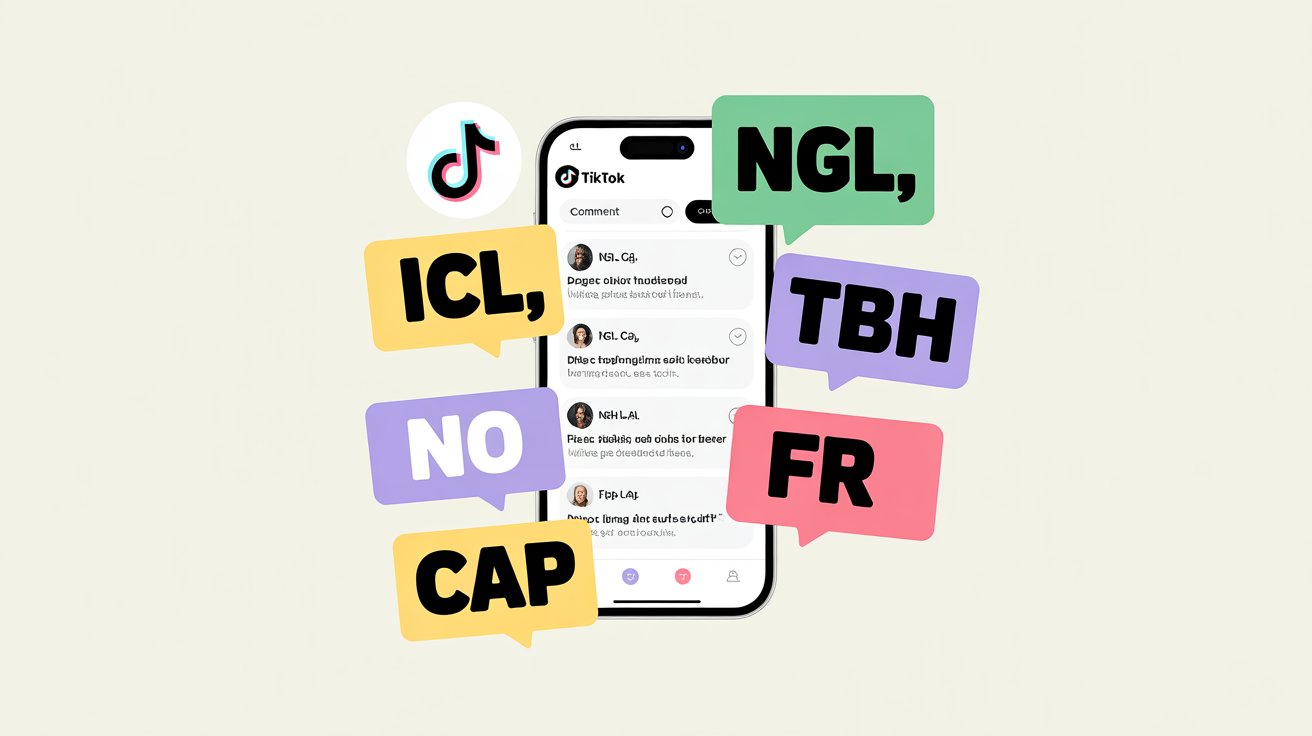
You've probably noticed that ICL, NGL (Not Gonna Lie), and TBH (To Be Honest) all seem to do pretty much the same thing. And honestly? They mostly do. But there are some subtle vibes that separate them.
- ICL feels the most raw and present-tense. It's used in the moment, like you're confessing something right as you're feeling it. There's a casual intensity to it.
- NGL (Not Gonna Lie) has been around longer and carries a slightly more conversational, reflective tone. It's the older sibling of ICL. In fact, some TikTok users have pointed out that ICL is basically just NGL repackaged for a newer generation — and they're not wrong.
- TBH (To Be Honest) feels a bit more intentional and slightly more formal than the other two. You'd use it when you want to share a considered opinion, not just a gut reaction.
Here's a quick breakdown:
Slang: ICL
- Full Phrase: I Can't Lie
- Vibe: Raw, emotional, in-the-moment
Slang: NGL
- Full Phrase: Not Gonna Lie
- Vibe: Conversational, reflective
Slang: TBH
- Full Phrase: To Be Honest
- Vibe: Considered, slightly more formal
Slang: FR
- Full Phrase: For Real
- Vibe: Agreement, emphasis
No Cap No Lie / For Real Strong emphasis, no exaggeration
- None of these are wrong to use — they're just different flavors of the same honesty. Context and tone usually tell you which one fits best.
How to Use ICL Correctly (Without Sounding Forced)
The quickest way to make slang sound weird is to force it. ICL is no different. Here's how it naturally fits into conversation:
At the start of a sentence for emphasis: "ICL, I cried watching that video."
In comments to validate someone's content: "ICL this is the best TikTok I've seen all week."
When admitting something a little embarrassing: "ICL I've watched this 14 times."
When sharing an unpopular opinion: "ICL I think the original was better."
Where it gets awkward is when it's crammed into places that don't need it, or when someone uses it in a clearly sarcastic or performative way. Part of what makes ICL work is that it signals authenticity — so using it constantly for everything kind of defeats the purpose.
One more thing worth knowing: ICL is strictly casual. It works great in TikTok captions, comment sections, texts, and Instagram DMs. It does not work in a work email, a university essay, or anything that calls for professional language. Save it for the right crowd.
Why Does TikTok Keep Producing New Slang?
If you've ever felt like TikTok slang moves faster than you can keep up with — you're not imagining it. There's actually a reason for that.
TikTok's algorithm is built around short-form video that rewards virality. When a creator uses a new phrase or acronym and the video explodes, millions of people encounter that term at the same time. They start using it in comments, which spreads it to more feeds, which creates more content around it. The whole cycle can push a piece of slang from obscurity to mainstream in a matter of days.
This is how "ICL" spread. This is how "rizz," "understood the assignment," "no cap," "era," and dozens of other terms spread. TikTok is essentially a real-time language lab, and Gen Z are the scientists — and sometimes the chaos agents.
Research actually backs this up. A study on Gen Z language patterns found that acronyms are the most frequently used type of slang on TikTok, making up about 30% of all slang usage. The reason is simple: they're fast, they carry cultural weight, and they feel like a shared code between people who are "in the know."
Other TikTok Slang You Should Know While You're Here
Since you're learning the language, here are a few more you'll probably bump into:
No Cap — No lie, for real. Used to emphasize truth.
FR (For Real) — Agreement or emphasis. "FR that was wild."
Rizz — Natural charm or charisma, especially in romantic contexts.
Slay — To do something exceptionally well.
Era — The phase of life you're currently in. "I'm in my unbothered era."
POV — Point of view. Used heavily in TikTok storytelling content.
Understood the assignment — Performed perfectly, nailed it completely.
Rent free — Something that keeps living in your head. "This song is living in my head rent free."
LWK (Low-key) — Subtly or quietly. "ICL I LWK loved that movie."
Why TikTok Slang Actually Matters for Creators
Here's where it gets practical especially if you're someone trying to grow on TikTok rather than just consume it.
Using the right language in your captions and comments isn't just about fitting in. It's about speaking the same dialect as your audience. When creators use terms like ICL naturally in their content, it signals to viewers that they're authentic, current, and relatable. That authenticity drives engagement.
There's even data on this. TikTok captions that used acronyms like ICL reportedly received around 20% higher engagement on average than similar captions without them — because they feel more personal, less corporate, and more like something a real person actually said.
But language is only one part of the equation. Growing a TikTok account consistently requires understanding trends, timing, and what your audience actually responds to. If you're serious about building your presence on TikTok, it helps to have the right resources. Sites like Tokboostly are built around exactly that — helping creators understand the platform and grow their reach more strategically, rather than just hoping the algorithm notices them.
Quick Recap: Everything You Need to Know About ICL
Let's pull it all together:
ICL = I Can't Lie
It's used to signal honesty, genuine emotion, or an unfiltered opinion
It originated from everyday spoken English and went viral on TikTok around 2020–2021
It's essentially a newer, more intense cousin of NGL and TBH
It works in captions, comments, texts, and DMs — not in formal writing
Using it naturally goes a long way; forcing it is obvious and kills the vibe
Final Thoughts
TikTok has this way of taking a feeling everyone already has — the need to be real, to signal authenticity, to cut through the noise — and giving it a shorthand. That's what ICL is. It's not complicated. It's just three letters that say: this is the honest version of what I think.
And ICL? Now that you know what it means, you're going to start seeing it absolutely everywhere.
That's just how it works with TikTok slang. Once you learn it, it's impossible to unsee
About the Creator
TokBoostly
We’re passionate about understanding how TikTok works, from viral trends & creator psychology to audience growth and engagement signals. TokBoostly shares practical, easy-to-read guides for creators, brands, & social media enthusiasts.
Enjoyed the story? Support the Creator.
Subscribe for free to receive all their stories in your feed.
Comments
There are no comments for this story
Be the first to respond and start the conversation.