
We’ll Forget Her Soon
A new book by Earl Spencer claims King Charles said Diana would be forgotten. Buckingham Palace says grief can distort memory. Nearly thirty years later, the argument is still open.
Buckingham Palace rarely comments on books about the royal family. It commented on this one. Swan Song: Diana, My Sister by Charles Spencer, Earl Spencer, was serialized before publication. By the time the hardcover reached shelves, the Palace had already issued a denial.
The book's central claim is a phone call. Spencer says it happened after Diana died in Paris in August 1997. He and the man then known as Prince Charles were arguing about the funeral. The question was whether Diana's sons, William and Harry, then fifteen and twelve, should walk behind her coffin through London. Spencer says Charles spoke through his teeth and said, "Don't worry, we'll forget her soon."
Spencer says he replied, "I can't believe you just said that," and hung up. He has repeated the line in interviews. He says he remembers the call because he spoke to Charles only twice in his life. He was alert and listening for every word. He says he was shocked.
The book goes further. Spencer writes that when Charles learned Diana had died, his voice sounded carefree, almost cheerful, as if he had won the lottery. Spencer suggests Charles saw the death as clearing the way for Camilla Parker Bowles, now Queen Camilla. These are serious accusations about what a man said and wanted in the first hours after his ex-wife died. They also concern what the monarchy wanted the public to forget.
Buckingham Palace responded. The statement said the King understands that losing a sibling can cloud reason, affect judgment, and alter memory. It added that even after many years, such grief can distort recollection in ways others cannot understand. The statement did not call Spencer a liar. It did not name Diana or Charles. It questioned memory and wrapped the denial in sympathy. It was two paragraphs long. The words were careful and cold.
Observers compared the response to 2021. After Harry and Meghan spoke to Oprah Winfrey, the Palace said recollections may vary. Now the same idea returned. The question is whose memory is real and who gets to say. The Palace has lawyers and a press office. Spencer has a book and a phone call he says he cannot forget. The dead cannot speak. The living disagree.
Spencer went on the BBC. He did not back down. He said his account was true. He said Buckingham Palace was trying to erase it. He said the institution had gaslit him. He also said the book is both a history and a memoir. He said he still holds some memories he has not published, and he does not plan to publish them. The book is not the whole story. He knows what withholding can do.
The background is 1997. Diana died on August 31 in a car crash in Paris. She was thirty-six. The years before had been tabloid wars, a divorce, and a public fight over her role in the royal family. The Queen stayed at Balmoral. The public gathered in London and left flowers outside Kensington Palace. They cried in the streets. The silence from the Palace became its own crisis. The Queen returned to London and addressed the nation. The damage was already done.
At the funeral on September 6, William and Harry walked behind their mother's coffin. The world watched. Spencer gave the eulogy. He called Diana "the very essence of compassion, of duty, of style, of beauty." He said she needed no royal title to generate her particular brand of magic. He promised that her blood family would protect her sons. The speech was a tribute and a warning. The relationship between the Spencers and the Windsors never fully healed.
Then came the years. Charles married Camilla in 2005. Public opinion softened. William and Harry grew up, served in the military, married, and had children. Then Harry and Meghan stepped back, moved to California, and gave interviews. Harry published Spare. He wrote about his mother and the Palace. The monarchy learned that Diana's story does not stay buried. It returns through her sons, her admirers, and books.
A memoir is not a court transcript. It is a reconstruction shaped by grief, time, and the needs of the present. Spencer writes as a brother, a witness, and a man who has watched his sister's image be used and sold for three decades. His account may be sincere. It may be selective. Charles cannot easily answer. He is the King, bound by protocol and advised by lawyers. The institution prefers silence.
The public is left with versions. One version says a grieving ex-husband made a cruel remark in a heated phone call. Another says a grieving brother has let years of anger rewrite a sentence. One version says the Palace wanted Diana forgotten. Another says the Palace has spent decades living with her ghost. There is no tape, no transcript. There is only memory, and memory is the most contested ground in the House of Windsor.
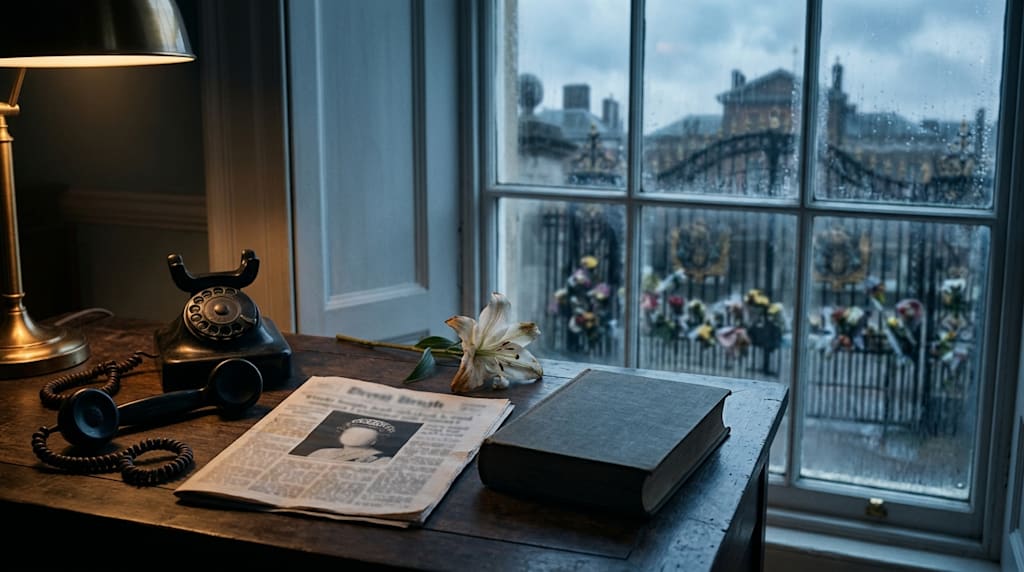
The book sits on a table. The photograph is on the cover, the index in the back, the sentence on a page. The Palace statement is in a file. The interview is on a screen. In London, the route is still there. In Paris, the tunnel is still there. At Kensington Palace, the gates are still there. The flowers are gone. Spencer says he has more memories and keeps them. The Palace says memory changes. The book stays open. He does not publish the rest. The argument does not close.
About the Creator
Jin
Writer of reamstories
https://reamstories.com/jin
Enjoyed the story? Support the Creator.
Subscribe for free to receive all their stories in your feed. You could also become a paid subscriber, letting them know you appreciate their work.
Comments
There are no comments for this story
Be the first to respond and start the conversation.