
Warm Minimalism vs Maximalism in Vladimir Krull's 2027 Style Guide
Two opposite styles compared by an interior designer, with advice on how to choose between them or combine the best of both in your own home
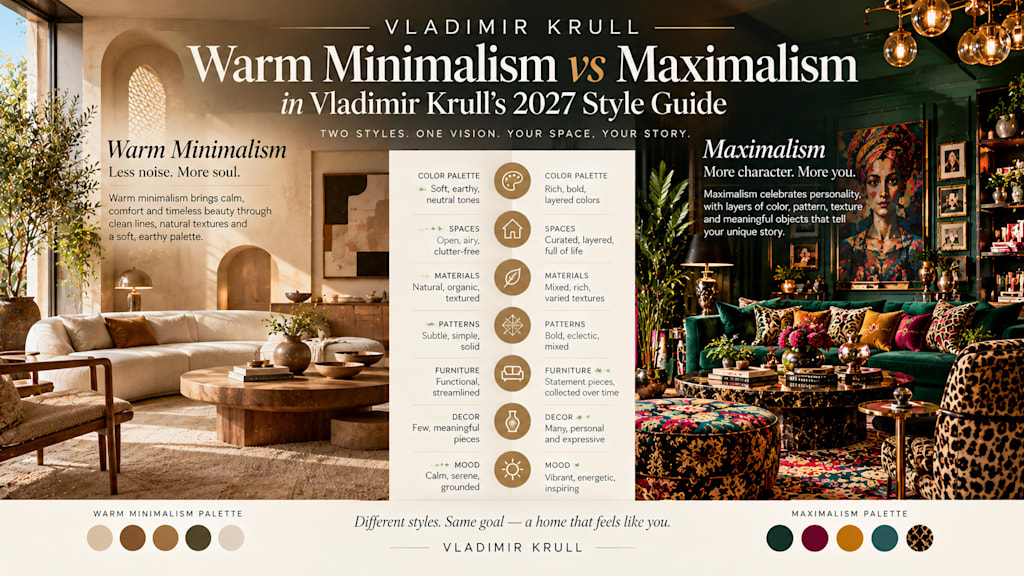
Two Styles, One Big Question
When I talk to clients about style, one question comes up again and again: should my home be calm and simple, or bold and full? In 2027, the two ends of that choice are best represented by warm minimalism and maximalism.
I am Vladimir Krull, an interior designer, and I enjoy both. In this style guide I will explain what each style means, how they differ, who each suits and how to blend them if you cannot decide. My aim is to help you choose with confidence, not to declare a winner.
What Is Warm Minimalism?
Warm minimalism keeps the order of classic minimalism but adds comfort. Instead of stark white walls and bare surfaces, it uses soft neutrals, natural materials and gentle textures. The rooms are uncluttered, yet they feel inviting.
You will see creamy whites, sand, oatmeal, soft taupe and warm wood. Furniture is simple and well made. Accessories are few, and each one is chosen with care. The overall feeling is quiet and restful.
What Is Maximalism?
Maximalism celebrates abundance. Walls may be painted in rich colors or covered in art. Patterns are mixed, collections are displayed and every corner has something to look at.
Done well, it is not messy. It is curated and layered, with a consistent logic of color, grouping and focus. The overall feeling is energetic, personal and expressive.
The Main Differences at a Glance
Color. Warm minimalism uses soft, low-contrast tones. Maximalism embraces strong, saturated colors and contrast.
Objects. Minimalism keeps only essentials. Maximalism displays collections and mementos.
Pattern. Minimalism uses very little and relies on texture. Maximalism mixes several patterns.
Mood. Minimalism feels calm and spacious. Maximalism feels lively and rich.
Maintenance. Minimalism is easy to clean and reset. Maximalism needs more care to stay organized.
The Case for Warm Minimalism
Warm minimalism offers peace. For people with busy lives, coming home to a quiet, orderly space can be deeply relaxing. It also makes cleaning easier, and it often leads to more intentional buying.
It suits small spaces well, since fewer objects and light colors make rooms feel larger. It is a good choice for people who find visual clutter stressful or who prefer a timeless look that will not date quickly.
The Case for Maximalism
Maximalism offers joy and personality. If you love art, travel, books or collecting, it gives them a home. It allows you to tell your story and to surround yourself with things that make you happy.
It is wonderful for people who feel bored by plain interiors, who enjoy color and who like change. It is also kind to budgets, since it welcomes secondhand finds and inherited pieces.
Which Style Suits Your Personality?
I often suggest a few questions.
Do you feel calmer in a quiet room or an energetic one? Do you enjoy displaying objects or prefer clear surfaces? Do you like the idea of regularly editing, cleaning and arranging a full room? Does color excite you or overwhelm you?
If you lean toward calm, simplicity and low maintenance, warm minimalism will probably suit you. If you lean toward color, collecting and self-expression, maximalism may be your match.
How the Two Styles Handle Color
In a warm minimalist room, color is gentle. A palette might include cream walls, a beige sofa, a wooden table and a single olive green cushion. Contrast is subtle.
In a maximalist room, color is confident. Deep green walls, a mustard sofa, a patterned rug and pink cushions might all appear. The skill lies in repeating colors so that the room feels planned.
Both styles benefit from repetition. Whatever you choose, use each color in several places.
How the Two Styles Handle Texture
Texture matters in both. Warm minimalism depends on it, because a quiet palette needs tactile variety to avoid looking flat. Linen, wool, wood, ceramics and stone create the interest.
Maximalism layers texture on top of pattern and color. Velvet, fringe, tassels and embroidered fabrics all appear. The key is to add texture deliberately.
How the Two Styles Handle Furniture
In minimalism, furniture is simple, with clean lines and gentle curves. A few quality pieces are enough, and storage is hidden.
In maximalism, furniture can be more decorative, such as carved tables, tufted chairs or vintage cabinets. Comfort and scale still matter, and the largest pieces often stay simpler to keep the room stable.
Lighting in Each Style
Both styles need layered lighting. Warm minimalism prefers soft, even light from simple lamps and concealed sources. Maximalism uses decorative fixtures, patterned shades and accent lights for art.
In either case, avoid relying on a single overhead light. Warm bulbs and dimmers help set the mood.
Combining the Best of Both
You do not have to choose one side completely. In fact, many of my favorite homes mix them.
One approach is to be minimalist in the background and maximalist in the details. Keep walls and large furniture calm, then add bold art, patterned cushions and collections in specific areas.
Another is to assign each room a mood. Use warm minimalism in bedrooms, where rest matters, and maximalism in a living room, hallway or bathroom, where personality can shine.
A third is to use the rule of focus. Choose one area of each room to be rich and detailed, such as a bookshelf or gallery wall, and keep the remainder simple.
A Simple Test Before You Commit
Try a small experiment. Style one shelf in a minimalist way, with three carefully chosen objects. Style another in a maximalist way, with a full, layered collection. Live with both for a week and notice which one you enjoy.
You can also test paint with large samples, and watch how you feel in different environments, such as a hotel, a gallery or a friend's home.
Mistakes to Avoid
With warm minimalism, the biggest mistake is going too bare. Without warmth and texture, the room can feel cold. Another is buying cheap items, because simple design shows flaws.
With maximalism, the biggest mistake is lack of structure. Without a color plan or focal point, a full room becomes chaotic. Another is ignoring comfort and storage.
In both styles, avoid copying pictures exactly. Your home should serve your life.
Which Style Is Better for Resale?
If you are thinking about selling, neutral and tidy interiors tend to appeal to a wider audience. That favors warm minimalism. However, a maximalist home can be adapted by clearing items, repainting a few walls and simplifying displays before viewings.
Room-by-Room Examples
Living room. In a warm minimalist version, I would use a low neutral sofa, a wooden coffee table, a wool rug and a single piece of large art. In a maximalist version, I would add a patterned rug, a gallery wall, a bold armchair and layered lamps.
Bedroom. Warm minimalism suits rest, with linen bedding, soft lamps and clear surfaces. Maximalism can work with a richly colored headboard, patterned curtains and framed art, as long as the bed itself feels calm.
Kitchen. A minimalist kitchen has clear counters and simple cabinets. A maximalist kitchen might include colorful tiles, open shelves of favorite dishes and a bold pendant.
Budget and Time Considerations
Warm minimalism can cost more per item, because fewer, higher-quality pieces carry the room. Maximalism can cost less per item, since it welcomes secondhand finds, though the total number of objects is larger.
Time matters too. Maximalism usually develops slowly through collecting, while minimalism can be assembled more quickly, though it needs careful editing. Be realistic about how much time you want to spend on your home.
How Style Changes Over Time
Our needs change, and so do our homes. Many people begin with a minimalist approach, then gradually add personal objects and color as they gain confidence. Others start with abundance and later simplify as life gets busier.
Allow your home to evolve. A flexible foundation of good furniture and neutral walls lets you shift in either direction with paint, art and accessories.
Frequently Asked Questions
Is warm minimalism the same as Scandinavian style? They overlap, but warm minimalism uses a broader palette of earthy neutrals and textures.
Can I do maximalism with a small budget? Yes. Use paint, secondhand pieces and collected objects.
Can both styles live in one home? Yes. Keep a consistent thread, such as a color or material, to link the rooms.
Final Thoughts
Warm minimalism and maximalism are two different ways to make a home feel like yours. One values calm and clarity, the other values abundance and expression. Neither is right for everyone.
Take your time, experiment and trust how a room makes you feel. The best style for 2027 is the one that helps you live well every day.
About the Creator
Enjoyed the story? Support the Creator.
Subscribe for free to receive all their stories in your feed.
Comments