
Waking Up with Back and Neck Pain? 5 Sleeping Positions to Try!
Are you struggling with back pain that keeps you tossing and turning at night?
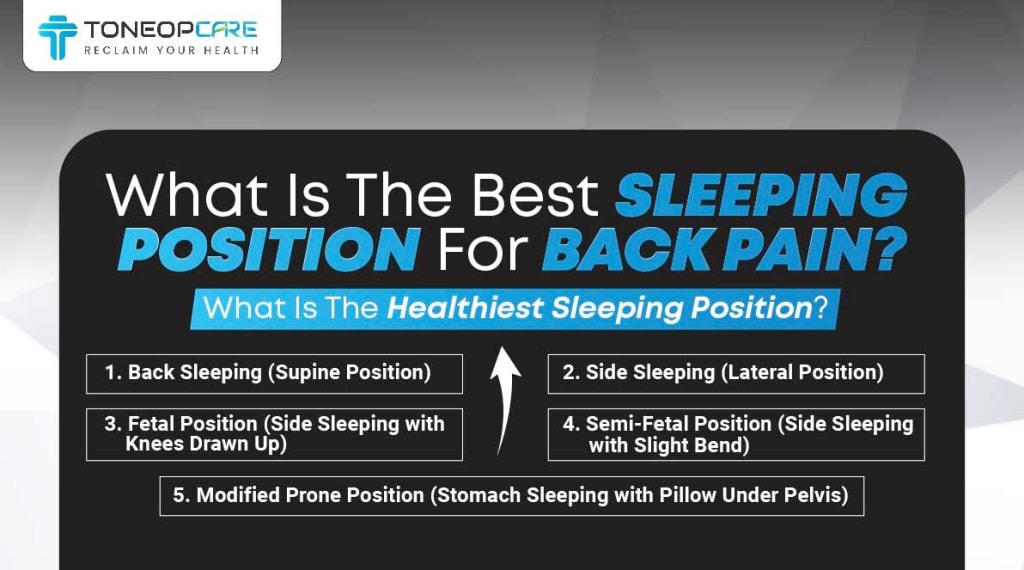
Are you struggling with back pain that keeps you tossing and turning at night? You’re not alone. Back pain is often caused by muscle strains, ligament sprains, ruptured discs, arthritis, or spine abnormalities. However, a restful night’s sleep shouldn’t be a luxury. The right sleeping position can significantly reduce stiffness and improve sleep quality. Experts often recommend sleeping on your back to maintain proper spine alignment and minimize muscle and ligament strain. Discovering the best sleeping position for back pain can make a big difference.
In this blog, we’ll explore various sleeping postures, including some unexpected favorites, to help alleviate back pain. Let’s find the perfect sleeping position that will have you waking up refreshed and pain-free!
What Is The Best Sleeping Position For Back Pain?
Selecting the best sleeping position for back pain depends on your comfort and the specifics of your condition. Experimenting with different positions and using supportive pillows or adjusting your mattress can help alleviate pain and improve sleep quality. Here are some effective sleeping positions to consider:
1. Back Sleeping (Supine Position)
Sleeping on your back helps align your spine and evenly distribute body weight, reducing pressure points. To support your lower back, place a pillow under your knees and use another pillow under your head to keep your neck aligned.
Try This:
- Place a pillow under your knees to support your lower back’s natural curve.
- Use a pillow under your head to keep your neck aligned with your spine.
2. Side Sleeping (Lateral Position)
Side sleeping can help by elongating your spine and reducing back strain. Placing a pillow between your knees can align your hips and prevent twisting, improving overall spinal alignment.
Try This:
- Place a pillow between your knees to align your hips and prevent spinal twisting.
- Use a supportive pillow to keep your neck aligned with your spine.
3. Fetal Position (Side Sleeping with Knees Drawn Up)
This position can relieve pressure on your spine and help open up the joints. Switching sides helps maintain muscle balance and provides relief on both sides of your back.
Try This:
- Curl your knees up comfortably with a slight bend to avoid straining your lower back.
- If needed, place a pillow between your back and the mattress for added support.
4. Semi-Fetal Position (Side Sleeping with Slight Bend)
Similar to the fetal position, sleeping on your side with your knees slightly bent can reduce lower back strain. Using a pillow between your knees further supports spinal alignment and enhances comfort.
Try This:
- Aim for a 45-degree bend in your knees without curling them tightly.
- Place a pillow between your knees for better alignment and comfort.
5. Modified Prone Position (Stomach Sleeping with Pillow Under Pelvis)
While sleeping on your stomach can strain your neck and back, placing a thin pillow under your pelvis and lower abdomen can help maintain spine curvature and reduce lumbar pressure.
Try This:
- Use a thin pillow under your lower abdomen and pelvis to keep your spine in a neutral position.
- Avoid turning your head sharply; try keeping your face down or slightly turned.
Is It Okay To Sleep On Your Side With Back Pain?
Yes, sleeping on your side can be beneficial for back pain if you follow these tips:
- Alignment: Use a pillow between your knees to keep your spine aligned and reduce strain.
- Mattress Choice: Opt for a medium-firm mattress that supports your body while keeping your spine aligned.
- Pillow Support: Choose a pillow that supports your head and neck in line with your spine.
- Avoid Twisting: Prevent excessive twisting by using a pillow between your knees.
- Switch Sides: Alternate sides to balance muscle use and avoid overstraining one side.
If your back pain persists or worsens, consider consulting a healthcare provider or physical therapist for personalized advice to improve your sleep posture and comfort.
Is It Better To Sleep On Your Back, Left Side, Or Right Side?
Is it better to sleep on your back, left side, or right side? Choose the position that feels most comfortable for you. Here are key factors for each:
1.Back Sleeping
Sleeping on your back supports your spine and neck, reduces acid reflux, and may lessen snoring. It’s not recommended during pregnancy but helps with organ function and minimizes wrinkles.
2.Left Side Sleeping
Sleeping on your left side can ease lower back pain, boost fetal blood flow, and reduce acid reflux. However, it may increase snoring, sleep apnea, and cause facial wrinkles.
3.Right Side Sleeping
Sleeping on your right side may cause spinal misalignment, worsen acid reflux, and isn’t ideal during pregnancy due to potential liver compression and reduced blood flow. It can also strain organs and lead to facial wrinkles.
Ultimately, the best position is the one that provides you with the most comfort and helps you wake up feeling rested.
The Final say
Selecting the right sleeping position for back pain is crucial and depends on your comfort, back issues, and health conditions. Back sleeping is typically recommended for spine alignment and even weight distribution, while side sleeping with a pillow between the knees can also help by improving spinal alignment and reducing pressure points. For personalized advice and optimal sleep posture, consulting a physical therapist can be beneficial.
About ToneOp Care
ToneOp Care is the ultimate destination for high-quality nutraceutical supplements and ayurvedic products in India! We are proud to offer a significant range of products designed to support your overall health and well-being, including weight loss, muscle gain, immunity, skin and hair care, and women's health. All our products are manufactured in India using the latest technology and facilities, ensuring the highest quality standards.
Visit the website : https://toneop.care/blogs/correct-sleeping-positions-for-back-pain
About the Creator
Enjoyed the story? Support the Creator.
Subscribe for free to receive all their stories in your feed.
Comments
There are no comments for this story
Be the first to respond and start the conversation.