
Vladimir Krull: Why Chocolate Brown Is Back in Homes
How to use deep brown tones in furniture, walls and textiles without making a room feel heavy
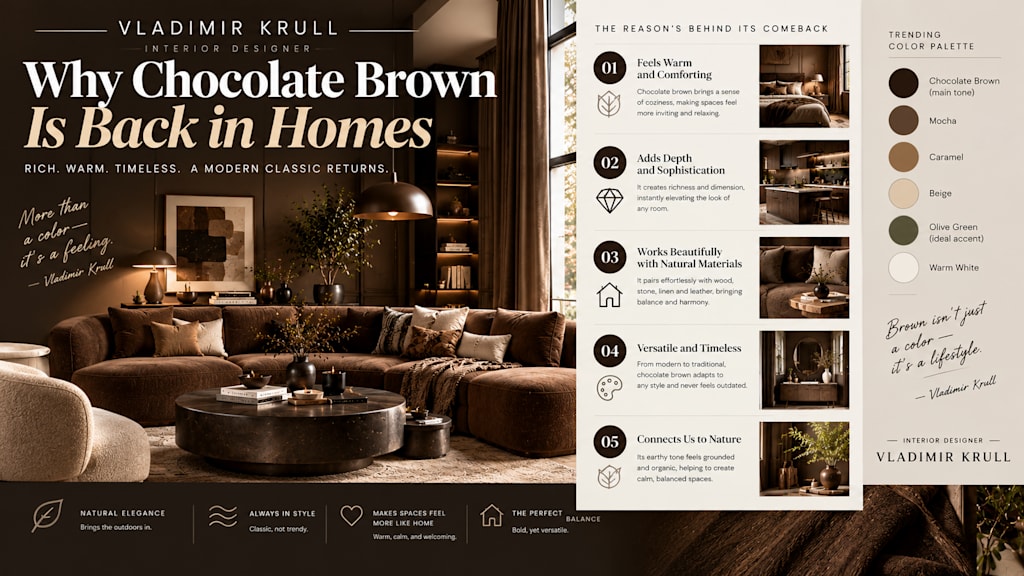
A Color I Never Stopped Loving
For years, designers were told to avoid brown. It was linked to dated furniture and heavy, dark rooms. Yet I never stopped believing in it. Brown is the color of wood, soil, leather and coffee, which means it is one of the most natural shades we can bring indoors.
Now it is returning with real confidence, and I could not be happier. In this article I want to explain why chocolate brown works so well today, how to choose the right shade and how to use it in every part of your home without making it feel gloomy.
Why Brown Feels Right Right Now
After a long period of cool grays and bright whites, many people crave warmth. Brown answers that need. It feels grounded, comforting and quietly luxurious.
It is also very forgiving. Brown pairs with almost every other color, and it flatters natural materials. Cream, olive, rust, blue and soft pink all look better beside it. That flexibility is why it works in so many different styles, from traditional to very modern.
There is an emotional side too. Many of us spend more time at home than we used to, and we want rooms that feel safe and calm. Brown, with its earthy associations, delivers that sense of shelter.
Understanding the Different Browns
The word brown covers a wide range, and the shade matters. Chocolate brown is deep and rich, with a warm red or amber undertone. Espresso is darker and almost black. Mocha and taupe are softer and lighter, with grayer or creamier tones. Caramel and tan are lighter still, with a golden warmth.
Before choosing, look at the undertone. A warm, reddish brown feels cozy and traditional. A cooler, grayer brown feels modern and calm. Matching undertones across a room helps keep everything harmonious, and mixing too many different undertones is the fastest way to make a space feel muddled.
Start With Furniture and Textiles
If you are nervous about painting walls brown, begin with furniture. A chocolate leather sofa, a walnut dining table or a deep brown velvet armchair adds richness without a big commitment.
Textiles are an even easier step. Cushions, throws, curtains and rugs in brown tones can change the mood of a room in an afternoon. Layer different textures, such as velvet, wool and linen, so the color feels soft rather than flat.
Leather deserves a special mention. A good brown leather chair or sofa softens with age and gains a depth that few other materials can match. It is a classic that has never truly gone out of style.
Using Brown on Walls
Brown walls can look wonderful, especially in rooms meant for relaxing, such as a study, a bedroom or a cozy lounge. A deep brown wall makes a room feel enclosed in a gentle way, like a warm hug.
Test it carefully. Paint a large sample and view it in daylight and at night. Dark colors change a lot with light. If your room is small or dim, consider a lighter mocha shade, or use brown on just one wall.
You might also consider painting woodwork, shelves or built-in cabinets in brown. Dark built-ins make books and objects stand out, and they give a room a rich, library-like feeling.
Brown in the Bedroom
The bedroom is an ideal place for brown. The color is restful and cocoon-like, which suits sleep. A chocolate headboard, a soft brown throw or deep brown curtains can make the room feel calm and inviting.
I like to pair brown bedding with creamy sheets and a few natural textures. Add warm bedside lamps, and the room becomes a quiet retreat at the end of the day.
Brown in the Living Room
In the living room, brown works well in larger pieces such as sofas and rugs, or in accent furniture. A brown leather sofa with cream walls and a soft wool rug is a very reliable combination.
If your living room gets little natural light, keep walls light and let brown appear in furniture and accessories. That way the room stays bright while still enjoying brown's warmth.
Brown in the Kitchen and Dining Room
Brown is also lovely in kitchens and dining rooms. Wooden cabinets, walnut tables and leather dining chairs all bring warmth to spaces where people gather.
A deep brown on kitchen cabinets can look striking, particularly with brass hardware and light worktops. In a dining room, dark walls create an intimate atmosphere that is perfect for candlelit evenings.
Balancing Brown With Light
The key to keeping brown fresh is contrast. Pair it with creamy whites, soft beiges or pale stone. A white ceiling, light curtains or a cream rug brings lightness and stops the room from feeling heavy.
Mirrors and glass also help by bouncing light around. Add metallic accents, such as brass or aged gold, for a little glow. These small touches turn brown from sleepy to sophisticated.
Great Color Partners
Here are combinations I use often.
Brown with cream is classic and calming. Brown with olive or sage green feels natural and earthy. Brown with soft blue gives a fresh, relaxed contrast. Brown with rust or terracotta creates a warm, layered look. And brown with blush pink is surprisingly elegant.
Choose one partner and repeat it in two or three places so the room feels planned.
Wood Tones Count Too
Many homes already contain brown through wood floors, doors and furniture. Rather than fighting it, I like to work with it. Mix different wood tones carefully, and keep a consistent undertone so they do not clash.
If you have a lot of orange-toned wood, soften it with cool-leaning neutrals. If you have dark wood, balance it with lighter fabrics and plenty of light. Rugs are a helpful way to bridge different tones.
Lighting Matters
Brown rooms need good lighting. Without it, they can feel dull. Layer different light sources: floor lamps, table lamps and wall lights with warm bulbs. Avoid harsh, cool white bulbs, which make brown look muddy.
Natural light is equally important. Keep windows clear where you can, and use sheer curtains to let daylight in.
Texture Keeps Brown Interesting
Because brown is a quiet color, texture does a lot of the talking. Combine smooth leather with nubby wool, soft velvet with rough linen, and polished wood with woven baskets. Each surface catches light differently, so the room gains depth even without extra color.
A simple test I use is to touch the room with my eyes. If everything looks equally smooth or equally rough, I add a contrasting material.
Brown in Small Spaces
Many people assume dark colors shrink a small room. In my experience, the opposite can be true when it is done with confidence. A small hallway, powder room or home office painted in a rich brown can feel intimate and deliberate, rather than cramped.
The secret is to commit. Painting walls, trim and even the ceiling in the same deep shade removes harsh lines and makes the edges of the room melt away. Add a mirror and a warm light, and the space feels like a jewel box.
If you are worried, start with a tiny room where the stakes are low. It is a perfect place to experiment before trying the color in a larger space.
Brown for Different Lifestyles
If you have children or pets, brown is wonderfully practical. It hides marks and wear better than pale colors, so sofas, rugs and curtains in brown stay looking good for longer.
If you rent your home and cannot paint, rely on movable items. A brown rug, a leather armchair, wooden furniture and warm textiles will bring the color in without touching the walls. And if you love bright, playful interiors, use brown as a grounding base while adding cheerful accents in yellow, green or pink.
Caring for Brown Materials
Brown leather benefits from occasional conditioning, and it should be kept away from strong sunlight and heaters. Wooden furniture appreciates a gentle dusting and an occasional wax. Velvet and wool should be vacuumed regularly with a soft attachment.
Taking care of these materials is part of what makes brown feel luxurious. They reward attention by looking richer with time.
A Simple Room Example
Imagine a living room with a cream wall color, a chocolate leather sofa, a wool rug in oatmeal and a walnut coffee table. Add olive green cushions, a brass floor lamp and a few plants. Nothing here is complicated, yet the room feels warm, layered and calm. That is the beauty of brown: it rewards simple choices.
Mistakes to Avoid
The most common mistake is using too much dark brown with nothing to lighten it. This can make a room feel closed in and tired.
Another is mixing too many different browns without a plan. Choose a main shade and keep the others close to it. Finally, avoid cheap, shiny finishes. Good brown looks natural and rich, not plastic.
Making It Feel Modern
To keep brown from looking old-fashioned, choose simple shapes and clean lines. Pair a chocolate sofa with a modern coffee table and minimal lighting. Add fresh elements, such as plants and contemporary art.
The goal is to respect brown's warmth while keeping the room light, uncluttered and current.
Final Thoughts
Chocolate brown is returning because it offers comfort, depth and a natural feeling that many of us want at home. Used with balance, good light and thoughtful partners, it can make a house feel warm and welcoming.
Start small, test your shades and let the color settle into your home. I think you will find that brown is not outdated at all. It is timeless.
About the Creator
Enjoyed the story? Support the Creator.
Subscribe for free to receive all their stories in your feed.
Comments