
Vladimir Krull on Layering Natural Materials: Wood, Stone, and Texture in Modern Homes
How to combine wood, stone, and texture so your home feels rich, balanced, and truly lived in.
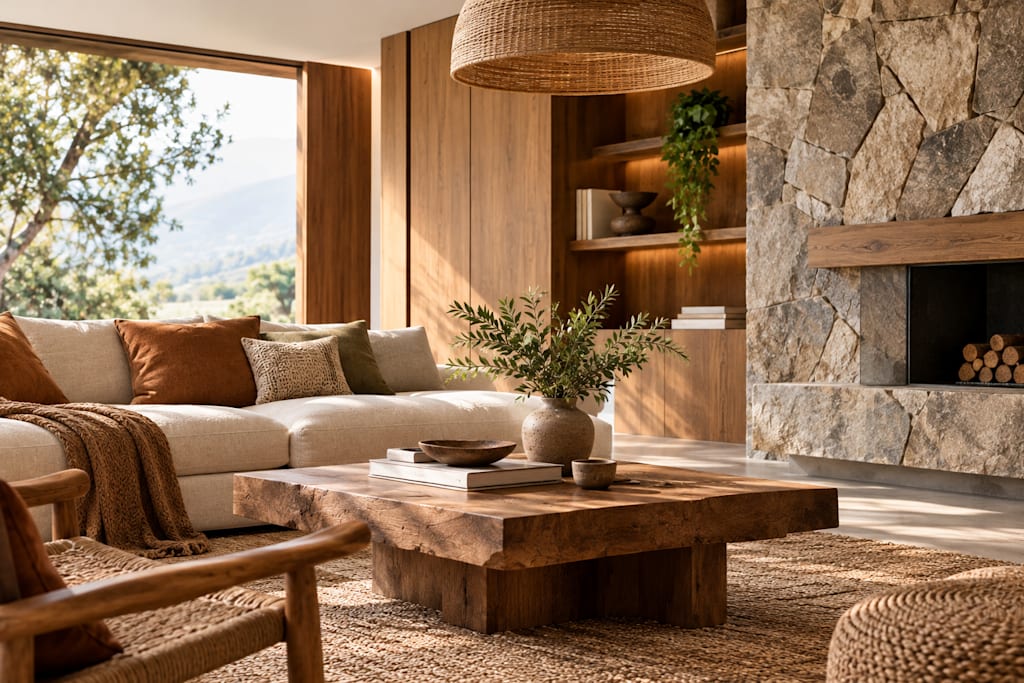
If you ask me what separates a house that feels memorable from one that feels merely tidy, I usually point to materials. Paint and furniture matter, but what you touch and see up close, like the grain in wood, the cool weight of stone, or the weave of a fabric, shapes how a room feels long after the trends have passed. Houzz's 2026 U.S. Fall Design Trends Report shows homeowners building rooms out of warm woods, real stone, and a mix of tactile finishes. Here is how I think about doing that well, and how you can do it in your own home without making the space feel crowded.
Why Natural Materials Keep Coming Back
Natural materials have a quality that manufactured finishes struggle to copy: no two pieces are exactly alike. A slab of oak, a block of travertine, or a handmade tile carries small variations that give a room character. They also age gracefully. Wood develops a patina, stone softens with use, and leather becomes more supple. Instead of looking worn out, they often look better with time.
There is a practical side too. Quality natural materials tend to last, which appeals to homeowners who would rather invest once than replace things every few years. And in a world full of screens, there is something grounding about surfaces that feel real.
Wood: The Foundation of Warmth
Wood is usually where I begin because it brings warmth into a room immediately. It does not have to be everywhere. A single statement piece, such as a dining table or a set of floating shelves, can set the tone.
Pay attention to tone and grain. Light oak feels airy and relaxed, walnut feels richer and more formal, and reclaimed wood brings a lived-in character. If you already have wood floors, choose furniture in a related but not identical tone so the room does not look like a matched set. Mixing two or three wood tones is perfectly fine, as long as they share a similar undertone.
Finishes matter as well. Matte or oiled surfaces tend to feel more natural than high-gloss ones, and they hide small scratches better.
Stone in Unexpected Places
Countertops and fireplace surrounds are the classic places for stone, but one of the most interesting developments is seeing it appear elsewhere. Designers are noticing stone move well beyond the kitchen counter and into everyday objects. A carved stone basin in a powder room, a travertine coffee table, or a lamp with a stone base can add weight and a sense of permanence.
When choosing stone, think about maintenance. Marble is beautiful but can stain or etch, while quartzite and honed granite are often more forgiving. Honed finishes, which are matte instead of polished, also feel softer and more modern. If you love a particular stone but worry about upkeep, try it in a low-traffic spot first, such as a side table, before committing to a kitchen counter.
Texture: Where the Layering Happens
Wood and stone give a room its bones. Texture is what makes it feel finished. Linen curtains soften light, a wool rug warms a hard floor, a leather chair adds a touch of richness, and handmade tile brings subtle irregularity to a wall or backsplash.
My rule of thumb is to bring at least three distinct textures into any room: something sleek, something coarse, and something plush. If everything is smooth, the space can feel cold. If everything is rough, it can feel heavy. The contrast is what creates depth.
How to Mix Materials Without Creating Chaos
Layering can go wrong when too many materials compete. A few guidelines help:
Choose a main material, a supporting one, and an accent. For example, oak as the main, stone as the support, and leather as the accent.
Repeat each material at least twice in the room so it feels intentional.
Vary scale. Pair a large, simple stone surface with small, detailed ceramics.
Keep your color palette tight so the textures can do the talking.
Leave some empty space. Natural materials look best when they have room to be noticed.
Caring for What You Choose
Natural materials reward a bit of care. Seal stone as recommended, oil wood when it looks dry, and clean leather with products made for it. Accept small marks as part of the story. That is the real appeal: a home that records the life lived in it.
Final Thoughts
You do not need to buy everything at once. Start with one wood piece, one stone element, and a few textiles, then let the room evolve. Choose materials you enjoy touching and looking at, and the layers will begin to feel natural rather than staged.
About the Creator
Enjoyed the story? Support the Creator.
Subscribe for free to receive all their stories in your feed.
Comments