
Vladimir Krull on Layered Interiors: A Designer's Approach
How texture, color, lighting and personal objects build depth and warmth in a room, and a step-by-step method for layering your home without clutter
What Are Layered Interiors?
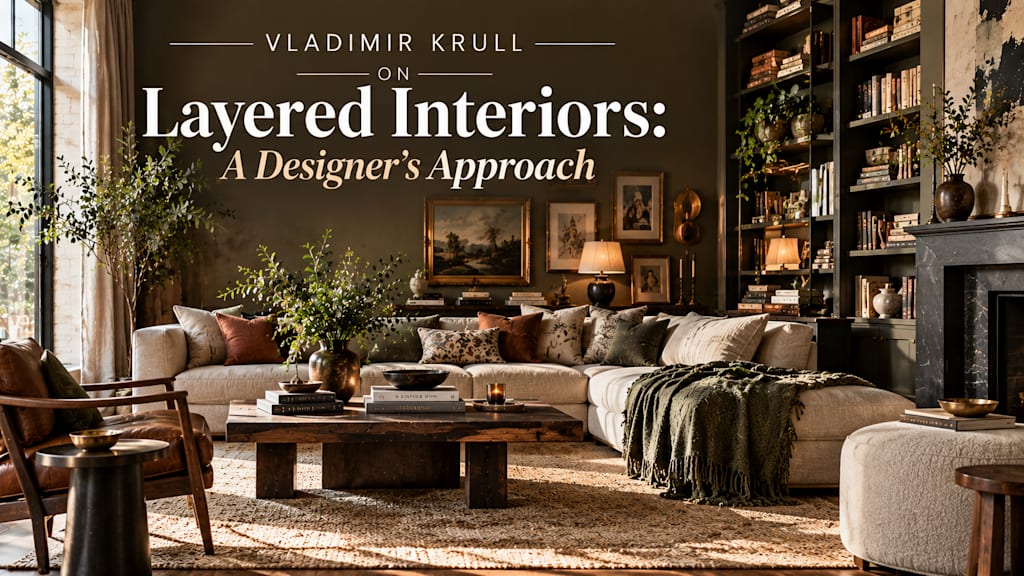
A layered interior is a room built in stages, with different textures, colors, patterns, lights and objects working together. Instead of a single bold gesture, the room gains depth from many thoughtful details that sit on top of one another, like the layers of a well-made meal.
I am Vladimir Krull, an interior designer, and layering is one of the most useful skills I teach clients. Many people tell me their room feels flat or unfinished, even though the furniture is good. In almost every case, the missing ingredient is layering. In this guide I will explain how I approach it, step by step.
Why Layering Matters
A room without layers can feel like a showroom: correct, but cold. Layers add warmth, character and a sense of time. They make a space feel collected rather than purchased in one afternoon.
Layering is also very practical. It allows you to change a room gradually, using inexpensive items such as cushions, throws, lamps and art. You do not need a full renovation to transform a space.
Start With a Strong Foundation
Every layered room needs a solid base. Before adding anything, I make sure the basics work: a sensible layout, comfortable furniture and a calm backdrop.
Choose a restrained color for walls and large pieces. This could be a warm white, a soft gray, a muted green or a gentle earth tone. This base allows the layers on top to stand out without competing.
Think of it as the canvas. The better the canvas, the easier it is to paint on it.
Layer One: Texture
Texture is the most powerful tool in layered design. It adds visual interest even when the color palette is quiet.
I like to include at least three contrasting textures in every room. For example, pair a smooth leather sofa with a chunky wool throw and a rough linen curtain. Add a woven basket, a ceramic lamp and a wooden table, and the room immediately feels richer.
Look for contrasts: soft and hard, shiny and matte, smooth and rough. These differences keep the eye moving and make the space feel rewarding to touch.
Layer Two: Color
Color layering does not mean using many colors. It means building a considered palette.
A simple method I use is the sixty-thirty-ten rule. Roughly sixty percent of the room is a dominant color, usually the walls and large furniture. Thirty percent is a secondary color, found in curtains, rugs or an accent chair. Ten percent is an accent, such as cushions, art or a vase.
Within this structure, tonal layering works beautifully. Use different shades of the same color, such as cream, sand and caramel, to create depth without clashing.
Layer Three: Pattern
Pattern adds personality, but it needs care. I follow a few guidelines.
Mix patterns of different scales. Combine a large pattern, such as a bold rug, with a medium one, like a striped cushion, and a small one, such as a subtle texture. Keep them within a shared color family so they feel connected.
Balance patterned items with plain ones. If the curtains are patterned, keep the sofa simple. Solid areas give the eye a place to rest.
Layer Four: Lighting
Lighting is often the most neglected layer, yet it changes everything. I plan three types of light in every room.
Ambient light is the general illumination, from ceiling fixtures or natural daylight. Task light is focused, such as a reading lamp or desk light. Accent light highlights features, such as art, shelves or a plant.
Use warm bulbs and, wherever possible, add dimmers. A room with several low sources of light feels far more inviting than one harsh overhead light. Lamps at different heights create a soft, layered glow.
Layer Five: Rugs, Curtains and Soft Furnishings
Soft furnishings finish a room. A rug anchors the seating area and adds warmth underfoot. Curtains soften windows and frame the view. Cushions and throws invite people to sit down and stay.
My advice is to choose a good rug first, since it sets the tone for the palette. Then add curtains in a complementary color, and finally gather cushions in varied sizes and textures. Odd numbers, such as three or five cushions, usually look more natural than pairs.
Layer Six: Art and Wall Decoration
Walls are an opportunity for storytelling. Hang art at eye level, and consider grouping pieces in a gallery arrangement for a collected effect. Mix framed prints, paintings, mirrors and even objects like woven plates.
Leave space between pieces so they do not feel crowded. A large mirror is also helpful, because it reflects light and adds depth.
Layer Seven: Personal Objects and Greenery
This final layer is what makes a room yours. Books, ceramics, family photographs, travel souvenirs and inherited pieces all tell a story.
Display them in small groups rather than scattering them. Vary heights and shapes, and leave empty space around each cluster. Add plants for life and freshness. Even a single leafy plant softens a corner.
A Simple Step-by-Step Method
If you want to layer a room, here is the order I follow.
First, edit the room and remove anything you do not love or use. Second, set the base: walls, large furniture and rug. Third, add lighting at several levels. Fourth, bring in textiles such as curtains, cushions and throws. Fifth, hang art and mirrors. Finally, add personal objects and plants.
Work slowly, and step back after each stage. If the room starts to feel crowded, stop and edit.
Layering Different Rooms
Living room. Combine a neutral sofa with mixed cushions, a textured throw, a rug, layered lamps and a gallery wall.
Bedroom. Start with crisp sheets, then add a duvet, a quilt, a throw and varied pillows. Include soft bedside lighting and art above the bed.
Dining room. Layer a tablecloth or runner, placemats, tableware and candles. Add a sideboard with lamps and objects.
Entryway. Even a small hallway can be layered with a console, mirror, lamp, tray and a runner.
The Importance of Editing
Layering is not the same as collecting everything. Good layering depends on editing. Every few months I suggest that clients walk through each room and ask whether every object still belongs.
A useful trick is to take one item away and see how the room feels. If nothing is missed, it was probably extra. This habit keeps layers intentional, and it stops a lovely, warm room from tipping into clutter.
Layering Through the Seasons
One of the joys of layered interiors is how easily they can change. In colder months, I bring in heavier throws, wool rugs, deeper colors and warm lamp light. In summer, I swap them for lighter linens, thinner curtains, fresh flowers and paler tones.
This seasonal rotation requires no major spending. A few cushion covers, a throw and some fresh greenery can refresh a room completely. It also keeps your home feeling alive throughout the year.
Layering on a Budget
You do not need an expensive budget to enjoy layered design. Secondhand shops, markets and online marketplaces are excellent sources for lamps, frames, baskets and small tables.
Start with the layers that cost the least and make the most difference: lighting, cushions, throws and plants. Add larger pieces such as rugs over time. Patience usually leads to better, more personal results than buying everything at once.
Mistakes to Avoid
The most common error is adding too much, too quickly. Layering requires restraint, and every item should earn its place.
Another is ignoring scale. Tiny accessories can disappear in a big room, while huge items can overwhelm a small one. A third is forgetting function. A beautiful room must also be comfortable and easy to clean.
Finally, avoid matching everything. A perfectly coordinated set can look flat. Aim for harmony, not identical pieces.
Layering in Open-Plan Homes
Open-plan spaces need extra care, because layers must connect different zones without creating confusion. I repeat a few colors and materials across the kitchen, dining and living areas, so the whole space feels related.
At the same time, I use rugs, lighting and furniture placement to define each zone. Pendant lights over a dining table, a large rug under the sofa and a console behind it all help the eye understand the layout.
Frequently Asked Questions
How do I know when a room is finished? When each layer has a purpose and the room feels balanced, stop. If you are unsure, remove one item and see how it looks.
Can I layer a small room? Yes. Use fewer, well-chosen layers and light colors, and keep surfaces clear.
Is layered design the same as maximalism? Not exactly. Layering can be calm and subtle, while maximalism is bolder and fuller.
Final Thoughts
A layered interior is created slowly, with care and curiosity. By building from a strong base and adding texture, color, light, pattern and personal objects, you give a room depth and soul.
Remember that no home is ever perfectly finished. Enjoy the process, add things you love and let your space grow with you.
About the Creator
Enjoyed the story? Support the Creator.
Subscribe for free to receive all their stories in your feed.
Comments