
Vladimir Krull on Hospitality Interior Design for Residential Spaces
How the layout, lighting, materials and comfort of leading hotels and restaurants can make an ordinary home feel welcoming, relaxed and refined.
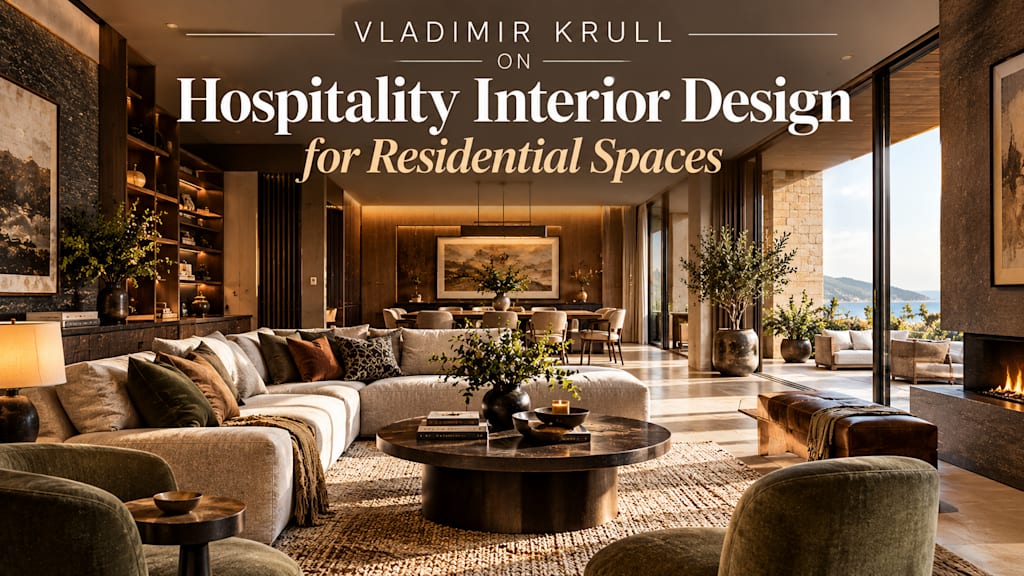
What Is Hospitality Interior Design?
Hospitality interior design is the design of spaces made to welcome people, such as hotels, restaurants, cafés and lounges. These interiors are planned to make guests feel comfortable, relaxed and cared for from the moment they walk in.
I am Vladimir Krull, an interior designer, and I often borrow ideas from hospitality when designing homes. Many clients tell me they feel calm in a good hotel and wish their own home felt the same way. The good news is that this feeling can be created at home. In this guide I will explain the principles behind hospitality design and how to apply them to residential spaces.
Why Bring Hospitality Ideas Home?
Hospitality designers have a clear goal: guests should enjoy their stay and want to return. To achieve this, they think carefully about comfort, atmosphere, flow and detail.
Those same ideas work in a house or apartment. A home is where we rest, entertain and recover from the day. When we apply the thinking of a boutique hotel, our daily life becomes more comfortable and more pleasant.
Principle One: Create a Welcoming Arrival
In a hotel, the entrance is carefully designed. The lobby sets the tone, and guests know instantly that they are in a considered space.
At home, the entryway deserves the same attention. Provide a place to sit, hooks or a closet for coats, a console for keys and a mirror. Add a warm light and perhaps a plant or a small piece of art. A welcoming arrival makes the entire home feel organized and inviting.
Principle Two: Plan the Flow of the Space
Great hospitality spaces guide people naturally from one area to the next. There are clear paths, defined zones and comfortable places to pause.
In a home, consider how you and your guests move. Keep walkways clear, and group furniture so that conversation feels easy. Define areas, such as seating, dining and reading, using rugs, lighting or furniture placement. Open-plan homes benefit especially from this zoning.
Principle Three: Layered, Warm Lighting
Lighting is the secret weapon of hospitality design. Restaurants and hotels rarely depend on a single bright overhead light. Instead, they combine soft lamps, wall lights, candles and concealed lighting.
I recommend the same approach at home. Use warm bulbs, add dimmers and place lights at different heights. Lamps on sideboards and bedside tables create intimacy. Accent lights over art or shelves add depth. In the evening, lower the lights to create a relaxed atmosphere.
Principle Four: Comfort Is the Priority
Hospitality design always remembers that people must be comfortable. Seating is supportive and inviting, beds are well dressed and surfaces are pleasant to touch.
At home, invest in a good mattress, quality bedding and a sofa that you truly enjoy sitting on. Add soft throws and plump cushions. Choose fabrics that feel good against the skin. Comfort is not an extra. It is the foundation of a welcoming space.
Principle Five: Texture and Quality Materials
Boutique hotels often rely on rich materials: natural stone, solid wood, brass, velvet, linen and leather. These materials look and feel luxurious, and they create a sense of quality.
You do not need to use expensive versions everywhere. Choose one or two statement materials, such as a marble tray or a velvet chair, and keep the rest simple. Mixing textures in a calm color palette gives a home a refined, layered look.
Principle Six: Attention to Detail
What separates hospitality from ordinary design is detail. Fresh flowers at reception, perfectly folded towels, a carefully chosen scent and a thoughtful welcome all add up.
At home, small details create the same effect. Display fresh flowers or greenery, use matching hangers, keep towels folded neatly and choose quality hardware. Light a candle or use a subtle diffuser. These details cost little, but they make daily life feel special.
Principle Seven: Create a Sense of Calm
Many hotels use a restrained color palette to help guests relax. Soft neutrals, muted greens, warm grays and gentle earth tones are common, often with a few darker accents for contrast.
In a home, a calm palette reduces visual noise. Keep surfaces tidy, and conceal clutter with attractive storage. Choose a few meaningful objects instead of many small ones. The result is a space that feels peaceful the moment you enter.
Scent, Sound and the Senses
Hospitality spaces appeal to all of the senses, not only sight. Many hotels use a signature scent, gentle background music and carefully chosen textures to shape the atmosphere.
You can do the same at home. Choose a subtle fragrance, such as a natural candle or a light diffuser, and avoid anything overpowering. Soft music in the evening can set a relaxed mood. Use rugs, curtains and upholstered furniture to absorb echo and reduce noise. When a room sounds, smells and feels good, it feels better to be in.
Smart Storage and Hidden Practicality
Behind every polished hospitality space is excellent storage. Staff supplies, linens and equipment are kept out of sight, which keeps the public areas calm and orderly.
At home, plan storage that hides daily clutter. Built-in cabinets, ottomans with storage, baskets, trays and closed cupboards all help. Give everything a place, such as a drawer for chargers and a tray for keys. A tidy surface instantly makes a room feel more luxurious.
Applying Hospitality Design Room by Room
The bedroom as a hotel suite. Dress the bed in crisp white or soft neutral linens, with layers of duvet, throws and pillows. Add bedside lamps, blackout curtains and a comfortable chair or bench at the foot of the bed.
The bathroom as a spa. Use quality towels, a simple tray for toiletries, soft lighting and a plant. Stone, wood and matte finishes add a spa-like quality. Keep surfaces clear and store everyday items in baskets or cabinets.
The living room as a lounge. Create a comfortable seating arrangement, with a mix of sofas and chairs. Add a rug, layered lighting and a coffee table styled with books and flowers. A bar cart or drinks tray makes entertaining easy.
The dining area as a restaurant. Choose a table that fits your space, with comfortable chairs. Use a pendant light over the table, and style it with candles, linen napkins and good tableware.
The kitchen as a café. Keep the countertops tidy, with a few beautiful objects such as a coffee machine, a bowl of fruit and a wooden board. Add stools if there is room, to make the kitchen a social spot.
The home office as a business lounge. Include a comfortable chair, a good desk, task lighting and a calm backdrop. A small side table for coffee adds a touch of hospitality.
Learning From Restaurants and Cafés
Restaurants and cafés teach us a great deal about atmosphere. They know that guests linger in places with comfortable seating, warm light and a sense of intimacy. Booths, banquettes and cushioned benches create cozy corners, while a mix of seating types keeps the space interesting.
At home, a built-in bench along a dining wall, a window seat or a pair of armchairs in a corner can create the same inviting effect. Add a small table and a lamp, and you have a spot where people naturally want to sit and talk.
Making Guests Feel Welcome
Hospitality at home also involves the experience you offer visitors. A guest room can follow the same rules: fresh linens, a lamp, a small shelf or table, a water carafe and a few books. Provide extra towels, a place to put a suitcase and a charging point.
These considerate touches show care, and guests will remember them long after they leave.
Mistakes to Avoid
One mistake is copying a hotel too literally. A home should still feel personal, not like a corporate lobby. Add your own art, books and mementos.
Another is overlooking practical needs. Hospitality spaces are designed to withstand heavy use, so choose durable fabrics and finishes for your busiest areas.
A third mistake is relying only on overhead lighting. Without layers of light, even beautiful rooms can feel harsh.
Frequently Asked Questions
Can hospitality design work in a small apartment? Yes. Focus on lighting, a calm palette and quality bedding, and keep surfaces clear.
Is hospitality design expensive? Not necessarily. Many ideas, such as lighting, fresh flowers and neat styling, cost very little.
What is the easiest way to start? Begin with the bedroom. Better bedding and warmer lighting make an immediate difference.
Final Thoughts
Hospitality interior design teaches us that comfort, atmosphere and detail matter as much as style. By applying these principles to residential spaces, you can create a home that welcomes you and your guests every day.
Begin with one room, focus on light and comfort, and add thoughtful details over time. Before long, you may find that your own home feels like the best place you could stay.
About the Creator
Enjoyed the story? Support the Creator.
Subscribe for free to receive all their stories in your feed.
Comments