
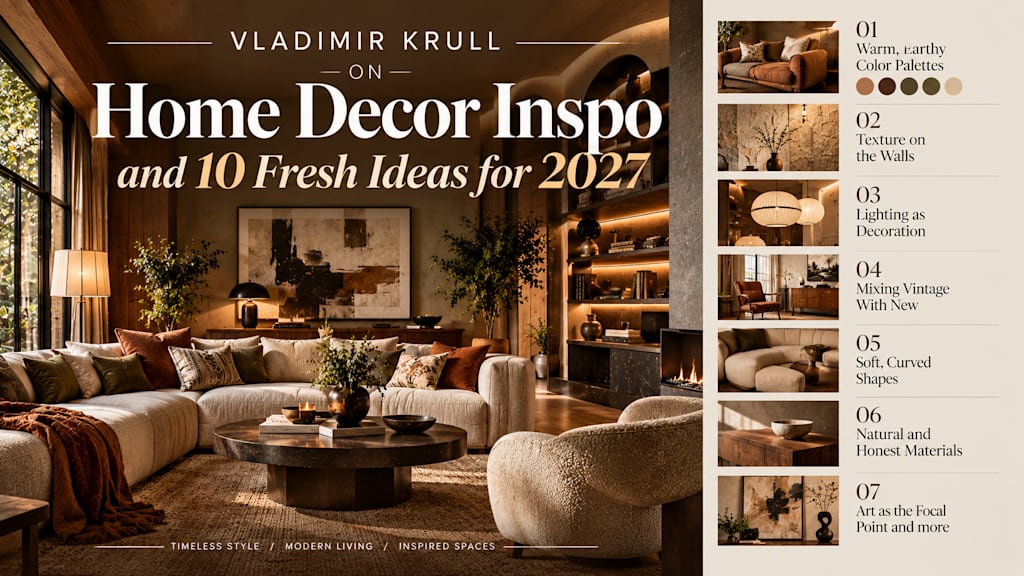
Vladimir Krull on Home Decor Inspo and 10 Fresh Ideas for 2027
A designer's guide to finding home decor inspiration, turning it into a plan and trying ten fresh ideas that suit real homes
What Home Decor Inspo Really Means
Every week someone shows me a photograph and says, "This is the look I want." That picture is what people now call home decor inspo, short for inspiration. It might come from a magazine, a hotel lobby, a friend's living room or a screen full of saved images.
I am Vladimir Krull, an interior designer, and I love inspiration. But I have also seen how easily it can mislead. A beautiful photograph shows a moment, not a way of living. In this guide I will explain how I use inspiration properly, and then share ten fresh ideas I think are worth trying as we move into 2027.
Why Inspiration Helps and Where It Hurts
Inspiration is useful because it shows us what is possible. It helps you discover colors, shapes and moods you might never have considered, and it gives you language to explain your taste to a designer, a partner or a builder.
The problem begins when a picture becomes a recipe. Rooms in photographs are usually styled for the camera, lit perfectly and cleared of everyday life. Copy them exactly and your home may feel stiff. Treat them as a starting point instead, and they become a wonderful guide.
How I Turn Inspiration Into a Plan
Before I suggest any idea, I follow a simple process with clients.
First, gather around twenty images you love and place them side by side. Second, look for patterns. Do you keep choosing warm woods, soft light or deep colors? Those repeating elements are your real taste. Third, write three words that describe the mood, such as calm, layered and natural. Finally, test every purchase against those three words.
This method keeps a home consistent, and it saves money, because you stop buying items that do not belong to your own story.
Idea 1: Warm, Earthy Color Palettes
Cool grays and stark whites are giving way to warmer shades. Think clay, sand, olive, caramel and soft brown. These colors feel grounded and are easy to live with.
You do not have to repaint a whole house. Introduce earthy tones through cushions, a rug or a painted wall in a small room. Pair them with natural materials such as wood and linen for a calm, welcoming result.
Idea 2: Texture on the Walls
Plain painted walls are being joined by limewash, plaster effects and subtle textured finishes. These surfaces catch light differently throughout the day, which gives a room quiet depth.
If a full plaster finish is beyond your budget, try a textured paint effect on one wall, or add large textile art. The goal is to give the eye something soft and tactile to rest on.
Idea 3: Lighting as Decoration
Lamps and pendants are no longer only functional. A sculptural floor lamp or a handmade ceramic table lamp can act as a decorative object, even when switched off.
Choose a few memorable fixtures and use warm bulbs. Place lights at different heights to build a layered glow. Good lighting is one of the cheapest ways to make a room feel expensive.
Idea 4: Mixing Vintage With New
Combining old and new gives a home character. A vintage mirror above a modern console, or an antique chair beside a clean-lined sofa, makes a room feel collected rather than ordered from a single catalogue.
Keep one element in common, such as a wood tone or a color, so the mix feels deliberate. Secondhand markets are a rewarding place to begin, and they are kinder to the planet.
Idea 5: Soft, Curved Shapes
Rounded sofas, arched mirrors, pebble-shaped tables and curved doorways are softening interiors. Curves feel friendly and relaxed, especially against a background of straight walls.
Try one or two curved pieces first, such as a round coffee table or an arched mirror, and balance them with simple, straight-lined items nearby.
Idea 6: Natural and Honest Materials
Wood, stone, clay, wool, cotton and linen are staying strong because they age beautifully and feel good to touch. I prefer finishes that show their natural grain and character rather than perfect, glossy surfaces.
When possible, choose materials that can be repaired or refinished. They last longer, and they develop a patina that makes a home feel lived in.
Idea 7: Art as the Focal Point
Instead of treating art as an afterthought, many people are building rooms around one meaningful piece. A large painting, a striking print or a handmade textile can set the tone for the whole space.
Hang art at eye level, and do not be afraid of scale. One large work often looks better than several small ones scattered around. Buy what you love, not what matches the sofa.
Idea 8: Collections on Display
Books, ceramics, baskets, travel finds and inherited objects are being displayed with pride. A shelf of things you truly care about tells a story that no showroom can.
Group items in clusters, vary their heights and leave breathing space. Edit regularly, so the display stays intentional rather than crowded.
Idea 9: Furniture That Works Harder
Homes are doing more jobs than ever, so furniture that adapts is valuable. Think of a storage ottoman, a fold-away desk, extendable dining tables or a sofa that converts for guests.
The best versions look good first and function second, so the practical element never feels like a compromise. Measure carefully before buying, especially in smaller spaces.
Idea 10: Plants and Natural Light
Greenery makes a room feel alive. Choose plants that suit your light conditions, from trailing varieties on shelves to a single large plant in a corner. Pair them with clear windows and light curtains so daylight can flow.
You do not need many plants. A few healthy ones in simple pots do more than a crowded jungle that you cannot maintain.
Decor Inspo on a Budget
Good style does not depend on a large budget. Begin with changes that cost little but make a difference: repaint a wall, swap cushion covers, rearrange furniture, add a lamp and display a collection.
Shop secondhand, visit local makers and buy fewer, better things. Over time, a thoughtful home grows richer than one filled all at once.
Mistakes to Avoid When Using Inspiration
One common mistake is following too many trends at the same time, which leaves a home feeling confused. Another is ignoring how you actually live. A white sofa may look wonderful online, but not if you have young children.
A third mistake is buying before planning. Measure rooms, check lighting and choose a palette first. Finally, avoid comparing your home with edited photographs. A real home should look lived in.
Building a Mood Board That Works
A mood board is the simplest planning tool I know. Collect images, fabric samples, paint swatches and small objects, and place them together on a board or a digital page. Seeing colors and textures side by side shows you quickly what works and what fights.
Keep it honest. If an item looks out of place next to the rest, it probably will be in your room too. Update the board as your ideas change, and bring it with you when you shop, so you can compare real samples in real light.
Room-by-Room Starting Points
If ten ideas feel like a lot, begin with one room. In the living room, try warm colors, layered lighting and a statement piece of art. In the bedroom, focus on soft textiles, calm colors and bedside lamps. In the kitchen, add open shelving, a plant and a handmade bowl. In the hallway, use a mirror, a console and one beautiful light.
Small changes in a high-traffic room are the most rewarding, because you see them every day. Once one room feels right, you will have a clearer sense of what to do next.
Keeping Inspiration Personal
Whatever you collect, filter it through your own life. Ask whether an idea suits your climate, your family, your budget and your daily routine. Choose what makes you feel at ease, and leave the rest. A home built from honest choices will always feel more convincing than one assembled from borrowed pictures.
Frequently Asked Questions
Where can I find home decor inspo? Magazines, design books, hotels, galleries, local shops and nature are all excellent sources, along with image-saving apps.
How do I choose between ideas? Pick the two or three that match your mood words, and ignore the rest.
Are trends worth following? Use them selectively. Choose small, changeable items for trends and invest in lasting pieces for the foundation.
Final Thoughts
Home decor inspo is most useful when it reveals what you already love. Use it to learn your taste, not to copy someone else's room. Try a couple of the ideas above, test them patiently and keep what feels right.
A home that reflects you will always look better than one that simply follows the latest picture.
About the Creator
Enjoyed the story? Support the Creator.
Subscribe for free to receive all their stories in your feed.
Comments