
Vladimir Krull on Decorating with Vintage and Antiques
Mixing old and new pieces for a home with character, history and sustainable style
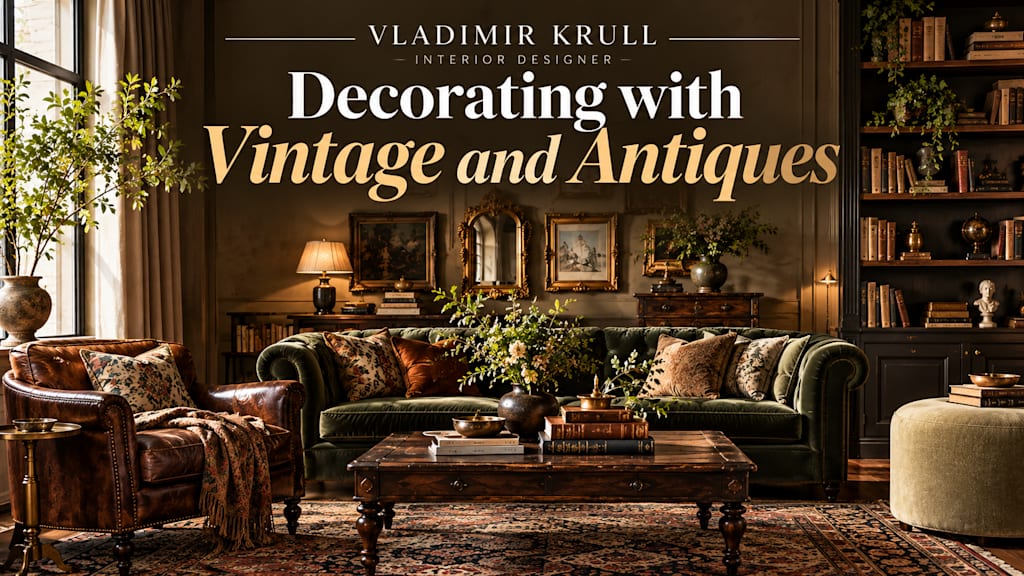
Some of my favorite moments as a designer happen in antique shops and flea markets. I may be searching for a small table, and I find a carved chair or a brass lamp that instantly gives a room a story. New furniture rarely offers that.
Vintage and antique pieces are becoming more popular, and I understand why. They bring character, quality and a sense of time into a home. In this article I will explain how I use them, what to look for and how you can mix old and new with confidence, even if you have never bought an antique before.
Vintage or Antique: What Is the Difference?
People often use the words together, but there is a distinction. Antique usually refers to items that are around one hundred years old or more. Vintage describes pieces that are older than a few decades but not quite antique. You may also hear the word secondhand, which simply means previously owned.
For decorating, the exact label matters less than the quality and the feeling. What counts is whether the piece is well made, in good condition and something you truly like.
Why They Make Sense Today
There are three reasons I recommend them.
First, quality. Older furniture is often built from solid wood with traditional joinery, so it can last far longer than much modern flat-pack furniture.
Second, sustainability. Reusing an existing piece is one of the most environmentally friendly choices, since nothing new needs to be manufactured.
Third, individuality. A vintage item is rarely identical to something in your neighbor's home. It gives your space a personal signature.
There is also a fourth reason that I find just as important: value. Good vintage pieces often hold their worth, and sometimes even increase in value, while new mass-produced furniture usually loses value the moment it leaves the shop.
Start With One Special Piece
If you are new to this, I suggest beginning with a single statement item. It might be an old mirror, a wooden sideboard, a painted cabinet or a pair of antique chairs.
Place it where it can be noticed, then build the rest of the room around it. A good vintage piece often works like a piece of art, setting the tone for the entire space.
Mixing Old With New
My favorite approach is blending eras. A traditional wooden chest looks lovely beside a clean, modern sofa. A vintage rug adds depth to a contemporary room. An antique mirror can soften a plain, minimalist hallway.
To keep the mix harmonious, repeat something across the pieces, such as a color, a wood tone or a shape. That small link helps old and new feel like they belong together, and the room avoids looking like a museum or a jumble.
Where to Find Good Pieces
There are many ways to shop. Local antique shops and flea markets offer the thrill of discovery. Estate sales and auctions can provide excellent value. Online marketplaces and secondhand stores make browsing easy, and family attics sometimes hold hidden treasures.
Take your time. The best finds often appear when you are not in a hurry, and patience usually leads to better choices than buying quickly.
When you find a dealer you trust, keep in touch. Good dealers often notice items you may like and will happily tell you about them before they are widely advertised.
What to Check Before Buying
Examine each piece carefully. For furniture, check that joints are firm, drawers slide properly and there are no signs of woodworm or serious damage. Look underneath and inside, since these areas reveal a lot.
Smell matters too. A strong musty odor can be hard to remove. Ask questions about the piece's history if the seller knows it, and measure your space, including doorways, before you commit.
For items such as mirrors, check the glass. A little age spotting can look charming, but deep damage may not. For upholstery, ask about the frame and padding, since reupholstering can cost more than the piece itself.
Repair, Restore or Leave Alone
Not every old item needs perfecting. A few marks and a soft patina often add charm. Over-restoring can sometimes reduce character, and may even lower the value of genuine antiques.
That said, safety comes first. Electrical items such as old lamps should be checked or rewired by a qualified professional. Upholstered pieces may need fresh padding or fabric, which can also be a lovely chance to personalize them.
If you are unsure about a valuable piece, speak to a professional restorer before changing anything. Some repairs cannot be undone.
Vintage Pieces Room by Room
In the living room, a vintage coffee table, an old armchair or a collection of framed prints adds depth. In the dining room, an antique table and mismatched chairs create a relaxed, welcoming atmosphere.
In the bedroom, old nightstands, a carved headboard or a vintage dresser feel warm and personal. In the kitchen, wooden chopping boards, old pottery and aged copper pans bring charm, and an old farmhouse table can serve as a wonderful island.
In the hallway, a vintage console, a coat stand or an old mirror makes an excellent first impression. Even in the bathroom, a small antique cabinet or framed artwork can add surprising character, as long as it can tolerate moisture.
Styling Vintage Pieces
Give your special items room to breathe. A single beautiful chair looks better with some empty space around it than squeezed among others.
Group smaller objects in threes or fives, such as ceramics, books and candlesticks. Use plants to freshen things up. Good lighting also makes a big difference, so add a lamp or wall light to highlight a favorite item.
Change your displays from time to time. Moving a vase, swapping a painting or rotating a few objects keeps a collection feeling alive.
Caring for Your Pieces
Older items need gentle care. Keep wooden furniture out of strong direct sunlight, which can fade and dry it. Avoid placing it directly next to heaters. Dust regularly with a soft cloth, and use appropriate wax or polish occasionally.
Use coasters and mats to protect surfaces, and handle fragile items carefully. With sensible care, these pieces can last for many more decades.
Small Vintage Finds That Make a Big Difference
You do not have to buy furniture to enjoy vintage style. Smaller items are easier to place, cheaper to buy and simple to change. Old books with beautiful spines, framed botanical prints, glass bottles, brass candlesticks, ceramic bowls and woven baskets all add warmth.
I often recommend collecting a theme, such as blue-and-white pottery, wooden bowls or old maps. A collection looks intentional, and it grows slowly as you find new pieces. Display them together on a shelf or table, and the group becomes more striking than any single item.
Using Vintage Textiles
Rugs, linens and fabrics are another wonderful area. An old rug with softened colors can anchor a room beautifully, and its wear often adds to its appeal. Vintage quilts and tablecloths bring handmade warmth, while antique linen makes lovely cushions.
Check textiles for damage, moths and strong smells before buying. Many items can be gently washed or professionally cleaned, but delicate fabrics need extra care.
Vintage Lighting
Lighting is one of my favorite places to use old pieces. A vintage lamp, a brass wall light or an old glass pendant can bring a glow that modern fixtures sometimes lack.
Always have older electrical items inspected and rewired for safety. Choose warm bulbs, and consider a new shade if the old one is damaged. With the right bulb, an antique lamp becomes the most flattering light in the room.
Think About Budget
Vintage does not have to be expensive. Many practical items, such as wooden chairs, side tables and frames, are affordable. Save larger spending for items you will use every day, such as a quality table or sofa.
Be wary of buying only because something is old. A piece should be useful, beautiful or meaningful, otherwise it is just clutter.
A Simple Room Example
Picture a bedroom with a plain, modern bed and neutral linens. Beside it sits an old wooden nightstand with a worn top, topped with a vintage brass lamp. On the wall hangs a framed print found at a market. None of these items match, yet together they feel warm and collected, because the wood and brass tones echo each other.
Common Mistakes
One mistake is filling a room entirely with antiques, which can feel heavy. Another is ignoring scale, such as a huge cabinet in a tiny room. A third is buying damaged items hoping to fix them later and never doing so.
Balance, patience and honest assessment will help you avoid all three.
Final Thoughts
Decorating with vintage and antiques is about more than style. It is about valuing craftsmanship, caring for the planet and giving your home a story.
Start with one piece you truly love, mix it with modern basics and let your collection grow slowly. Over time your home will feel rich, personal and unlike anyone else's.
About the Creator
Enjoyed the story? Support the Creator.
Subscribe for free to receive all their stories in your feed.
Comments