
Vladimir Krull on 2027 Kitchen Trends Worth Trying
Materials, layouts and finishes shaping the kitchen of the future, and which ones last.
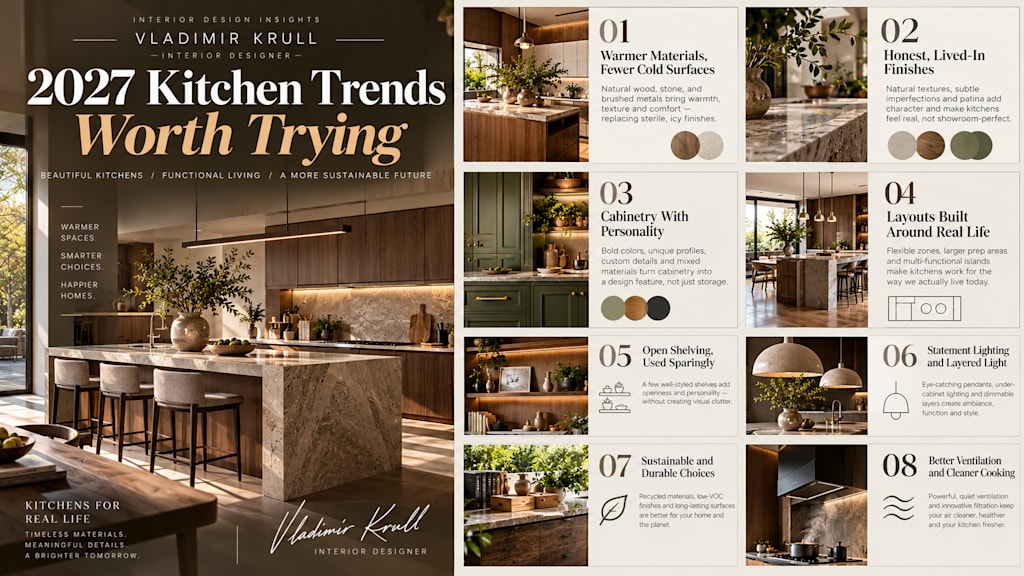
The Kitchen Is Still the Heart of the Home
Whenever I start a new project, the kitchen is almost always where the conversation gets serious. It is where we cook, talk, work, do homework and gather with friends. It is also the most expensive room to change, so mistakes cost real money.
That is why I treat kitchen trends carefully. Some are genuinely useful, and others will look dated in three years. After many years of designing kitchens for different families, budgets and house types, I have learned to separate ideas that improve daily life from ideas that simply look good for a season.
Here is my honest view of the ideas I think are worth trying in 2027, how to use them wisely and which ones I would approach with caution.
Why Kitchens Are Changing
Before the trends, it helps to understand what is driving them. Kitchens are no longer used only for cooking. They are home offices, social spaces, play areas and sometimes the only room where everyone is together at the end of the day.
Because of this, people want kitchens that feel warm, flexible and comfortable. They want less of the sterile, laboratory look and more of the welcoming, lived-in feeling of a room you actually want to spend time in. Almost every trend I describe below grows from that simple wish.
1. Warmer Materials, Fewer Cold Surfaces
The all-white, high-gloss kitchen is losing its grip. People now want kitchens that feel welcoming, not clinical. I am seeing more natural wood, warm stone, soft plaster-style walls and matte finishes.
If you are renovating, consider wood-toned cabinets or a wooden island set against calmer painted units. The mix of warm and plain surfaces gives a kitchen depth, and it feels far less like a showroom.
Warmth does not require a rustic look. A sleek, modern kitchen can still feel warm if the materials are right. A slim oak shelf, a stone worktop with soft veining or a matte cabinet in a gentle clay tone can change the whole mood without changing the style.
2. Honest, Lived-In Finishes
Closely linked to this is a love of finishes that age well. Unlacquered brass, honed stone, solid timber and handmade tiles all develop a patina with use.
I like to explain this to clients early. A little wear on a worktop or a soft change in a metal tap is not damage, it is character. If you prefer a spotless look, choose harder, more stain-resistant surfaces. If you like the idea of a kitchen that grows with you, choose natural materials and accept their marks.
Be honest with yourself about your tolerance. Some people love a marble counter with a few rings from wine glasses. Others find it stressful. Neither answer is wrong, but your answer should guide your material choice.
3. Cabinetry With Personality
Plain slab doors still have a place, but I am seeing more detail: shaker profiles, fluted fronts, slim rails and two-tone combinations. A darker color on lower cabinets with lighter tones above is an easy way to add interest without overwhelming a room.
My advice is to choose one feature rather than five. Fluting on an island, or a deep color on a pantry wall, will feel deliberate. Too many details compete with each other and make the kitchen feel busy.
Handles and knobs are another small opportunity. Switching hardware is one of the cheapest ways to refresh a kitchen, and it lets you experiment with finishes such as aged brass, dark bronze or simple wood.
4. Layouts Built Around Real Life
Good design is not only about looks. In 2027 I expect even more focus on how kitchens actually work. That means a clear work triangle between the sink, hob and refrigerator, generous prep space and storage that is easy to reach.
Smart touches are worth considering: deep drawers instead of low cupboards, a hidden pantry, a built-in recycling station and enough outlets for appliances. These details rarely appear in magazine photos, but you will enjoy them every day.
I often ask clients to describe a normal weekday morning in their kitchen. Where do they make coffee? Where do the lunch boxes get packed? Where do the keys end up? Those small answers shape a layout far better than any trend report.
5. Open Shelving, Used Sparingly
Open shelves can make a kitchen feel airy and personal, but they also collect dust and grease. I usually recommend them in small amounts, perhaps one or two shelves for everyday plates, glasses and favorite jars.
Keep closed storage for anything messy or rarely used. That balance keeps the kitchen practical while still showing a bit of personality. Placing open shelves away from the hob will also reduce how often you need to clean them.
6. Statement Lighting and Layered Light
Lighting is one of the most overlooked parts of a kitchen. I always plan three layers: task lighting under cabinets, ambient lighting overhead and accent lighting, such as pendants over an island.
A well-chosen pendant can act as jewelry for the room. Use warm bulbs, add dimmers and avoid relying on a single bright ceiling light. The result is a kitchen that works for cooking at noon and relaxing in the evening.
Do not forget daylight. If you can, position work areas near windows, and keep window treatments simple so that natural light can do its job.
7. Sustainable and Durable Choices
More clients ask me about durability and environmental impact. I welcome this. Reclaimed wood, recycled surfaces, energy-efficient appliances and long-lasting hardware all make sense.
The most sustainable kitchen is often the one you do not need to replace in ten years. Choose quality construction, timeless shapes and repairable parts. A good kitchen should serve a family for a long time.
It also helps to think about what you can keep. Perhaps the cabinet boxes are sound and only the doors need replacing. Perhaps the layout works and only the worktops need changing. Reusing what is good saves money and reduces waste.
8. Hidden Technology
Modern kitchens contain plenty of technology, from induction hobs to smart ovens and built-in charging points. The trend I like most is making them blend in. Integrated appliances, concealed sockets and a clean backsplash keep the design calm.
Do think about wiring and placement early. It is far easier to hide technology during construction than afterward. A few well-placed pop-up sockets or a charging drawer can remove clutter from counters completely.
9. Better Ventilation and Cleaner Cooking
This is not the most glamorous topic, but I believe it deserves attention. A powerful, quiet extractor and good airflow make a kitchen healthier and more comfortable. Induction cooking is also growing in popularity because it heats quickly and keeps the room cooler.
If you are planning a renovation, discuss ventilation at the very beginning. It affects cabinet layout, ceiling design and even the look of the room.
10. Kitchens That Connect to the Rest of the Home
The boundary between kitchen and living space keeps softening. Instead of a closed-off room, many people want a kitchen that flows into the dining or living area.
I like to design this carefully. Use consistent materials and colors so the spaces feel related, but allow subtle separation through lighting, rugs or a change in flooring. A sideboard or banquette can help define zones without building a wall.
Trends I Would Approach With Caution
Not everything deserves your money. Very bold, high-contrast color schemes can tire quickly. Ultra-trendy tile patterns may date faster than plain ones. And a very specific style, such as a strong theme, can be hard to live with long term.
My rule is simple: spend on the parts that are hard to change, such as layout, cabinetry and worktops, and keep the more fashionable elements to things you can easily replace, like paint, hardware, lighting and accessories.
Planning a Kitchen Update on a Budget
You do not need a complete renovation to enjoy these ideas. Here are a few modest steps that make a big difference.
Repaint or respray the cabinets in a warmer color. Replace the hardware. Add under-cabinet lighting and a statement pendant. Swap a few closed doors for a single open shelf. Introduce a wooden chopping board, ceramic jars and a plant to add warmth.
Small changes, done carefully, can make an older kitchen feel fresh and current.
How to Plan Your Own Kitchen Update
Begin with how you actually use the space. Make a list of daily frustrations, such as limited counter space or poor lighting. Then decide on a budget, including a margin for surprises.
Gather ideas in a folder, then look for patterns in what you save. Those patterns reveal your genuine taste, which is more useful than any trend list.
Finally, speak with a professional before making expensive decisions. A good designer or kitchen planner can often spot layout problems and save you money in the long run.
Final Thoughts
The best kitchen trends in 2027 share one theme: warmth with practicality. Choose materials you enjoy touching, layouts that suit your routine and lighting that makes the room feel kind.
If you do that, your kitchen will remain a place you love long after the current trends have moved on.
About the Creator
Enjoyed the story? Support the Creator.
Subscribe for free to receive all their stories in your feed.
Comments