
Vladimir Krull: 7 Interior Design Trends for 2027
A designer's look at the styles, colors and materials shaping the year ahead.
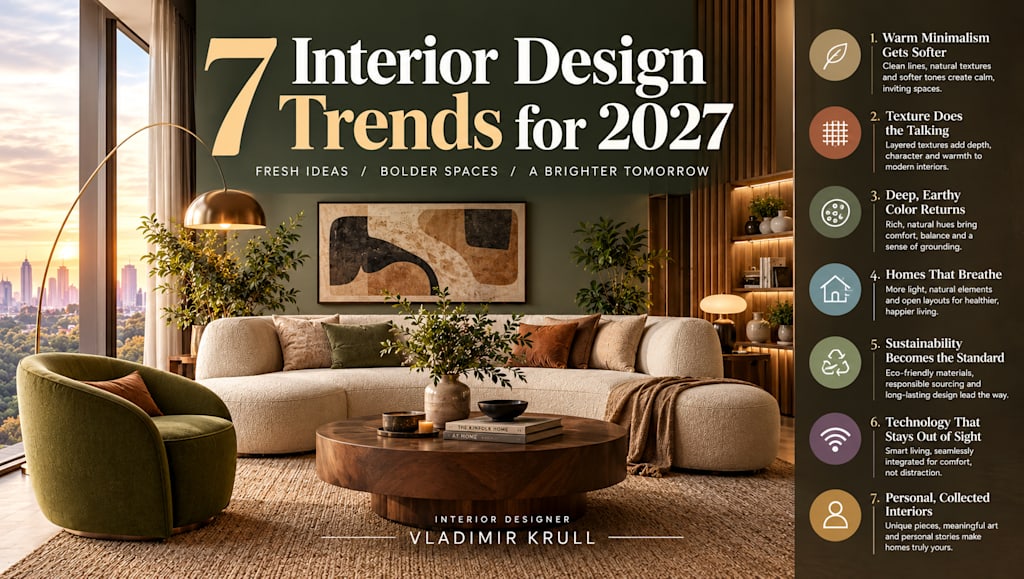
Why I Watch Trends but Never Follow Them Blindly
Every autumn, people ask me what is coming next in interior design. I enjoy the question, but I always answer with a warning: a trend is a tool, not a rule. The best rooms I have seen never looked like a catalog page. They looked like the people who lived in them.
Over the years I have learned that the loudest trends age fastest, while the quiet ones tend to stay useful. That is why I look for the reasons behind a style before I recommend it to anyone.
Still, patterns do appear, and they tell us how people want to feel at home. As I look toward 2027, I see a clear move away from showy and toward calm, honest and personal. Below are the seven directions I am watching most closely, along with my advice on using each one without regretting it three years from now.
1. Warm Minimalism Gets Softer
Cold white boxes are fading. I still love clean lines and clear surfaces, but people now want warmth alongside them. Think creamy off-whites, oatmeal, soft clay and wood with visible grain. The goal is a room that feels quiet rather than empty.
My advice is simple. Edit what you own, then keep a few pieces with real character. One handmade bowl on a clear shelf says more than ten matching accessories ever could.
2. Texture Does the Talking
Color will always matter, but texture is becoming the real star. I am seeing limewash and plaster walls, bouclé and linen upholstery, rough stone and brushed metal. In a restrained palette, texture is what gives a room depth.
When I plan a space, I try to include at least three different surfaces: something smooth, something rough and something soft. That mix keeps a neutral room from feeling flat, and it invites people to touch things, which is a quiet kind of luxury.
3. Deep, Earthy Color Returns
After years of pale walls, I expect more people to try rich color. Moody greens, burnt umber, deep terracotta and ink blue all feel grounded and grown-up. They make a room feel wrapped, almost like a hug.
You do not need to commit a whole house. Start with a study, a dining room or even a single wall behind a bed. Always test large paint samples and look at them in morning and evening light, because dark colors change a lot during the day.
4. Homes That Breathe
Biophilic design, which simply means bringing nature indoors, is moving past the occasional potted plant. I see more thought about natural light, views, airflow and honest materials like wood, cork and clay.
I do not mean turning your living room into a jungle. I mean arranging seating near windows, choosing plants that suit your actual light, and using natural finishes that age well. A home that connects you to the outdoors usually feels calmer, and that matters more than any fashionable color.
5. Sustainability Becomes the Standard
For a long time, sustainable design was treated as a special category. I believe by 2027 it will simply be part of good design. Reclaimed timber, vintage furniture, repairable pieces and durable fabrics are all gaining ground.
My own rule is to buy fewer things and buy them well. A solid chair that can be reupholstered will outlive three cheaper ones. Mixing antiques with modern pieces also gives a room history, which new furniture alone rarely achieves.
6. Technology That Stays Out of Sight
Smart homes are growing up. People no longer want visible gadgets everywhere. They want lighting scenes that shift through the day, shades that open on a schedule, hidden speakers and charging points tucked inside furniture.
The best technology is the kind you forget about. The key is planning early. Wiring, outlets and control points are far easier to place before walls are finished, and a good plan keeps the design clean instead of cluttered with cables and screens.
7. Personal, Collected Interiors
This is the trend I love most. Homes are becoming more individual, filled with art, books, travel finds and inherited pieces. Matching furniture sets feel less appealing than a room built slowly over time.
If you are starting from scratch, do not rush. Buy the large essentials first, then add objects as you find ones you truly like. A flea market lamp, a family photograph in a good frame or a small painting from a local artist can give a space more soul than any showroom display.
Final Thoughts: Choose What Fits Your Life
If there is one idea connecting all seven trends, it is intention. People want rooms that feel considered, comfortable and true to them, rather than rooms designed to impress strangers.
Pick two or three of these ideas that genuinely appeal to you and leave the rest. A home that tries to follow every trend usually ends up following none of them well.
So before you repaint or buy anything, ask yourself how you want to feel in the space. Then let a trend help you get there, only if it fits. That approach has never failed me, and I expect it will serve you well in 2027 and long after.
About the Creator
Enjoyed the story? Support the Creator.
Subscribe for free to receive all their stories in your feed.
Comments
There are no comments for this story
Be the first to respond and start the conversation.