
The Walk to Gokyo Ri Gave Me a View I Still Think About
Standing at Base Camp with the mountain right in front of them.
Most people who plan a trip to the Everest region picture one thing, standing at Base Camp with the mountain right in front of them. Fewer people know about Gokyo, and even fewer make the extra effort to get there. That is part of what makes it special.
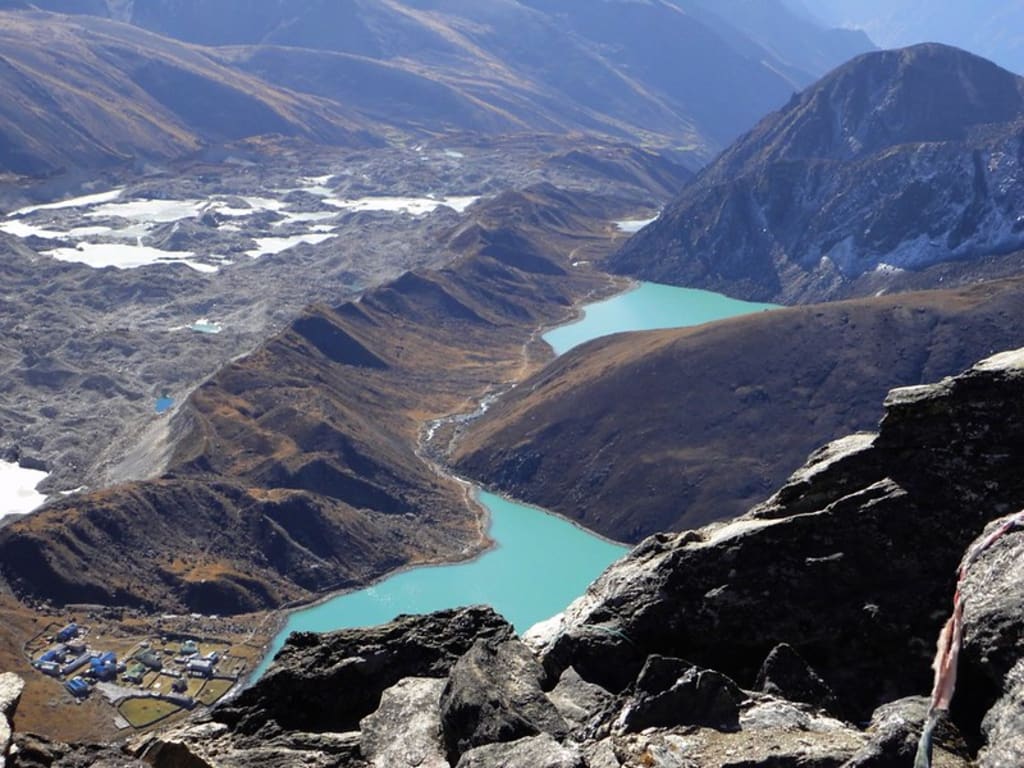
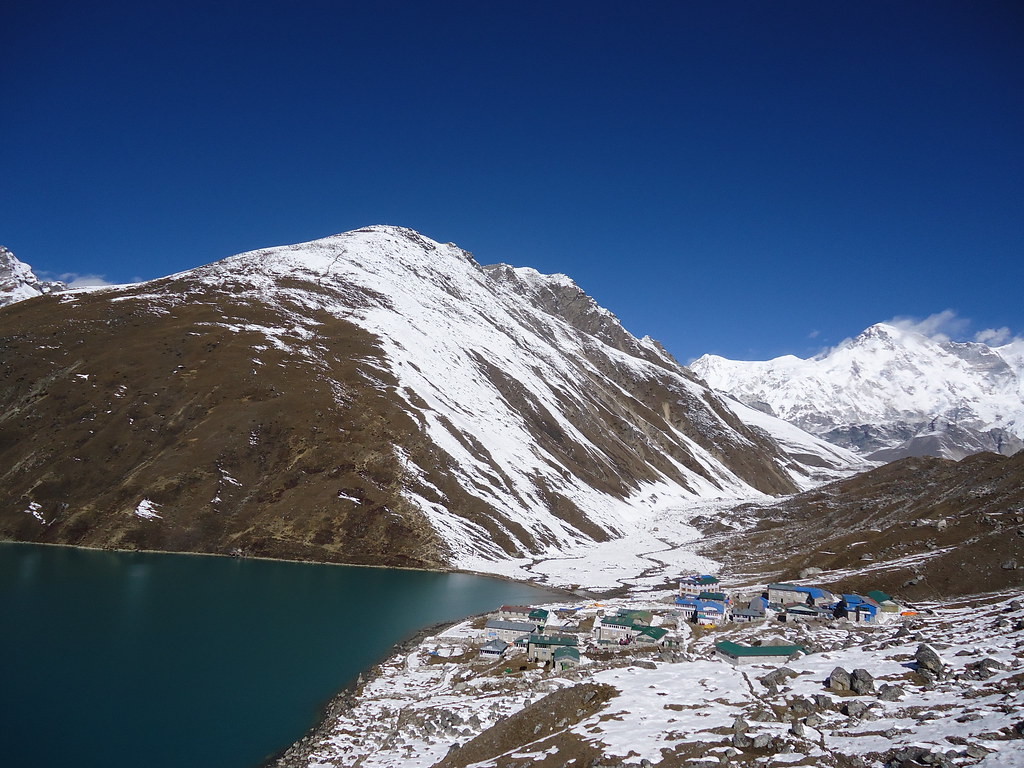
Gokyo is a small village sitting beside one of the highest lake systems in the world. The lake itself is a deep turquoise color, almost unreal against the brown and white of the mountains around it. You do not expect water that color at nearly five thousand meters, but there it is, calm and clear, with snow peaks reflecting on the surface on a still morning.
Getting to Gokyo takes more than the usual route to Base Camp. After reaching Base Camp and Kala Patthar, the trail keeps going. You cross Cho La Pass, which sits above five thousand meters and is a real glacier crossing, not just a steep walk. It takes more care, more energy, and a bit more nerve than the earlier days of the trek. Once you are through the pass, the trail drops down toward Dragnag and then into the Gokyo Valley itself.
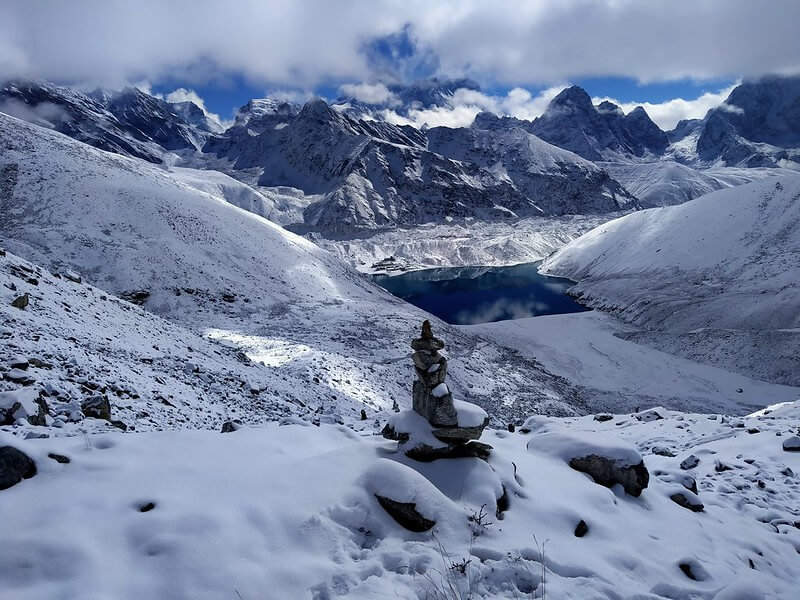
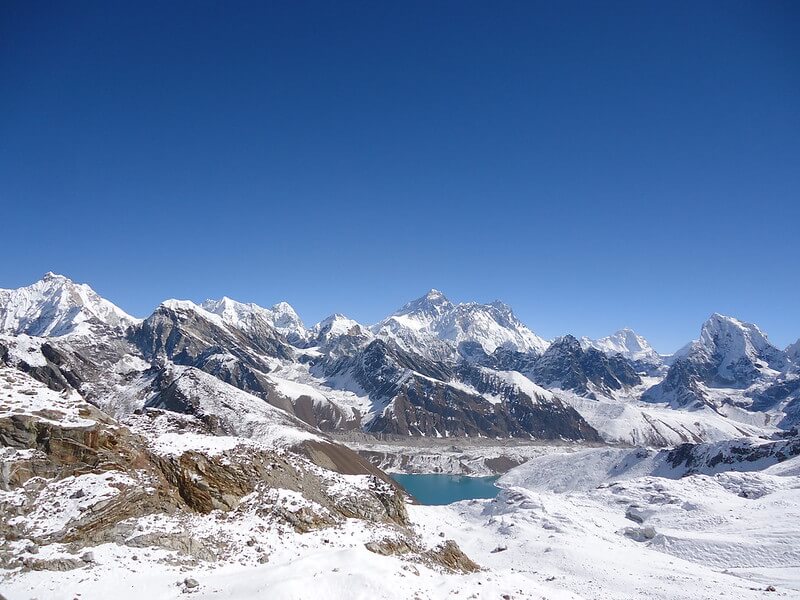
The real reward comes the next morning, before sunrise, on the climb up Gokyo Ri. It is not an easy climb. Your legs are already tired from the days before, and the air at that height makes even slow steps feel like work. But the top gives you something rare. From one single point, you can see four of the world's tallest mountains at the same time, Everest, Lhotse, Makalu, and Cho Oyu, all lined up across the horizon. Below you, the lakes of Gokyo sit next to the Ngozumpa Glacier, the longest glacier in Nepal, stretching out like a frozen river of rock and ice.
People often compare this view to the famous one from Kala Patthar. They are both incredible, but they feel different. Kala Patthar gives you Everest close and direct. Gokyo Ri gives you the whole picture, the lakes, the glacier, and several giants of the Himalaya all in one frame. Standing there, with almost no other trekkers around, makes the moment feel personal in a way that the busier parts of the trail do not.
This route is not for everyone. It takes more days, more effort, and a level of comfort with altitude and basic glacier travel that the standard trek to Base Camp does not require. But for anyone who already has some trekking experience and wants to see a side of the Everest region that most visitors skip, the walk to Gokyo and the climb up Gokyo Ri are worth every extra step.
Some places you visit once and remember. Gokyo Ri is one of those places that stays with you long after you are back at sea level, still trying to describe a view that is hard to put into words even months later.
The Days Before Gokyo
It helps to understand what comes before you ever reach the lake, because the walk there is part of why the place feels earned rather than handed to you. The journey usually begins the same way most Everest region treks do, with a short flight into Lukla, one of the more thrilling airstrips you will ever land on. From there the trail follows the Dudh Koshi river through small villages, swinging bridges, and pine forest, slowly climbing toward Namche Bazaar.
Namche is where most people first feel the air thinning. It sits above three thousand meters, and a rest day here is not optional if you want your body to keep up later. From Namche the trail continues through Tengboche, home to one of the most respected monasteries in the region, then on toward Dingboche, where the landscape turns drier and more open, the trees finally giving way to bare rock and wide valleys.
By the time most trekkers reach Lobuche and then Gorak Shep, the air is noticeably thinner and the days noticeably colder. This is the stretch where Everest Base Camp and Kala Patthar usually come first, before the trail turns toward Gokyo. Many trekkers stop here, satisfied, and head back down the way they came. The ones who continue toward Gokyo are choosing a longer, harder, and in many ways more rewarding version of the same journey.
Crossing Cho La Pass
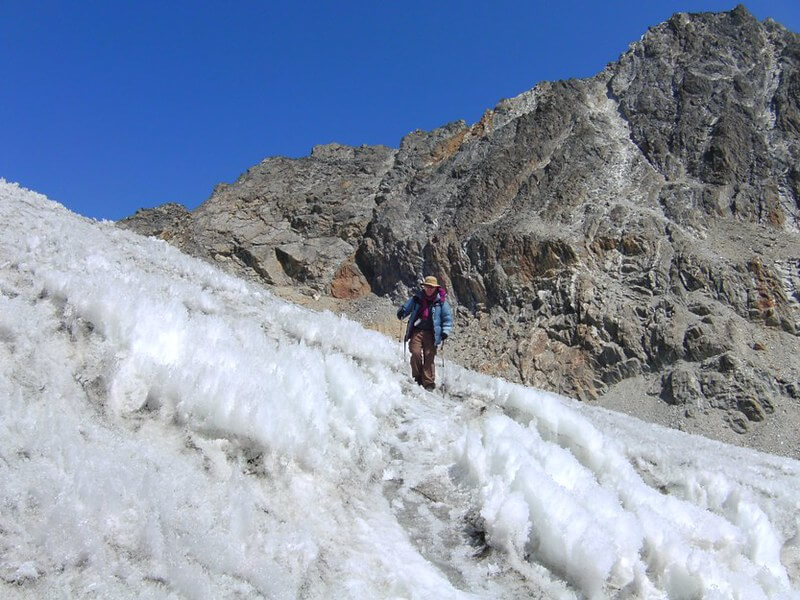
The path from Base Camp toward Gokyo does not simply continue along flatter ground. It goes up and over Cho La Pass, a high crossing above five thousand meters that involves real glacier travel. This is not the kind of day you can take lightly. Depending on conditions, there may be sections of ice and snow where basic crampons help, and the exposure on parts of the pass demands steady footing and a clear head.
It is also, strangely, one of the most memorable days of the whole trek. The silence up there is different from anywhere else on the route. There are no villages, no yaks grazing on hillsides, just rock, ice, and sky. Reaching the far side and beginning the descent toward Dragnag feels like a genuine achievement, not just another day of walking.
Arriving at Gokyo
After the pass, the trail drops down and eventually opens up into the Gokyo Valley, and this is where the lakes begin to appear. There are six of them in total, scattered along the valley at increasing altitude, with the village of Gokyo sitting beside the largest. Arriving here after the effort of Cho La Pass makes the first sight of that turquoise water feel almost unreal, like the trail has rewarded you for the hardest day with the most beautiful one.
The village itself is small, a handful of teahouses built right at the edge of the lake, with prayer flags strung between rooftops and the mountains rising steeply on every side. Evenings here are quiet. There is no real nightlife at this altitude, just tea, conversation with other trekkers, and an early sleep before the next morning's climb.
The Morning Climb
Waking up before sunrise to climb Gokyo Ri is not pleasant in the moment. It is dark, it is cold enough that your water bottle might have ice forming inside it, and your body is already tired from the days before. The climb itself is steep and constant, switchbacking up loose rock and scree, and every step at that altitude takes more effort than it would anywhere else in the world.
None of that matters once you reach the top. The first light hitting Everest, Lhotse, Makalu, and Cho Oyu all at once is the kind of moment that makes the early wake up call and the tired legs completely worth it. Below, the lakes catch the same light, and the Ngozumpa Glacier stretches out like a frozen river cutting through the valley.
Why It Stays With You
It is not the easiest path through the Everest region, and it is not the most famous one either. But for those willing to take the extra days and the extra effort, it offers something the busier trail to Base Camp alone cannot, a quieter, wider, and in many ways more complete picture of what the Himalaya actually looks like up close.
About the Creator
Enjoyed the story? Support the Creator.
Subscribe for free to receive all their stories in your feed.
Comments
There are no comments for this story
Be the first to respond and start the conversation.