
The Stories That Never Make It Onto the Menu
After years in professional kitchens, I began paying more attention to the people, decisions and responsibilities that guests rarely see.

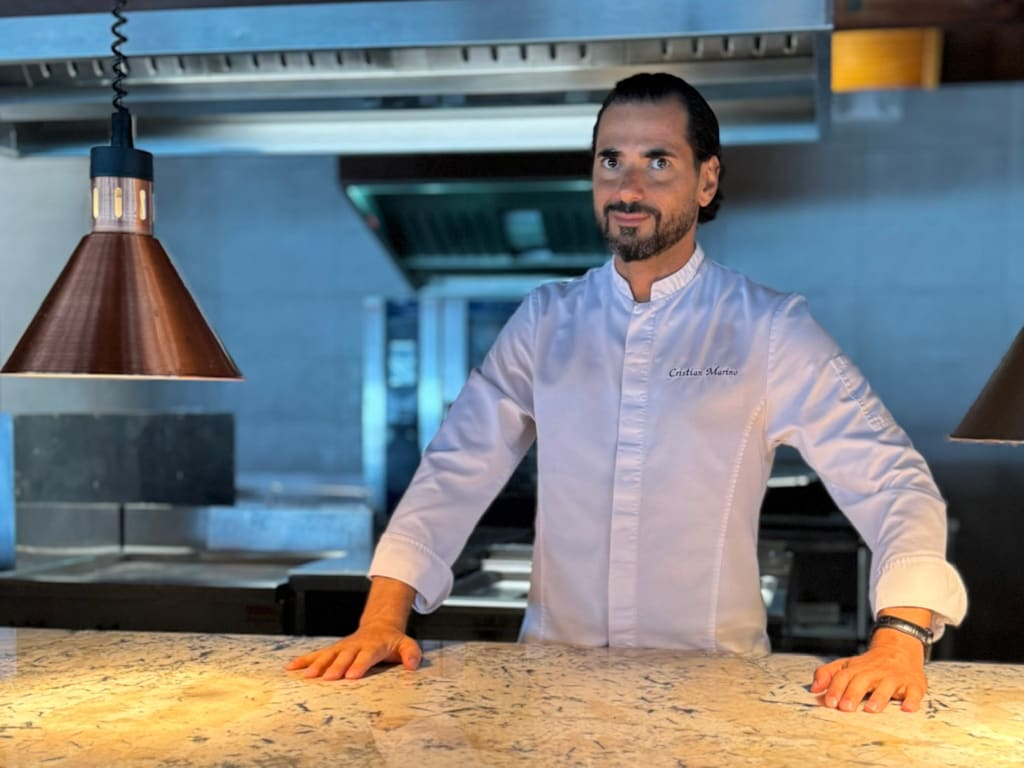
A menu can tell you a great deal about a restaurant. It describes the dishes, the ingredients and sometimes the traditions behind them.
What it cannot tell you is everything that happened before those dishes reached the table.
A delivery may have arrived late. Guest numbers may have changed after the food was ordered. A colleague may have needed help at a difficult moment, while someone else was trying to keep the service moving.
By the time dinner begins, many of these situations have already been resolved.
Guests will probably never know about them. And, in most cases, there is no reason they should.
But after spending much of my life working in professional kitchens, hotels and resorts, I have become increasingly interested in this other side of hospitality.
The part that rarely makes it onto the menu.
What experience teaches you to notice
My career has taken me through different countries, cultures and working environments, including years at sea.
I have worked with people who approached the same responsibilities in very different ways. Some were exceptionally organised. Others relied on experience and instinct. I have seen teams perform well under considerable pressure, and I have seen relatively simple situations become unnecessarily complicated.
For a young chef, much of the attention naturally goes towards learning the profession.
You want to improve your techniques, understand ingredients, develop consistency and become someone your colleagues can rely on.
Those things never stop being important.
But as your responsibilities grow, you begin to see how many factors influence what eventually appears on a plate.
Consider something as ordinary as a change in guest numbers.
From outside the operation, it may seem like a straightforward adjustment. Inside a hotel, that change can involve purchasing, food preparation, staffing, storage and sometimes waste that could have been avoided.
The problem is no longer just about cooking.
It is about how information moves between departments, when decisions are made and who takes responsibility for their consequences.
I find these questions increasingly interesting because they are often overlooked during conversations about hospitality.
We talk about standards, quality and guest satisfaction. We should.
But I sometimes wonder whether we spend enough time examining the everyday decisions that make those results possible.
The questions that stay with me
Not every professional experience offers an immediate lesson.
Sometimes you finish a demanding day knowing that something could have been handled differently, without being entirely certain what the better decision would have been.
You move on because the following day brings new responsibilities.
Later, perhaps while considering a similar situation, you begin to see details that were less obvious at the time.
This is one of the reasons I have become more interested in writing.
Writing gives me an opportunity to return to a question without the pressure of having to resolve it immediately.
For example, I have often thought about the difference between having an experienced professional in a team and building an operation that depends entirely on that person's knowledge.
Experience should be valued. I strongly believe that.
But if a hotel struggles whenever one person is absent, is that a sign of exceptional individual competence, or has the organisation failed to share essential knowledge?
Perhaps both things are true.
That is what makes these subjects worth exploring.
I have also become more cautious about accepting explanations that appear too simple.
A mistake does not always begin with the person who makes it. An operational improvement does not necessarily work simply because it looks convincing during a meeting. A sustainability initiative may have good intentions but still fail if the practical arrangements have not been considered.
These are not questions with answers that fit neatly into a few sentences.
They deserve attention, particularly from people who understand what daily operations actually involve.
Why I wanted to write beyond the kitchen
I began sharing professional experiences and reflections online in 2018.
At the time, writing was a way to document observations from my work and occasionally examine subjects that interested me beyond the immediate demands of being a chef.
Over the years, the range of those subjects expanded.
Food remained central to my professional identity, but I found myself wanting to write more about the people and systems surrounding it.
How hospitality organisations make decisions. How experienced professionals pass on knowledge. How operational expectations affect employees. And how the choices made behind the scenes eventually influence what a guest experiences.
I also wanted room to discuss culinary culture without treating food exclusively as a collection of recipes or techniques.
In 2026, that writing developed into Cristian Marino Journal, an independent publication dedicated to hospitality, leadership, culinary culture and the wider questions connected to these fields.
It was not a decision to move away from being a chef.
If anything, it came from wanting to look more closely at the profession I had spent so many years practising.
I do not approach every subject believing I already know the answer. My experience gives me a perspective, but it does not make that perspective the only valid one.
Other professionals may have encountered different circumstances or reached different conclusions.
I welcome that.
An observation becomes more valuable when it encourages someone to examine a situation from another angle, including when they disagree.
What remains after service
One of the peculiar things about hospitality is how quickly the work disappears.
A dining room is prepared, guests arrive, food is served and the tables are cleared.
The following day, much of the process begins again.
We remember certain dishes, important occasions and particularly difficult services. But there are countless smaller moments that influence how a team works and how people experience their profession.
A conversation that prevented a misunderstanding. A decision that made someone's work easier. A problem that returned because nobody had addressed its cause.
Some of these moments taught me more than the occasions that appeared impressive from the outside.
I still enjoy the practical side of being a chef. The preparation, the organisation, the anticipation before service and the satisfaction of seeing a team deliver what it has worked towards.
I also know that a successful service does not tell the whole story of how a workplace is functioning.
That is something I try to keep in mind when I write.
Not everything worth discussing happens in front of the guest.
And not every important story in hospitality is about food.
Cristian Marino
Executive Chef, Author & Founder of Cristian Marino Journal
About the Creator
Enjoyed the story? Support the Creator.
Subscribe for free to receive all their stories in your feed.
Comments
There are no comments for this story
Be the first to respond and start the conversation.