
The Letter Was Dated September 3. The Applause Came on September 8.
A four-hour Musk documentary, a Starlink election claim, and the legal threat that sold more tickets than any trailer could.
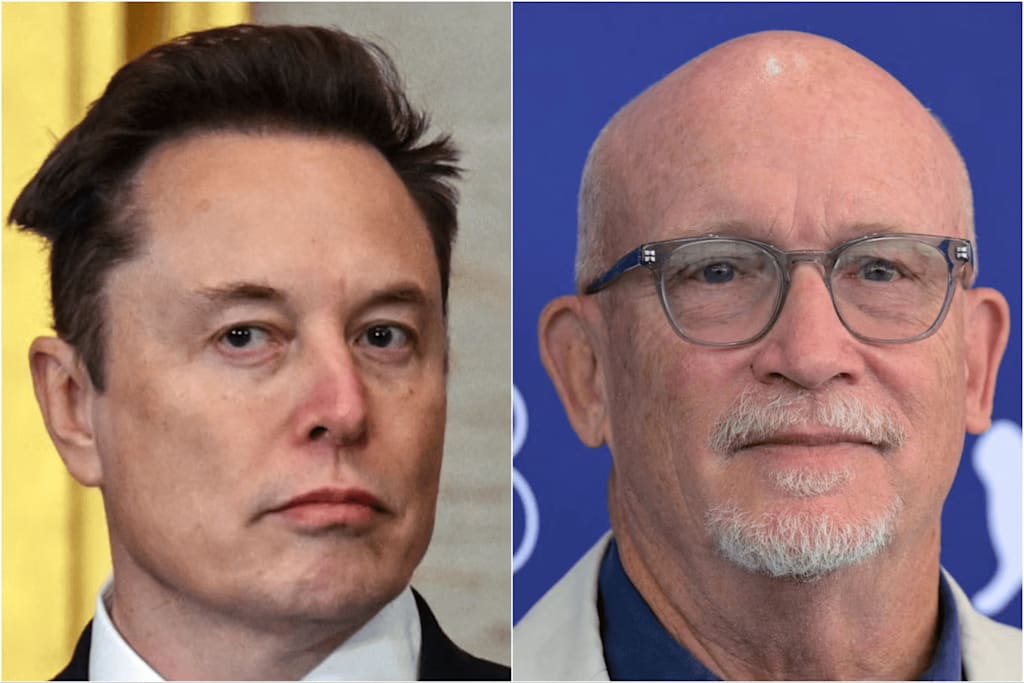
A letter dated September 3, and a trial that premiered early
On September 8, on the Lido in Venice, in the Sala Grande, the last of the four-hour credits rolled and the lights came up. The audience stood. The applause lasted five minutes. At the same moment, in a Los Angeles law office, a printer pushed out its final page. The date on the paper was September 3. The recipient: Jigsaw Productions. The sender: Alex Spiro. Above the signature was a line: if the content is not revised, HBO, Bleecker Street, and Universal Pictures will be sued.
The film received applause in Venice. The legal letter had already been sent before Venice.
Gibney's film is called Musk. Four hours. South African childhood. Silicon Valley entrepreneurship. Tesla. SpaceX. X. Fourteen children. Multiple women. The controversy lands in the final section: the 2024 United States presidential election. The former girlfriend Ashley St. Clair sits before the camera. She says that before the election, Musk told her to "release the anomaly in the matrix." He also said, "I have tens of thousands of space lasers." Gibney asks: What did you think that meant at the time? She answers: I don't know what other space lasers he has.
The legal letter fastens onto Starlink. Spiro writes: Starlink is not connected to any ballot-counting system. Multiple state election agencies, cybersecurity experts, and fact-checking organizations already refuted this in November 2024. The Associated Press fact-check report lists the details: voting devices are not connected to the internet. Paper records. Manual audits. David Becker of the Center for Election Innovation & Research wrote in an email: Starlink cannot be used to hack or change the result of a U.S. presidential election. It did not happen, and it could not happen.
These facts are on the table. The legal letter does not say the film fabricated anything. It says the film "implies." Implication is an old documentary tool. Editing. Music. The order of interviews. Pauses. Spiro admits in the letter that defamation does not require an explicit accusation. That sentence also lays out the difficulty of the lawsuit. To sue for defamation, Musk must prove Gibney knew the content was false and still spread it. The 1964 case New York Times v. Sullivan set the "actual malice" threshold for public figures. Musk is a public figure. A top one. Gibney can say: I presented multiple viewpoints. I let the former girlfriend speak. I let the legal letter speak. I let the fact-check speak. A documentary is not a press release. It does not need the subject's signature.
So the legal letter slides toward another place: public opinion. The theatrical release is October 16. Before the Venice premiere, the film was a topic within festival circles. After the letter went out, headlines from Agence France-Presse, Reuters, the Associated Press, the New York Post, and CBC all carried some version of "Musk threatens to sue." People who might have bought an art-house ticket now see clips on X. The Streisand effect. Gibney told the media: Musk should embrace free speech. Musk posted on X, calling Gibney a "bitter old man" and a "terrible person." Under the post, someone linked to movie tickets.
Gibney is not filming power for the first time. He has an Oscar. He made Taxi to the Dark Side, Zero Days, We Steal Secrets. His habit is to point the camera at powerful people and wait for their lawyers. This time, the letter arrived before the premiere. Asked about it in Venice, the producers responded concisely: critical scrutiny of influential public figures is protected by the First Amendment. That sentence is enough in court. It is also enough in the public square.
Starlink is hard to touch for several reasons. The numbers: more than 11,000 satellites in orbit. The X platform. In the 2024 election, Musk donated $259 million to groups supporting Trump. After Trump's victory, Musk led the Department of Government Efficiency. SpaceX is a major Defense Department contractor. Several rural counties used Starlink during the election to access electronic poll books. Voting devices are not connected to Starlink. Poll-book access was connected. Two facts exist at the same time. A private entrepreneur holds both space communications and the global public square. That structure turns "would he" into "could he," and then into "dare he." The documentary does not need to prove it happened. It only needs the audience to see the structure.
In the film, Gibney uses an AI-generated Musk. The digital Musk is based on a public-speech database and says things Musk has said. Gibney explains it as the unreality of his narrative meeting reality. The technique is controversial. AI ethics. Documentary boundaries. Actor or synthesis. But it also answers a practical problem: when the subject refuses to appear, the creator finds another way. The legal letter says Gibney refused to verify with Musk. Gibney's team says it tried and got no response. Musk, when the film was announced in 2023, called it a "hit piece." Both sides are writing their own scripts.
There is another legal layer. U.S. defamation law for public figures does not stop at "inaccurate." It requires "actual malice": knowledge of falsity or reckless disregard for the truth. The legal letter accuses Gibney of "refusing to verify" and "preset conclusions." Those words carry weight in journalism ethics. In court, they must become evidence. Gibney can hand over interview records, emails, an edit timeline. He can say the film does not conclude; it lets different people speak. The First Amendment protects opinions and also protects a documentary's use of editing to express a point of view. Spiro writes that "defamation does not require an explicit accusation." That sentence turns around and helps Gibney: without an explicit accusation, there is no clear target.
The AP fact-check makes the technical issue clear. Nearly 10,000 election jurisdictions. Voting machines are not online during voting. Almost all ballots have paper records. Manual audits verify electronic counts. Starlink satellites are in the sky. Ballots are on paper. There is no physical connection between them. Becker says "it could not happen." That is a fact. The documentary's Starlink segment also does not say "it happened." It lets St. Clair recall a sentence and lets the audience connect the dots. The legal letter calls this implication. Implication is not a factual statement. Implication is part of documentary grammar.
But technical impossibility does not equal public unconcern. A private entrepreneur simultaneously controls space communications and a global social platform. He campaigned publicly in the election. He donated $259 million. He entered the Department of Government Efficiency. His company receives defense contracts. These are public records. They do not prove Starlink rigged the election. They prove a concentration of power. The documentary asks about that concentration. The legal letter answers with technical impossibility. The two sides are not speaking about the same thing. The audience can see the mismatch.
In the fall of 2026, Hollywood is lining up stories about tech giants: OpenAI's Sam Altman in Artificial; Zuckerberg in The Social Reckoning; Musk in Gibney's film. Silicon Valley giants have accumulated economic and political power. The public demand for scrutiny is growing too. Gibney said in an interview that he hopes this is a starting point for discussion, for world citizens to take power back from tech oligarchs. That sentence can be debated. The question itself has already entered the cinema.
A legal letter can make distribution lawyers meet a few more times. It can make a theater chain think for a second before scheduling. It can sell a few more tickets for October 16. It cannot move Starlink satellites out of orbit, stop X from pushing posts, connect ballot-counting systems to satellites, or make the audience leave.
September 8, Venice, five minutes of applause. September 3, the legal letter. October 16, theaters. Three dates. One in the Italian sea breeze. One in a Los Angeles printer. One on a ticketing website. Gibney's film will not change the election. It might change how people see Starlink and X. It will not make Musk post less. It will make more people go to the theater on October 16. The legal letter has already done the advertising.
After the screening, a cleaner finds a translation-headset instruction sheet under a seat. In the Los Angeles law office, the printer stops. On X, under a post, someone asks: where can I watch it? Another replies: October 16.
About the Creator
Jin
Writer of reamstories
https://reamstories.com/jin
Enjoyed the story? Support the Creator.
Subscribe for free to receive all their stories in your feed. You could also become a paid subscriber, letting them know you appreciate their work.
Comments
There are no comments for this story
Be the first to respond and start the conversation.