
The Last Hurdle: Liu Xiang’s “Third Path” Was Never a Path
For eleven years he held a government post he never sat in. Then an inspection notice gave him two choices, and neither was the one he wanted.
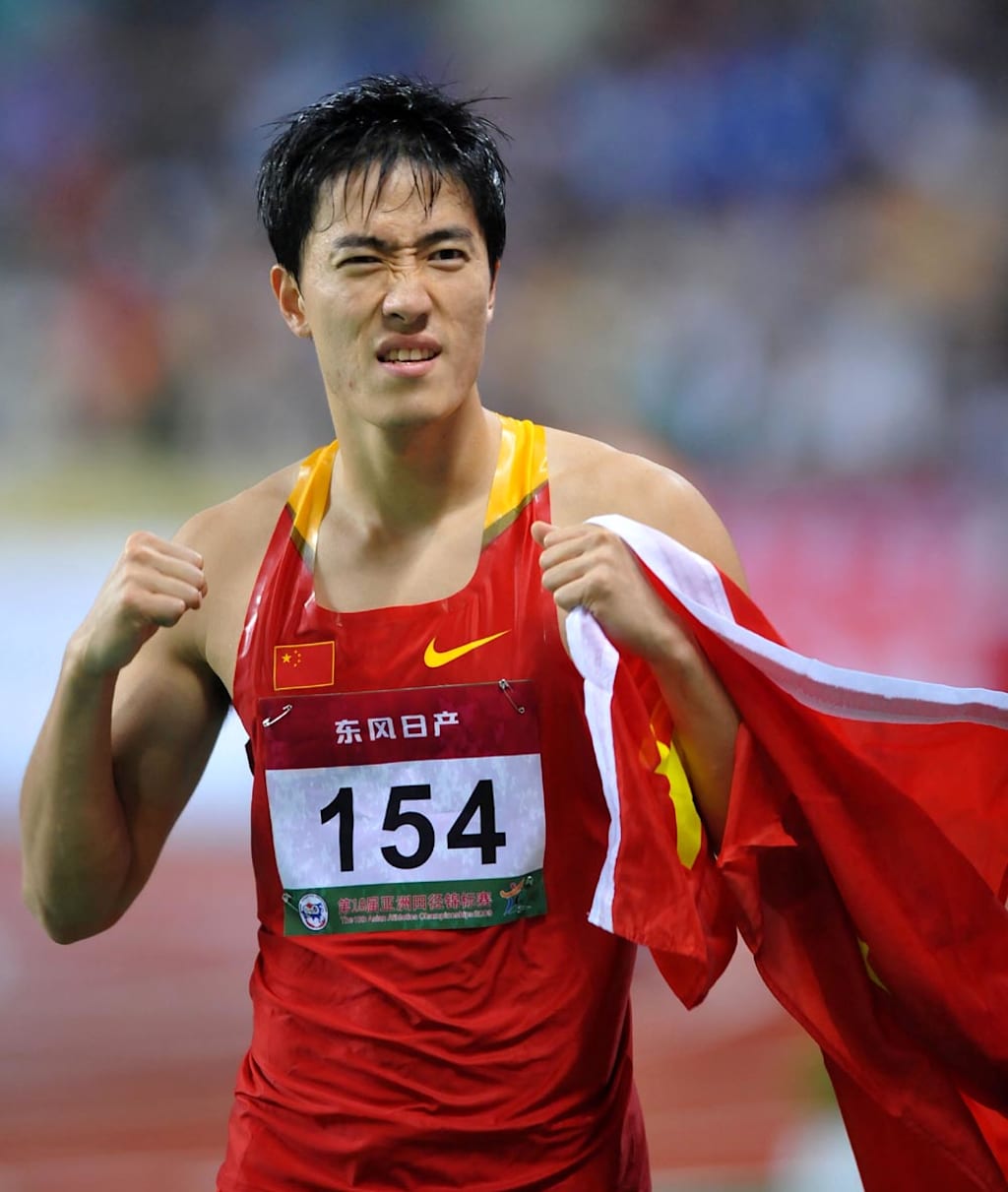
The last hurdle, eleven years late: Liu Xiang and the "third path" that was never there
I. A number bib
On August 26, 2026, Liu Xiang posted a photograph on Weibo. The 2004 Athens Olympics, men's 110-meter hurdles final. The number bib pinned to his chest. White background, black numbers: 1363.
The caption: "Waiting online. I've run into a problem. I'd like netizens to give me some advice. The sports bureau says I can either take a buyout or become a coach and show up for work. What should I do?"
A few hours later, he added: "After ten years, you suddenly remember to resettle me. When you were splitting my endorsement money, why didn't you resettle me according to the rules?"
By the time he wrote that, he probably already knew the answer. But he posted it anyway.
II. Eleven years
On April 7, 2015, Liu Xiang announced his retirement. After that, his personnel file stayed with the Shanghai sports system. He held a concurrent post as deputy secretary of the Communist Youth League committee of the Shanghai Sports Bureau. No office hours. No administrative rank. There was no clear work assignment, and no formal retirement procedure was completed.
That state lasted eleven years.
Over those eleven years, from April 2015 to September 2026, he received a total of 982,935 yuan in wages and subsidies. Less than 90,000 yuan a year on average. For an athlete who had once earned over 100 million yuan a year, that money had no economic meaning.
But what the establishment post gave him was more than wages.
After retirement, Liu Xiang took part in public welfare events and sports promotion. He appeared in public as a "Shanghai sports person." That identity meant he did not have to explain who he was. He did not have to build a new social coordinate from scratch. An establishment post is a position. Even if you are not sitting in it, you know it is there.
This tacit understanding had never been institutional.
III. One hundred million yuan and a notice
From 2003 to 2014, Liu Xiang's pre-tax commercial endorsement income was about 535 million yuan. Under the distribution rules then set by the General Administration of Sport of China, the athlete received 50%, coaches and meritorious personnel 15%, the national single-sport association 15%, and the athlete's sending unit 20%. The Shanghai Sports Bureau, as his sending unit, took 20%.
More than 100 million yuan in total.
One commentator summed it up: When it was time to divide the money, the documents were laid out neatly, the percentages were calculated clearly, and the payments arrived more punctually than wages.
From October to December 2024, the third inspection team of the Shanghai Municipal Party Committee inspected the Shanghai Sports Bureau. In February 2025, it fed back its opinions, pointing to "lax, lenient, and soft" management of athletes and deficiencies in the management of athletes who were on the establishment but not on the job. In February 2026, the rectification progress report was made public, requiring a regular review of such personnel.
Then a notice landed in front of Liu Xiang. Either take a buyout, or return to a post and go to work. Choose one of two.
Liu Xiang's question was: "The state regulates and cleans up the problem of 'on the establishment but not on the job' every year. Why, after eleven years, are you suddenly in such a hurry to make me choose?"
The logic is simple. If the rules had been strictly enforced from the beginning, he would have made a completely different arrangement when he retired. Eleven years of tacit permission had given him a stable expectation. He thought he had traded his commercial share for an identity he could keep inside the system for the long term. Now he was being told that the trade had never counted.
IV. Two paths
The two options the sports bureau offered were not problematic on paper. Organizational placement and independent employment are the two resettlement routes provided by policy. The Shanghai Sports Bureau later said it had offered several organizational placement directions: head of the track and field center, technical director, a post at a sports university.
Be a coach? Liu Xiang said: "At my age, with no coaching experience, if I were suddenly put in charge, I would ruin other people's futures."
Take a buyout? He said: "That word feels a bit ancient. I don't get it."
Neither line was polite filler. He was 32 when he retired. The Achilles injury had followed him for half his life. Putting a man with no coaching experience directly in charge of athletes would be irresponsible to him and to them. A buyout meant cutting all ties with the sports system. The identity of "Shanghai sports person" would be gone too.
The "third path" Liu Xiang wanted was to maintain the status quo. Keep the establishment post. No office hours. No specific work assignment. He would continue to take part in sports in the ways he was good at. This was not an option written into any policy document, but for eleven years it had been the state in which both sides actually operated.
He simply wanted it to continue.
V. Why it could not exist
An establishment post is a public resource. To hold it without being on the job means the post is occupied while its duties are not performed. That is unfair to others inside the system.
As the country pushed forward with standardizing personnel management in government and public institutions and cleaning up "on the establishment but not on the job," the Shanghai sports system was named in an inspection. Liu Xiang, as the most prominent case, was almost certain not to receive a special exception.
More importantly, once Liu Xiang put the matter in the sunlight, the Shanghai Sports Bureau had only one choice: handle it by the book. If Liu Xiang could get a "third path" because of his meritorious status, why could not everyone else who was on the establishment but not on the job? Once this case set a precedent, the entire cleanup would lose its standard.
From the moment he made the problem public, the "third path" no longer existed.
VI. Three thousand a year
Nationally, about 3,000 athletes retire each year. In major competition years, the number is higher. The vast majority have no Olympic gold medal, no commercial endorsements, no traffic. They have injuries and a compensation payment of a few tens of thousands of yuan.
They also have to choose between organizational placement and independent employment.
Organizational placement means entering the system, showing up at a post, and undergoing assessment. For athletes who have spent years on training grounds and are highly disconnected from society, adapting to a bureaucratic hierarchy is not easy. Su Bingtian, who retired at the end of 2025, took a post at Jinan University's sports college, teaching and participating in discipline building. That is a relatively mature path. But not every sport and not every athlete has that opportunity.
Independent employment means a one-time payment and finding one's own way. Wu Liufang, a balance beam World Cup champion, retired and went into self-media, making a living through livestream sales, and has said sales are not ideal. The earlier weightlifting champion Cai Li died in 2003 in financial distress.
These are people who once stood on the podium. The more ordinary athletes never even get seen.
The either-or framework is too narrow. The value of top athletes is plural: professional experience, social influence, brand value. None of that can be fully carried by a coaching post, and none of it can be fully measured by a buyout.
In 2017, Yao Ming was elected chairman of the Chinese Basketball Association as a social figure and pushed professional reform in basketball. That was a "third choice" in practice. But it was something he and his sport's marketization crashed into. It was not an institutional channel.
Liu Xiang's case proves one thing: even an athlete with the highest commercial value and the strongest public voice, when institutions are absent, can only choose between two paths he does not want.
VII. 1363
Liu Xiang ultimately chose the buyout. The buyout fee was 494,000 yuan. He donated the entire 982,935 yuan in wages and subsidies he had received since April 2015 to the China Charity Federation for Tibet mudslide relief.
The Shanghai Sports Bureau said in response that it "fully respected" his choice and "deeply respected" his donation.
The wording was dignified.
When Liu Xiang posted that photograph of his number bib, the number 1363 had been with him for twenty-two years. Athens, 2004. He was 21. After crossing the finish line, he wrapped himself in the national flag and jumped onto the podium. No one then would have thought that the last hurdle of his athletic career would not be the tenth hurdle of the 110-meter race, but a personnel notice.
He crossed it. It did not look good. But he crossed it.
On Weibo, the photograph is still there. White bib. Black numbers. 1363.
About the Creator
Jin
Writer of reamstories
https://reamstories.com/jin
Enjoyed the story? Support the Creator.
Subscribe for free to receive all their stories in your feed. You could also become a paid subscriber, letting them know you appreciate their work.
Comments
There are no comments for this story
Be the first to respond and start the conversation.