
The 3-Minute Rule and 9 Other Tiny Habits That Quietly Change Everything
No motivation. No 5 a.m. wake-up. Just small moves that compound.
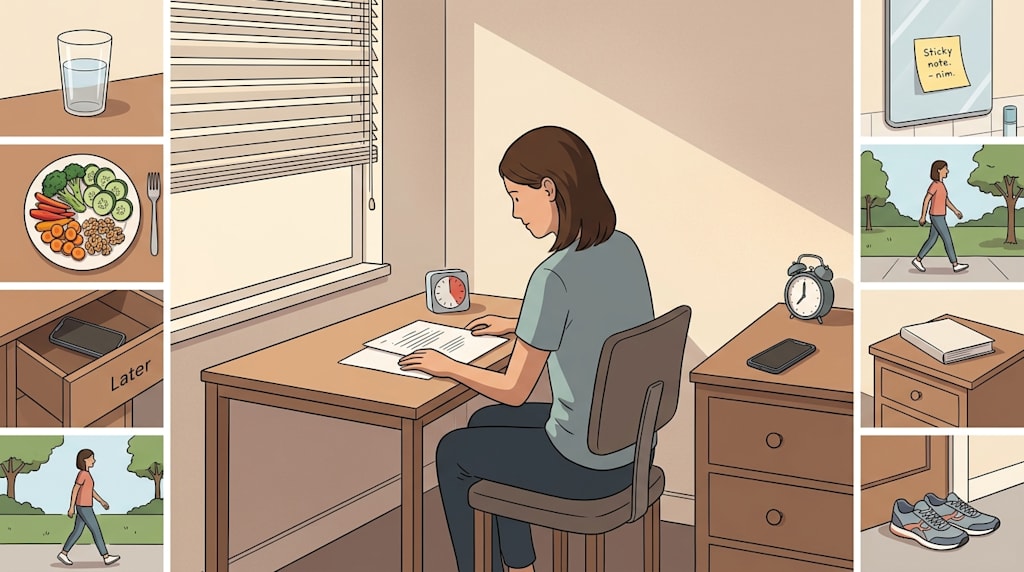
At 6:40 the alarm goes off across the room. She gets up. Crosses the cold floor. Turns it off. The phone stays on the dresser. She drinks a glass of water. Opens the blinds. Light hits the wall. Then she sits at the desk, opens one document, sets a timer for twenty-five minutes, and writes one sentence. The sentence is not good. She keeps going.
No speech. No plan. A body moving to a different place.
Change often starts with a body moving to a different place. The decision can come later.
The habits below are not dramatic. You can do them on a bad day.
Three minutes
The hardest part of any task is the first thirty seconds. The mind builds a wall: the document is too long, the room is too messy, the workout will take an hour, the email will require thinking. The wall is made of imagined difficulty. The actual task is usually smaller.
Set a timer for three minutes. Open the document. Write one line. Open the book. Read one paragraph. Put on the shoes. Walk to the end of the street. When the timer rings, you can stop. You usually will not. At 3:12 she is still typing. At 3:47 he saves the file. At 4:05 she is halfway down the block and turns the corner.
A timer on the kitchen table. A laptop open. A person who said, "I'll start Monday," now says, "Three minutes." The timer rings. He does not stop.
The three-minute rule does not finish the task. It breaks the freeze. Finishing can happen later.
The tomato timer
She puts the phone in a drawer. Notifications off. One document open. The timer is set for twenty-five minutes. On the desk: a glass of water, a pen, a sticky note. The sticky note says, "Only this."
Twenty-five minutes. Five minutes to stand, refill the water, look out the window. Four rounds. Then a longer break, fifteen or thirty minutes. The work gets a boundary. The mind gets a finish line.
During the twenty-five minutes, no switching. If a thought about another task arrives, it goes on the sticky note. The note is not a to-do list. It is a parking lot. The current task keeps the room.
After four rounds, the page has more words. The inbox is still there. The dishes are still there. The important thing moved forward.
The day after
Yesterday she stayed up until two in the morning. Today she does not punish herself. She sets the alarm for 6:40, puts the phone in the living room, and goes to bed at eleven. Yesterday he ate cake at his desk. Today he eats vegetables and rice. Yesterday he skipped the gym. Today he walks in, scans his card, and does twenty minutes.
No confession. No drama. No "I ruined everything."
The break is part of the pattern. The return is the pattern. A person who misses one day and returns the next has not failed. A person who misses one day and spends three weeks talking about the miss has lost more time.
She says, "I missed yesterday." He says, "Today is today." Then they do the thing.
Bad first draft
He wants to make videos. He watches people with clean lighting, sharp edits, good sound. He thinks, "I can't do that." So he does nothing for three months.
Then he opens the camera. The first video is shaky. The light is yellow. He says "um" eleven times. He uploads it. It gets twelve views. The second video is less shaky. The third has better sound. By the tenth, he knows where to put the microphone.
The first version is raw material. You cannot edit a blank page. You can edit a bad one.
She writes the first paragraph of the report. It is clunky. She highlights it, cuts it, rewrites. The second paragraph is better. The first paragraph was not wasted. It showed her what she did not want to say.
Two minutes
The cup on the desk. The message from a friend. The shoes by the door. The receipt in the pocket. If it takes two minutes or less, do it now. Do not stack it. The stack becomes a wall.
He rinses the cup. He replies to the message: "Got it. I'll send it tonight." He puts the shoes in the closet. He throws the receipt away. The desk is not perfect. The desk is usable.
Two minutes stops small messes from becoming large ones.
Habit stacking
After brushing teeth, floss. After sitting down to eat, eat two bites of greens first. After pouring morning coffee, write three things on an index card. After closing the laptop, clear the desk for five minutes.
The old habit is the cue. The new habit is the passenger. The brain already knows how to brush teeth. It can learn to hold a piece of floss afterward. The brain already knows how to sit at the table. It can learn to reach for the broccoli first.
She already has a chain. She adds one link.
The chair, the cup, the walk
The cup sits at the far end of the office. To refill it, he must walk past four desks, the printer, and the window. On the way back, he puts the printed pages in the cabinet. The water is cold. The legs move. The eyes look at something farther than a screen.
Every forty-five minutes, stand up. Stretch the arms overhead. Roll the shoulders. Walk to the window. Look at something twenty feet away for twenty seconds. The 20-20-20 rule: every twenty minutes, look twenty feet away for twenty seconds. The eyes stop burning. The neck loosens.
After lunch, walk for five to ten minutes. Keep it easy. The blood sugar settles. The stomach works. The mind gets a gap before the afternoon.
Twice a week, lift something heavy. Squats. Push-ups. Rows with a band. Twenty minutes. The muscles hold the skeleton together. The metabolism gets a reason to stay awake.
The plate
She cooks. Garlic in the pan. Greens wilt. Rice steams. Salt at the end. Oil measured with a spoon, not poured. The kitchen smells like food, not like a restaurant fryer.
The plate has color: green spinach, red tomato, purple cabbage, yellow pepper. A small handful of walnuts. A few blueberries. Water. No soda. No package with a cartoon on it.
She eats until she is seven-tenths full. Not stuffed. Not starving. The fork goes down between bites. The phone stays in the other room.
Fried food is rare. Added sugar is rare. Packaged snacks do not come into the house. Sausage, bacon, and cured meat are occasional. Nuts are a small handful, not a bag. Omega-3, vitamin D, and probiotics only with a doctor's advice. The rest comes from the plate.
Floss after brushing. Sunscreen before going out. Two small things. The dentist and the dermatologist notice.
The phone
The phone is a slot machine. It is designed to interrupt. So the interruptions are removed.
Notifications off. Only calls, calendar, and messages from humans. The home screen has tools: maps, notes, camera, bank. The entertainment apps go into a folder on the second screen. The folder is named "Later." Later rarely comes.
She unfollows the accounts that make her chest tight. She leaves the group chats that are only noise. She turns off the red badges. The phone becomes a tool again.
After reading an article, she writes one sentence in her notes: "The main idea is X. I disagree with Y." After watching a video, she says out loud what she remembers. If she remembers nothing, she does not save it. The saved folder gets twenty-four hours. Read it or delete it.
Once a day, she walks without headphones. The bus ride is silent. The brain sorts the morning. The scattered pieces find each other.
Before bed, a paper book. The phone charges in the living room. The bedroom is for sleep and the book. The screen is not the last thing she sees.
The ten-second gap
She is about to send the angry message. She counts to ten. The message changes. It becomes shorter. It becomes a question instead of an accusation. She sends it. The reply is not a fight.
He is about to buy the jacket. He puts it in the cart. He waits twenty-four hours. The next day, the jacket is still there. He closes the tab. The money stays in the account.
At dinner, she says, "I'm angry." The room does not explode. The sentence names the weather. The weather passes. They finish the meal.
He says, "That's your opinion. My action is mine." He does not argue with the opinion. He looks at his own next step. The argument loses fuel.
He arrives five minutes early. He sits in the car. He breathes. He walks in without rushing. The meeting starts with a calm face.
She does not talk about the coworker behind his back. She says one good thing to his face instead. The office feels lighter. The gossip loop loses one person.
Things go back to their places. Keys on the hook. Scissors in the drawer. Towel on the rack. The house stops eating time.
Once a week, he opens the bank app. He looks at the numbers. He moves ten dollars to savings. He cancels one subscription he forgot about. The number on the screen becomes less scary.
Once a week, she writes three lines: What worked. What did not. What is the one change for next week. Only one. The list stays short. The change has room to happen.
One sticky note
The mistake is trying to change ten things on Monday. The system collapses by Wednesday. The person says, "I have no discipline." The person has too many open tabs.
One sticky note on the bathroom mirror: "This week: phone not in bedroom." That is all. The other habits wait in a notebook. They are not forgotten. They are queued.
If only three habits can fit, these three:
Phone not in bedroom. Alarm across the room.
Three most important things on an index card. Do them before the inbox.
Two-minute rule. If it takes two minutes, do it now.
The first fixes sleep. The second fixes direction. The third fixes the small debris that makes the mind feel heavy.
Tomorrow
At 6:40 the alarm goes off in the living room. She walks out of the bedroom. The floor is cold. She turns off the alarm. She drinks water. She opens the blinds. She sits at the desk. The document is already open. The cursor sits after yesterday's last line.
She types one sentence. The timer is set for twenty-five minutes. The phone is on the dresser, face down. The room is quiet.
At 6:43, she is still typing.
About the Creator
Jin
Writer of reamstories
https://reamstories.com/jin
Enjoyed the story? Support the Creator.
Subscribe for free to receive all their stories in your feed. You could also become a paid subscriber, letting them know you appreciate their work.
Comments
There are no comments for this story
Be the first to respond and start the conversation.