
Ted Turner Dead at 87: How the CNN Founder Revolutionized 24-Hour News, Media, and Global Communication
The Visionary Who Turned News into a 24/7 Global Reality

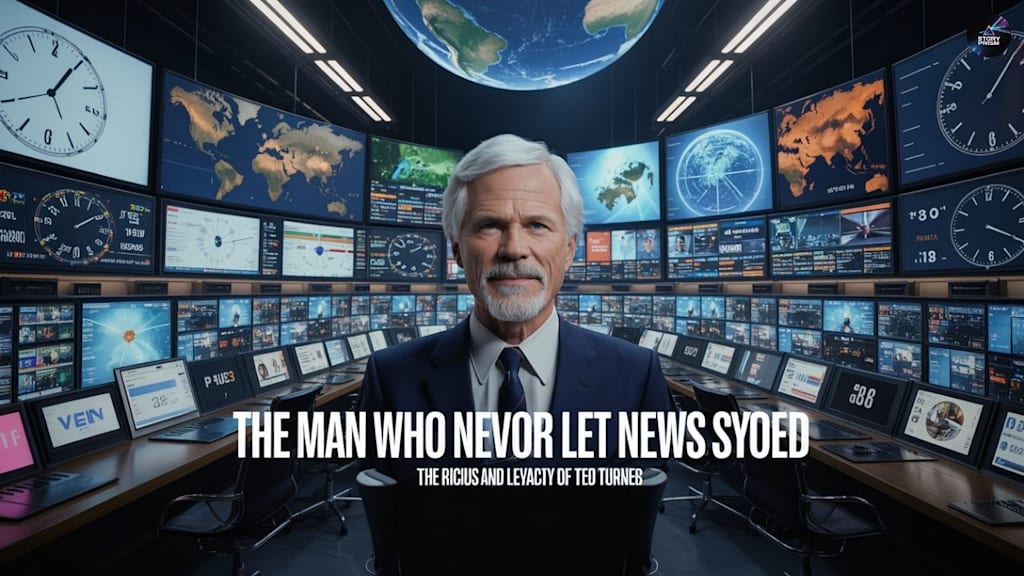
Ted Turner, the pioneering media entrepreneur who fundamentally transformed global journalism by creating CNN, has died at the age of 87. His death marks the end of one of the most influential careers in modern media history—one that reshaped how people around the world receive, understand, and respond to news.
Turner was not just a businessman; he was a disruptor who changed the structure of global communication itself. In 1980, he launched CNN (Cable News Network), the world’s first 24-hour news channel. At the time, the idea was considered highly risky and even impractical. Television news was traditionally scheduled in short, fixed broadcasts, and many industry experts believed audiences would not want continuous coverage. Turner challenged that assumption, believing that news should be immediate, accessible, and ongoing.
That belief changed journalism forever. CNN quickly became a groundbreaking force in global media, especially during major international events. Wars, political crises, elections, and natural disasters were no longer reported after long delays—they were broadcast live as they unfolded. For the first time, audiences around the world could witness history in real time, creating a new expectation that news should be constant and instant.
This innovation introduced the modern 24-hour news cycle, which has since become the standard across global media. It also changed the relationship between the public and current events, making viewers more connected to global developments than ever before.
Beyond CNN, Turner built a vast media empire that included TBS (Turner Broadcasting System), TNT, and Cartoon Network. His companies helped define the rise of cable television in the United States and beyond. At a time when broadcast television was limited and tightly controlled, Turner expanded what television could offer, creating networks that combined entertainment, sports, and news on a scale never seen before.
Turner’s approach to business was defined by boldness and risk-taking. Many of his ideas were initially dismissed by competitors and industry analysts, but he consistently pursued long-term vision over short-term approval. His willingness to challenge established norms allowed him to build platforms that reshaped global media consumption. He did not simply adapt to change—he created it.
One of Turner’s most lasting contributions was establishing the expectation that news should be continuous. This shift influenced not only television but also the development of digital media decades later. Modern news websites, social media platforms, and live update systems all reflect the foundation he built with CNN.
Outside of media, Turner became one of the most significant philanthropists of his era. He donated approximately $1 billion to the United Nations, one of the largest private contributions ever made to the organization. His philanthropy focused on global issues such as environmental conservation, nuclear risk reduction, and humanitarian development. He also supported initiatives aimed at improving global cooperation and addressing long-term international challenges.
Turner was particularly known for his commitment to environmental conservation. He invested heavily in wildlife protection projects, including large-scale bison restoration efforts in North America. His philanthropic philosophy reflected a belief that wealth should be used to address global problems, not only personal or corporate success.
His early life played an important role in shaping his ambition. As a student at McCallie School in Chattanooga, Tennessee, Turner developed a competitive drive and independent thinking style that would later define his career. The school would later honor him as one of its most influential alumni, recognizing the global scale of his achievements and the lasting impact of his vision.
In addition to his business and philanthropic work, Turner was also known for owning major sports franchises, including the Atlanta Braves and the Atlanta Hawks. His involvement in sports broadcasting further expanded his media influence and helped bring professional sports to wider national audiences.
In his later years, Turner stepped back from public life, but his influence remained deeply embedded in global media systems. Even as digital platforms and streaming services emerged, the core idea he introduced—continuous, real-time news—remained central to how information is delivered worldwide.
Ted Turner’s legacy is not limited to the creation of a television network. It is the transformation of global awareness itself. Before Turner, news was something people waited for at specific times of the day. After Turner, news became a continuous stream of information that never stops.
His impact can still be seen in every breaking news alert, live broadcast, and 24-hour news channel operating today. Turner did not simply build a media empire—he redefined how the world experiences reality as it happens.
About the Creator
Enjoyed the story? Support the Creator.
Subscribe for free to receive all their stories in your feed.
Comments
There are no comments for this story
Be the first to respond and start the conversation.