social media
Social Media targeted pieces, for influencers and trending topics in the Journal workplace digital universe.
Toilet Cubicle - Toilet Cubicles Partition Manufacturer & Suppliers India
Everything You Need to Know About the Best Toilet Partitions by Megha Systems Toilet cubicles and partitions are essential elements of any modern restroom design, especially in public and commercial spaces. Selecting the right manufacturer ensures not only premium quality but also style, durability, and seamless functionality. Megha Systems is recognized as one of the leading manufacturers of high-quality toilet partitions and toilet cubicles in India, known for its innovative designs and prompt delivery services
By Sumit Kumar2 years ago in Journal
30 Ways to Earn Money in the Online World
In today’s digital age, the internet offers countless opportunities for individuals to earn money online, regardless of their skill level, location, or experience. Whether you're looking to build a side hustle or a full-time income, there's something for everyone. Here are 30 proven and popular ways to earn money in the online world: 1. Freelancing Websites like Upwork, Freelancer, and Fiverr allow you to offer services such as writing, design, programming, and marketing. 2. Blogging Start a blog around your passion or niche. Monetize it through ads, affiliate links, sponsored content, or product sales. 3. Affiliate Marketing Earn commissions by promoting other companies’ products through blogs, social media, or email newsletters. 4. Online Tutoring Teach students around the globe through platforms like Chegg, Preply, or Wyzant in subjects like math, languages, or science. 5. YouTube Channel Create videos in any niche (vlogs, reviews, tutorials) and earn money through ads, sponsorships, and merchandise. 6. Dropshipping Run an e-commerce store without holding inventory. Use platforms like Shopify and AliExpress to fulfill orders. 7. Selling Handmade Goods Sell crafts or handmade items on Etsy or other niche marketplaces. 8. Stock Photography Upload your photos to stock websites like Shutterstock or Adobe Stock and earn when people download them. 9. Online Courses Create and sell educational courses on platforms like Udemy, Teachable, or Skillshare. 10. eBook Publishing Write and self-publish eBooks on Amazon Kindle Direct Publishing and earn royalties. 11. Podcasting Start a podcast and monetize it through sponsorships, listener donations, and premium content. 12. Social Media Influencing Build a following on Instagram, TikTok, or X, and earn money through brand collaborations. 13. Virtual Assistant Provide administrative support to businesses or entrepreneurs remotely. 14. Graphic Design Design logos, marketing materials, or digital assets and sell them on platforms like 99designs or Canva. 15. Website Flipping Buy, improve, and resell websites for profit. Check out Flippa or Empire Flippers. 16. Domain Trading Buy and sell domain names that are likely to be in demand. 17. App Development Build and sell mobile apps or games, or earn through in-app purchases and ads. 18. Data Entry Simple tasks like inputting data into systems can be done on sites like Clickworker or Microworkers. 19. Transcription Services Listen to audio files and transcribe them. Sites like Rev and TranscribeMe offer steady work. 20. Selling Digital Products Create digital downloads like planners, printables, templates, or fonts to sell on marketplaces. 21. Proofreading & Editing Work with students, writers, or companies to polish their content. 22. Online Coaching Provide life, business, or fitness coaching via Zoom or Skype. 23. Voice Acting Record voiceovers for commercials, audiobooks, or animations using platforms like Voices.com. 24. Surveys & Market Research Earn small amounts by taking surveys or testing products on sites like Swagbucks or InboxDollars. 25. Print-on-Demand Design and sell custom t-shirts, mugs, or posters without upfront investment. 26. Gaming & Streaming Play games and stream live on Twitch or YouTube; earn from ads, donations, and sponsorships. 27. Remote Tech Support Offer troubleshooting or technical help to people remotely. 28. Writing Reviews Get paid to review apps, products, or websites on platforms like UserTesting or G2. 29. Translation Services If you're bilingual, offer translation services online for websites, books, or documents. 30. Selling NFTs or Digital Art If you're a digital artist, consider creating and selling NFTs on platforms like OpenSea. --- Final Thoughts With a stable internet connection and a bit of dedication, anyone can start earning money online. The key is to find something that matches your skills and interests, then remain consistent and open to learning. While not all methods bring instant wealth, many can grow into sustainable, long-term income streams. Whether you’re looking to earn a few extra dollars or build an online business, the internet holds vast opportunities for everyone willing to explore and innovate.
By Shah saab IT2 years ago in Journal
The Human Face Can Make Over 10,000 Expressions: The Hidden Language of Emotions and Identity
Introduction Human beings are expressive creatures. We use words, gestures, posture, and most powerfully—our faces—to communicate with one another. While we may take it for granted, the human face is a complex system capable of conveying a stunning range of emotions. According to experts in psychology and anatomy, the face can make over 10,000 distinct expressions. This extraordinary range enables us to express everything from joy to disgust, suspicion to surprise, often without saying a single word. In this article, we’ll explore the science, evolution, and significance of facial expressions—how they work, why they matter, and what they reveal about the human experience. The Anatomy Behind Expression The foundation of facial expression lies in the facial muscles—43 of them, to be exact. These muscles are unique because they insert directly into the skin rather than onto bones. This allows small contractions to move the skin and produce visible changes in facial appearance. Some of the key facial muscles involved in expression include: Frontalis: Raises the eyebrows. Orbicularis oculi: Closes the eyelids and forms “crow’s feet” when smiling. Zygomaticus major: Draws the corners of the mouth upward in a smile. Corrugator supercilii: Pulls the eyebrows downward and together, forming a frown. Orbicularis oris: Shapes the mouth, crucial for expressions and speech. The combination and intensity of these muscles working together account for the wide range of possible expressions. Researchers have mapped many of these in systems like the Facial Action Coding System (FACS), developed by Paul Ekman, which breaks down expressions into individual "action units." More Than Just the Basic Emotions For decades, scientists believed there were six universal emotions expressed facially across all cultures: happiness, sadness, anger, fear, surprise, and disgust. However, newer research shows that the human face can communicate dozens—if not hundreds—of subtle emotional states, from admiration and confusion to contempt and pride. Paul Ekman and his colleagues identified micro-expressions and subtle variations in how emotions manifest in the face, leading to the staggering estimate that humans can produce over 10,000 unique facial expressions. These include blends of emotions (like happy surprise), intensity shifts (mild versus intense anger), and socially conditioned variations (like a polite smile versus a genuine one). The Role of Facial Expressions in Communication Facial expressions are crucial to nonverbal communication. In fact, studies suggest that up to 55% of communication is nonverbal, and facial expressions play a major role in conveying emotional tone. Contextual Clarity: A facial expression can clarify the meaning of spoken words. Saying “I’m fine” with a smile has a very different impact than saying it with a blank or angry face. Social Bonding: Smiles, nods, and expressions of empathy help build social rapport and trust. They also signal group belonging or emotional support. Feedback Loop: Our own facial expressions can influence our emotions—a phenomenon known as the facial feedback hypothesis. Smiling, even artificially, can make you feel happier. Facial Expressions Across Cultures Despite cultural differences, many facial expressions are universal. A blind person who has never seen a face will still smile when happy and frown when sad. This suggests a deep biological and evolutionary basis for facial expression. However, culture does influence the rules about expressing emotions, known as display rules. For instance: In some East Asian cultures, it may be more acceptable to mask negative emotions in public than in Western cultures. Americans may smile more frequently and broadly than people in some European or Asian countries, where subtlety is preferred. These cultural nuances show how expression is both innate and socially conditioned. Microexpressions: The Hidden Clues One of the most fascinating aspects of facial expression is the phenomenon of microexpressions—fleeting, involuntary facial expressions that occur within a fraction of a second. They often reveal a person’s true feelings, especially when they're trying to hide them. Microexpressions can betray emotions like fear, disgust, or contempt, even when a person is attempting to appear calm or happy. Law enforcement, security agencies, and even therapists study microexpressions to detect deception or uncover suppressed emotions.
By Orbit Scope2 years ago in Journal
The Memory of Tomorrow"
Elena had always been different, but it wasn’t until the night of the accident that she realized just how profound her difference was. For as long as she could remember, she’d felt the edges of time stretch and bend in ways no one else seemed to understand. It wasn’t that she saw things before they happened, not in the way of a psychic or a fortune teller. No, for Elena, it was far more elusive, far more unsettling. She remembered the future. It started with small moments—a conversation she had with a friend, the exact words spoken, the way the light hit the window just as they laughed. At first, she thought it was déjà vu, but it wasn’t like that. It wasn’t a fleeting sensation that disappeared as soon as it appeared. It was something far deeper, more tangible. She could feel the weight of the memory in her chest, as if she had already lived through it, as if she were being forced to relive it with the same intensity, the same emotions, all over again. But it wasn’t just déjà vu. It was a knowing, a certainty that gripped her heart and made her wonder: What if time wasn’t a linear progression? What if the moments ahead of her had already been lived, and what if she was merely waiting to catch up? At first, the memories were fragmented, like broken pieces of a puzzle. A glimpse of a conversation here, a flash of an event there. But as time went on, they grew more distinct, more frequent. Elena found herself anticipating conversations, moments, even actions before they happened. It wasn’t a prediction; it was a recollection. The first real test of this strange phenomenon came on a cold, rainy evening in October. Elena was walking home from work, her coat wrapped tightly around her, the drizzle making the streets glisten like wet glass. She turned the corner, and there it was—a scene she’d lived through before, though not in the present. A couple stood under an umbrella, arguing, their voices rising above the noise of the rain. He was shouting something about a betrayal, and she was sobbing, her face hidden beneath her hands. Elena paused, her heart pounding in her chest. This wasn’t just a memory of something she’d seen; it was a memory of something she was about to witness. She knew what they were going to say before they said it, knew the exact moment the woman would break down into tears, knew the way the man would reach out to touch her arm and then pull back. She knew the words he would speak, the way he would apologize, but it would be too late. The damage had already been done. It all unfolded just as Elena remembered. And in that moment, she realized the truth: she wasn’t seeing the future. She was remembering it. The events, the choices, the pain—they had already occurred, and now she was just walking through them again. But why? Why her? Why was she the one experiencing this strange distortion of time? And why did it feel so much like déjà vu, but with a haunting twist? The answer came to her one day while she was sitting in her favorite café, the smell of fresh coffee filling the air as she flipped through a book. A woman entered the café, dressed in black, her face hidden beneath a veil. Elena didn’t recognize her, but the moment their eyes met, something shifted inside her. The world seemed to pause, as if the fabric of time itself had taken a breath. The woman sat down across from her, and without a word, Elena knew exactly what she was about to say. “You’re remembering, aren’t you?” the woman asked, her voice low, almost a whisper. Elena blinked in shock, unable to speak. The woman continued, her gaze unwavering. “You’ve been seeing glimpses of the future, haven’t you? You think they’re memories, but they’re not. They’re fragments of a life you’ve already lived. A life you’re meant to live again.” The words hit Elena like a thunderclap. She had felt it, that undeniable pull toward something she couldn’t explain. But to hear it spoken aloud—by a stranger, no less—was a revelation that shook her to her core. The woman smiled, a knowing, sad smile. “You are part of a rare few. Those who live not forward, but backward. Your memories aren’t of your past, but of your future. And you’ve been chosen to remember it, to relive it.” “Chosen?” Elena asked, her voice barely above a whisper. The woman nodded. “The world, the universe, has a way of balancing itself. There are moments in time that must be revisited, decisions that need to be made again. And you, Elena, are the keeper of those moments.” Elena felt her mind racing, her heart hammering in her chest. She wanted to ask more questions, to understand what this meant, but the woman stood up, her chair scraping across the floor. “Don’t worry,” the woman said softly. “You’re not alone in this. There are others, people like you, scattered throughout the world, living with the same memories. You’ll find them. And when the time comes, you’ll know what to do.” With that, the woman turned and walked out of the café, disappearing into the crowded street. Elena sat there, the weight of her words pressing down on her. She didn’t know what the future held, or what it meant to live a life in reverse, but she knew one thing for certain: she wasn’t the only one. There were others, others who, like her, had already lived the moments they were now walking through.
By Inam Zohan2 years ago in Journal
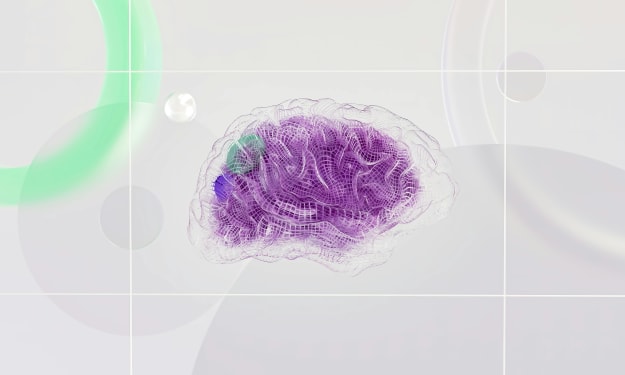
How Neurons Use Electricity and Chemicals to Communicate: The Fascinating Science of Neural Signaling
Understanding the Structure of a Neuron To understand how neurons communicate, it is essential to know their basic structure. A neuron is composed of three main parts: 1. Dendrites – These are tree-like extensions at the beginning of a neuron that receive signals from other neurons. 2. Cell Body (Soma) – This contains the nucleus and is the metabolic center of the neuron. 3. Axon – A long, cable-like projection that transmits electrical impulses away from the cell body toward other neurons or muscle cells. 4. Axon Terminals – The endpoints of an axon where chemical signals are released into the synapse (the gap between neurons). Each part plays a role in transmitting information either electrically within a neuron or chemically between neurons.
By Orbit Scope2 years ago in Journal
The Moon Is Slowly Escaping Earth: A Celestial Drift That’s Reshaping Our Future
Introduction The Moon, Earth’s only natural satellite, has long captured our imaginations and influenced our lives—from guiding ancient calendars to shaping the tides. But behind its calm, glowing presence in the night sky lies a subtle, almost imperceptible movement: the Moon is slowly drifting away from Earth. At a rate of about 3.8 centimeters (1.5 inches) per year, this cosmic separation is not just a curious fact; it has significant implications for Earth’s rotation, tides, and the long-term stability of our planetary system. This ongoing drift is a remnant of powerful forces set in motion billions of years ago and tells a fascinating story about our planet’s deep history and distant future. The Science Behind the Drift The Moon’s slow escape is primarily driven by tidal forces—the same gravitational phenomena that cause ocean tides on Earth. As the Moon’s gravity pulls on Earth’s oceans, it creates a tidal bulge on the side facing the Moon. However, because Earth rotates faster than the Moon orbits, this bulge is slightly ahead of the Moon in its orbit. This misalignment creates a gravitational interaction that transfers energy from Earth to the Moon. In essence: - Earth’s rotation slows down slightly due to the drag of the tidal bulge. - The Moon gains orbital energy and moves farther away. This energy exchange is a fundamental example of angular momentum conservation and has been gradually changing Earth-Moon dynamics for billions of years.
By Orbit Scope2 years ago in Journal
The Superpower You Never Knew You Had: The Human Nose Can Detect Over 1 Trillion Scents
Introduction For decades, scientists believed that the human nose was relatively unimpressive compared to the noses of other animals. It was commonly taught that we could detect around 10,000 different smells—just a fraction of what dogs or rodents could perceive. However, recent scientific breakthroughs have turned this assumption on its head. Researchers now estimate that the human nose can distinguish more than 1 trillion different scents, revealing a hidden superpower we all carry, quite literally, under our noses. This revelation not only reshapes our understanding of human biology but also has profound implications for industries ranging from medicine to technology.
By Orbit Scope2 years ago in Journal
The Life Behind the Screen: Navigating the World of Social Media
Social media has become a critical feature of modern life, affecting the way we communicate, interact and even perceive ourselves. From Facebook to Instagram, Twitter and Tikkok, social media has changed our world and created new opportunities, connections and challenges. It opened the doors for creativity, self-expression and behaviorism, but also introduced new prints, uncertainty and complexity. Living on social media is a mixture of reality and fantasy, and it is important to understand both its power and its pitfalls when navigating in this digital world.
By Abrar Siddik2 years ago in Journal
The First Molecule: How RNA Paved the Way for Life Before DNA and Proteins
Life, as we know it, is built on three essential molecules: DNA, RNA, and proteins. DNA stores genetic information, RNA transmits and sometimes edits it, and proteins carry out the vast majority of cellular functions. However, the question of which came first—DNA, RNA, or proteins—has intrigued scientists for decades. Today, the most widely accepted answer is that RNA came before DNA and proteins. This theory, known as the RNA World Hypothesis, offers a compelling explanation for how life may have begun on Earth. The RNA World Hypothesis: An Overview The RNA World Hypothesis posits that RNA was the original molecule of life, predating both DNA and proteins. This concept emerged in the 1960s and gained traction in the 1980s when scientists discovered that RNA could function not only as a carrier of genetic information but also as a catalyst for chemical reactions. This dual functionality makes RNA uniquely suited to serve as the precursor to life. Before this discovery, the classic "chicken-and-egg" problem puzzled scientists: DNA requires proteins to replicate, but proteins are made based on instructions in DNA. So, how could either molecule have arisen first? RNA, with its ability to perform both roles, may hold the answer. RNA’s Dual Role: Storage and Catalysis Unlike DNA, which mainly serves as a stable storage form for genetic information, RNA can fold into complex three-dimensional shapes that allow it to function as an enzyme, known as a ribozyme. These ribozymes can catalyze reactions such as cutting and joining other RNA molecules or even replicating themselves under laboratory conditions. This catalytic capability indicates that RNA could have sustained a primitive metabolism and self-replication system, essential characteristics of life. In contrast, while DNA is more chemically stable, it is functionally limited, and proteins are incredibly versatile but cannot store hereditary information. The Evolutionary Pathway: From RNA to DNA and Proteins Once RNA-based life gained traction, evolution likely led to the emergence of proteins and DNA. 1. Proteins Take Over Catalysis: Proteins, composed of amino acids, are far more versatile catalysts than RNA. Over time, natural selection favored organisms that utilized proteins for most biochemical reactions, relegating RNA primarily to messenger and regulatory roles. 2. DNA Becomes the Genetic Archive: DNA eventually supplanted RNA as the primary genetic material because it is chemically more stable and less prone to mutations. Unlike RNA, DNA has a double-helix structure and a built-in error-checking system during replication, making it a superior long-term storage medium for genetic information. In this way, the earliest RNA molecules set the foundation for the complex, protein- and DNA-based life we observe today. Experimental Support for the RNA World Several lines of scientific evidence support the RNA World Hypothesis: Ribozymes: RNA molecules with enzymatic activity were first discovered in the 1980s. One such ribozyme, the ribosome itself, is responsible for synthesizing proteins in all living cells and is composed mainly of RNA, not protein. Lab-Created Self-Replicating RNA: Scientists have engineered RNA molecules that can copy parts of themselves, a key trait for early life forms. Nucleotide Synthesis Pathways: Some researchers have demonstrated how RNA nucleotides could have formed under plausible prebiotic conditions, though this remains an area of active research. RNA Intermediates in Modern Cells: All living cells utilize RNA intermediates (mRNA, tRNA, rRNA) in gene expression, potentially a relic of an earlier RNA-dominated era. Challenges to the RNA World Hypothesis Despite its appeal, the RNA World Hypothesis faces challenges: RNA Instability: RNA is less chemically stable than DNA, especially in water. This raises questions about how long early RNA molecules could have survived on prebiotic Earth. Complexity of RNA Synthesis: While scientists have replicated nucleotide formation under laboratory conditions, the process is still complicated and may have required very specific environments. Transition to DNA and Proteins: Although the pathway from RNA to DNA/protein-based life is theorized, the exact steps remain unclear. Some scientists propose that RNA may have coexisted with other molecules or that simpler precursors like pre-RNA molecules (e.g., PNA or TNA) may have existed before RNA fully took over. Implications for the Origin of Life Understanding RNA’s role in the origin of life has profound implications: Astrobiology: If RNA-based life could arise on Earth, it might also evolve on other planets with similar conditions. Missions to Mars and the moons of Jupiter and Saturn are partly inspired by this possibility. Synthetic Biology: Scientists are attempting to recreate RNA-based systems in the laboratory, potentially paving the way for life-like machines or new medical treatments. Medicine and Evolution: Understanding RNA’s evolutionary history helps explain diseases involving RNA viruses (like influenza or COVID-19) and RNA-based regulatory disorders. Conclusion The idea that RNA preceded DNA and proteins revolutionized our understanding of life's beginnings. Although much remains to be discovered, the RNA World Hypothesis provides a plausible narrative for how inert molecules transitioned into self-replicating systems, laying the groundwork for all of biology. With ongoing research in molecular biology, chemistry, and planetary science, we are getting closer to answering one of humanity’s oldest questions: Where did life begin, and how did it start?
By Orbit Scope2 years ago in Journal
The Thunder Whisperers: How Elephants Detect Rainstorms From 150 Miles Away
In the sweeping plains and dense forests of Africa and Asia, one of nature's most intelligent and majestic creatures roams with purpose and deep intuition. The elephant—renowned for its size, memory, and emotional intelligence—harbors a unique and almost supernatural ability: it can detect rainstorms from more than 150 miles away. This astonishing capability isn't myth or folklore; it is a well-documented scientific phenomenon grounded in biology, physics, and the natural evolution of survival instincts. But how do elephants perform this meteorological magic? The answer lies in something called infrasound—a low-frequency sound below the threshold of human hearing. The Power of Infrasound Infrasound refers to sound waves with frequencies lower than 20 Hz, the bottom limit of human audibility. While we can’t hear these frequencies, elephants can not only hear them but also produce and interpret them. Elephants communicate with each other across vast distances using rumbling calls that travel through the ground and air. These calls can be picked up by other elephants miles away. When thunder rumbles or a storm brews on the distant horizon, it generates natural infrasonic waves. Elephants, equipped with a network of sensors in their feet and trunk, can pick up these subtle vibrations through the ground—like natural seismographs. They also use their large ears, not only for temperature regulation but also as sonic receivers that help them detect low-frequency sounds in the air. This gives elephants a sixth sense, enabling them to be aware of changing weather patterns far beyond what most animals—or even humans with technology—can sense unaided. Why Rain Matters to Elephants Water is everything to an elephant. These gentle giants require up to 50 gallons of water per day to drink, bathe, and cool down. In dry seasons, water becomes scarcer, and elephants must travel long distances to find it. The ability to detect rainstorms—often the first indication of new water sources—can mean the difference between life and death. Elephants in the wild have been observed suddenly changing course and marching in seemingly random directions—only to arrive at a newly formed waterhole or a region experiencing fresh rainfall. Scientists used to think these changes in movement were driven by memory or random chance. However, with the discovery of infrasonic communication and storm detection, the truth has come to light. In one landmark study, researchers tracked elephant herds with GPS and found that their movements correlated with distant rainfall patterns—not just local weather. This means elephants were responding to rain events they couldn’t possibly see, smell, or feel—only hear, through infrasonic signals. An Evolutionary Survival Tool From an evolutionary perspective, this ability is a powerful adaptation. Elephants migrate seasonally in search of food and water, often over hundreds of miles. Being able to detect the direction of rainfall long before it reaches them allows the herd to anticipate environmental changes, move accordingly, and ensure the survival of the group—including vulnerable calves and older members. This ability has also led to fascinating implications in elephant conservation. Understanding how elephants navigate their environment can help wildlife managers and conservationists build better strategies for preserving migratory corridors and avoiding human-elephant conflicts. Listening With Their Feet One of the most incredible aspects of elephant anatomy is their ability to “listen” through their feet. The bottom of an elephant’s foot contains a dense network of nerves and fat pads that are highly sensitive to ground vibrations. When infrasound waves travel through the earth—caused by thunder, distant footsteps, or even other elephants—the vibrations are detected by these foot sensors. The vibrations travel up the legs and into the cochlea of the inner ear, where they are interpreted by the brain. Additionally, elephants often freeze and press their trunks against the ground to enhance this ability, much like tuning in to a long-distance signal. What This Teaches Us About Animal Intelligence The elephant’s storm-sensing ability is more than just a fascinating fact—it’s a window into the deep intelligence and sensory sophistication of animals. Elephants are known to mourn their dead, form lifelong family bonds, display empathy, and even cooperate to solve problems. Their use of infrasound is another testament to the extraordinary ways in which life has evolved to thrive in Earth’s diverse ecosystems. Humans often rely on technology—radar, satellites, weather apps—to predict what elephants can “hear” on their own. This underscores a larger truth: that many animals possess hidden abilities that rival, and sometimes exceed, our own in natural precision. In Harmony With Nature As climate change reshapes weather patterns and alters ecosystems, understanding animal behaviors—like elephant storm sensing—becomes more critical than ever. Elephants, through their ancient evolutionary wisdom, continue to read the signs of the Earth in ways we are only beginning to understand. In a world of scientific breakthroughs and high-tech gadgets, perhaps the greatest meteorologist of all still walks on four legs, trumpeting its way through the savannah, listening to thunder whisper across the land.
By Orbit Scope2 years ago in Journal