social media
Social Media targeted pieces, for influencers and trending topics in the Journal workplace digital universe.
The Hidden Language of the Forest: How Trees Communicate Underground
Introduction: A Silent, Subterranean Society Beneath your feet, in every forest, lies a secret network that rivals the complexity of the internet. It’s not made of fiber optics or copper wires, but of roots and fungi. For centuries, trees were seen as solitary organisms competing for sunlight, water, and nutrients. But recent scientific discoveries have shattered this perspective, revealing a world where trees communicate, cooperate, and even nurture one another through underground connections. This phenomenon, often called the “Wood Wide Web,” has changed how we understand forests, ecosystems, and even the concept of intelligence in the plant kingdom. The Mycorrhizal Network: Nature’s Internet At the center of this underground communication system are mycorrhizal fungi. These fungi form a symbiotic relationship with tree roots. The word "mycorrhiza" comes from Greek—myco meaning fungus and rhiza meaning root. This partnership is ancient, dating back over 450 million years. Fungal threads known as hyphae penetrate tree roots and spread out into the soil, vastly increasing a tree’s ability to absorb water and nutrients. In exchange, trees supply the fungi with sugars produced through photosynthesis. But this relationship extends beyond mere nutrient exchange. Scientists have discovered that these hyphae connect the roots of different trees—sometimes even of different species—creating vast, interconnected networks. Through these fungal highways, trees send signals, share resources, and transmit warnings. Mother Trees: The Forest's Nurturers One of the most groundbreaking researchers in this field is Dr. Suzanne Simard, an ecologist from the University of British Columbia. Her experiments have shown that older, larger trees—dubbed “Mother Trees”—are crucial to the health of forest ecosystems. These trees not only support young saplings by sharing nutrients, but they also prioritize their offspring, sending more resources to them than to unrelated trees. Simard found that when a young tree is shaded or struggling, the mother tree will increase the flow of carbon and nitrogen to it through the mycorrhizal network. Even more fascinating is that these elder trees can recognize their own genetic kin and give them preferential treatment, just like animals caring for their young. Trees Send Warnings and Defend Together Communication in forests isn’t limited to friendly resource-sharing. Trees also use the network to send distress signals when under attack. If a tree is infested with pests or suffering from drought, it can release chemical signals through the fungal network to warn its neighbors. These surrounding trees, in response, may begin producing defensive chemicals or toxins to protect themselves—sometimes hours or days before the threat arrives. This kind of early warning system shows a level of anticipation and adaptation that scientists are only beginning to understand. It’s not communication in the way humans talk, but it’s a sophisticated form of information transfer. Resource Redistribution: Helping the Weak In addition to alerts, the underground network allows trees to redistribute nutrients. When one tree has excess sugar or nitrogen, it can pass it to another tree in need, especially during the winter or droughts. In dying trees, this transfer can become almost poetic—as they wither, they donate their remaining nutrients to neighbors, helping the forest thrive even after their own death. This behavior challenges long-standing ideas about natural selection being purely competitive. Instead, these interactions show a cooperative, community-oriented forest ecosystem where survival is linked to mutual support. Inter-Species Communication What’s even more remarkable is that this network is not limited to one species. Pines, birches, firs, and other species often share the same mycorrhizal fungi. This allows cross-species connections, enabling a birch tree to support a fir, or a pine to warn a maple. Simard’s research demonstrated that birch trees and Douglas firs exchange carbon seasonally, depending on which tree has more access to sunlight. This interconnectedness across species challenges our notions of individuality in nature. Trees, once thought to be isolated, are actually part of a living, breathing superorganism. Implications for Forestry and Conservation These discoveries aren’t just fascinating—they have real-world applications. Conventional logging practices, which often involve clear-cutting, can devastate these underground networks. When Mother Trees are removed, the support system for younger trees collapses, leading to lower survival rates for saplings and slower forest regeneration. By understanding how trees communicate and cooperate, foresters can adopt more sustainable methods, preserving the mycorrhizal networks and maintaining forest health. Replanting strategies can also be informed by these insights, ensuring that new growth is supported by existing fungal networks. A New Perspective on Intelligence and Community The idea that trees can communicate, cooperate, and form relationships challenges our definitions of intelligence and consciousness. Trees may not have brains, but their ability to process information, respond to threats, and form networks suggests a different kind of awareness—one that is slow, silent, and deeply connected to the environment. It also offers a profound lesson for humans: interconnectedness is strength. Just as trees thrive by supporting each other through unseen roots, our own survival may depend on recognizing our interdependence with one another—and with the natural world. Conclusion: Listening to the Forest’s Whisper Next time you walk through a forest, pause and reflect. Underneath the soil, a hidden world is humming with activity. Trees are whispering warnings, sharing food, and nurturing the young. It's a community in the truest sense—a society built not on dominance, but on cooperation. The trees are talking. We just had to learn how to listen.
By Orbit Scope2 years ago in Journal
Can Custom Packaging Designs Increase Social Media Shares?
In the age of social content saturation, standing out online doesn’t just come down to what a brand posts, it’s often about what users choose to post. And in 2025, one of the most powerful yet underutilized catalysts for organic social media exposure is: packaging design.
By Innovator's Edge2 years ago in Journal
Finding the Best Commercial Kitchen Equipment Supplier in Delhi: A Friend’s Honest Guide
So, you’re setting up a restaurant, café, or maybe even a cloud kitchen in Delhi? Smart move! The food industry here is booming, and having the right equipment can make or break your business. But here’s the real challenge—where do you find the best commercial kitchen equipment supplier in Delhi without burning a hole in your pocket or compromising on quality?
By cooktechkitchen2 years ago in Journal
La Belle Époque: A Journey to the Past Through the Lens of Love
La Belle Époque is a time-travel film—without actual time travel! Just as practical effects are created by hand on set without computer manipulation, this film stages time travel in a similar, theatrical way. No CGI-rendered futuristic worlds here, only a meticulously handcrafted recreation of the past. There’s no machine to whisk someone back in time, yet there exists a way to touch the past while remaining in the present. Sounds confusing? Let’s explore. Amid the relentless march of time, people—consciously or unconsciously—wish to return to the past, even if just for a moment. Sometimes it’s to change something, sometimes it’s to relive a feeling, to refresh a memory. As it’s not possible in reality, time travel enters the realm of imagination
By Riham Rahman 2 years ago in Journal
Google launches Gemini 2.5 Pro IO edition, optimized for coding and software development. Content Warning.
Google has unveiled an enhanced version of Gemini 2.5 Pro with dramatically improved coding abilities, especially for front-end and UI development. This "I/O Edition" preview, which was made available just before Google I/O, is a significant step forward in the field of AI-assisted development.
By SANJIB DEY2 years ago in Journal
Why We're So Lonely (Even with 1,000 Followers)
In a world where people are more connected than ever, loneliness has quietly crept into the background like a pop-up ad no one asked for. It’s that feeling of being emotionally unplugged—even in a crowded room or a buzzing group chat. And no, scrolling through memes at 2 a.m. doesn’t count as quality interaction.
By Maddie Johnson 2 years ago in Journal
he Rollercoaster of Social Media: The Trials of Lovely Diya
The Journey of Lovely Diya: A Story of Persistence in a Digital World In the fast-paced world of social media, where followers can quickly turn into fans and one post can make or break a career, Lovely Diya had built something remarkable. With 100k followers on Instagram and 88k on Facebook, she had become a name people recognized. Her content resonated, and her passion shone through every post, video, and story. But as with every journey, the road to success wasn’t without its challenges.
By Lovely Diya2 years ago in Journal
James Webb Space Telescope finds water in the air of exotic 'sub-Neptune' exoplanet. Content Warning.
NASA's James Webb Space Telescope (JWST) has made a groundbreaking discovery, detecting water vapor in the atmosphere of a distant exoplanet known as TOI-421 b. This exoplanet, classified as a "sub-Neptune," orbits a star approximately 244 light-years from Earth and boasts a scorching hot atmosphere.
By SANJIB DEY2 years ago in Journal
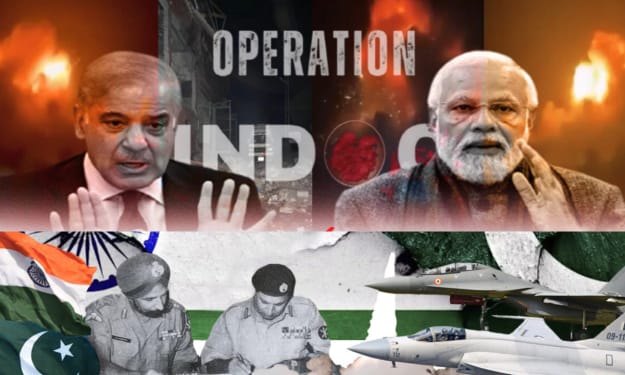
Kashmir crisis live: India must ‘suffer the consequences’ for ‘cowardly’ attack says Pakistan PM. Content Warning.
India and Pakistan are on the verge of conflict as the Kashmir crisis escalates. The long-standing dispute between India and Pakistan over Kashmir has reached a boiling point. Recent events have led to a significant escalation in tensions between the two nuclear-armed nations, with both sides engaging in hostile rhetoric and military action. *The Latest Developments* Pakistan's Prime Minister, Shehbaz Sharif, has condemned India's recent missile attack on Pakistani territory, calling it a "cowardly" act. Sharif stated that Pakistan has every right to respond vehemently to India's "act of war" and that Pakistan is doing so. The Indian government claims the attack targeted terrorist infrastructure in Pakistan and Pakistan-administered Kashmir, where attacks against India were planned and directed ¹. *The Kashmir Attack* The crisis began with a deadly attack on tourists in Indian-administered Kashmir, killing 26 people. India accused Pakistan of backing the attack, a claim Islamabad denies. This incident has triggered a series of retaliatory measures, including expulsions of diplomats, border closures, and suspension of a critical water-sharing treaty. Additionally, cross-border shelling has increased, escalating tensions between the two nations 2. *Pakistan's Response* Khawaja Asif, Pakistan's Defense Minister, has refuted India's claims, claiming that the targeted locations were civilian areas rather than militant camps. Asif warned that Pakistan would give a massive retaliation to the Indian attacks before sunrise. The Pakistani military has confirmed that missiles from Indian airspace hit at least seven sites in Pakistan, including areas in Pakistan-administered Kashmir ¹. *Consequences of the Crisis* The Kashmir crisis has far-reaching implications, potentially igniting a global crisis. Some possible consequences include ²: - "Escalation of Violence": If cross-border shelling and military action continue, more people could die and the region could become unstable. - "Diplomatic Fallout": The expulsion of diplomats and the closing of borders could have a significant impact on India and Pakistan's diplomatic relations. - *Economic Consequences*: Suspension of critical treaties, such as the water-sharing agreement, could have significant economic and environmental implications. - *Global Implications*: The crisis could draw in international mediators, potentially leading to a broader conflict. *International Reaction* The international community is closely watching the situation, with many nations urging restraint and diplomacy. The US Vice-President's recent visit to the region highlights the global concern about the escalating tensions between India and Pakistan ³. *Casualties and Damage* According to reports, the Indian missile attack on Pakistan has resulted in at least eight civilian deaths, with 35 people injured. The Pakistani military spokesperson confirmed up to 24 strikes across six locations, causing significant damage to civilian areas ³. *Straight Forward* To prevent further escalation, the Kashmir crisis requires immediate attention and diplomatic efforts. Both nations must work towards finding a peaceful resolution to the conflict, taking into account the complex history and sensitivities of the region. The international community can play a crucial role in facilitating dialogue and promoting a peaceful solution. In conclusion, the Kashmir crisis has brought India and Pakistan to the brink of a potentially catastrophic conflict. It is essential for both nations to exercise restraint and engage in diplomatic efforts to resolve the crisis peacefully. As the situation progresses, the entire world holds its breath.
By SANJIB DEY2 years ago in Journal
Why Airplane Cabin Lights Dim During Landing: The Hidden Safety Protocol Passengers Rarely Notice
Introduction Every frequent flyer has experienced it: just before landing or takeoff, the cabin crew dims the lights and asks passengers to lift their window shades. While this may seem like a simple routine or even a way to save energy, it’s actually part of a critical safety protocol designed to protect passengers in the unlikely event of an emergency. Air travel is filled with such hidden safety mechanisms—procedures we often take for granted or misunderstand. Among them, dimming cabin lights during landing and takeoff is one of the most quietly impactful. In this article, we’ll explore why this procedure exists, how it improves your chances of survival, and what it reveals about modern aviation’s meticulous attention to safety. Why Do Cabin Lights Dim? The primary reason cabin lights are dimmed during takeoff and landing is to help your eyes adjust to low-light conditions. These two flight phases—takeoff and landing—are when most aviation accidents are statistically likely to occur. In fact, more than 80% of aviation accidents happen within the first three minutes after takeoff or the final eight minutes before landing. In the event of an emergency requiring evacuation, passengers need to be able to see clearly—even in the dark. Eyes Need Time to Adjust The human eye takes several minutes to fully adapt to darkness. If the lights were left bright during landing, then suddenly went out in the case of a power failure or emergency landing at night, passengers’ eyes would need time to adjust—which could cost precious seconds in a life-or-death situation. By dimming the lights in advance, airlines ensure your eyes are already adjusted to low light, allowing for quicker response times and a safer evacuation. A Simulated Environment for Emergencies Dimming the lights creates a controlled simulation of emergency conditions. In a real emergency, visibility might be compromised due to smoke, fire, or electrical failure. By replicating lower visibility ahead of time, passengers and crew are mentally and physically better prepared for what might follow. Additionally, emergency floor lighting and exit signs become more visible in a dimmed environment. These lights are specifically designed to be noticeable in darkness, guiding passengers to exits. Dimming the lights helps these indicators stand out more clearly. Standard Operating Procedures Around the World This practice is not unique to one airline or country. It is a globally accepted aviation safety protocol enforced by regulatory bodies such as the Federal Aviation Administration (FAA) in the United States and the European Union Aviation Safety Agency (EASA). It is considered an essential part of pre-landing and pre-takeoff safety checks. According to the FAA’s cabin safety guidelines, cabin lighting must be adjusted for takeoff and landing during night operations. Many airlines apply the policy even during daylight, particularly if the cabin is dim or passengers are likely to be disoriented.
By Orbit Scope2 years ago in Journal
The Mystery of Luffy’s Blood Type F: How Eiichiro Oda Used Fictional Biology to Deepen One Piece Lore
In the vast, unpredictable world of One Piece, everything from sky islands to talking reindeer has found a place. But amid all the fantasy, there's one small but surprisingly important detail that often slips under the radar: Monkey D. Luffy's blood type is “F.” Yes, you read that correctly. While the real world runs on blood types like A, B, AB, and O, One Piece introduces something entirely different—fictional blood types, like Luffy’s type F. But why would creator Eiichiro Oda invent fake blood types for his characters? Is there a deeper meaning? As it turns out, this tiny detail is far more significant than it seems. In this article, we explore the origins, narrative functions, and symbolic power behind Luffy’s fictional blood type—and how it contributes to the larger mythos of One Piece. What Are Blood Types—and What’s So Special About “F”? In real life, blood types are classified based on the presence or absence of antigens in red blood cells. These include the familiar A, B, AB, and O blood types, plus a positive or negative Rh factor. These types are crucial in medicine, especially for blood transfusions, because mismatched blood can trigger dangerous immune responses. In One Piece, however, Eiichiro Oda took creative liberties and introduced a set of blood types that don't exist in reality. Luffy is labeled as blood type "F", which doesn’t correspond to any known classification. This fictional system is not just for fun—it becomes an important plot device later in the series, especially during the post-Marineford arc, when Luffy suffers massive blood loss after the Battle of Marineford. The Marineford Arc and the Importance of Luffy’s Blood Let’s go back to one of the most emotional and defining moments in One Piece history—the Paramount War at Marineford. After witnessing the death of his beloved brother, Portgas D. Ace, Luffy goes into a state of physical and emotional collapse. He’s mortally wounded and loses a massive amount of blood. Even after being rescued, he teeters on the edge of death. The question becomes: Who can donate blood to Luffy? This is where his rare blood type F suddenly becomes a critical issue. Since “F” is so uncommon (or perhaps exclusive to Luffy and a few others), the Straw Hat crew faces a challenge: no one nearby shares his blood type, and time is running out. The situation is resolved by Jinbe, who donates his blood to save Luffy. This moment is significant for several reasons: It deepens the bond between Luffy and Jinbe. It breaks a cultural taboo (in One Piece, some regions prohibit blood sharing between races). It reveals the story value of introducing fictional blood types as a plot-driving mechanic. Why Did Oda Invent Fictional Blood Types? Eiichiro Oda has never fully explained why he created fake blood types, but the creative logic is clear. 1. Freedom to Tell Unique Stories Using fictional blood types frees Oda from real-world medical constraints. He can invent unique transfusion dilemmas, plot twists, and relationships based on something as “simple” as a blood type. 2. Symbolism of Difference Luffy's "F" blood type can be seen as symbolic of his uniqueness. Just like his Devil Fruit power (later revealed to be a Mythical Zoan), his blood is literally uncommon—maybe even one-of-a-kind. 3. Breaking Societal Barriers In One Piece, certain characters (like Jinbe, a Fish-Man) are marginalized or discriminated against. Jinbe donating blood to a human like Luffy not only saves his life—it also represents racial unity and equality. Fictional blood types help Oda navigate complex sociopolitical themes without being limited by real-world science. Other Characters with Fictional Blood Types Luffy isn’t alone. Oda has given many characters fictional blood types, typically classified as: F S XF X And others These aren't always explained in detail but seem to serve narrative and symbolic purposes. For example: Sanji’s blood type is "S RH-", another rare and fictional type. Jinbe has a compatible blood type with Luffy—an unexpected but vital twist during the post-Marineford recovery. This use of blood as a narrative thread goes far beyond biology. In a world where alliances and bonds are crucial, the idea of literally sharing blood becomes a metaphor for family, loyalty, and trust. Blood as a Theme in One Piece Blood in One Piece isn’t just red liquid—it’s a recurring motif that often symbolizes: Sacrifice (Ace’s death, Whitebeard’s wounds) Brotherhood (Luffy, Ace, and Sabo exchanging cups of sake) Unity across boundaries (Jinbe’s donation) Legacy and inheritance (Luffy’s inherited will and D. lineage) By giving Luffy a fictional blood type, Oda adds one more layer to his mythical, symbolic role. Luffy isn’t just another pirate—his very biology reflects his uniqueness, his destiny, and his difference from the rest of the world. Fan Theories: Could Type F Mean More? Some fans believe that "F" could stand for: “Freedom” – reflecting Luffy’s core value and goal. “Fiction” – a meta nod to his extraordinary, impossible life. “Future” – suggesting Luffy represents the next step in evolution or destiny. While these are unconfirmed, they align with Oda’s tendency to embed hidden meanings in names, letters, and details. Final Thoughts: A Small Detail with Big Impact Luffy’s blood type “F” might seem like a throwaway detail to casual viewers, but to dedicated fans and narrative analysts, it’s a stroke of genius. It’s a tool for storytelling, symbolism, and even social commentary. From saving Luffy’s life to representing unity across race and class, his blood type becomes more than just medical trivia—it’s part of what makes him the heart of One Piece. So the next time you watch Luffy stretch his arms or charge into battle, remember: the power flowing through his veins isn’t just rubber—it’s something rarer, deeper, and uniquely his own.
By Orbit Scope2 years ago in Journal