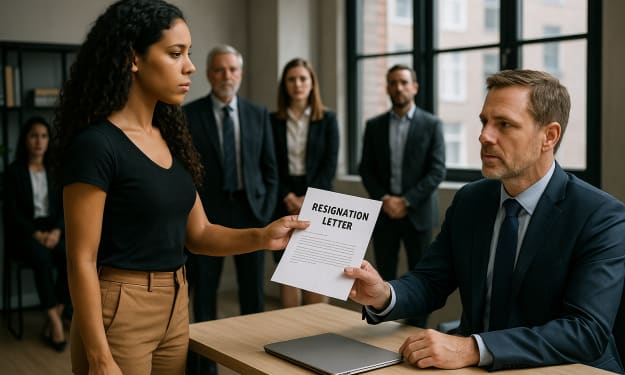
quotes
Best corporate culture and inspirational quotes from workplace executives, office workers, and everyone in between.
Are Relationships Meant to Be or Made to Work? Understanding Destiny and Growth Beliefs
When it comes to finding a life partner, our beliefs about love and relationships shape our choices and behaviors. Relationship scientist C. Raymond knee introduced two contrasting mindsets that influence how people approach romantic partnerships: destiny beliefs and growth beliefs. Destiny believers view relationships as predestined, with a "soulmate" who is inherently compatible. Growth believers, on the other hand, see relationships as dynamic, requiring effort and collaboration to thrive. These perspectives profoundly affect how individuals select life partners, navigate challenges, and sustain long-term relationships. This article explores how destiny and growth believers differ in choosing life partners, drawing on Knee’s foundational research.
By Doctor Strangeabout a year ago in Journal
How to watch the Google I/O 2025 keynote tomorrow
Google I/O 2025, Google's annual developer conference, is set to commence on Tuesday, May 20, 2025, at 10:00 AM Pacific Time (PDT). Standard Time (BST). The event will be held at the Shoreline Amphitheater in Mountain View, California, and will be livestreamed globally. How to Watch the Google I/O 2025 Keynote
By Shakil Sorkarabout a year ago in Journal
Is The "PRODUCTIVE YET PRETTY GIRL" Aesthetic just another trap ?
In a world of flawless Instagram morning routines, Pinterest boards full of pastels, and TikToks romanticizing studying with oat milk lattes—one trend stands out: the “productive yet pretty girl” aesthetic. She wakes up early, journals, eats clean, exercises, maintains glowing skin, and somehow does it all in an effortlessly photogenic way.Back in the day, hustle culture was all about grind—messy desks, all-nighters, black coffee, and burnout. But Gen Z said, “Nope, we want soft girl vibes while we conquer the world.” So the internet rebranded productivity. Now, it wears a silk robe, lights a candle, and journals before sunrise.
By Purabi Basakabout a year ago in Journal
I Thought I Was Just Tired — Turns Out, I Wasn’t Sleeping Right
I Thought I Was Just Tired — Turns Out, I Wasn’t Sleeping Right For months, I blamed everything on being tired. Work felt harder. I was snapping at people. I kept forgetting little things. But I was sleeping 7–8 hours every night, so I thought, “Maybe I’m just stressed.”
By Dr manvir bhatiaabout a year ago in Journal
God is the Author of Wisdom
What if the wisdom you’ve been searching for… isn’t something you learn, but someone you meet? In a world overflowing with opinions, hot takes, self-help books, and endless scrolling, there’s a question that cuts through the noise like lightning through a storm:
By Randolphe Tanoguemabout a year ago in Journal
The Dark Reality of Dimonds
Diamonds are often regarded as symbols of love, luxury, and status. Advertisements glorify them as "forever," and they dominate engagement rings, red carpets, and royal regalia. However, beneath their sparkling surface lies a troubling reality that involves human suffering, environmental destruction, and exploitative practices. The journey of a diamond, from the earth to the display case, is often riddled with blood, corruption, and inequality. Blood Diamonds and Human Suffering The term "blood diamond" or "conflict diamond" refers to diamonds mined in war zones and sold to finance armed conflict against governments. This practice became widely known during the brutal civil wars in African nations such as Sierra Leone, Angola, and the Democratic Republic of Congo during the 1990s and early 2000s. Rebel groups seized control of diamond-rich areas, exploiting local populations and using the profits to fund war efforts. Miners, including children, were often forced to work in horrific conditions. Many were subjected to violence, mutilation, and even death. Families were displaced, communities destroyed, and entire regions destabilized — all in pursuit of profits from diamonds. The 2006 film Blood Diamond, starring Leonardo DiCaprio, helped raise awareness about this issue, but the problem still persists in less visible forms. The Illusion of Ethical Regulation In response to international pressure, the Kimberley Process Certification Scheme was established in 2003 to prevent the trade in conflict diamonds. While it brought some improvement, the system has major flaws. The Kimberley Process only defines conflict diamonds as those used to fund rebel movements against recognized governments. It does not account for human rights abuses committed by governments themselves or by companies operating under legal contracts. Furthermore, the certification process is often easy to manipulate. Diamonds can be smuggled across borders and mixed with ethically sourced stones to obscure their origin. As a result, consumers are frequently misled into thinking their purchase is conflict-free when it may not be. Environmental Devastation Diamond mining has a severe environmental impact, especially in developing countries. Open-pit mining, one of the most common methods, involves digging massive holes in the earth, displacing soil and ecosystems. Forests are cleared, rivers diverted, and landscapes permanently altered. In some cases, abandoned mines become toxic wastelands, contaminating water supplies and harming wildlife. Alluvial mining, often used in riverbeds, causes erosion and disrupts local agriculture and fishing industries. In areas where regulations are weak or non-existent, companies may leave without rehabilitating the land, creating long-term ecological disasters. Exploitation and Inequality The diamond industry generates billions of dollars annually, but very little of this wealth reaches the communities where diamonds are mined. In many cases, local workers earn meager wages and are exposed to dangerous working conditions without protective equipment or health care. Child labor is still prevalent in some regions. Meanwhile, multinational corporations and elites profit immensely, widening the gap between rich and poor. Countries rich in natural resources like diamonds often suffer from what's known as the "resource curse" — where resource wealth leads to corruption, conflict, and economic stagnation instead of development. The Rise of Alternatives In recent years, there has been a growing demand for ethically sourced and sustainable diamonds. Lab-grown diamonds, which are chemically and visually identical to natural ones, have emerged as a popular alternative. These stones are created using high-tech processes that eliminate the need for mining, significantly reducing environmental and ethical concerns. Some companies also offer traceable diamonds mined under strict ethical standards, but verifying their claims remains a challenge. Consumers can play a role by researching brands, asking questions about sourcing, and considering alternatives to traditional diamonds. Conclusion The beauty of a diamond often masks a dark and disturbing reality. From financing wars and human rights abuses to environmental destruction and economic exploitation, the diamond industry has a long history of injustice. While steps have been taken to address these issues, much more work is needed to ensure that diamonds no longer come at the cost of human and ecological suffering. As consumers, we hold the power to demand change. By choosing ethically sourced or lab-grown diamonds, supporting transparent businesses, and spreading awareness, we can help shift the industry toward a more humane and sustainable future. Behind every glittering gem lies a choice — and it’s up to us to make the right one.
By Shah saab ITabout a year ago in Journal
Mastering Your Self Assessment Tax Return: A Step-by-Step Breakdown
Completing your taxes can seem like navigating a labyrinth, but with a bit of planning, your Self Assessment Tax Return doesn’t have to be intimidating. Whether you're newly self-employed or managing multiple streams of income, staying compliant with HMRC is both a legal duty and a financial safeguard.
By Self Assessment Tax Returnabout a year ago in Journal
The Hidden Cost of Instant Entertainment
Within the advanced age, social media stages like Instagram, YouTube, and TikTok have changed the way we consume substance. Among the foremost prevalent patterns are short-form videos—commonly known as reels or shorts—that final anyplace from a couple of seconds to a diminutive. Whereas these bite-sized pieces of amusement are fun, lock in, and exceedingly addictive, they come with covered up results. Later investigate and behavioral designs recommend that reels and shorts are adversely affecting both our memory and our physical and mental wellbeing. This proposal investigates the mental components behind this drift, the memory-related results, and the broader wellbeing suggestions.
By Hamim Iqbalabout a year ago in Journal
"Criticism Doesn’t Mean Failure: Learning to Stay Calm Under Workplace Pressure"
There are days when I feel like I’ve given my best at work. Sorting documents, making sure every procedure is followed, handling administrative tasks without missing a step. But still, the criticism comes. Not in the form of constructive feedback, but raised voices echoing from the manager’s office. Suddenly, everything I’ve done feels meaningless. What I thought was right, turns out to be wrong. And all I can do is stand there, nod, and quietly swallow the moment.
By DanishMahdiabout a year ago in Journal
Five Years Without Alcohol or Cigarettes
They call me Chef. But for years, I was running on fumes — and I didn’t even realize it. I used to smoke. I never drank in the kitchen — that was a personal rule — but outside of work, a glass of wine here and there had become part of my routine. A social habit. Harmless on the surface. But exhausting in the long run.
By Cristian Marinoabout a year ago in Journal