pop culture
Modern popular culture topics in the Journal workplace sphere, such as corporate history, workplace advice, healthy office habits, and more.
Grocery Retailers Are About To Suffer The Consequences Of Degenerative Practices
The Future of Business is Regenerative. However, most companies seem to be slow to catch on to this Reality, as we continue to see Degenerative Practices.
By H.E. Dr. Cody Dakota Wooten, COIE, DFM, DHM3 years ago in Journal
Leadership Lessons From Japanese Terms
One of the great Failures of the English language, in my opinion, is that we often do not have terms for certain Ideas. Even when we do have terms, often they do not have a lot of Depth of what is meant.
By H.E. Dr. Cody Dakota Wooten, COIE, DFM, DHM3 years ago in Journal
A New, Fascinating Development In Artificial Intelligence (AI) Proving What I Have Been Saying
Artificial Intelligence (AI) has been the center of conversations in Business for over a year now. Now, I'm not Anti-AI, I can see how it could be positively used.
By H.E. Dr. Cody Dakota Wooten, COIE, DFM, DHM3 years ago in Journal
Something To Consider If You Want To See The World Change
I hear it a lot. "I wish the world worked differently!" I get it, most people do, including me. Though there are truly incredible things in the world and many of our Lives, many Problems still exist.
By H.E. Dr. Cody Dakota Wooten, COIE, DFM, DHM3 years ago in Journal
Navigating the Digital Marketplace: Understanding EPOS Systems in 2024. Content Warning.
In today's rapidly evolving digital marketplace, businesses are constantly seeking ways to streamline operations, enhance customer experiences, and boost profitability. One essential tool that plays a pivotal role in achieving these goals is the Electronic Point of Sale (EPOS) system. As we delve into 2024, understanding the landscape and functionalities of EPOS systems becomes increasingly crucial for businesses aiming to thrive in the competitive market. Let's explore the key aspects of EPOS systems and how they are shaping the digital marketplace.
By Munnazir Zarin3 years ago in Journal
Little Boy At 14 yrs Killed With Electric Shock; Here's what he did.
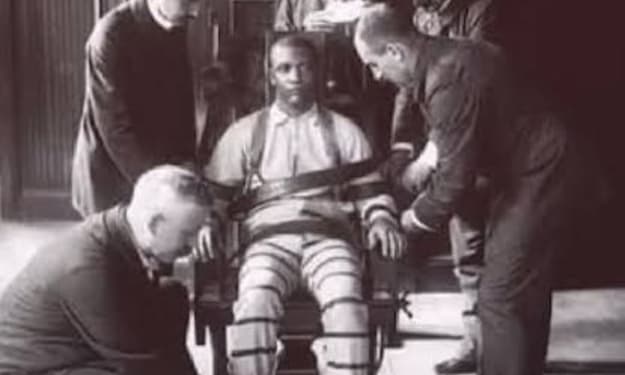
A fourteen-year-old Black kid weighing ninety pounds, George Stinney Jr., was put to death in Columbia, South Carolina, on June 16, 1944, using an electric wheelchair. On March 24, three months ago, while George and his sister Aimé were having fun in their backyard, two young white girls casually stopped with their bicycles to ask where they could obtain maypops(a local name for passion flowers). A search party was sent out to locate the girls after they disappeared from their house for several hours. After joining the search team, George jokingly told a passerby that he had previously seen the females. … After the girls failed to return home the previous evening, on March 23, 1944, the next morning, the! remains of Betty June Binnicker and Mary Emma Thames were found in a ditch on the African-American side of Alcolu. Stinney's dad helped with the hunt. A weapon, described in different accounts as a railway spike or a rough metal object, had been used to beat the girls. Both Binnicker and Thames experienced significant blunt force injuries, which caused their skulls to be penetrated. These wounds had been "inflicted by a blunt instrument with a round head, about the size of a hammer," according to a medical examiner's report. In spite of the older girl's genitalia being slightly injured, the medical examiner found no indication of a sexual attack on the younger girl. Without the presence of his parents or a lawyer, George was taken into custody for hours after being apprehended for the killings of two young white girls, Betty June Binnicker - 11, and Mary Emma Thames - 8, in Alcolu, South Carolina. Although no signed or written statement was provided, the sheriff subsequently stated that George had admitted to the killings. George Stinney's execution was racially motivated. He was Black, and the victims were White. And during this time in the Jim Crow South, Black individuals were often railroaded by the justice system. George's family was forced to leave because of threats against their life, and his father lost his job. Although George was already being held in an out-of-town jail, on March 26 a crowd tried to murder him. George Stinney stood trial almost by himself on April 24 in a mock trial. If na you, wetin you go do?
By Chuks Gad Nwaigwe3 years ago in Journal