politics
Political figures, histories, and current events in the whole scope of modern and past politics. Work place politics.
The Deployment of Federal Forces in Los Angeles Amid Immigration Policy Protests
In recent years, immigration has become one of the most polarizing issues in the United States. With increasing tensions at the southern border and evolving federal policies, many American cities have become the stage for demonstrations and civic unrest. Among them, Los Angeles—a diverse, immigrant-rich metropolis—has often found itself at the center of both activism and federal scrutiny. The deployment of federal forces in Los Angeles during protests against immigration policies marked a significant moment in the ongoing national debate. This essay explores the circumstances that led to the deployment, the public response, the legal and constitutional concerns raised, and the broader implications for civil liberties and federalism in the United States.
By Jane Bradshaw about a year ago in Journal
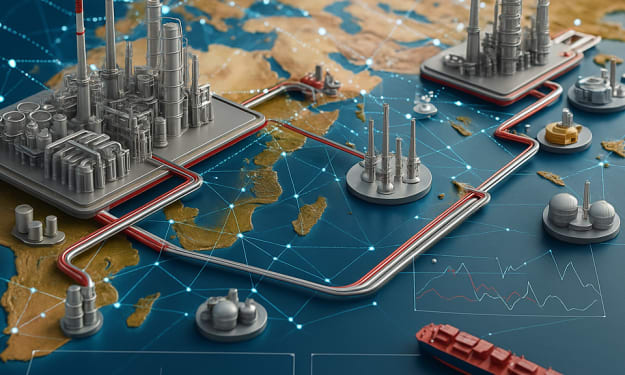
Is Brazil About to Become a Food and Energy Superpower?
As the world faces crucial geopolitical and economic shifts, two trends seen as long-term important topics are already coming to discussion as subjects of the global future, these are: the growing demand for food and the transition to sustainable energy.
By Pedro Cagnoni about a year ago in Journal
The Controversy of Trump and Pride Month 2025
As Pride Month 2025 came into full swing, unfolding events in Washington D.C. were overshadowed by the unexpected absence of official support from President Donald Trump, whose administration has taken a notably hostile stance toward LGBTQ+ communities. What began as voices of celebration quickly shifted into a clash of public opinion, political symbolism, and protest.
By Jane Bradshaw about a year ago in Journal
Los Angeles Erupts: Immigration Raids Spark Massive Protests
In early June 2025, the city of Los Angeles became a focal point of intense national attention after large-scale Immigration and Customs Enforcement (ICE) raids triggered widespread protests. Sparked by operations in areas such as the Fashion District, Home Depot parking lots, and a doughnut shop, at least 44 individuals – including union leader David Huerta – were detained, fueling outrage and mobilizing communities across L.A. County
By Jane Bradshaw about a year ago in Journal
Iran - US Nuclear Deal
The Iran-U.S. nuclear deal, officially known as the Joint Comprehensive Plan of Action (JCPOA), stands as one of the most pivotal and controversial diplomatic agreements of the 21st century. Signed in 2015 between Iran and six world powers—the United States, United Kingdom, France, Germany, Russia, and China—the deal aimed to limit Iran’s nuclear program in exchange for relief from economic sanctions. Nearly a decade later, the deal remains in a state of uncertainty, with efforts to revive it met with mistrust, geopolitical shifts, and domestic opposition on all sides. Background: What the JCPOA Was Designed to Do At its core, the JCPOA was a non-proliferation agreement. Iran agreed to drastically reduce its uranium enrichment activities, limit its stockpile of enriched uranium, and open its nuclear facilities to international inspections by the International Atomic Energy Agency (IAEA). In return, crippling economic sanctions—particularly those related to oil exports and banking—were lifted, offering Iran a chance to reintegrate into the global economy. The agreement was hailed as a diplomatic breakthrough. Supporters argued it prevented Iran from acquiring a nuclear weapon without the need for military conflict. Critics, however, saw it as overly lenient, claiming it merely delayed Iran’s nuclear ambitions without permanently dismantling its capabilities. U.S. Withdrawal and Its Fallout The turning point came in May 2018, when then-President Donald Trump unilaterally withdrew the United States from the JCPOA, calling it a “disastrous deal.” The Trump administration reinstated and intensified sanctions under its “maximum pressure” campaign, aiming to force Iran back to the negotiating table under more favorable terms. Iran responded by gradually stepping away from its commitments, enriching uranium beyond JCPOA limits and restricting IAEA inspections. This breakdown severely strained U.S.-Iran relations and led to heightened tensions, including cyberattacks, sabotage incidents, and the targeted killing of Iranian General Qasem Soleimani in 2020. The risk of open military conflict briefly surged, and hopes for reviving diplomacy dimmed. Biden’s Approach: Hope for Revival President Joe Biden came into office promising to rejoin the JCPOA, but only if Iran returned to full compliance. Indirect negotiations began in Vienna in 2021, with European intermediaries attempting to bridge the growing chasm between the two sides. While progress was made, multiple rounds of talks failed to yield a breakthrough. Several factors complicated the negotiations. Iran demanded guarantees that a future U.S. administration wouldn’t abandon the deal again—something the Biden administration couldn’t legally promise. Meanwhile, Iran’s domestic politics shifted after the 2021 election of hardline President Ebrahim Raisi, who took a more confrontational stance. Israel and some Gulf states also lobbied against a renewed deal, fearing it would legitimize Iran’s regional influence. Current Status: Stalemate with High Stakes As of 2025, the JCPOA remains dormant, neither fully alive nor entirely dead. Iran continues to enrich uranium to near-weapons-grade levels, though it insists its program remains peaceful. The U.S. has imposed new sanctions and explored alternative means of containment, such as regional security pacts and tighter coordination with European allies. This stalemate has dire implications. Without a functioning agreement, the risk of proliferation in the Middle East increases, raising the likelihood that other countries could seek nuclear capabilities in response to Iran. It also limits global cooperation on other security challenges, such as counterterrorism and energy stability, especially in a region as volatile as the Middle East. Broader Geopolitical Implications The fate of the Iran-U.S. nuclear deal goes beyond bilateral relations. It underscores the fragility of international agreements in the face of changing political winds. The U.S. withdrawal in 2018 eroded trust not only in Washington’s commitment to diplomacy but also in the idea that multilateral deals can survive leadership changes. For Iran, the experience reinforced the belief that engagement with the West brings few lasting benefits. Meanwhile, other global players like China and Russia have taken advantage of the vacuum. Iran has strengthened its ties with Beijing and Moscow, signing long-term economic and military agreements that give it more strategic flexibility. These shifts could recalibrate power dynamics in the region and complicate future efforts by the West to isolate or pressure Tehran. Conclusion: A Deal Worth Saving? Despite its imperfections, the JCPOA represented a rare moment of consensus and diplomacy in a region often defined by conflict. It proved that negotiation, not just coercion, could deliver tangible security outcomes. Reviving the deal—or crafting a new, more comprehensive framework—remains a challenging but potentially crucial task for global stability. Ultimately, the Iran-U.S. nuclear deal is not just about uranium enrichment levels or centrifuge counts. It is about building a sustainable model of conflict resolution in a world where trust is scarce and the cost of failure is dangerously high. Whether diplomacy can overcome politics remains the central question.
By Naveed Younisabout a year ago in Journal
DJ Khaled: Why His Voice Matters for Palestine
DJ Khaled: Why His Voice Matters for Palestine Imagine scrolling through Instagram. You see DJ Khaled, beaming, flashing his signature grin. "Another one!" he shouts, celebrating success. He's in his element — luxurious setting, major vibes, feel-good energy. But what if that same booming voice spoke for those who are often unheard? What if he said something more than just motivational quotes? What if he used his platform to speak for Palestine?
By Herald Post Mailabout a year ago in Journal
The Ripple Effects of U.S. Tariff Increases: What’s at Stake?
U.S. tariff policy holds immense sway over international trade dynamics, domestic industries, and consumer well-being. Recent tariff increases by the United States—most notably under the Biden and Trump administrations—have reignited debates on protectionism, trade fairness, and economic resilience. These measures, often aimed at protecting domestic industries or retaliating against perceived unfair practices by trade partners like China, may seem like short-term solutions but carry far-reaching consequences. Understanding the ripple effects of these tariff hikes is crucial to grasp what’s truly at stake for the global and domestic economy. Protectionist Goals vs. Global Interdependence Tariffs are essentially taxes imposed on imported goods, intended to make foreign products more expensive and thereby boost demand for domestic alternatives. In theory, this promotes local manufacturing, preserves jobs, and corrects trade imbalances. However, the U.S. is deeply enmeshed in global supply chains. From semiconductors to solar panels, many goods consumed or assembled domestically rely heavily on imported components. Increasing tariffs on Chinese goods, for example, is intended to encourage reshoring and reduce reliance on a geopolitical rival. But this often disrupts supply chains, raises costs for U.S. manufacturers, and provokes retaliatory tariffs from affected nations, compounding the economic strain. Instead of achieving strategic autonomy, tariffs may result in strategic isolation—where U.S. businesses are less competitive on the global stage. Economic Impact on U.S. Consumers and Businesses One of the most immediate ripple effects of tariff increases is rising consumer prices. When tariffs make imported goods more expensive, U.S. retailers and manufacturers often pass on the additional costs to consumers. This phenomenon has been particularly visible in industries such as electronics, automobiles, and household appliances. Small and medium-sized enterprises (SMEs), which typically lack the scale and financial buffer to absorb these costs, are hit especially hard. Many rely on global suppliers for affordable components. Tariffs squeeze their profit margins or force them to raise prices, potentially reducing their competitiveness. Meanwhile, large multinational corporations may be better positioned to relocate supply chains or negotiate more favorable terms—but at significant cost and complexity. In the long run, this could slow innovation and economic growth, particularly in technology sectors that depend on agile, cost-effective international partnerships. Retaliation and the Risk of Trade Wars Tariff increases rarely go unanswered. History shows that one nation’s tariffs often provoke retaliation, leading to escalating trade wars. The U.S.–China trade conflict that began in 2018 led to successive rounds of tariffs on hundreds of billions of dollars in goods from both sides. While some U.S. farmers and manufacturers saw temporary relief from subsidies or redirected trade, others suffered major losses as access to key export markets was blocked or diminished. Beyond bilateral disputes, higher tariffs can damage multilateral trade relationships and weaken institutions like the World Trade Organization (WTO), which plays a crucial role in mediating disputes and maintaining a rules-based global trading system. As the U.S. increases tariffs, it risks undermining the very frameworks that help resolve unfair trade practices peacefully and systematically. Strategic Competition and National Security Some proponents of tariffs argue they are necessary to protect national security interests, especially in critical sectors like semiconductors, rare earth elements, and green energy technologies. The concern is that overdependence on foreign—especially Chinese—suppliers in these areas could compromise national security and economic sovereignty. In this context, tariffs may be part of a broader strategy that includes industrial policy, subsidies, and domestic investment. However, without coordinated planning, such measures can misfire. Overreliance on tariffs without accompanying infrastructure and workforce investment may yield little more than higher costs and political tensions. Looking Ahead: Finding a Balance The challenge for U.S. policymakers is to strike a balance between legitimate national security concerns and the risks of overplaying protectionist tools. While some tariffs may be justified to address specific issues—such as intellectual property theft or forced technology transfers—broad, sweeping tariff increases risk backfiring. A forward-looking strategy might include targeted tariffs, coupled with robust investment in domestic innovation, supply chain diversification, and multilateral diplomacy. In today’s multipolar world, the cost of going it alone is high. As the U.S. recalibrates its trade relationships, the stakes are not just economic—they are geopolitical, structural, and deeply human. The ripple effects of tariff increases will be felt far beyond customs warehouses and trade balance sheets. They will shape the future of global commerce, the livelihoods of millions, and America’s role in a rapidly evolving world order.
By Naveed Younisabout a year ago in Journal
The Philosophy of Two Identities in Ukraine: Normativism and Positivism
Historical Introduction Some Ukrainians, scarred by the trauma of war, say: “We will never again have anything to do with Russians.” But many also recall the experience of the 1920s–30s, when Poles carried out a cultural genocide against Ukrainians in Galicia. This later led to a response — a real and bloody genocide committed by Ukrainians in the 1940s, known as the Volhynia Massacre or Volhynian Tragedy. Yet since 1991, every Ukrainian president has visited Western Ukraine or Poland to offer apologies, calling the events a “tragedy.” In turn, during Russia’s invasion of Ukraine, Poland received nearly a million Ukrainian refugees.
By Ilya V. Ganpantsuraabout a year ago in Journal
Trump Travel Ban Sparks World Cup Questions — and Raises More Soccer Issues
Beyond politics and immigration, the Trump administration's contentious 2017 travel ban, which limited admission into the US for nationals of several primarily Muslim nations, had far-reaching effects. International soccer was one unanticipated area of concern, especially in relation to the FIFA World Cup in 2026, which the United States is scheduled to co-host with Canada and Mexico. Concerns about whether players, officials, and spectators from impacted countries would have trouble entering the country were raised by the ban, and they have come up again as the tournament draws near.
By Tanvir Shahariarabout a year ago in Journal