politics
Political figures, histories, and current events in the whole scope of modern and past politics. Work place politics.
Drafting Solid Business Contracts: A Guide for Denver Entrepreneurs. AI-Generated.
Whether you're launching your first startup or scaling an established business, one thing remains constant: the need for well-drafted, legally sound contracts. Contracts form the backbone of any business operation, governing relationships with partners, clients, vendors, employees, and investors. For entrepreneurs in the Mile High City, working with an experienced Denver contract lawyer can mean the difference between a smooth business relationship and a costly legal dispute.
By Steven Rickyabout a year ago in Journal
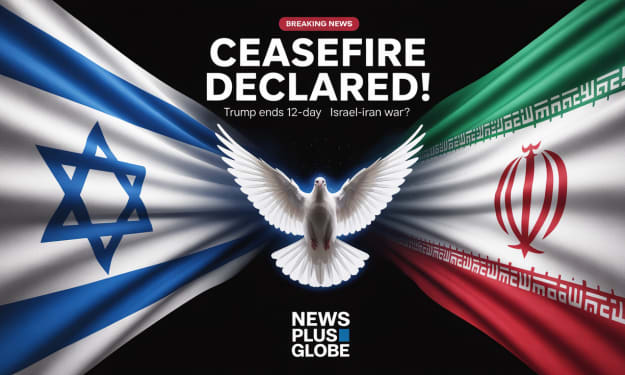
Trump Announces Ceasefire Between Israel and Iran
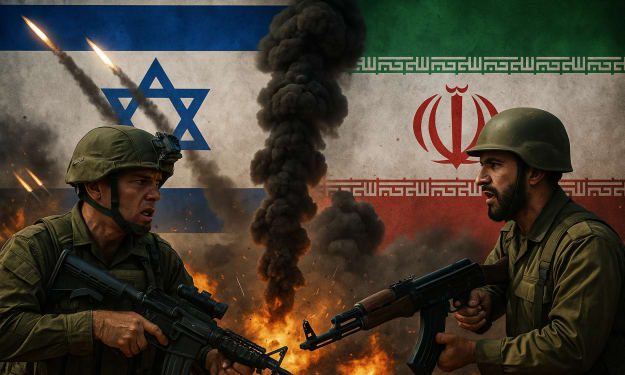
Introduction After 12 days of escalating conflict marked by missile strikes, air raids, and tense diplomacy, U.S. President Donald Trump announced a "complete and total ceasefire" between Israel and Iran on June 23, 2025. This declaration, made on Trump’s social media platform Truth Social, signaled a potential end to one of the most dangerous flare-ups in the Middle East in recent years. The ceasefire announcement comes amid ongoing uncertainty about its implementation and the fragile state of regional peace.
By M Irfan Zafarabout a year ago in Journal
Trump’s War and Peace: US Role in Iran-Israel Clash
A Ceasefire in Name Only On June 24, 2025, U.S. President Donald Trump declared a “complete and total ceasefire” between Israel and Iran, marking what he called the end of the “12 Day War.” However, despite this bold announcement, the battlefield tells a different story. Israeli cities were still under fire from Iranian missiles just hours after Trump’s claim, and Israeli airstrikes reportedly continued up to the ceasefire deadline. Tehran, meanwhile, remains under siege, and Iranian officials have denied any formal agreement—revealing a dangerous dissonance between diplomacy and reality.
By Det. Marcusabout a year ago in Journal
US Joins the Fire: Iran-Israel War Goes Nuclear
June 2025, What began as a series of tactical skirmishes and covert operations has spiraled into full-blown warfare: Israel and Iran are now engaged in direct military exchanges, including strategic air and missile strikes targeting each other’s territory. This marks a dramatic intensification of a conflict that has simmered for decades.
By Det. Marcusabout a year ago in Journal
Me & AI Talk War: What Just Happened Between the U.S., Iran, and Iraq?. AI-Generated.
Me: Hey AI, I woke up to the news that the U.S. launched airstrikes against Iran's nuclear sites. That sounds like a major turning point. Can you tell me exactly what happened?
By Rajaratnam Lishanthanabout a year ago in Journal
Iran Israel America War: Latest Updates, Analysis, and What it Means for the World
Introduction Recent weeks have witnessed an escalated confrontation among Iran, Israel, and the US, with America launching new attacks against Iran. People worldwide have taken notice, seeking information and insight into how developments could shape both Middle Eastern stability and global peace in general.
By Robert Brownabout a year ago in Journal
Judge Boasberg’s Hammer Falls Hard on Trump’s Inner Circle
If you burn the evidence, don’t be shocked when the fire burns your future. Washington, D.C. — June 18, 2025 A federal judge on Friday ordered Secretary of State Marco Rubio, who is also serving as the acting archivist, to collect any Signal messages belonging to top Trump officials that could be at risk of deletion and to refer those messages to the Department of Justice for further review.
By Omasanjuwa Ogharandukunabout a year ago in Journal
The Israel-Iran Conflict:
The Israel-Iran conflict is one of the most volatile and complex confrontations in the Middle East, with far-reaching implications for global security. Though not officially declared a war in the traditional sense, hostilities between Israel and Iran have unfolded in a shadow war spanning decades, involving cyberattacks, assassinations, airstrikes, and proxy battles. As tensions escalate in 2025, the risk of a full-scale military conflict appears more real than ever. Historical Context The roots of the Israel-Iran rivalry trace back to the 1979 Islamic Revolution in Iran. Before the revolution, Iran under the Shah maintained cordial relations with Israel. However, after Ayatollah Khomeini came to power, Iran adopted a hardline anti-Israel stance, denouncing the Jewish state and supporting armed resistance against it, primarily through groups like Hezbollah and Hamas. Iran sees itself as a leader of the Islamic world and a bulwark against Western and Israeli influence in the region. Israel, in turn, views Iran’s nuclear ambitions and support for militant groups as existential threats. The Nuclear Issue At the core of the conflict is Iran’s nuclear program. While Iran insists its program is for peaceful purposes, Israel believes Tehran is on the path to acquiring nuclear weapons. This concern has driven Israel to act preemptively, including the sabotage of nuclear facilities and the assassination of Iranian nuclear scientists. Israel has consistently lobbied the international community, especially the United States, to take a harder stance on Iran. The U.S. withdrawal from the 2015 Iran nuclear deal (JCPOA) under President Trump, and subsequent re-imposition of sanctions, re-ignited tensions and pushed Iran to expand its nuclear activities. Despite recent attempts at diplomacy, talks have stalled, and both nations have prepared for the possibility of conflict. Proxy Warfare The most visible aspect of the Israel-Iran conflict is its proxy dimension. Iran’s influence in Syria, Lebanon, Iraq, and Yemen has given it strategic depth, allowing it to pressure Israel from multiple fronts. Iran-backed Hezbollah in Lebanon possesses an estimated 150,000 rockets aimed at Israel, and Iran’s involvement in Syria has brought its forces closer to Israeli borders. In response, Israel has conducted hundreds of airstrikes in Syria targeting Iranian weapons shipments and military infrastructure. While these strikes are rarely acknowledged by Israel, they have become routine, keeping the conflict in a state of simmering escalation. In Gaza, Iran supports Hamas and Palestinian Islamic Jihad, both of which have launched rocket attacks against Israeli cities. Each round of fighting—like those in 2021 and 2023—has intensified regional instability and fueled animosity. Cyber and Covert Operations Another key front is cyberspace. Israel and Iran have engaged in increasingly sophisticated cyberattacks against one another. The Stuxnet virus, a joint U.S.-Israeli effort in 2010, damaged Iran’s nuclear centrifuges and revealed the power of cyberwarfare. Since then, both countries have launched cyberattacks on infrastructure, financial systems, and government networks. Iranian hackers have targeted Israeli water systems, transportation infrastructure, and health databases, while Israeli cyber units have disrupted Iranian ports, power grids, and oil facilities. Additionally, covert operations—such as the assassination of Qassem Soleimani (though carried out by the U.S.) and other Iranian military figures—underscore the lethal nature of this shadow war. Risks of Escalation The situation in 2025 is particularly precarious. Iran's deepening military cooperation with Russia and China, combined with increasing enrichment of uranium, has alarmed Western powers and Israel alike. Meanwhile, Israel’s growing normalization with Arab countries, including the Abraham Accords and possible ties with Saudi Arabia, threatens Iran's strategic position. Any miscalculation—such as a successful Iranian missile strike, or an Israeli attempt to bomb Iranian nuclear facilities—could spiral into a broader regional war involving Hezbollah, Hamas, and potentially U.S. forces stationed in the region. Conclusion The Israel-Iran conflict remains a key flashpoint in Middle Eastern geopolitics. While both nations have avoided direct, large-scale confrontation so far, the pattern of escalating attacks, deep-rooted hostility, and the looming threat of nuclear weapons make the situation dangerously unstable. Unless diplomatic efforts are revived and regional powers seek de-escalation, the world may face a conflict with devastating consequences far beyond the Middle East.
By Dr Gabriel about a year ago in Journal
The Qur’anic Framework for Conflict Engagement : Part 1
Beyond Tribal Allegiances: Divine Mandates in Times of War The seismic tensions between Iran and Israel demand Muslims return to revelation’s unchanging compass. Allah’s command in Surah Al-Anfal (8:61) –
By Mahdi H. Khanabout a year ago in Journal