literature
Best corporate culture and workplace literature to better your workplace experience. Journal's favorite stories.
Business Growth Strategies
Business venture is an elating excursion loaded up with incalculable difficulties and open doors. While having a good thought is fundamental, it takes more than that to construct an effective and flourishing business. Practical development requires the execution of successful business development procedures. These procedures act as a guide to explore deterrents, immediately jump all over chances, and impel your business forward. In this thorough blog, we will investigate top to bottom some key development procedures that each business visionary ought to be aware and use to make long haul progress.
By Mahnoor Malik3 years ago in Journal
Is the Teacher Tax Rebate Genuine?. Content Warning.
Teachers play a vital role in shaping the future of society, dedicating their time and effort to educating the next generation. In recognition of their hard work, the UK government introduced the Teacher Tax Rebate, a program aimed at providing tax relief for teachers' work-related expenses. However, many teachers are skeptical about the legitimacy of this scheme. In this article, we will explore the Teacher Tax Rebate in the UK, examining its eligibility criteria, application process, and addressing the concerns surrounding its genuineness.
By Arvada Axel3 years ago in Journal
Reasons Why Conventional Meeting Spaces Are Expensive in the Long Run. Content Warning.
Introduction Today's business world moves at lightning speed, making communication and teamwork more important than ever. In order to facilitate teamwork and decision-making, conference rooms are an indispensable component of any business. Traditional conference rooms, on the other hand, have hidden expenses that can reduce efficiency and waste time and money. This article will examine the unseen expenses of conventional conference rooms and explain why a shift is warranted.
By Munnazir Zarin3 years ago in Journal
Asian Pacific American Activism and Civil Rights Movement
Introduction: Asian Pacific Americans (APA) have played a crucial role in shaping civil rights movements in the United States, contributing to the fight for social justice and equality. Throughout history, Asian Pacific American activists have championed causes that encompassed not only the struggles of their own communities but also intersected with other minority groups. This article explores the significant contributions of Asian Pacific Americans to various civil rights movements, highlights notable activists and organizations, and examines the intersectionality of Asian Pacific American activism with other marginalized communities.
By Adeeyo Victoria3 years ago in Journal
The Battle for Glory
In the heart of Madrid, a city that breathed football, anticipation hung heavy in the air. The Santiago Bernabeu Stadium pulsated with energy as the day of the fateful clash between Real Madrid and Athletic Club approached. The stakes were high, the emotions even higher. For Real Madrid, the embodiment of Spanish footballing glory, victory was not just an aspiration; it was an expectation. Their rich history was adorned with countless trophies, their trophy cabinet a testament to their unrivaled success. But beneath the veneer of confidence lay a team driven by an insatiable desire for more. The players knew what was at stake. Each one had a personal connection to the club, to the fans who packed the stands week after week, and to the legends who had donned the white jersey before them. They carried the weight of history on their shoulders, feeling the expectations pressing against their chests with every heartbeat. Sergio Ramos, the captain, embodied the spirit of Real Madrid. His passion for the game was unparalleled, and he wore his heart on his sleeve. The thought of victory against Athletic Club stirred a fire within him, an unquenchable desire to etch his name in the annals of footballing history. On the other side of the pitch, Athletic Club stood tall, a symbol of Basque pride and resilience. The players knew that their task was formidable. Real Madrid had an aura of invincibility, an aura they were determined to shatter. Their journey to the final had been fraught with challenges, but they had overcome each obstacle with unwavering determination. As the game kicked off, emotions ran wild. The roar of the crowd enveloped the players, fuelling their adrenaline. It was a game of skill, strategy, and heart. Every pass, every tackle, every shot carried the weight of dreams and aspirations. Minutes turned into hours as the battle raged on. Real Madrid, with their fluid attacking style, relentlessly pressed forward. Athletic Club, with their unyielding defense, held firm. The game became a symphony of emotions, rising and falling with every touch of the ball. For Real Madrid, each missed opportunity was met with frustration and disappointment. Their desire for victory mingled with fear of failure. The weight of the club's legacy sat heavily on their shoulders, threatening to crush their spirits. But Athletic Club, with their unwavering determination, refused to be overwhelmed. They fought with every ounce of their being, blocking shots, intercepting passes, and launching counterattacks that sent shockwaves through the Real Madrid defense. The dreams of a city rested on their shoulders, and they were not ready to let them fade away. As the final whistle approached, the intensity reached its peak. The scoreline remained locked in a stalemate, and the outcome of the match seemed destined for uncertainty. Players on both sides were physically and emotionally drained, their bodies pushed to the brink, but their will to win burning brightly. And then, in a moment of sheer brilliance, a flicker of magic illuminated the Santiago Bernabeu. Asensio, the young prodigy, unleashed a thunderous strike that soared past the Athletic Club goalkeeper, finding the back of the net. The stadium erupted in a symphony of jubilation, emotions cascading through the crowd like a tidal wave. Athletic Club fought valiantly until the last second, but the final whistle confirmed their defeat. Tears of both joy and heartbreak flowed freely, mingling with sweat on the faces of players from both sides. In victory and defeat, theyfound a common ground, for they had experienced the full spectrum of emotions that football could offer. In the midst of the jubilant celebration, there was a moment of reverence. Real Madrid's captain, Sergio Ramos, made his way towards the dejected players of Athletic Club. In a display of respect and empathy, he extended his hand, offering solace and acknowledging the battle they had fought. The Athletic Club players, with tears streaming down their faces, accepted the gesture. It was a testament to the bond that football created, transcending the boundaries of competition. In that moment, they were not adversaries, but warriors who had poured their hearts and souls into the pursuit of glory. As the stadium emptied and the echoes of the chants faded away, the emotional weight of the match lingered. Real Madrid's victory was sweet, but it was not without a tinge of empathy for their fallen opponents. They knew that the battle for glory was not won solely through victory but through the shared experiences and the emotions that united players and fans alike. In the following days, the emotional rollercoaster of the match continued to resonate. Real Madrid's victory ignited a renewed sense of pride within the city, with jubilant fans flooding the streets in celebration. Yet, in the midst of the revelry, there was an underlying respect for the valiant effort put forth by Athletic Club. Athletic Club, though defeated, held their heads high. They may not have lifted the trophy, but their journey had captured the hearts of fans across the nation. Their unwavering determination and resilience became a source of inspiration, reminding everyone that success was not always measured in trophies, but in the emotional journey of the pursuit itself. Months later, as the dust settled, both Real Madrid and Athletic Club continued their quests for glory. The memories of that fateful clash lingered, serving as a driving force for both teams. Real Madrid sought to maintain their dominance, fueled by the taste of victory. Athletic Club, on the other hand, used the experience as fuel to ignite their hunger for future triumphs. Football, with its emotional highs and lows, would forever be a battleground where dreams clashed and emotions intertwined. Real Madrid and Athletic Club understood that the pursuit of glory was not simply about winning matches or lifting trophies. It was about the shared emotions, the unwavering passion, and the indomitable spirit that brought people together. The story of Real Madrid vs. Athletic Club was not just a clash of footballing titans; it was a tapestry of human emotions. It was a testament to the power of sport to transcend boundaries, ignite passions, and evoke emotions that would forever be etched in the hearts of players and fans alike.
By Fernando Sikalango3 years ago in Journal
How to Say "No" Without Saying No:
In our fast-paced world, saying "no" is often considered difficult or even rude. Whether it's declining a social invitation, turning down a project at work, or rejecting a favor, the fear of disappointing or offending others can make us hesitate to express our true feelings. However, there are ways to gracefully decline without resorting to a blunt "no." In this blog post, we'll explore the art of saying "no" without actually saying it, allowing you to assert boundaries while maintaining positive relationships.
By Mahnoor Malik3 years ago in Journal
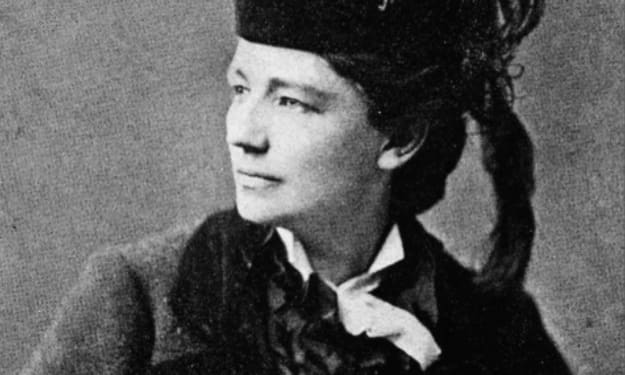
Victoria Woodhull 1838-1927
The first woman to run for president and the first female stock broker on Wall Street, Victoria Woodhull achieved remarkable success in finance, journalism, and politics. A spiritualist, suffragist, and free love advocate, Woodhull was an iconoclast who fought for her beliefs no matter how controversial they were at the time.
By Unknown Bsn3 years ago in Journal
Research and Writing
Just because when writing your novel you're doing some creative writing, doesn't mean that you get to make up everything in your novel from imagination. Sure if it's part of your world like electricity being made from trapped fairies in lamps, but if you're not writing a fantasy novel - this is a little out of place.
By Elise L. Blake3 years ago in Journal
Ghana's Rich Culture
Introduction: Ghana, a West African nation known as the "Gateway to Africa," is renowned for its extraordinary cultural heritage. Steeped in history, Ghana's rich culture is a tapestry woven with tradition, diversity, and vibrancy. From its ancient empires to the present-day, Ghana has nurtured a thriving cultural landscape that captivates the world. In this essay, we will explore the various facets of Ghana's culture, including its traditions, arts, music, festivals, cuisine, and values, shedding light on what makes Ghana's cultural heritage truly remarkable. Historical Background: To appreciate Ghana's culture, it is essential to delve into its historical roots. Ghana's cultural heritage is shaped by its past empires, such as the Ashanti, Fante, and Ga-Dangme, which played vital roles in the region's development. These empires, known for their advanced political and social systems, left indelible imprints on Ghanaian culture. The Ashanti Empire, for instance, renowned for its gold craftsmanship and intricate weaving, still influences Ghana's arts and crafts today. Traditions and Customs: Ghanaian society is deeply rooted in traditions and customs that have been passed down through generations. Family, respect for elders, and communal living are core values that shape the fabric of Ghanaian culture. Rituals and ceremonies mark significant life events, including birth, initiation, marriage, and death. Traditional naming ceremonies, where names are given based on the day of the week a child is born, exemplify the importance of ancestry and the spiritual connection Ghanaians hold dear. Arts and Crafts: Ghanaian art is diverse, vibrant, and reflective of the country's cultural heritage. Traditional arts and crafts, such as woodcarving, pottery, basketry, and textile weaving, are integral to Ghanaian culture. The country's artisans are skilled in creating intricate masks, statues, and other sculptures that often embody spiritual and ancestral themes. The Kente cloth, a colorful and handwoven fabric, is Ghana's most iconic textile, symbolizing wealth, power, and cultural identity. Music and Dance: Ghana's music and dance are renowned worldwide for their infectious rhythms and energetic performances. Traditional music is deeply rooted in the country's ethnic diversity, with each region having its distinctive styles and instruments. The highlife genre, a fusion of traditional and Western musical elements, emerged in Ghana during the early 20th century and has since become a symbol of national identity. Traditional dances, such as the Adowa and Kpanlogo, showcase the artistry, grace, and storytelling prowess of the Ghanaian people. Festivals and Celebrations: Ghana is known for its vibrant festivals, which celebrate various aspects of the country's culture, history, and spirituality. The Homowo festival of the Ga people, for example, commemorates the end of a famine and involves elaborate processions, music, dancing, and feasting. The Aboakyer festival of the Efutu people sees young men capture live antelopes as a symbol of bravery and abundance. These festivals not only provide entertainment but also serve as platforms for community bonding and the preservation of cultural heritage. Culinary Delights: Ghanaian cuisine is a delectable fusion of flavors and influences, reflecting the country's historical connections with diverse cultures. Staples such as fufu (pounded cassava or plantain), banku (fermented corn and cassava dough), and jollof rice (a savory rice dish cooked with spices and tomatoes) are widely enjoyed. The use of local ingredients, such as palm oil, fish, yams,
By emmanuel emmanuel3 years ago in Journal
Echoes of Heritage
Part I: The Land of the Igbo In the southeastern region of Nigeria, nestled amidst lush green landscapes and flowing rivers, lies the vibrant and culturally rich land of the Igbo people. With a history dating back centuries, the Igbo culture is a tapestry woven with tradition, resilience, and a deep sense of community. The Igbo people are known for their industrious nature and entrepreneurial spirit. From small villages to bustling cities, their creativity and determination can be seen in every aspect of life. Agriculture forms the backbone of the Igbo economy, with yam, cassava, and palm oil being staple crops. Women, adorned in colorful wrappers and adorned with intricately woven headgear, take pride in tending to their farms while men engage in trading activities, showcasing their business acumen. Part II: The Rhythm of Life Music and dance are integral components of Igbo culture, serving as a means of storytelling and preserving history. The beat of the drums resounds through the air, invoking a sense of unity among the people. Dressed in vibrant attire, both young and old sway to the rhythm, their bodies moving gracefully as they perform traditional dances like the "Ekpe" and "Atilogwu." These dances not only entertain but also transmit knowledge and values, ensuring the preservation of ancestral wisdom. Language is another pillar of Igbo culture, with the Igbo language serving as a vessel for their thoughts, emotions, and aspirations. The rich linguistic heritage of the Igbo people is celebrated through proverbs, folktales, and oral history. Elders pass down these stories to the younger generation, fostering a sense of identity and reinforcing the values of hard work, respect, and community. Part III: The Power of Masquerades No discussion of Igbo culture would be complete without mentioning the captivating world of masquerades. These masked figures, draped in colorful costumes and intricately carved wooden masks, represent spirits of the ancestors. Each masquerade embodies a specific deity, acting as a link between the living and the supernatural realm. During festivals and ceremonies, the masquerades take center stage, captivating onlookers with their synchronized movements and mesmerizing dances. People gather in anticipation, eager to witness the spectacle and receive blessings from the ancestral spirits. The Igbo believe that these masquerades bring good fortune, protection, and fertility to the community, reaffirming their deep-rooted spiritual beliefs. Part IV: The Resilience of the Igbo The Igbo people have faced numerous challenges throughout history, including colonization, civil war, and economic struggles. Despite these adversities, they have demonstrated remarkable resilience and an unwavering commitment to preserving their culture. One of the notable examples of Igbo resilience is the Nri Kingdom, often referred to as the cradle of Igbo civilization. With its egalitarian structure and democratic principles, the Nri Kingdom served as a beacon of Igbo culture, resisting external influences while nurturing indigenous traditions. Today, the remnants of the Nri Kingdom can still be found, reminding the Igbo people of their proud heritage. Part V: A Modern Outlook As Nigeria moves forward in the 21st century, the Igbo culture continues to evolve and adapt while holding onto its core values. Education plays a vital role in empowering the younger generation to embrace their roots and contribute to the development of their communities. Igbo intellectuals, writers, and artists have made significant contributions to Nigerian literature, music, and cinema, weaving traditional themes into contemporary works. This blending of old and new helps to bridge the gap between generations and ensures that Igbo culture remains vibrant and relevant.
By emmanuel emmanuel3 years ago in Journal
Lives of Ancient Indian Saints
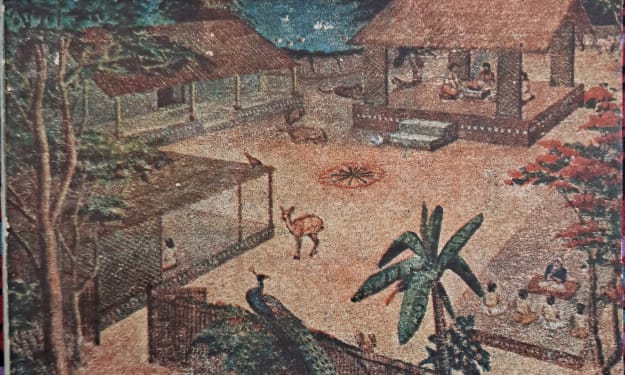
Angiras - Penance Angiras began severe penance. The physical body is made up of the five elements. It has the five senses. They have their attractions and influences. They are so powerful that man cannot understand his real self when he is under the influence of the senses. So, penance is no other than the control of the five senses and concentration of the mind. If one can control the body, he can control everything. If one cannot control the body and the senses, he is good for nothing. Worshippers of the spirit must be the controllers of their bodies and senses. The constant practice of controlling the body and the senses is called the Tapas. Penance is a vague term, but ' Tapas ' is a great term signifying a greater and deeper meaning. If you repeat the word Tap, Tap, Tap, you will hear the echo of it Pat, Pat, Pat. Tap means Tapas. Tapas is that which saves man from ' Pat ', fall. Man is the crown of God's creation. If he does not realise Godhead, he is sure to fall down from the celestial heights of being the Crown of God's creation. When one falls down from the glory of manhood, he will have to take millions of births before he could aspire to become a man again. So, Tapas saves man from falling.
By B G Giridhar3 years ago in Journal