literature
Best corporate culture and workplace literature to better your workplace experience. Journal's favorite stories.
The Editor's Regret. AI-Generated.
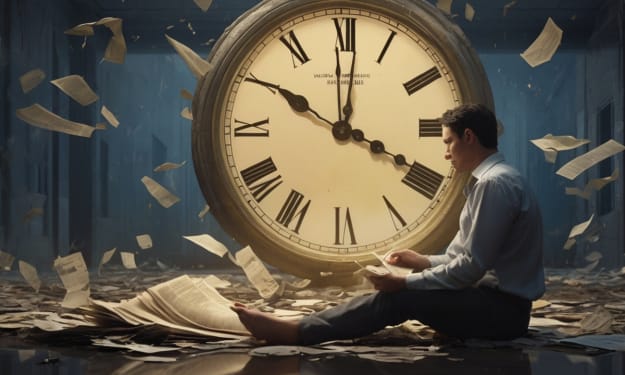
I often wander through the dim corridors of my memories as if they were a labyrinthine library—a place where every printed word, every ink stain on paper, hums with the echoes of voices I once set free into the world. In the hush of late evenings, as the office clocks forget to tick, I trace back the steps of decisions made in haste, in hope, in the merciless pursuit of a perfect narrative. There were days when every article I edited seemed like a small universe, an ever-expanding cosmos where public opinion was gently nudged and cultural narratives took root, sprouting wings of belief and discontent alike. Each punctuation mark was a silent force, every revision a ripple across the collective consciousness. The power of words, intoxicating yet imperceptible in the moment, was something I wielded with both precision and recklessness. I remember the taste of those moments—bittersweet, like a rare wine mixed with the acrid tang of regret. What magic was I weaving, if not spells of unintended consequence? It is as if, in the quiet alchemy of words, I had become both the creator and the critic of a fragile reality. At first, it was exhilarating. The rush of deadlines, the artful restructuring of sentences, the careful curation of voices. I had convinced myself I was merely a conduit, a vessel through which truth found its way into ink and permanence. But truth, I have learned, is a shape-shifter. It bends under the weight of perspective, contorts in the hands of intention, and dissolves in the flood of public perception. It does not sit comfortably on the printed page; it breathes, writhes, and sometimes mutates into something unrecognizable. In my dreams, the headlines shimmer and dissolve like mirages on a sun-baked road. The stories I once championed morph into living, breathing beings—fluttering ghosts that haunt the edges of our collective conscience. They whisper in an ancient tongue, half-truths woven with the fragile threads of memory and myth, reminding me that truth is as elusive as the flicker of a candle in a midnight breeze. I see them in the margins of books I once loved, in the eyes of readers who trusted my judgment, in the spaces between words where intent and interpretation clash. Some nights, I imagine walking through a vast archive of all the stories I have shaped. The words hover in the air like fireflies, suspended in golden light, waiting to be read aloud once more. I reach out to touch them, but they shift, rearrange themselves, eluding my grasp. A phrase I once deemed harmless now pulses with unintended meaning. A headline I crafted with careful neutrality now stands as a battle cry for those I never meant to empower. It is a cruel trick of fate, this realization that stories do not belong to those who write them. They take on lives of their own, weaving themselves into the fabric of society, whispering into the ears of those who would twist them into weapons or shields. I sit here, a reluctant sorcerer of syntax, burdened with the quiet knowledge that every polished line carries the weight of accountability. There is a peculiar beauty in this burden, a raw honesty that binds me to every soul touched by the narratives I helped shape. The lines between my intent and the outcome have blurred into a chiaroscuro of light and shadow, where the real and the imagined coalesce into a singular, perplexing vision. The world outside—vibrant and unyielding—continues its ceaseless dance, indifferent to the subtle wounds inflicted by my edits. Yet, within me stirs a longing for redemption, for a chance to mend the delicate tapestry of public discourse. But how does one rewrite what has already been read? How does one untangle the knots of perception, the interwoven strands of influence and interpretation? I wonder if the words can ever be untangled, if the narratives can be re-forged into a gentler truth. Perhaps the only redemption lies in acknowledgment. In peeling back the layers of ego and facing the reality that my hands have shaped not only words but destinies. I have left fingerprints on stories that no longer belong to me, and perhaps never did. I have wielded the pen with both grace and recklessness, and now, in the quiet twilight of self-reflection, I see that regret is not merely a bitter pill but a crucible from which deeper self-awareness may emerge. So, I remain, pen in hand, the editor of my own fate—ever aware that each revision is both an act of creation and of undoing. And in that perpetual interplay, I search for a truth that is not dictated by headlines or the fervor of fleeting passions, but by the steady, introspective pulse of a soul that dares to look back and learn.
By Yusuf gaidam2 years ago in Journal
The Rise of Constantino Fiança: How The Truth You Don’t Want to Face is Captivating Readers Worldwide
A Breakthrough in Modern Literature Constantino Fiança is making waves in the literary world with his latest book, The Truth You Don’t Want to Face. The book, which recently reached an impressive milestone of 40,000 copies sold, has captured the attention of readers worldwide. With its thought-provoking content and unique perspective on human nature, the book is quickly becoming a must-read for those seeking a deeper understanding of life, personal growth, and self-awareness.
By Lily Brock2 years ago in Journal
Kiran Devi Rathore: The Trailblazing Queen Who Took on Akbar and Transformed History
All of us grew up hearing tales about Akbar the Great, the greatest Mughal emperor. From abolishing the Jizya levy, which imposed taxes on non-Muslims, to fostering harmony within the community, honoring religious beliefs, and governing fairly, he did a lot for his people. Although all of these are true, Akbar had another side too. We know only about his gallantry and courage from what we have read. But did you know that he begged the Rajput princess Kiran Devi Rathore for pardon? Although the truthfulness of this tale is questionable, folklore and portraits continue to tell this tale. One of the tales as old as the 16th century is the one that involves consent.
By Hridya Sharma2 years ago in Journal
Black Holes: Cosmic Endings or New Beginnings?. AI-Generated.
The universe is filled with wonders that capture our imagination, and few celestial objects are as captivating as black holes. These enigmatic regions of spacetime, with gravity so intense that not even light can escape, have long been a source of fascination in both scientific research and popular culture, inspiring novels and films like 2001: A Space Odyssey, The Martian, and Interstellar. However, recent groundbreaking research from the University of Sheffield is challenging our fundamental understanding of these cosmic giants . This new study suggests a mind-bending possibility: black holes might not be the ultimate cosmic endpoints we have long believed them to be, but rather could transition into something entirely different – theoretical objects known as white holes . This revolutionary idea hints at a cosmic reversal, where matter and energy, once trapped, could be ejected back into the universe, potentially even altering our perception of time itself.
By Muhammad Iqbal2 years ago in Journal
The Absurdist Awakening: Finding Meaning in Meaninglessness . AI-Generated.
In a 🌍 that often feels 🔀 chaotic and 🏜️ devoid of 🎯 inherent purpose, the 📖 philosophy of 🤡 absurdism offers a 🔥 unique perspective on how we 🚶♂️ navigate 🌱 existence. The 🤯 absurdist awakening is the 🎇 moment one 💡 realizes the ⚖️ inherent contradiction between 👥 humanity’s 🔍 search for meaning and the 🌌 universe’s ❄️ indifference. But rather than leading to 😞 despair, this realization can become a 🚪 gateway to 🕊️ liberation.
By prashant soni2 years ago in Journal
🔓 Breaking the 🫧 Illusion: The 🤯 Absurdist’s Path to 🆓 Freedom. AI-Generated.
**🔓 Breaking the 🫧 Illusion: The 🤯 Absurdist’s Path to 🆓 Freedom** ### 📝 Introduction 🌍 Life often presents itself as a 🧩 puzzle, a series of 🔗 interconnected events that seem to be leading toward some 🏆 grand purpose. Yet, upon closer 👀 examination, this purpose remains 🌀 elusive. This realization—of an 😶 indifferent universe devoid of inherent 🏛️ meaning—forms the core of 🤯 Absurdism. But rather than succumbing to 😞 despair, the 🤹 Absurdist awakens to a new kind of 🆓 freedom, one that comes from 🪨 breaking the 🫧 illusion of imposed 🏛️ meaning and embracing the 🎭 chaos of existence.
By prashant soni2 years ago in Journal
European Markets Decline as Euro Surges Amid Trump’s Tariff Delays
European Markets Decline as Euro Surges Amid Trump’s Tariff Delays European stock markets faced a sharp decline as investors grappled with uncertainty over Donald Trump’s inconsistent tariff policies. Meanwhile, the euro surged to its highest weekly gain since the 2008 financial crisis, reflecting shifting market dynamics and economic anxieties.
By Nazmul Hasan Nahid2 years ago in Journal