literature
Best corporate culture and workplace literature to better your workplace experience. Journal's favorite stories.
Pak India conflict
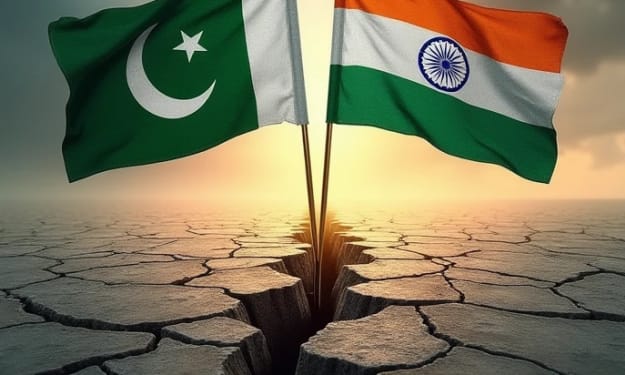
In April 2025, the fragile peace between India and Pakistan unraveled dramatically following a brutal terrorist attack in Indian-administered Kashmir. The attack, which resulted in the deaths of 26 civilians, has reignited longstanding hostilities between the two nuclear-armed neighbors, leading to military skirmishes, diplomatic expulsions, and the suspension of critical bilateral agreements. The event has raised fears of a potential full-scale conflict between the two countries, whose relationship has long been marred by violence and territorial disputes. The Pahalgam Massacre: A Catalyst for Crisis On April 22, 2025, gunmen opened fire on a group of tourists in Pahalgam, a popular tourist destination in Jammu and Kashmir, killing 25 Indian nationals and one Nepalese citizen. The attack was both ruthless and strategically timed, as it occurred in the heart of the tourist season, when many Indian families visit the region. The perpetrators, reportedly militants from the group known as The Resistance Front, a Pakistan-based insurgent organization affiliated with Lashkar-e-Taiba, took responsibility for the massacre. The attackers reportedly targeted the victims based on their religious identity, raising concerns about the rising influence of radical elements within Kashmir. The attack has drawn comparisons to the horrific 2008 Mumbai attacks, which also targeted civilians and heightened Indo-Pakistani tensions. Following the Pahalgam massacre, Indian Prime Minister Narendra Modi delivered a stern speech, condemning the violence and promising to bring the attackers to justice "no matter where they are." Modi vowed to pursue the perpetrators to "the ends of the Earth," a declaration that signaled India's intent to adopt a more aggressive stance against Pakistan. India responded to the attack by suspending the Indus Waters Treaty, a crucial water-sharing agreement signed between the two nations in 1960, and expelled several Pakistani diplomats from New Delhi. The suspension of the treaty marked a significant shift in India’s policy towards Pakistan, signaling that economic and environmental pressure might be used as tools to curb Pakistani support for cross-border terrorism. Pakistan, in turn, denied any involvement in the attack and demanded an international investigation. The Pakistani government retaliated by expelling Indian diplomats and suspending all trade relations, further deepening the rift between the two countries. Military Escalations Along the Line of Control In the days following the attack, tensions along the Line of Control (LoC), the de facto border that divides Kashmir between India and Pakistan, escalated rapidly. Both Indian and Pakistani military units exchanged gunfire in multiple regions, with artillery shelling reported on both sides. These skirmishes, which have occurred intermittently in the past, now took on a much more serious tone, with fears that they could spiral into a broader military conflict. Indian forces accused Pakistani troops of engaging in unprovoked firing, while Pakistan's military responded by claiming that Indian forces had launched preemptive strikes across the border. The rhetoric between the two nations became increasingly hostile, with both sides calling for heightened preparedness. To signal its military readiness, India deployed the INS Vikrant, an aircraft carrier, near Pakistan's maritime borders and conducted live-fire exercises. India’s show of force was clearly aimed at sending a message to Islamabad that the country would not tolerate further aggression or cross-border terrorism. Meanwhile, an incident in which an Indian Border Security Force (BSF) soldier accidentally crossed into Pakistan-administered territory added fuel to the fire. The Pakistani military detained the soldier, accusing him of being part of a larger covert operation. In response, Indian officials demanded his immediate release, accusing Pakistan of illegally detaining an Indian national. This small but significant incident further heightened the tensions, with both countries trading accusations of violations of international norms. The Indus Waters Treaty in Jeopardy One of the most significant aspects of India’s response to the attack was the suspension of the Indus Waters Treaty. The agreement, brokered by the World Bank in 1960, has been a cornerstone of cooperation between the two nations, particularly in managing the water resources of the Indus River system, which flows through both India and Pakistan. The treaty has survived multiple wars and skirmishes, but India’s recent decision to unilaterally suspend it raises concerns about the stability of the agreement. India’s move was seen as a tactical response to the growing threat posed by cross-border terrorism emanating from Pakistan. India accused Pakistan of using the water-sharing treaty to further its geopolitical aims and suggested that it might use the waters of the Jhelum, Chenab, and Ravi rivers as leverage in future negotiations. By releasing excess water from Indian dams into the Jhelum River without prior notice, India sent a strong signal to Pakistan, which has expressed concerns about potential flooding in Pakistan-administered Kashmir. Pakistan has warned that any attempt to weaponize water resources could be considered an act of war. The environmental implications of such a step are severe, as the Indus River system is the primary source of irrigation and drinking water for both nations. Any disruption to this system could lead to widespread economic devastation, especially in Pakistan, which relies heavily on the waters for its agriculture. Domestic and International Repercussions The recent escalation has had profound domestic consequences in both India and Pakistan. In India, the attack has fueled a rise in nationalist sentiments, with calls for tougher action against Pakistan. Political leaders across the spectrum have rallied behind Modi’s government, urging more military intervention and further crackdowns on separatist elements within Kashmir. In the aftermath of the attack, Indian security forces have detained over 1,500 individuals suspected of being involved in militancy, and several homes of suspected militants have been demolished. In Pakistan, the deteriorating situation has sparked fears of an economic collapse. The suspension of trade ties with India has had a crippling effect on Pakistan’s economy, which is already grappling with rising inflation and debt. Pakistan has sought financial support from its ally China, requesting an additional $10 billion to stabilize its economy. In the absence of Indian trade, Pakistan’s financial outlook remains bleak. International actors, particularly the United States, Russia, and China, have called for both nations to de-escalate and return to the negotiating table. While Iran has offered to mediate, the international community's response has been tepid, with many fearing that the situation could spiral out of control if not addressed quickly. The United Nations has urged both sides to resume dialogue, but with the diplomatic channels between the two countries severed, the future remains uncertain. A Precarious Path Forward The recent events have plunged India and Pakistan into one of their most severe crises in recent years. The combination of military confrontations, diplomatic breakdowns, and environmental threats poses a significant challenge to regional stability. The fragile peace that existed for years in Kashmir has now been shattered, and both countries are poised at the brink of conflict. As both nations navigate this precarious situation, the role of international mediators becomes increasingly crucial. The risk of a larger-scale conflict, one that could involve both conventional and nuclear weapons, looms larger than ever. Without concerted efforts to address the underlying issues, particularly the unresolved Kashmir dispute, the risk of a catastrophic war remains high. The hope for peace now rests with diplomatic channels, but the road ahead is fraught with uncertainty. The international community must work quickly to prevent further escalation, and both India and Pakistan must recognize the importance of dialogue to avoid plunging the region into a devastating war
By Sajid khan2 years ago in Journal
Unpacking White Lotus Season 3: Gorgeous Scenes and Frustratingly Familiar Tropes
For the last eight weeks, my morning routine has been to get up, make coffee, and mentally get ready for the upcoming episode of HBO's The White Lotus. It has evolved into a weekly immersion in opulence, dysfunction, and mortality rather than merely a viewing experience. I was optimistic, high, caftan-clad, sun-kissed aspirations about the upcoming show.
By Hridya Sharma2 years ago in Journal
From Zero to Side Hustle: How I Made My First $1,000 Online Without Quitting My Day Job
A True Story of Late Nights, Digital Grit, and Real Profit Not long ago, I was stuck in the same daily cycle many people find themselves in: wake up, commute, work, come home, sleep — repeat. I wasn’t unhappy, but I wasn’t fulfilled either. More importantly, I wasn’t earning enough to feel financially secure, let alone excited about the future.
By Muhammad Sabeel2 years ago in Journal
Jewellery in the UK: A Timeless Expression of Style and Culture
Jewellery has always served more than just a decorative purpose—it’s an expression of individuality, a representation of culture, and frequently, a cherished keepsake. In the UK, the passion for jewellery is deeply rooted, seamlessly merging tradition with contemporary designs in a manner that feels both enduring and innovative. Whether it's an elegant gold necklace inherited through the family or a striking statement ring acquired at a local fair, jewellery plays a pivotal role in daily attire throughout the country.
By Rob Sherwin2 years ago in Journal
Top 20 World Economies: A Decade of Growth (2015–2025)
1. United States In 2015, the U.S. had a GDP of $23.7 trillion. By 2025, it grew to $30.3 trillion, showing a 28% increase. The U.S. remains the largest economy in the world. It has strong industries in technology, finance, healthcare, and energy. Its economy is driven by consumer spending and innovation. The U.S. dollar is a major global currency, and the country has a big influence on global trade and economics.
By Abdul Mateen 2 years ago in Journal
The Book That Brought Me Back to Myself
The Book That Made Me Fall in Love with Thinking Again Sometimes, a book doesn’t just speak to you—it speaks for you. There was a time in my life when I felt swallowed by the weight of the world. My 8-5 job had drained me. Life felt too loud, too busy, too overwhelming—and somehow, I had forgotten who I was beneath all that noise. In a small act of rebellion against the routine, I joined the local library. I didn't know what I was looking for. I just knew I needed something that would remind me what it felt like to feel again.
By Asanda M..2 years ago in Journal
Airbnb: The $100 Billion Idea That Was Born Out of Desperation
In October 2007, Joe Gebbia and Brian Chesky were two struggling roommates living in a cramped San Francisco apartment. They were behind on rent, low on cash, and unsure about what to do next with their careers. What they didn’t realize was that in a matter of months, they would stumble upon an idea — almost by accident — that would reshape the way people travel, disrupt the global hotel industry, and create a company valued at over $100 billion. This is the remarkable true story of how Airbnb was born. --- The Idea That Started on an Air Mattress It all began with a problem. The annual Industrial Design Conference was coming to San Francisco, and every hotel room in the city was booked solid. Joe and Brian, both design graduates, saw an opportunity. With no spare rooms but a small living room, they decided to set up three air mattresses on their apartment floor and offer travelers a place to stay for $80 a night. They called it the “AirBed & Breakfast” and even served homemade breakfast in the morning. To their surprise, three guests actually booked the space — a woman from Boston, a man from India, and another from Utah. The experience was positive for everyone. The guests loved the local connection, and Joe and Brian realized this quirky idea might have bigger potential. --- Turning a Quirky Experiment into a Startup After the conference, the roommates roped in their engineer friend, Nathan Blecharczyk, and officially co-founded what would later be known as Airbnb. But the early days were far from glamorous. When they tried pitching their business to investors in Silicon Valley, they were met with skepticism. Most investors dismissed the idea of strangers paying to sleep in other people’s homes as risky, odd, and unscalable. To keep themselves afloat, the trio even started selling novelty breakfast cereals — “Obama O’s” and “Cap’n McCain’s” — during the 2008 U.S. presidential election. The limited-edition boxes were a hit, earning them around $30,000 and just enough cash to keep working on Airbnb. --- The Struggles and the Breakthrough The turning point came when they were accepted into Y Combinator, a prestigious startup accelerator. The program gave them seed funding, mentorship, and access to valuable investors. But most importantly, it pushed them to fix their biggest issue: trust. In the early days, Airbnb’s listings lacked quality photos, making homes look unappealing. So Joe and Brian personally visited hosts in New York, took professional-grade photos of their properties, and uploaded them to the platform. Almost immediately, bookings surged. This small yet smart move taught them a crucial startup lesson: small tweaks can trigger big changes. --- Airbnb Goes Global Over the next few years, Airbnb slowly expanded beyond the U.S., attracting hosts and guests from around the world. Travelers loved the concept of experiencing a destination through the eyes of locals, often staying in unique properties like treehouses, castles, boats, and tiny homes. Despite early controversies over regulations, safety concerns, and opposition from hotel chains, Airbnb persevered by implementing stronger safety measures, identity verification, host guarantees, and a user-friendly app. By 2015, Airbnb was valued at over $20 billion. By 2020, even amid a global pandemic that devastated travel, the company adapted quickly by promoting local stays, long-term rentals, and virtual experiences. --- The IPO That Made History In December 2020, Airbnb went public. Despite fears over the future of travel during COVID-19, its stock price skyrocketed on the first day of trading, giving Airbnb a market valuation of over $100 billion — making it one of the largest IPOs in U.S. history. Today, Airbnb has hosted over 1 billion guests in more than 220 countries. --- Lessons from Airbnb’s Success Solve a real, immediate problem. Airbnb started as a fix for their own rent troubles and a citywide hotel shortage. Be persistent despite rejection. Most early investors rejected them — over 20 times. Don’t underestimate small changes. Upgrading listing photos was a game-changer. Adapt quickly. Airbnb thrived during crises by pivoting and innovating. --- Final Thought: Airbnb’s story isn’t just about a billion-dollar business — it’s a reminder that great ideas don’t always start with perfect plans or ideal conditions. Sometimes, all it takes is an air mattress, a little hustle, and the courage to believe in something others think is crazy.
By SHADOW-WRITES2 years ago in Journal
Bangladesh’s Youthful Population: A Powerful Asset for the Future
Bangladesh is home to a vibrant and youthful population, with over 40% of its people under the age of 25. This youthful demographic presents a mix of exciting opportunities and serious challenges that will shape the country’s future.
By Shariful Haque 2 years ago in Journal
The Social Media Shift: How Gen Z Is Redefining Online Culture in 2025
In 2025, social media isn't just a tool—it's a lifestyle, an economy, and in many ways, an identity. While platforms like Facebook and Twitter (now X) were once the titans of digital interaction, the landscape has dramatically evolved, led by a new generation that’s redefining how we create, consume, and communicate online.
By Fazly Rabbi Taimur2 years ago in Journal
Fragrance of your presence . AI-Generated.
He was like a beautiful and captivating flower. One look at him made me want to pluck him. I wanted to adorn myself with him, to make myself more radiant. But he belonged to someone else's garden. Someone else was entitled to him. I could only stand afar, gazing at him, taking in his fragrance, being cautious not to be seen.
By Neelima Mandal2 years ago in Journal