industry
Industry related topics in the realm of corporate culture, business, and the workplace.
Benefits of Hiring Professional Concrete Floor Leveling Contractors
Maintaining the integrity of your property is one of the most important aspects to consider when it comes to the condition of your flooring. Concrete floors are durable, but over time, they can become uneven due to factors like foundation settlement, moisture exposure, and natural wear and tear. An uneven floor can cause problems going from structural issues to aesthetic concerns and safety hazards. While you may have to tackle the task yourself, hiring concrete floor leveling contractors brings various benefits that can save you time, money, and frustration.
By Creek Stone Resurfacingabout a year ago in Journal
Clever Marketing
Clever marketing has a powerful impact on our spending habits, often leading us to make purchases we don't truly need or can’t afford. It taps into our emotions, desires, and insecurities to persuade us to part with our money. While marketing can help introduce us to useful products, it can also create a false sense of urgency, manipulate our self-perception, and cause us to make decisions that are more about what’s “trendy” than what’s actually beneficial for us financially. Here's how clever marketing often makes us broke:
By Gabriela Toneabout a year ago in Journal
How to Find the Best Free Business Listing Websites in the USA (2025 Guide)
In today’s digital-first marketplace, building a strong online presence is essential for business growth. One of the most effective and low-cost strategies to increase visibility and attract local customers is by leveraging local business directory websites. With numerous business listing sites in the USA to choose from, selecting the right platform can feel overwhelming. This 2025 guide outlines how to find and evaluate the top business directories in the USA, with a special focus on List of Local USA’s Free Business Directory.
By waqar hashmiabout a year ago in Journal
SEO for New Websites: A Step-by-Step Guide to Get Found Online
So, your website is finally live, beautifully designed, fully functional, and ready to represent your brand. But here’s the truth: a visually appealing site isn’t enough to attract customers. You need visibility. And in the digital world, that means search engine optimization (SEO).
By Growth Acceleratorsabout a year ago in Journal
Revolutionize Facility Management with CAFM Software
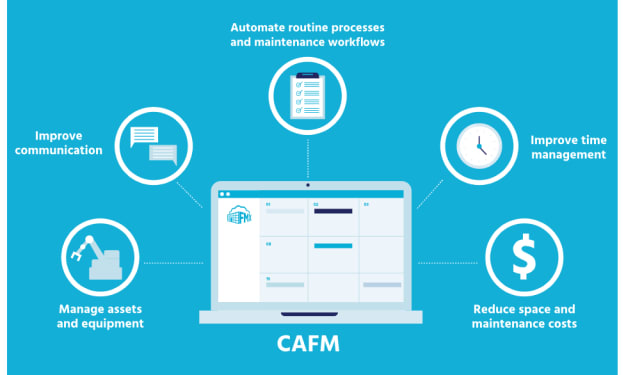
In today's fast-paced, tech-driven world, efficient management of facilities has never been more crucial. Companies of all sizes are turning to Computer-Aided Facility Management (CAFM) software to streamline operations, reduce costs, and enhance productivity. Whether you manage a corporate campus, a university, a hospital, or a real estate portfolio, CAFM software can be a game-changer.
By Sankamidraabout a year ago in Journal
Beyond Burnout: 5 Proven Retention Strategies to Fix the Healthcare Staffing Crisis
The Setting: The Healthcare Crisis Healthcare is at a crossroads. Burnout rates are rising, there’s a gap in providers, and patients are feeling it. This isn’t a looming threat; it’s the daily reality for healthcare professionals. As a nurse or healthcare provider, you know the pressure of a failing system: burnout, exhaustion, constant demands, and the battle to balance work with the rest of your life.
By Brian Sutterabout a year ago in Journal
The Strategic Role of IT Architects in Digital Transformation
In today's dynamic digital economy, successful business transformation into its mission relies as much on the technical skills of IT architects as it does on the business savvy of the C-suite. Modern IT architects are no longer limited to a seat at the table when the planning for technical infrastructure is done: They are, instead, working with executive teams to help lead the technology initiatives and they will provide guard rails to make sure that the initiatives are tied back to the core business objectives. We, at eSystems value this paradigm shift and offering architects best-in-class solutions fluently balancing low-code agility and enterprise-grade security with scaled automation.
By Abdullah Khanabout a year ago in Journal
Facebook: From Dorm Room Project to Global Empire
It started in a Harvard dorm room — just a bored student with a laptop, a few lines of code, and a controversial idea. Fast forward two decades, and that little website called Facebook has not only become a household name but arguably one of the most powerful companies in history. This is the real story of how Facebook changed the world, and how its transformation into Meta is shaping the next chapter of the internet. --- The Humble Origins In February 2004, a sophomore named Mark Zuckerberg launched a website called TheFacebook. It was designed as a digital student directory — a way for Harvard students to view each other’s profiles, pictures, and mutual connections. Zuckerberg wasn’t a stranger to controversy. Before Facebook, he had created a site called Facemash that let users rate fellow students’ looks — a stunt that nearly got him expelled. But this time, the idea stuck. Within 24 hours of launching, over 1,000 Harvard students had signed up. In a few weeks, it spread to other Ivy League schools. In less than a year, it went nationwide across U.S. colleges. What began as a campus experiment quickly turned into a social wildfire. --- From Startup to Silicon Valley Titan In 2005, Facebook dropped “The” from its name and began opening up to high school students, then the general public. By 2006, anyone over the age of 13 with an email address could join. Investors saw potential. Tech icon Peter Thiel was the first to invest — $500,000 for a small stake. Soon, major venture capital firms joined in. Zuckerberg famously turned down early buyout offers from Yahoo and others, believing Facebook could be the next big thing. He wasn’t wrong. By 2008, Facebook overtook MySpace as the most popular social network. It wasn’t just the cleaner design or easier navigation — it was the sense of real identity. Unlike other platforms, Facebook encouraged users to be themselves, to connect with friends, family, classmates, coworkers. --- The Power of the News Feed Perhaps the most defining feature of Facebook’s success was the News Feed, introduced in 2006. At first, users hated it. But over time, it became the heart of the platform — a personalized stream of updates, stories, and, later, ads. Facebook wasn’t just where you checked on friends. It became the place to read news, watch videos, join groups, follow pages, and scroll endlessly. Zuckerberg’s goal wasn’t just to connect people — it was to keep them engaged. That engagement, of course, translated into money. Lots of it. --- A Giant Built on Data Facebook's business model wasn’t based on subscriptions — it was based on data. The more users shared, liked, clicked, and posted, the better Facebook’s algorithm became at serving targeted ads. By 2012, the platform had over one billion users, and Facebook made its IPO, raising $16 billion in one of the largest tech offerings ever. That same year, it made another bold move: acquiring Instagram for $1 billion. Then came WhatsApp (acquired in 2014 for $19 billion), and Oculus, a bet on virtual reality. Facebook wasn’t just a social media company anymore. It was becoming a tech empire. --- The Controversies That Followed With massive influence came massive scrutiny. The 2016 U.S. election exposed the dark side of Facebook’s influence — fake news, misinformation, and manipulation. The Cambridge Analytica scandal in 2018 revealed how user data had been misused on a massive scale. Zuckerberg testified before Congress. Hashtags like #DeleteFacebook trended. But despite the criticism, Facebook kept growing. Its user base, revenue, and influence only expanded. --- Becoming Meta: The Next Chapter In 2021, Zuckerberg made a stunning announcement: Facebook Inc. would now be known as Meta Platforms Inc. The reason? To shift focus from social media to the metaverse — a digital world of 3D spaces, avatars, and immersive experiences. While critics were skeptical and the stock took a hit, Meta doubled down on its vision, pouring billions into technologies that might define the next generation of online life. --- The Legacy of Facebook Love it or hate it, Facebook reshaped how we communicate, market, campaign, protest, and even remember. It turned everyday users into content creators, gave rise to influencers, disrupted newsrooms, and even helped organize revolutions. Zuckerberg’s idea — born in a Harvard dorm room — now connects over 3 billion people across the globe. As it continues to evolve into Meta and beyond, one thing is certain: Facebook didn’t just build a platform. It built a digital society.
By SHADOW-WRITESabout a year ago in Journal
Unpacking White Lotus Season 3: Gorgeous Scenes and Frustratingly Familiar Tropes
For the last eight weeks, my morning routine has been to get up, make coffee, and mentally get ready for the upcoming episode of HBO's The White Lotus. It has evolved into a weekly immersion in opulence, dysfunction, and mortality rather than merely a viewing experience. I was optimistic, high, caftan-clad, sun-kissed aspirations about the upcoming show.
By Hridya Sharmaabout a year ago in Journal