industry
Industry related topics in the realm of corporate culture, business, and the workplace.
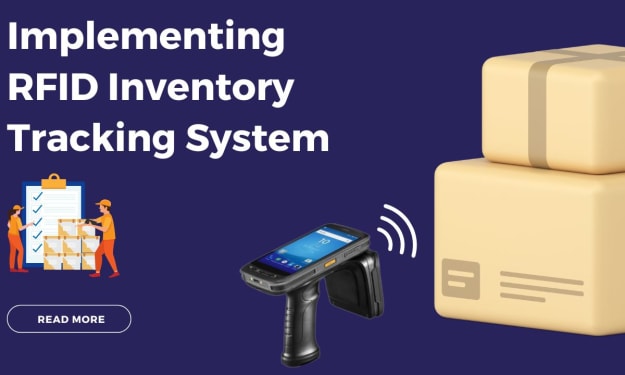
Implementing RFID Inventory Tracking System: A Step-by-Step Guide
That is where an RFID Inventory Tracking System can be a game-changer. More than just a tech upgrade, RFID offers real-time visibility, faster operations, and fewer mistakes. Whether in retail, manufacturing, logistics, or healthcare, this guide will walk you through exactly how to implement RFID—from the planning phase to full-scale execution.
By sankalp singh about a year ago in Journal
The Role of Web Development in Building Collaborative Online Communities
Effective web development appears to be the result of the combined efforts of the developers and designers in creating an application or website. This collaboration is not only beneficial to become acquainted with different tools, technologies, and practices but also helpful to develop professional networks and opportunities. With this process, the other required aspects, including clear communication, transparent workflow, and client involvement, are also promoted. In this blog, we will discover the effectiveness of website development in facilitating collaborative online communication.
By Bhumi Patelabout a year ago in Journal
The Impact of High Voltage on Wire Insulation
High voltage can have extensive impacts on wire insulation, demanding a comprehensive understanding of the interactions in between voltage degrees and insulation materials. Engineers and technicians have to carefully think about the choice of insulation materials, style arrangements, and functional conditions to minimize the obstacles postured by high voltage and guarantee the ideal efficiency of electrical systems.
By FLU-TEF WIRES & CABLES PVT. LTD.about a year ago in Journal
Why The Ideas Of Most Businesses, Creators, and Entrepreneurs Naturally Fail Before They Ever Begin
I Hear it All the Time. A Business gives their Business Pitch. A Creator talks about their latest Creation. An Entrepreneur Discusses how their New Thing is going to Revolutionize Their Industry.
By H.E. Dr. Cody Dakota Wooten, COIE, DFM, DHMabout a year ago in Journal
WHAT IF THE WORLD ONLY HAD ONE CURRENCY?. AI-Generated.
What If the World Only Had One Currency? Imagine waking up tomorrow and finding out that the world has decided to unify its currencies. No more euros, dollars, or yen—just one global currency that everyone uses. While this might sound like the plot of a futuristic movie or a far-off dream, it's a concept that has intrigued economists, policymakers, and visionaries for centuries. But what if it actually happened? What would the world look like, and how would it impact us?
By Rayyan Writesabout a year ago in Journal
Threads Between Us
The Threads Between Us Talia always thought of the environment as something *outside* of her. Trees, air, oceans, mountains—these were all things that existed *around* her, not within her. Her world was the city: pavement under her sneakers, earbuds in, screen in her hand, noise all around. Nature was something you visited, like a museum or a park, and then left behind.
By Gabriela Toneabout a year ago in Journal
Signage Manufacturers in Dubai - Twigs Advertising LLC
Signage Manufacturers in Dubai – Twigs Advertising LLC In Dubai's constantly changing business and retail environments, signage is an essential tool for branding, visibility, and customer experience. As one of Dubai's top signage manufacturers, Twigs Advertising LLC has earned a solid reputation for providing creative, high-quality, and custom signage solutions that say a lot—literally and visually.
By Twigs Advertising LLCabout a year ago in Journal
Rob Tolley, Former London Broker: Surety - What You Need to Know
A surety is a formal commitment made by one party to accept financial responsibility if another party defaults on their obligations. In this arrangement, the guarantor pledges to cover any debts or liabilities owed by the principal—the party that has entered into an agreement with a third party, known as the obligee.
By Rob Tolley Londonabout a year ago in Journal
Amazon: From Garage Startup to Global Retail Empire
In the summer of 1994, Jeff Bezos packed his bags, left a high-paying Wall Street job, and drove from New York to Seattle in a beat-up Chevy Blazer. In the backseat sat a laptop, a few boxes of books, and a bold idea: to build an online bookstore that could one day sell everything. That wild idea became Amazon — a company that would eventually redefine how the world shops, reads, watches, and even speaks. --- The Modest Beginnings Bezos didn’t start Amazon in a fancy office or tech campus. He launched the company from his garage, fueled by the rising popularity of the internet and an old door-turned-desk. At first, it was just books. They were easy to ship, had massive catalogs, and low overhead. Bezos believed e-commerce was the future — and books were the best entry point. In July 1995, Amazon.com went live. Within 30 days, it was selling books across the United States and in 45 other countries. There was no advertising, no social media, no viral video — just word-of-mouth and great service. --- Obsessed With the Customer From day one, Bezos preached “customer obsession.” He believed that if Amazon could deliver a better experience than any brick-and-mortar store — through fast delivery, low prices, and a massive selection — it would win. He was right. Over the years, Amazon added categories: electronics, clothes, home goods, groceries — eventually becoming the “Everything Store.” Its customer reviews, one-click checkout, and personalized recommendations weren’t just innovative — they became industry standards. Bezos didn’t just want to compete. He wanted to out-deliver everyone else. --- Weathering the Dot-Com Crash When the dot-com bubble burst in the early 2000s, most internet companies went under. Amazon’s stock dropped by over 90%. Critics said it would never make money. But Bezos stayed the course. Instead of panicking, he doubled down on infrastructure, technology, and logistics. He launched Amazon Prime, offering members free two-day shipping — a bold move that turned customers into loyal fans. That loyalty paid off. Amazon not only survived — it began dominating. --- The Master of Expansion What makes Amazon different is that it never stopped expanding. In 2006, it launched Amazon Web Services (AWS) — a cloud computing platform that would quietly become its most profitable division. Companies from Netflix to NASA now rely on AWS. Then came the Kindle, which disrupted the publishing industry. Then Alexa and the Echo devices, which brought AI into our homes. Then Amazon bought Whole Foods, signaling a move into physical retail. It wasn’t just a retailer anymore — it was a tech company, logistics giant, data powerhouse, and content creator. --- Controversy and Criticism As Amazon grew, so did scrutiny. Critics accused the company of unfair labor practices, small business displacement, data misuse, and monopolistic behavior. Bezos, once seen as a scrappy entrepreneur, became a symbol of extreme wealth and power. In 2021, he stepped down as CEO, handing the reins to Andy Jassy, the head of AWS. But Bezos remained chairman — still steering the ship’s big-picture direction. Despite the criticism, Amazon’s numbers continued to climb. It now generates over $500 billion in annual revenue, employs over 1.5 million people, and serves millions of customers every day. --- The Legacy of Amazon Amazon didn’t just change how we shop. It changed how we live. It made fast delivery the norm, personalized recommendations expected, and cloud computing accessible. It empowered self-published authors, small sellers, and indie brands. It gave consumers more choice than ever — all from the palm of their hand. What started with a few books in a garage is now one of the most powerful companies in history. And to think, it all began with a risk — and a guy willing to leave comfort behind for something uncertain but deeply visionary.
By SHADOW-WRITESabout a year ago in Journal
Role of VoIP Gateway in Modern Communication
In the ever-evolving landscape of business communications, Voice over Internet Protocol (VoIP) has emerged as a powerful solution to streamline voice communications over IP networks. One of the critical components in a VoIP ecosystem is the VoIP gateway, a device that plays a pivotal role in bridging the gap between traditional telephony systems and modern IP-based networks.
By Grandstream Indiaabout a year ago in Journal