history
Key historic events throughout the ages in relation to business, work, corporate figures and moguls.
Sunoco's Strategic Power Play: A $9.1B Acquisition to Reshape Fuel Distribution in the Americas. AI-Generated.
Sunoco’s $9.1 Billion Acquisition of Parkland: A New Era in Fuel Distribution In a landmark move poised to reshape the fuel distribution landscape across the Americas, Sunoco LP has announced its acquisition of Canada’s Parkland Corporation for $9.1 billion, including debt. This major transaction marks a significant step forward for Sunoco as it positions itself to become the largest independent fuel distributor across North and Central America, the Caribbean, and beyond.
By Prianka dhar 2 years ago in Journal
Israel–Gaza Conflict Escalates
The conflict between Israel and Hamas in the Gaza Strip has intensified dramatically, following a declaration by Israeli Prime Minister Benjamin Netanyahu that his government plans to launch a large-scale military operation. The proposed campaign, which includes the relocation of civilians within Gaza “for their protection,” has raised alarm globally and sparked heated debate across diplomatic and humanitarian circles.
By Masood Zahid2 years ago in Journal
The Beautiful Game: A Comprehensive Exploration of Football (Soccer)
Football, or soccer as it is known in some countries, is the world's most beloved and widely played sport. With more than 250 million players across over 200 countries and billions of fans watching from every corner of the globe, football has transcended its role as a mere sport to become a cultural and social phenomenon. It unites people regardless of age, race, gender, or nationality. From small urban backstreets to massive international stadiums, football is a global language spoken by millions daily. The beauty of football lies in its simplicity. A ball, a makeshift goal, and a flat surface are all that is needed to begin. This minimalism has made the sport accessible to even the most impoverished communities, becoming a source of joy, pride, and inspiration. Over the years, football has evolved into a global industry, influencing economies, shaping national identities, and producing legends whose names resonate across generations. This essay provides a comprehensive exploration of football, from its ancient origins to its present status as a multi-billion-dollar industry. We will delve into the game’s rich history, its global popularity, structural aspects, legendary players, iconic matches, and social and political influence. We will also explore tactical evolutions, grassroots development, women’s football, and the role of technology in shaping its future. 1. History of Football The origins of football can be traced back thousands of years. Variations of ball games have been recorded in different parts of the world, including ancient China, Greece, Rome, and Mesoamerica. In China, a game known as “Cuju” involved kicking a leather ball into a net without using hands, and it was played as early as the Han Dynasty (206 BCE – 220 CE). Ancient Romans played “Harpastum,” a game with some similarities to football, although it was more brutal and chaotic. However, modern football began to take shape in England during the 19th century. In medieval times, “mob football” was popular in towns and villages. It was chaotic, violent, and had few formal rules. The development of the modern game started in English public schools where different variations of football were played. These schools began to codify their rules, leading to the formation of different playing styles. In 1863, the Football Association (FA) was established in England, laying down standardized rules for the game. This marked the birth of association football, distinguishing it from rugby football. The FA’s rules emphasized kicking the ball over handling it, and this version gained rapid popularity. From England, football spread to continental Europe, South America, Africa, and beyond. British sailors, traders, and workers played a crucial role in introducing the game to other regions. By the early 20th century, national football associations began forming worldwide, and in 1904, FIFA (Fédération Internationale de Football Association) was founded to oversee international competition. The first FIFA World Cup was held in 1930 in Uruguay, and since then, the tournament has become the most prestigious competition in the sport. Football continued to evolve, with new strategies, professional leagues, and international competitions emerging, shaping the game into the global spectacle we know today. 2. Global Popularity and Cultural Impact Football’s global popularity is unparalleled. It is played in almost every country, with millions of clubs ranging from amateur to professional levels. The sport’s widespread appeal stems from its accessibility, emotional intensity, and capacity to foster community and identity. Football is deeply embedded in cultural traditions. In Brazil, it is more than a game—it is a source of national pride and identity. The "samba style" of Brazilian football reflects the country’s vibrant culture. Similarly, in Argentina, football is a passion that permeates every aspect of life. Clubs like Boca Juniors and River Plate command intense loyalty, and the rivalry between them is legendary. In Europe, football is almost a religion. England, Italy, Germany, and Spain boast some of the most competitive and financially powerful leagues in the world. Clubs such as Manchester United, Real Madrid, and Bayern Munich have global fan bases and serve as cultural ambassadors for their countries. In Africa and Asia, football plays a vital social role. It brings together communities, offers a means of escape for underprivileged youth, and serves as a tool for peace and development. Tournaments like the African Cup of Nations and the AFC Asian Cup have helped elevate the status of football in these regions. Football has also had significant political impact. It has been used as a tool of diplomacy, such as in the famous “Football War” between El Salvador and Honduras in 1969, or the “Football Diplomacy” between Turkey and Armenia. In apartheid South Africa, football was a rare space where people of different races could come together. 3. The Rules and Structure of the Game Football is governed by a standardized set of rules known as the Laws of the Game, established by the International Football Association Board (IFAB) and maintained by FIFA. The game is played between two teams of eleven players each, on a rectangular field with a goal at each end. The objective is simple: score more goals than the opponent by propelling the ball into the opposing team’s net. Matches are typically 90 minutes long, divided into two 45-minute halves, with a 15-minute halftime break. In knockout competitions, extra time and penalty shootouts may be used to determine the winner. Positions in football include goalkeepers, defenders, midfielders, and forwards, each with specific roles. Teams can employ various formations and tactical approaches, such as 4-4-2, 4-3-3, or 3-5-2, depending on their strengths and strategic goals. Disciplinary measures include yellow cards (warnings) and red cards (ejections). Offside rules, handball regulations, and free kicks are among the most scrutinized aspects of the game. Referees and assistant referees enforce these rules, with additional technological support like VAR (Video Assistant Referee) enhancing decision-making. Football competitions exist at multiple levels, from local amateur leagues to international tournaments. Clubs compete in domestic leagues, national cups, and continental tournaments like the UEFA Champions League or Copa Libertadores. National teams compete in tournaments such as the FIFA World Cup, UEFA European Championship, and Copa América. 4. Famous Clubs and International Competitions Some football clubs are global brands with millions of supporters, vast financial resources, and storied histories. Clubs like Real Madrid, FC Barcelona, Manchester United, Bayern Munich, Juventus, and Paris Saint-Germain have dominated both domestic and international competitions. These clubs compete in elite leagues: the English Premier League, La Liga (Spain), Serie A (Italy), Bundesliga (Germany), and Ligue 1 (France). The UEFA Champions League is the most prestigious club competition in the world, featuring the best teams from across Europe. In South America, clubs like Boca Juniors, River Plate, Flamengo, and Palmeiras command massive followings and compete in the Copa Libertadores, the continent's top club competition. On the international stage, the FIFA World Cup is the pinnacle of football. Held every four years, it features 32 (soon to be 48) national teams competing for global supremacy. Countries like Brazil, Germany, Italy, and Argentina have enjoyed immense success in the tournament. Other significant international tournaments include: UEFA European Championship (Euros) Copa América (South America) Africa Cup of Nations (AFCON) AFC Asian Cup CONCACAF Gold Cup Olympic Football Tournament These competitions serve as stages for national pride and often elevate lesser-known players into global stars. 5. Iconic Players and Legends Football has produced countless legends who have left an indelible mark on the sport. Names like Pelé, Diego Maradona, Johan Cruyff, and Zinedine Zidane are etched in history. Pelé, a Brazilian icon, won three World Cups and scored over 1,000 career goals. His combination of skill, athleticism, and sportsmanship made him a global ambassador for the game. Maradona, famous for the “Hand of God” goal and the “Goal of the Century” against England in the 1986 World Cup, symbolized Argentina's passion and resilience. Johan Cruyff revolutionized the game with “Total Football” and later influenced coaching philosophies worldwide. Zidane dazzled with elegance and creativity, leading France to a World Cup victory in 1998. In the modern era, Lionel Messi and Cristiano Ronaldo have dominated football for over a decade. Their goal-scoring records, consistency, and rivalry have elevated the sport to new heights. Messi’s vision, dribbling, and passing contrast with Ronaldo’s power, aerial prowess, and finishing ability. Other modern legends include: Ronaldinho: for his flair and joy Andrés Iniesta and Xavi: midfield maestros Thierry Henry, Zlatan Ibrahimović, and Robert Lewandowski: prolific forwards Gianluigi Buffon and Iker Casillas: legendary goalkeepers 6. Tactics, Styles, and Innovations Tactics in football have evolved significantly. Early formations like the 2-3-5 gave way to more balanced structures like the 4-4-2 and the modern 4-3-3. Influential tactical innovations include: “Total Football” (Netherlands): where players interchanged positions seamlessly “Catenaccio” (Italy): a defensive, counter-attacking style “Tiki-Taka” (Spain): short passing and possession-based play Gegenpressing (Germany): intense pressing and quick transitions Managers like Rinus Michels, Arrigo Sacchi, Sir Alex Ferguson, Pep Guardiola, and Jürgen Klopp have pioneered these styles. Modern coaching emphasizes data analytics, sports science, and psychological conditioning. 7. Youth Development and Grassroots Football Youth academies are essential in developing future talent. Clubs like FC Barcelona’s La Masia, Ajax’s academy, and Clairefontaine in France have produced world-class players. Grassroots football, supported by local communities, schools, and amateur clubs, provides opportunities for children to engage in the sport. NGOs and development programs use football to teach life skills and promote social inclusion. 8. Football and Society: Politics, Economy, and Identity Football reflects broader societal dynamics. It influences politics, as seen when governments use successful national teams to boost popularity. Clubs often represent ethnic or political identities, such as Celtic and Rangers in Scotland. Economically, football is a massive industry. Sponsorships, broadcasting rights, and merchandising generate billions annually. Top clubs operate as global businesses, attracting investments from billionaires and state-backed funds. Football also promotes social causes. Players advocate against racism, support mental health, and contribute to charitable initiatives. 9. Women’s Football: Growth and Recognition Women’s football has grown tremendously in recent decades. The FIFA Women’s World Cup, first held in 1991, has become a major global event. The United States women’s team, with stars like Mia Hamm, Abby Wambach, and Megan Rapinoe, has dominated the tournament. European countries like England, France, Germany, and the Netherlands have also invested heavily in women’s football, leading to professional leagues and greater media coverage. Despite historical neglect, women’s football continues to break barriers and inspire millions. 10. Technology and the Future of the Game Technology has reshaped football. VAR assists referees with critical decisions. Goal-line technology ensures accurate calls. GPS tracking and data analytics help coaches optimize performance. Virtual and augmented reality are enhancing fan experiences. AI and machine learning are used for scouting and injury prevention. Looking ahead, football will continue to evolve with innovation, globalization, and efforts toward greater inclusivity and sustainability. Conclusion Football is more than a sport—it is a cultural force, a global language, and a unifying power. Its history is rich, its influence profound, and its beauty unmatched. As the game continues to grow and adapt to a changing world, one thing remains constant: its power to inspire, unite, and bring joy to people of all backgrounds. Whether in a World Cup final or a street game among friends, football’s magic lives on.
By Xihan mobarok2 years ago in Journal
Top Multispeciality Hospital in Mangalore You Can Trust
Top 12 Reasons A J is the Best Multispeciality Hospital in Mangalore When it comes to your health or the health of your loved ones, choosing the right hospital makes all the difference. Mangalore is home to several reputed hospitals, but one stands out for its exceptional care, modern infrastructure, and expert medical professionals.So, what makes this hospital truly the best? Let’s dive into the top 5 reasons why A J is the best multispeciality hospital in Mangalore is a cut above the rest.
By A J Multispeciality Hospital in Mangalore2 years ago in Journal
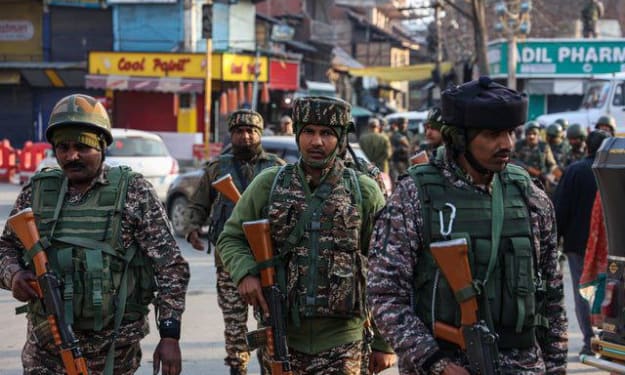
Relations between India and Pakistan
Terrorism and Political Tensions:Peace efforts have been repeatedly derailed by attacks by militant groups based in Pakistan, such as the 2008 Mumbai siege and the 2019 Pulwama attack. Islamabad argues that India's policies in Kashmir fuel unrest, while India accuses Pakistan of funding terrorism.
By mahruz ahmed2 years ago in Journal
Netanyahu Vows Retaliation After Houthi Missile Strike Near Israel’s Main Airport: A Growing Sense of Regional Siege. AI-Generated.
Tensions in Israel reached a new peak on Sunday morning after a missile launched by Yemen's Iran-backed Houthi rebels struck close to the heart of the nation’s air traffic system — Ben Gurion International Airport. The attack, which injured six people according to local reports, has sent shockwaves through both the Israeli public and government, with Prime Minister Benjamin Netanyahu vowing a forceful response.
By ASHIKUR RAHMAN ASHIK2 years ago in Journal
Planet Discovered Orbiting a Star Speeding Out of the Galaxy at 1.2 Million MPH
A cosmic ballet is always going on in the Milky Way's vast expanse of stars. The core of the galaxy is pirouetted by billions upon billions of stars, each one a potential sun for undiscovered worlds. However, every now and then, a dancer will break free, not gracefully but violently and thrillingly. This is the situation with a newly discovered star and its companion planet, a system that is hurtling through space at a staggering 1.2 million miles per hour and may be leaving our galaxy in one direction. This isn't the gentle drift of stars in their orbits; this is a cosmic expulsion, a slingshot maneuver of epic proportions. Through the delicate warping of spacetime, a phenomenon known as gravitational microlensing, the low-mass dwarf star and its likely companion, a planet of super-Neptune's size, were first subtly hinted at over a decade ago. It was like spotting a fleeting shadow, like spotting a brief arc in the light from a star farther away that hinted at an unseen object passing in front of it. For years, that fleeting signal remained a puzzle. Was it a rogue planet that was lost and alone in the void between stars, perhaps with a moon attached? Or was it something entirely different? The data from ground-based telescopes like Keck and the Gaia satellite of the European Space Agency were combined to produce the answer, which was found through persistent observation and sophisticated analysis. Astronomers were able to confirm the incredible speed and trajectory of a suspect star by meticulously following its minute movement over a decade. This is not just any fast-moving star; it has a velocity that is close to or even higher than the Milky Way's escape velocity. Imagine the immense gravitational pull of our galaxy, a cosmic anchor binding hundreds of billions of stars. A powerful kick that sends an object hurtling into the intergalactic void is all it takes to break free from that grip. A violent encounter with the supermassive black hole in our galaxy's center, Sagittarius A*, is the most plausible explanation for these high speeds. In this dramatic scenario, a binary star system – two stars orbiting each other – could have strayed too close to the black hole's immense gravity. One star would be thrown inward toward the black hole by the tidal forces, while the other, now a "hypervelocity star," would be ejected outward at a tremendous speed. The fact that this ejected star was able to hold onto its planet during such a violent event is what makes this discovery so remarkable. It speaks to the resilience of planetary systems and the complex gravitational interactions that can occur in the crowded galactic core. The planet itself is thought to be a "super-Neptune," a world larger than Neptune but smaller than Jupiter. It orbits its star at a relatively close distance, comparable to where Venus or Earth orbit our Sun in our own solar system. However, given the low mass of its star, this planet is not considered to be in the habitable zone. The discovery of this runaway planetary system opens a new window into the dynamics of galactic centers and the fate of planets in extreme environments. It raises concerns regarding the frequency of such ejections and the possibility that other hypervelocity stars may also host planets that quietly transport their families into the gloom between galaxies. While this particular system's journey out of the Milky Way will take millions of years, its discovery serves as a powerful reminder of the dynamic and sometimes violent processes shaping our universe, and the incredible resilience of planetary systems even in the face of cosmic chaos. A tiny world clinging to its star as they embark on an epic journey beyond the familiar spiral arms of our own galaxy is the subject of this tale of survival against all odds.
By Mehedi Hasan 2 years ago in Journal
snak
Snakes dance in movies when you play the flute. In reality, they don't. Snakes don't have ears. They have to stick out their tongues frequently to hear. Snakes won't attack you. If you walk with noise, they can understand. The color of the shell under the snake's chest is different. There are special nerve fibers there. They can sense the vibrations of the ground. They can understand how far you are, how big you are. They run away. Snakes never come to the smell of Belly and Hasnahena. Some people may have seen snakes under Belly and Hasnahena in their lifetime. Remember, snakes have a very weak sense of smell. They can't smell. Insects are more attracted to fragrant flowers. Frogs come to eat insects. Snakes may sometimes come to eat frogs. Snakes, like humans, get tired after eating. Just as humans sleep comfortably after eating, snakes can also sleep under Belly and Hasnahena. However, if these trees are inside the house, snakes come less often. Because they are afraid of human presence. However, if there are such trees on the side of the house, in the bushes, it is normal for snakes to come. If you kill a snake, its partner will never come to find you and bite you. Snakes have a very weak memory. Snakes are not the king of Bengali cinema Shakib Khan or Nagin Moonmoon who will rush to take revenge for the loss of their partner. Snakes are low-breed animals. There is no such thing as revenge among them. But after killing a snake, another snake is often seen in the same place, why? Simple. During mating, their partner may be nearby or if there is a hole nearby, its young or more snakes may come out. It did not come to take revenge but came out of the hole by mistake. It is wrong to say that small snakes do not have venom. Snake babies are also snakes. A patient had to fight for his life for 24 hours straight in front of my eyes after being bitten by a small snake the size of an earthworm. We three doctors fought beside him in the ICU for 24 hours. Starting with artificial ventilation, we gave him anti-venom several times. He recovered and went home. Before leaving, he abused us. We allegedly gave him very expensive medicine. He doesn't know that a single dose of antivenom costs 10,000 taka. Logically, the man is not at fault. He was a fisherman. His income is maybe 150 taka a day. Snakes bite more people who return home from the market in the dark at night and fishermen. Fishermen catch fish by throwing spears and nets at night during the monsoon. They catch them in the middle of rivers or canals. The snakes think they are dry and stay there. They bite.
By Arfan Raihen2 years ago in Journal
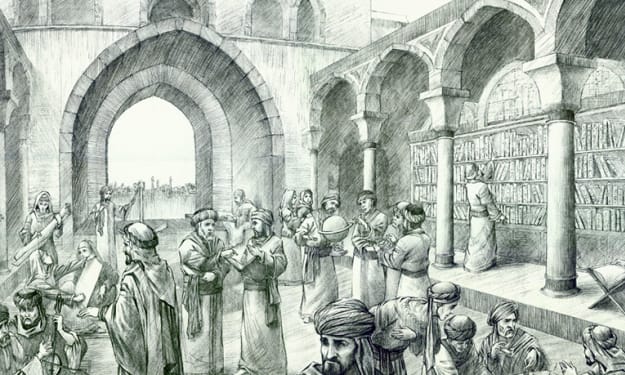
Bayt al-Hikmah: Where Stars of Knowledge Once Shone
During the Abbasid Caliphate, Baghdad emerged as a center of intellectual and economic excellence. One of the most iconic examples of their support for scientific advancement was the famous library of Baghdad, Bayt al-Hikmah—known in English as the House of Wisdom. From around the 5th to at least the 9th century, its collection was considered the largest in the world. The halls of this institution were always abuzz with the presence of prominent scholars of the time.
By Riham Rahman 2 years ago in Journal
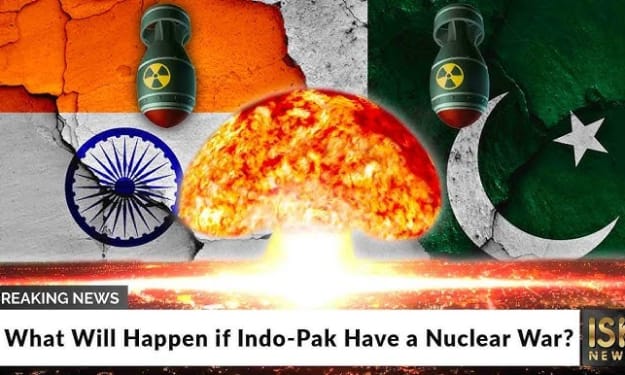
On the Brink: India-Pakistan Tensions Escalate Amid Nuclear Fears
By Ahmad Dost Published: May 3, 2025 A Deadly Attack and an Explosive Aftermath On April 22, 2025, a serene morning in Pahalgam, a popular tourist destination in Indian-administered Kashmir, was shattered by a brutal militant assault that left 26 dead and dozens injured. The victims, mostly Hindu pilgrims and Indian tourists, were caught in a sudden hail of gunfire from unidentified gunmen. The Indian government, without hesitation, pinned the blame on the Islamic Resistance Front—an outfit allegedly linked to the Pakistan-based group Lashkar-e-Taiba.
By Ahmad Dost2 years ago in Journal