business
Articles, videos, and related content associated with all aspects of Business and the culture surrounding business.
Is Ratul Puri the Key to India’s Energy Revolution? Discover How His Vision for Hindustan Power is Disrupting the Entire Industry!
India is undergoing a massive transformation in its energy sector. With increasing demand for clean, sustainable power sources, the need for innovative leadership is more pressing than ever. Enter Ratul Puri, Chairman of Hindustan Power, whose bold strategies are positioning the company as a key player in India’s energy revolution. In this article, we’ll explore how Ratul Puri’s leadership is reshaping the energy landscape, and why his vision for Hindustan Power could be the driving force behind India’s clean energy future.
By Chinmaya Singh2 years ago in Journal
Why BBPS Software Development Matters for Rural Utility Payments
In recent years, BBPS Software Development has become a game-changer for delivering utility services in rural areas. Bharat Bill Payment System (BBPS) is an RBI-approved integrated platform that simplifies the payment of bills like electricity, water, gas, DTH, and more. By enabling seamless digital payments, BBPS software bridges the financial gap between service providers and customers, especially in rural India where access to such services has traditionally been limited.
By ankitvjkumar2 years ago in Journal
Virtual Employee vs Freelancer: Key Differences Explained. AI-Generated.
When businesses begin outsourcing, they often face a common question: should we hire a virtual employee or a freelancer? At first glance, these two options may appear interchangeable. Both work remotely. Both are often cost-effective. But scratch the surface, and the differences start to matter—especially for companies prioritizing long-term growth, brand integrity, and smooth workflows.
By Anjelina Jones2 years ago in Journal
How Digital Marketing Agencies in Dubai Are Navigating a Privacy-First Future. AI-Generated.
Unlike the EU’s GDPR or California’s CCPA, the UAE introduced the Federal Decree-Law No. 45 of 2021 on the Protection of Personal Data (PDPL)—a pivotal regulation reshaping how companies collect and use customer information. As a result, digital marketing agencies in Dubai are shifting from data-heavy approaches to more ethical and permission-based practices.
By BrandStory UAE2 years ago in Journal
AEPS Software Compliance and Data Security Best Practices
With the rise of digital banking in India, AEPS software development has become a vital part of financial inclusion, especially in rural areas. AEPS, or Aadhaar Enabled Payment System, allows users to perform banking transactions using their Aadhaar number and biometric data. While this technology offers convenience and accessibility, it also comes with major responsibilities related to data security and regulatory compliance. Ensuring user privacy, secure transactions, and compliance with government norms is essential for any AEPS software provider.
By ankitvjkumar2 years ago in Journal
Impact of AEPS Software on Last-Mile Banking Services in India
In recent years, AEPS software development has transformed last-mile banking services in India by enabling secure and simple Aadhaar-based transactions. AEPS, which stands for Aadhaar Enabled Payment System, allows users—especially those in rural and remote areas—to access banking services through biometric authentication without needing debit cards or smartphones. This innovation is a key driver of financial inclusion and rural empowerment.
By ankitvjkumar2 years ago in Journal
How AEPS Software Supports Secure Aadhaar-Based Banking Services
In today’s digital India, AEPS Software plays a vital role in delivering secure and easy-to-use Aadhaar-based banking services, especially in rural and underserved regions. AEPS (Aadhaar Enabled Payment System) allows users to access basic banking functions using just their Aadhaar number and biometric verification, without the need for debit cards, smartphones, or internet access. This system has become a game-changer for financial inclusion and security in banking.
By ankitvjkumar2 years ago in Journal
AEPS Software Explained: What It Is and Why It Matters in 2025
In 2025, digital payment systems continue to change the way financial services reach the common man—especially in rural areas. One major tool behind this revolution is AEPS Software (Aadhaar Enabled Payment System). This technology has helped bring banking services to villages and remote regions across India, where people earlier had no access to basic banking. AEPS Software makes it easy, fast, and secure to carry out transactions using only an Aadhaar number and fingerprint. Let’s explore what AEPS Software is, how it works, and why it plays a key role in today’s financial system.
By ankitvjkumar2 years ago in Journal
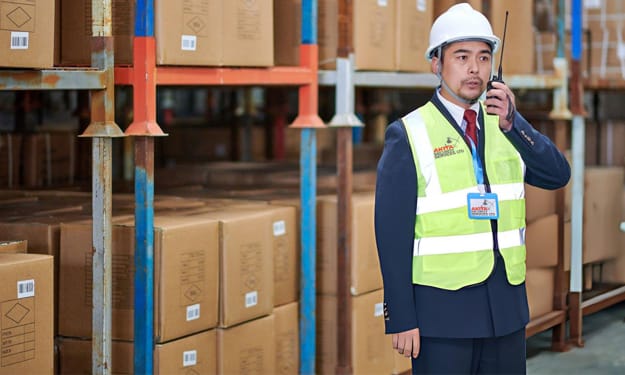
Top Benefits of Hiring Professional Warehouse Security Guard Services
Warehouses play a vital role in the supply chain, serving as storage hubs for goods and products before they reach retailers or customers. In the UK, the value of goods stored in warehouses can run into millions of pounds, making them prime targets for theft, vandalism, and unauthorised access. With increasing reports of warehouse crimes and growing concerns about safety, the demand for professional Warehouse Security Guard Services in Bedford and other regions has never been higher.
By Akita Security Services Ltd.2 years ago in Journal
What Are the Cultural Differences in Smart Toilet Adoption Around the World?. AI-Generated.
The global adoption of smart toilets reflects a complex interplay of cultural norms, economic factors, technological readiness, and public attitudes towards hygiene and innovation. While smart toilets are rapidly becoming a standard feature in certain parts of the world, uptake in other regions has been slower or more selective. Understanding these regional patterns sheds light on how consumer priorities and infrastructure influence the evolution of modern bathroom technology.
By My Homeware2 years ago in Journal
Gaza community kitchens warn food is running out after two months of Israeli blockade
Gaza community kitchens warn food is running out after two months of Israeli blockade 2 hours ago Share Save Yolande Knell Middle East correspondent Reporting fromJerusalem BBC Cooks stir pots of rice and lentils at a community food kitchen run by the US-based humanitarian organisation Anera in Khan Younis, southern GazaBBC Anera's community kitchens in Khan Younis feeds some 6,000 people each day A hot meal is hard to come by in the Gaza Strip, but a lunch for needy families in the south is about to be delivered by donkey and cart. Today's dish is koshari - made with lentils, rice and a zesty tomato sauce - in a set of huge cooking pots in one of two community kitchens run by American Near East Refugee Aid (Anera), a US-based humanitarian organisation. "People rely on our meals; they have no source of income to buy what's left in the local markets and many foods are not available," says Sami Matar, who leads the Anera team. "In the past we used to cook rice with meat - with protein. Now, because of the closure, there's no type of meat, no fresh vegetables." Anera manager Sami Matar walks around the empty warehouse in southern Gaza Sami Matar showed a local BBC journalist around the empty Anera warehouse Two months ago, Israel shut all crossings to Gaza – preventing all goods, including food, fuel and medicines from entering - and later resumed its military offensive, ending a two-month ceasefire with Hamas. It said these steps were meant to put pressure on Hamas to release the hostages it still holds. Recently, the UN's World Food Programme and Unrwa, the agency for Palestinian refugees, said they had used up all their stocks of food aid. There is growing international pressure on Israel to lift its blockade, with warnings that mass starvation could be imminent and that intentionally starving civilians is a war crime. "Aid, and the civilian lives it saves, should never be a bargaining chip," the UN's humanitarian chief, Tom Fletcher, warned on Thursday. "Blocking aid starves civilians. It leaves them without basic medical support. It strips them of dignity and hope. It inflicts a cruel collective punishment. Blocking aid kills." Anera communal kitchen staff make up parcels of koshari to distribute to Palestinians in al-Mawasi, southern Gaza Hundreds of thousands of Palestinians are relying on community kitchens for their survival Hundreds of thousands of Gazans depend on a few dozen remaining kitchens for sustenance. The one run by Anera in Khan Younis feeds some 6,000 people a day. But if Israel does not lift its blockade, by far the longest it has ever imposed on Gaza, the kitchens - a last lifeline for so many - will soon have nothing to distribute. Food stockpiled during the ceasefire at the start of this year, has all but run out. "The coming days will be critical. We expect we have two weeks' supply, maybe less," Mr Matar says as he shows a local BBC journalist around the vast, empty Anera warehouse. "We used to receive more than 100 trucks every week - trucks of food parcels and hygiene kits. Now we don't have anything. "We struggle to provide food such as rice, lentils, pasta, cooking oil and salt, for our community kitchens. It's very expensive to buy 1kg of wood and we need over 700kg a day for cooking." A displaced woman waits for a food parcel from an Anera community kitchen in al-Mawasi, southern Gaza A displaced mother said there was no cooking gas or food to make meals for her family Israel has accused Hamas of stealing and storing humanitarian aid to give to its fighters or sell to raise money. The UN and other agencies deny aid has been diverted and say that they have strict monitoring mechanisms. "We work hard to avoid any interference from any parties. We have an accurate and strong distribution process," says Mr Matar, inspecting lists of aid recipients on his computer. "We have a database of hundreds of thousands of people, including their names, ID numbers and addresses - the co-ordinates of the camps. This avoids duplication with the work of other non-governmental organisations and ensures transparency." UN's top court begins hearings on Israel's legal duties towards Palestinians UN agency runs out of food aid in Gaza after Israeli blockade 'It's really hard to have any hope': Gaza doctor describes daily struggle Back in the outdoor kitchen, Mr Matar tests the food from the steaming pots to check its quality. Parcels are wrapped up for distribution; each can serve up to four people. All the workers receive food for their own hungry families. The rest is soon transferred on the donkey cart through the bustling streets to al-Mawasi, a crowded tent camp for displaced people on the coast, where dozens of field monitors supervise the hand-out. An elderly man walking with crutches looks relieved as he clutches two parcels of koshari to feed his family of seven. "Thank God, this will be enough," he says. "Don't even ask me about the situation," he goes on. "We're only alive because death hasn't taken us yet. I swear I was searching for a loaf of bread since the morning, and I found none." An elderly man holds two food parcels of food from an Anera community kitchen in the al-Mawasi area of southern Gaza Each of the parcels of food can serve up to four people "The situation is tragic, and it keeps worsening," comments a weary looking mother. "Life is humiliating here. We have men who are unable to work. There is no income, and all the products are so expensive. We're unable to buy anything." "At this time, this is excellent," she says of the warm meal she has just been given. "Because there is no cooking gas, no food. When we want to have a cup of tea, I collect leaves to start a fire." It has now been more than a year and a half since the war in Gaza began, triggered by the Hamas-led attacks on southern Israel. That assault killed around 1,200 people and more than 250 people were taken hostage. Some 59 are still held captive, with up to 24 of those believed to be alive. Israel's military campaign has killed more than 52,400 people in Gaza, mostly women, children and the elderly, according to the Hamas-run health ministry. More than 90% of the 2.1 million population has been displaced - with many forced to flee multiple times. The UN has warned that the current situation "is likely the worst it has been" due to the blockade, the renewed offensive and evacuation orders that have displaced some 500,000 people since 18 March. An Anera communal kitchen staff member guides a donkey pulling a cart laden with parcels of koshari to distribute to Palestinians in al-Mawasi, southern Gaza Anera distributes the food to tents in al-Mawasi rather than requiring people to queue for food at the kitchen There is growing international pressure on Israel to lift its blockade, with warnings that intentionally starving civilians is a potential war crime. The UN says that Israel has a clear obligation under international law as an occupying power to allow and facilitate aid for Gazans. Last Friday, US President Donald Trump said he had told Israel's Prime Minister, Benjamin Netanyahu that "we've got to be good to Gaza" and pushed him to allow more food and medicine into the strip. There was no official response to that, but earlier in the week, the Israeli foreign ministry rejected criticism from the UK, France and Germany, which described the blockade as "intolerable" in a joint statement and insisting "this must end." The ministry said more than 25,000 lorries carrying almost 450,000 tonnes of goods had entered Gaza during the ceasefire. It added: "Israel is monitoring the situation on the ground, and there is no shortage of aid." Israeli officials have indicated they plan to overhaul the aid distribution system. For now, supplies are piling up at Gaza's border crossings waiting to be brought in, while inside the territory, aid workers carefully ration what is left of their stock. In al-Mawasi camp, children gather playfully around Sami Matar and the Anera workers giving out the last of the day's food parcels. Many are painfully thin, with new warnings of acute malnutrition in Gaza - especially among the young. Anera's Sami Matar speaks to a boy eating a plate of koshari in al-Mawasi, southern Gaza Sami Matar appealed to Israel to reopen Gaza's crossings "I don't know what will happen if our supplies end," says Mr Matar, weighed down by the responsibility of his work. "The feeling of having to stop this vital help to people would be so stressful and depressing to me and my staff." "We have an urgent appeal," he continues. "Look at us, see our desperation, understand that time is running out. Please we just need to open the crossings again." Israel-Gaza war Israel Palestinian territories
By CryptoCurrency News 2 years ago in Journal