book review
Books reviews on workplace, corporate, and business driven books.
From Struggle to Triumph: Nigeria's Path to Democracy
In the annals of Nigerian history, there exists a stirring tale of a nation's quest for democracy. It is a story etched with struggles, sacrifices, and triumphs—a testament to the indomitable spirit of a people yearning for freedom and good governance. Let us embark on a journey through time, unveiling the remarkable evolution of Nigeria's democracy. Nigeria's path to democracy can be traced back to its independence from British colonial rule on October 1, 1960. The newly established nation set out on a course of self-determination, with the promise of a democratic system that would reflect the will and aspirations of its diverse population. However, the early years of independence were marked by political turmoil and military interventions. The first military coup took place in 1966, followed by a series of coups and counter-coups that destabilized the young nation. The military ruled Nigeria for a significant portion of its early history, leading to a longing for civilian governance and democratic institutions. The turning point came in 1999 when Nigeria transitioned to civilian rule after nearly 16 years of military dictatorship. This marked a significant milestone in the nation's democratic journey. The election of Olusegun Obasanjo as Nigeria's President in 1999 ushered in a new era of hope and promise, signaling Nigeria's commitment to democracy. Since then, Nigeria has made significant strides in strengthening its democratic institutions. Elections have been held regularly, allowing the Nigerian people to exercise their right to choose their leaders. Civil society organizations, media outlets, and human rights activists have played pivotal roles in advocating for transparency, accountability, and good governance. However, Nigeria's journey to democracy has not been without its challenges. The nation has grappled with issues such as corruption, political instability, and ethnic tensions, which have at times threatened the fabric of its democratic progress. Nonetheless, the resilience and determination of the Nigerian people have remained steadfast, fueling the ongoing pursuit of a stronger and more inclusive democracy. Nigeria's democratic journey is a story of hope, as well as an ongoing narrative of continuous improvement. The nation has witnessed the emergence of vibrant political parties, the expansion of civil liberties, and the engagement of the youth in shaping the political landscape. Citizens are becoming more actively involved in the democratic process, demanding transparency, accountability, and the fulfillment of their rights. As Nigeria looks to the future, the path to a robust and thriving democracy lies in the hands of its people. It requires the collective efforts of citizens, leaders, and institutions to uphold the principles of democracy, protect the rule of law, and foster inclusive governance. It is a journey that demands vigilance, participation, and the unwavering commitment to building a nation where the voice of every Nigerian is heard and valued. To strengthen Nigeria's democracy, it is essential to prioritize transparency and accountability in all aspects of governance. This includes promoting a culture of openness and ensuring that public officials are held accountable for their actions. The establishment of independent oversight bodies and anti-corruption agencies has been crucial in addressing corruption and promoting good governance practices. Additionally, a vibrant and independent judiciary is vital for upholding the rule of law and protecting the rights of citizens. It ensures that justice is served and provides a check on the executive and legislative branches of government. Upholding the independence and integrity of the judiciary is essential for a thriving democracy. Another critical aspect of Nigeria's democratic journey is the active participation of citizens in the decision-making process. Engaging citizens in governance through mechanisms such as town hall meetings, public consultations, and feedback mechanisms fosters a sense of ownership and accountability. It empowers individuals to voice their concerns, contribute to policy discussions, and hold their elected representatives accountable. Civil society organizations (CSOs) and the media play vital roles in advancing democracy in Nigeria. CSOs act as watchdogs, advocating for the rights of citizens and promoting transparency and accountability. They provide spaces for citizen engagement, monitor elections, and advocate for policy reforms. The media, both traditional and digital, plays a crucial role in informing the public, exposing corruption, and holding those in power accountable. Furthermore, inclusivity is an essential aspect of a thriving democracy. Nigeria's diversity, with its multitude of ethnic groups, languages, and cultures, must be embraced and celebrated. Inclusive governance ensures that the needs and aspirations of all Nigerians, regardless of their backgrounds, are represented and addressed. Encouraging diversity in political leadership, promoting gender equality, and addressing the marginalization of minority groups are crucial steps towards building an inclusive democracy. Education and civic awareness also play pivotal roles in strengthening Nigeria's democracy. Providing quality education that promotes critical thinking, civic values, and democratic principles equips citizens with the knowledge and skills to actively participate in the democratic process. Promoting civic education programs and engaging youth in democratic discussions fosters a culture of active citizenship and encourages the next generation to become responsible and engaged citizens. As Nigeria continues its democratic journey, it is important to recognize that democracy is not a destination but a continuous process of growth and improvement. It requires ongoing dialogue, compromise, and the willingness to address the challenges and shortcomings that may arise. By nurturing a culture of democratic values, Nigeria can create an environment where citizens have trust in their institutions, where their voices are heard, and where the collective will of the people guides the nation's progress. In conclusion, Nigeria's path to democracy has been characterized by struggles, milestones, and progress. The future of Nigerian democracy lies in the commitment and actions of its people. Upholding the principles of democracy, ensuring transparency and accountability, promoting inclusivity, and fostering active citizenship are all essential for Nigeria to continue its journey towards a robust and thriving democracy. With unwavering dedication and collective efforts, Nigeria can build a nation where democracy flourishes, institutions are strong, and the aspirations of its citizens are realized.
By okpala michael3 years ago in Journal
The 10 BEST Side Hustles — How I Make $10,000 / Month
Making $10,000 per month through side hustles requires dedication, effort, and a diverse set of income streams. While the best side hustles can vary depending on your skills, interests, and location, I can provide you with a list of popular and potentially lucrative options that people have found success with. Here are ten side hustles that have the potential to generate significant income:
By ODS ACADEMY3 years ago in Journal
The Power of Experimentation in Business
In the always advancing universe of business, remaining stale isn't a choice. To flourish and succeed, business visionaries and business pioneers should embrace development and trial and error. Testing in business implies going ahead with reasonable courses of action, attempting new techniques, and pushing limits. While it might appear to be overwhelming from the get go, the advantages far offset any likely disadvantages. In this blog, we will investigate top to bottom five convincing justifications for why you ought to sincerely embrace trial and error in your business and how it can prompt astounding achievement.
By Mahnoor Malik3 years ago in Journal
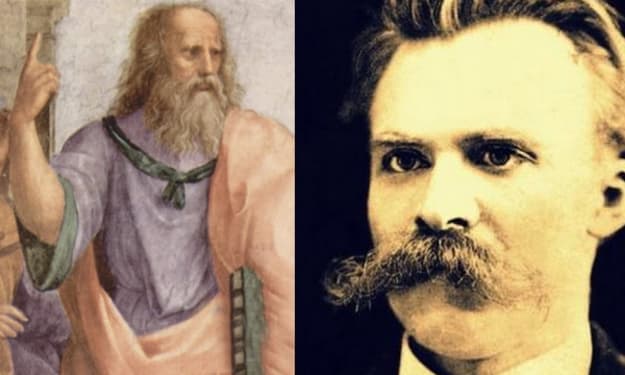
Why did Nietzsche call Plato a nihilist who hates life?
The philosophical exchange between Friedrich Nietzsche and Plato is one of the most intriguing debates in the history of philosophy. Nietzsche, the 19th century German philosopher, criticised Plato for his metaphysics, which he believed to be an expression of nihilism and a hatred of life. Nietzsche claimed that Plato's philosophy was life-denying and turned its back on the world of sensory experience. In this article, we will explore Nietzsche's critique of Plato's philosophy, examining his objections to Platonic metaphysics, the implications of the Platonic theory of forms for life, the Platonic dualism that Nietzsche rejected, and the role of art in both Nietzsche and Plato's views. We will conclude by examining the significance of Nietzsche's critique of Plato's philosophy for contemporary philosophy.
By Abdelelah Rafiq3 years ago in Journal
Uncovering Astonishing Discoveries with NASA's NuStar X-ray Telescope
NASA's NuSTAR X-ray Telescope has made groundbreaking observations about the brightest and most energetic gamma-ray burst ever detected, providing new clues for astronomers about the origins of these mysterious cosmic phenomena. Gamma-ray bursts are among the most violent and energetic events in the universe, releasing as much energy in a few seconds as the sun does in its entire lifetime. In this article, we will explore the significance of NuSTAR's observations and findings, and their implications for understanding the nature and origins of these enigmatic phenomena.
By Abdelelah Rafiq3 years ago in Journal
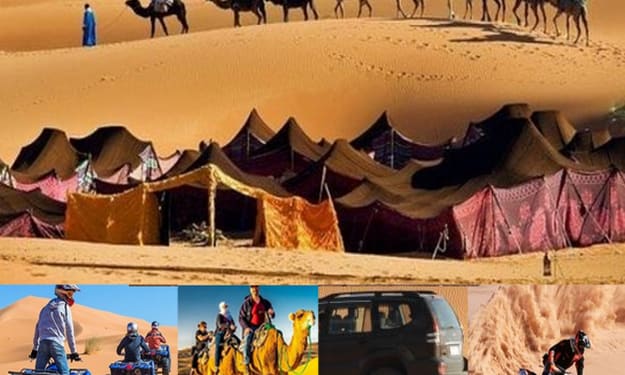
Adventure in the desert of marzouga,morocco
Marzouga, a small village located on the edge of the Sahara desert, is a hidden gem in Morocco waiting to be explored by adventure seekers. The vast golden sand dunes of Erg Chebbi and the clear blue sky make Marzouga a perfect destination for a desert adventure. From riding camels through the Sahara to camping under the stars, Marzouga offers a once-in-a-lifetime experience. In this article, we will take you on a journey through the desert sands of Marzouga, exploring the unique culture, stunning scenery, and unforgettable experiences that await you in this mystical place.
By Abdelelah Rafiq3 years ago in Journal
Success of Warren Buffett
Warren Buffett, widely known as the Oracle of Omaha, is one of the most successful and respected investors of all time. With a net worth of over $100 billion, Buffett's remarkable journey from humble beginnings to financial greatness is an inspiring tale of determination, intelligence, and unwavering discipline.
By waqas ahmad3 years ago in Journal