apparel
The best corporate culture and workplace apparel; from what you should wear in the corporate office to the home office. The best apparel essentials for all of your office needs.
How FDM is Redefining Comfort, Quality, and Personalization in Yoga
Yoga is not just an exercise in the body It's a total practice which integrates mind, body and spirit. The center of any yoga experience is the yoga mat, a quiet but indispensable companion that assists in every stretch, posture or moment of quiet. For many mats are more than an item of equipment, it's a reflection of their personal identity and reflects their individual preferences, style and beliefs.
By Bushra Rajpootabout a year ago in Journal
When a Journal Becomes a Mirror
M Mehran People often think of journals as simple notebooks—collections of scribbled thoughts and half-finished sentences. But if you stay with them long enough, journals stop being just books. They become mirrors, showing us who we are when the world isn’t looking. My own journey with journaling began reluctantly. I never thought of myself as the “dear diary” type. As a teenager, I believed journals were for people with neater handwriting or deeper secrets than mine. But one restless night, I picked up a cheap spiral notebook from my desk and began writing. I didn’t even know what I wanted to say. I just wrote: I feel stuck. That first line opened a floodgate. For the next two hours, I wrote without stopping, confessing fears I hadn’t spoken aloud and tracing thoughts I didn’t even know I carried. When I closed the notebook, I felt lighter. It was as though I had put down a weight I’d been carrying without realizing it. That was the first time I understood what people mean when they say journaling is therapeutic. Journals work because they are private sanctuaries. In a world obsessed with sharing everything online—photos, updates, even feelings—journals remind us that not everything needs to be broadcast. Some emotions deserve the privacy of paper. On those pages, I didn’t have to sound clever or polished. I didn’t have to worry about likes or comments. I could simply be. Over time, I began noticing patterns in my journals. Certain phrases kept reappearing: I’m tired, I want change, I feel invisible. It was uncomfortable at first, realizing how often I wrote about exhaustion or loneliness. But those patterns became signposts, guiding me toward what needed attention in my life. Without journaling, I might have ignored those signals. With it, I could no longer look away. That’s when journaling shifted from an outlet to a mirror. It wasn’t just about pouring emotions onto paper anymore. It was about learning from them. Sometimes, I would go back and reread old entries, and there she was—an earlier version of me, full of questions and half-formed answers. Sometimes I wanted to hug her. Other times I wanted to shake her and say, You’re stronger than you think. The act of rereading old journals is both humbling and hopeful. You realize how much you’ve grown, but also how much of yourself remains constant. The handwriting changes, the worries evolve, the goals shift—but the essence of you is still there, waiting on the page. Journals also have a strange power to preserve the ordinary in ways memory cannot. I once stumbled on a page where I had described a simple afternoon: a walk by the river, the sound of ducks splashing, the way the air smelled faintly of wood smoke. I had completely forgotten that day until I read about it again. Suddenly, the memory returned in full color, as though I had stepped back in time. That is the quiet magic of journaling—it saves the pieces of life that would otherwise vanish. Not every entry is profound. Some pages are messy lists: groceries to buy, books to read, places I want to travel. But even those lists have value. They show what mattered in a particular moment, what I longed for, what I thought was urgent. Years later, they remind me of who I was becoming. There’s also something grounding about writing by hand. In a world of screens and keyboards, the act of pressing pen to paper slows you down. Your thoughts can’t race ahead too quickly because your hand has to keep up. That slowness is where reflection happens. You linger with your feelings instead of skimming past them. Of course, journaling is not always comfortable. Some entries are raw, even painful. I’ve written pages through tears, scrawling words I could barely read later. But even those entries have a purpose. They bear witness to the hardest parts of life, and by writing them down, I no longer carry them alone. The page carries them with me. People often ask, What should I write about? The truth is, anything. Write about your day. Write about your dreams. Write about the song you can’t stop humming or the stranger you noticed on the bus. The subject doesn’t matter as much as the honesty behind it. A journal is a place where truth, not perfection, is the goal. Some people keep journals with the hope that their words will one day matter to someone else. I don’t know if anyone will ever read mine. And maybe they shouldn’t. But even if they remain hidden forever, their purpose is already fulfilled. They have helped me understand myself. They have reflected my fears, my hopes, my changes. Now, whenever I finish a journal, I don’t just see it as a stack of filled pages. I see it as a mirror I once looked into. Each one shows a version of myself—sometimes lost, sometimes determined, sometimes joyful. Together, they form a gallery of who I have been, and who I continue to become. So if you’ve been hesitating to start a journal, consider this: it is less about writing well and more about seeing clearly. Every line you write is a reflection waiting to reveal something new. And one day, when you look back, you might just thank yourself for having the courage to pick up a pen and face the mirror of the page.
By Muhammad Mehranabout a year ago in Journal
The Secret Life of Journals
M Mehran There is something magical about opening a fresh journal. The crisp blank pages hold endless possibilities—stories waiting to be written, confessions yearning for release, and dreams desperate to take form. For centuries, people have carried journals not only as notebooks but as companions. Some were filled with secrets, others with maps of the mind, and many with ideas that would later change the world. My first journal was not glamorous. It had a thin cardboard cover decorated with faded flowers, and the paper smelled faintly of glue. I bought it with pocket money at a corner store when I was twelve. I didn’t know what to write at first, so I copied song lyrics and doodled stars in the margins. But slowly, words began to spill from me. I wrote about my awkwardness in school, the names of friends who would later drift away, and my stubborn dream of becoming a writer. That journal was my secret world, a place where I didn’t need permission to be myself. Journals have always been more than blank books. They are time capsules. Each page captures a moment we might otherwise forget—the sound of rain on a summer night, the sting of heartbreak, the triumph of finally reaching a long-awaited goal. Years later, flipping back through old entries feels like stepping into a time machine. I often cringe at the clumsy handwriting and dramatic words, but I also smile at the reminder of who I once was. The journal does not judge. It simply remembers. History itself has been shaped by journals. The diary of Anne Frank continues to remind the world of resilience and humanity in the face of horror. Leonardo da Vinci’s notebooks reveal sketches and ideas centuries ahead of his time. Even explorers carried journals to record maps, discoveries, and the beating pulse of uncharted lands. Without these pages, much of our history would have been lost. Yet today, in the digital age, the art of journaling feels both old-fashioned and urgent. Our phones are filled with notes, reminders, and quick texts, but they lack the intimacy of ink meeting paper. Typing may be faster, but writing by hand slows us down, forces us to reflect, and connects us with thoughts we didn’t know we had. A journal doesn’t buzz with notifications. It simply waits, patiently, until we are ready to pour ourselves into it again. When I began journaling seriously as an adult, I discovered it was not just about recording life but shaping it. Writing down goals gave them weight. Scribbling through confusion often uncovered clarity. During a particularly difficult year, my journal became my therapist. I vented frustration in angry scrawls, drew messy arrows across the page, and eventually uncovered a quiet strength I didn’t know I carried. By the time the year ended, the journal was thick with pressed flowers, ticket stubs, and words that stitched me back together. The beauty of journals is that they belong entirely to the writer. There are no rules. Some people bullet journal with neat charts and colorful markers. Others scribble entire pages in the dark, just to unload the noise in their heads. Some write once a year; others fill notebooks every month. A journal does not demand perfection—it only demands honesty. I have friends who say, “I wouldn’t know what to write in a journal.” But that is the secret: you don’t have to know. The act of writing creates its own momentum. One sentence becomes two. A list of things you’re grateful for becomes a meditation on life. A single question—Why am I feeling this way?—can open doors you never knew existed. What fascinates me most is how journals capture both the extraordinary and the ordinary. In one entry, I might describe traveling to a new city, while in the next, I record what I ate for breakfast. Both matter. Both are pieces of life. One day, when I am older, I will look back at these details and smile, because they will remind me of the texture of daily living—the small things that make up the big story. Some people fear writing in journals because they worry others might read them. That fear is valid; journals are often deeply private. But I like to think that even if someone stumbles upon my words years from now, they will not see embarrassment but humanity. Journals remind us that everyone wrestles with doubts, celebrates victories, and struggles to make sense of the world. They are mirrors of the soul, written in ink. In the end, keeping a journal is not about creating something perfect to share. It’s about keeping something true for yourself. Each time I finish one journal and place it on the shelf, I feel as though I’ve closed a chapter of my life. The row of journals on my bookshelf is not just paper; it is a collection of versions of myself—every one of them imperfect, learning, and alive. If you’ve never kept a journal, perhaps now is the time. Buy one that feels inviting, even if it’s plain. Don’t worry about handwriting, spelling, or grammar. Just begin. Write down what made you smile today. Scribble a secret you can’t tell anyone else. Sketch the coffee cup in front of you. Press a flower between the pages. Let it be messy, let it be yours. One day, you will open that journal again and find yourself staring at a younger version of you. And in that moment, you will understand the secret life of journals: they do not just record our days, they remind us who we are becoming.
By Muhammad Mehranabout a year ago in Journal
Blackout Curtains: Services That Combine Style, Comfort, and Function
In today’s fast-paced world, creating a restful, private, and comfortable home environment is essential. One of the most effective ways to achieve this is by investing in blackout curtains. Known for their ability to block unwanted light, reduce noise, and improve insulation, blackout curtains are more than a decorative element—they are a practical solution for modern living.
By voila voileabout a year ago in Journal
🌍 Global Sumud Flotilla 2025: 40 Ships, 700 Activists, and the Fight to Break Gaza’s Siege
A Fleet of Hope in a Sea of Uncertainty In 2025, the Global Sumud Flotilla set sail across the Mediterranean, aiming to break one of the most enduring and controversial blockades in modern history: the Gaza siege. Carrying hundreds of activists, journalists, and humanitarian workers from more than 40 countries, alongside hundreds of tons of food, water, and medical supplies, this humanitarian flotilla has become more than a mission — it is a global symbol of resistance, solidarity, and hope.
By The Narrative Hubabout a year ago in Journal
The Secret Keepers
M Mehran I discovered journals when I was twelve. My mother handed me a small leather-bound notebook and said, “Write down what you feel. Someday, you’ll thank yourself.” At the time, I thought she was giving me a book for school, not a portal into my own mind. --- The First Entry The first page was blank, intimidating in its emptiness. I hesitated, pen hovering, unsure what to write. Then I scrawled, “Today was boring. Nothing happened.” And yet, that simple sentence marked the beginning of a habit that would change my life. Journals are not just about recording events—they are about capturing thoughts, feelings, and moments that slip through the cracks of memory. --- A Safe Place Over the years, my journals became a sanctuary. When school was overwhelming, I poured frustration onto the pages. When friendships faltered, I recorded the arguments, the misunderstandings, and the small reconciliations. When life was beautiful, I wrote feverishly, as if capturing joy on paper could make it permanent. Journals are safe places. They are silent, patient, and judgment-free. You can write anything—your triumphs, your fears, your secrets—and the pages will hold them without complaint. --- Discovering Patterns As I grew older, I noticed patterns emerging in my entries. Certain worries repeated. Certain dreams resurfaced. Certain regrets echoed like distant bells. Journals, I realized, are mirrors. They reflect not just the life you live, but the inner life you sometimes ignore. Reading old entries, I saw growth I hadn’t noticed at the time. I saw the shy child who gradually became more confident, the hesitant teenager learning to speak her mind, the young adult discovering resilience. Journals allow us to witness our own evolution. --- The Power of Honesty One summer, I faced a personal crisis. A close friend betrayed my trust, leaving me angry and hurt. I wanted to scream, to lash out, but instead, I opened my journal. I wrote pages of raw, unfiltered emotion. There were typos, smudges, and even tears on the paper. Writing honestly, without filtering for anyone else’s approval, had a strange power. By the time I finished, I felt lighter. Journals do not solve problems, but they help you see them clearly. They allow you to confront feelings you might otherwise bury, and in doing so, they guide you toward healing. --- A Conversation With Myself Over time, journaling became less about recording events and more about conversation. I wrote questions: Why do I feel anxious? What do I want from this friendship? What scares me most? And then I wrote answers, slowly, sometimes painfully. These conversations were never easy. Sometimes I lied to myself, evaded answers, or tore out pages in frustration. But eventually, the journal became a confidant, someone who listens without interruption, someone who forces you to face yourself. --- Moments Captured Not all entries were heavy. Some were moments of wonder. I wrote about sunsets that took my breath away, spontaneous road trips, laughter with friends that left my cheeks sore. I wrote poems, lists of dreams, snippets of conversations I didn’t want to forget. Journals capture life in its fullness. They record sorrow and joy, chaos and calm, love and loss. They remind us that every moment, no matter how small, has meaning. --- The Unexpected Discovery Years later, I found my very first journal, tucked away in a drawer. Flipping through the pages, I laughed at my childish handwriting and the way I overdramatized small events. Yet, beneath the humor, I felt gratitude. That journal had been with me through my earliest struggles, a silent witness to my growth. Journals have a strange magic. They preserve who we were, showing us how far we’ve come. They are artifacts of the self, proof that we have lived, felt, and endured. --- Journals as Legacy I began to see journals not just as personal tools, but as legacies. They hold stories we might never share aloud, memories we might forget, wisdom we may not fully understand until later. Some day, perhaps, someone else might read them—our children, friends, or even strangers—and glimpse the person we were, the person we are. There is power in that preservation. Journals remind us that our lives matter, that our experiences, thoughts, and feelings are worth documenting. They allow us to leave pieces of ourselves behind, quietly, page by page. --- The Living Practice Even now, I write every morning. It’s no longer a chore or a habit; it’s a practice. A meditation. A conversation with the most important person I know: myself. I write to remember, to understand, to dream. I write to process fear, disappointment, love, and gratitude. And sometimes, I write simply because the pen feels alive in my hand, tracing thoughts into existence. Journals are more than notebooks. They are companions, teachers, and mirrors. They are the living record of a life, chaotic and beautiful. --- Closing Reflection In a world that moves quickly, journals slow us down. They remind us that our inner lives matter, that our feelings are valid, and that our stories deserve attention. They teach patience, honesty, and self-compassion. Opening a journal is opening a door to yourself. Every entry, every page, every word is a step toward understanding who you are, who you’ve been, and who you might become. And in that quiet, sacred space, we find something extraordinary: our own voice, patiently waiting to be heard.
By Muhammad Mehranabout a year ago in Journal
Which store has the most affordable Cotton fabrics in Ireland
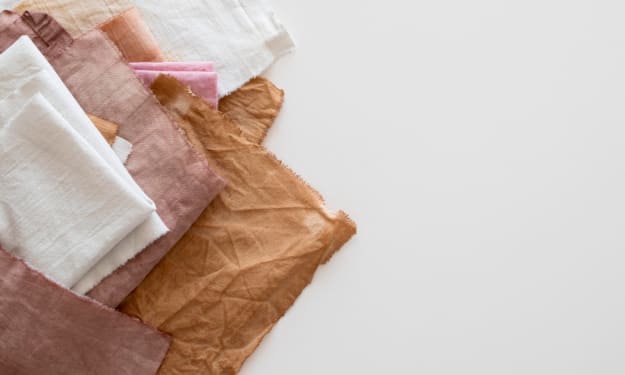
Cotton fabric shopping can strain your budget, especially when you need quality materials for your fashion projects or personal sewing. Finding the right balance between affordability and quality requires knowing where to look and what to compare. This guide examines the most cost-effective options for buying cotton fabric in Ireland, helping you make informed decisions that protect your wallet without compromising on material standards.
By Fabricloreabout a year ago in Journal
The Journal That Wrote Back
M Mehran Maya had always kept journals. Piles of them sat stacked in shoeboxes beneath her bed, filled with everything from teenage heartbreaks to half-baked poems. Writing was her way of making sense of life. When the world felt too loud, she found silence in ink. So, when she stumbled across a dusty leather journal at the thrift shop on Oak Street, she didn’t hesitate. Its cover was worn smooth, its pages edged in gold. The clasp was heavy, almost ceremonial. The tag read: $3.00. “A bargain,” she muttered, dropping it into her basket. That night, she cracked it open. The paper was thick, yellowed, and smelled faintly of cedar. On the very first page, written in elegant script, was a sentence: Welcome, Maya. I’ve been waiting. Her heart thudded. She hadn’t written that. She flipped through the book—every page was blank. Nervously, she wrote: Who are you? For a moment, nothing happened. Then, slowly, letters appeared beneath her words, curling onto the page like smoke: I am the Keeper of Stories. And you are my new author. Maya froze. She wanted to slam the journal shut, but curiosity was a stronger force than fear. Her pen hovered. What do you mean? she scribbled. The reply bloomed instantly. Every life has threads untold—paths not taken, words unspoken, futures that slipped away. My purpose is to let you write them… and live them, if you dare. A thrill rippled through her. Was it some kind of trick? A prank? But the more she wrote, the more real it felt. The Keeper instructed her: Write what you wish you had done differently. Write, and the ink will carry you. Maya hesitated, then scribbled: I wish I had spoken to Daniel that night at the café. Daniel. The one who had smiled at her across the room two years ago, the one she never had the courage to approach. The ink shimmered. The room spun. And suddenly—she was there. The clatter of coffee cups, the hum of conversation, the scent of roasted beans—it was the café. Daniel was at the counter, just as he had been. Only this time, when their eyes met, Maya found herself walking toward him with steady steps. Words tumbled out easily, a conversation bloomed, and his laughter was exactly as she had imagined. When she blinked, she was back in her bedroom, the journal resting on her lap. Her heart pounded. Had it really happened? But her phone buzzed with a new message: Great seeing you again today. Want to grab dinner? It had happened. From then on, Maya couldn’t stop. Each night, she wrote something new: a job she had once turned down, a friendship she had let slip, a regret she had carried too long. And each time, the journal sent her spiraling into that moment, giving her a chance to change it. Her life began to swell with possibilities—new friends, new adventures, laughter that filled the empty spaces. But with each wish, something felt… off. Her old friends began to look at her strangely, as though she were someone else. Memories blurred; conversations she recalled differently didn’t seem to exist for others. Her shoeboxes of journals no longer matched her experiences—entries described a life she no longer remembered living. One evening, trembling, she wrote: What’s happening to me? The Keeper’s reply was sharp this time. You asked to rewrite. With every choice, you unravel the old threads. That is the cost of change. Maya slammed the journal shut, horrified. Was she losing her true self piece by piece? But temptation whispered louder than fear. She still carried regrets. Still wanted to fix more. And each time she opened the journal, it promised her a better version of herself—more confident, more daring, more loved. Until the night she wrote: I wish I had told my mother I loved her before she passed. The ink spread like wildfire, letters twisting violently. The room cracked with thunder though the sky outside was clear. And then—she was in her childhood living room. Her mother sat on the sofa, alive, reading the newspaper. Tears filled Maya’s eyes. She rushed forward, fell into her arms, whispered the words she had never said. But when her mother smiled back, it wasn’t her mother’s smile. The eyes that met hers were hollow, almost… waiting. “You shouldn’t have written this,” her mother’s voice said, but it was the Keeper speaking through her. “Some threads are not meant to be rewoven.” The room dissolved. Maya awoke with a scream, clutching the journal. Its pages were no longer blank—they were filled with her handwriting, endless entries of choices she had never truly made. The final page bore one last message in that elegant script: You can keep rewriting, Maya. Or you can live the story that is truly yours. Choose wisely. For the first time, she left the journal closed. She shoved it into the shoebox under her bed and lay awake until dawn, staring at the ceiling, trembling at the weight of her own choices. Weeks passed. Life settled. Daniel was still in her world, but sometimes she wondered if he truly belonged—or if he was just ink on a page. The journal remained under her bed, heavy as a heartbeat. Some nights, she swore she could hear it whispering, tempting her to pick up the pen again. So far, she hasn’t. But temptation has a way of waiting. And journals—especially the ones that write back—never really close.
By Muhammad Mehranabout a year ago in Journal
Journal of Advanced Studies in Science
Chapter One – The Scientist’s Dream Dr. Meher Ali adjusted her glasses as she stared at the flickering monitor in her laboratory. The room was quiet except for the faint hum of machines and the soft scratching of her pen against a notebook. Piles of research papers surrounded her like fortresses, each page filled with equations, genetic sequences, and scribbled notes that only she could make sense of. Her eyes, sharp yet weary, lingered on the glowing title bar of a webpage: Journal of Advanced Studies in Science. For decades, this journal had been the crown jewel of scientific publishing. It was where the greatest discoveries in physics, biology, and technology were first revealed to the world. Publishing there was more than recognition—it was immortality. Meher whispered softly, “One day, my work will be here. Not for fame, but so no one can erase it.” She had reasons to be cautious. Born in a small town where resources were scarce, she had fought her way into the scientific community. She had been underestimated, doubted, and sometimes outright dismissed for being a woman in a field still dominated by older men who guarded their authority fiercely. Yet Meher persisted. Her current project was her boldest yet: a formula that could rewrite flawed genetic codes. In theory, it could cure diseases thought incurable—Huntington’s, ALS, even certain cancers. Her prototype worked on cell cultures, showing remarkable results. But the scientific board at her institute laughed at her proposal. “It’s dangerous, Ali,” said Professor Iqbal, the head of genetics. “Gene editing at that scale? It’s fantasy. Even if it worked, we’d never approve human trials. Submit something realistic to the Journal. Then maybe we’ll listen.” Realistic. That word stung. To Meher, realism was watching patients die in hospitals, children suffer in silence, and families break apart because science wasn’t brave enough to try. She wrote in her notebook: “If science stops where fear begins, then what is its purpose?” --- Chapter Two – Shadows of Doubt Weeks turned into months. Meher refined her formula in secrecy, perfecting algorithms that could repair DNA strands without triggering immune rejection. The more she tested, the more convinced she became: it worked. But whispers spread. A rival scientist, Dr. Sameer Khan, began undermining her work during faculty meetings. “Dr. Ali’s theories are mathematically elegant,” he sneered once, “but science is not poetry. We need facts, not fairy tales.” Meher bit her tongue. She had facts—stacks of them—but none recognized by the Journal yet. Without that stamp of approval, her discoveries were considered speculation. One night, she returned to her lab to find her computer files corrupted. Hours of simulations were gone. She suspected Sameer but had no proof. Furious, she clutched her handwritten notebook to her chest. “At least you’re still here,” she whispered. That notebook, like a silent confidant, became her lifeline. Sara, her closest friend from medical school, often visited her in the lab. “Meher,” she said one evening, “you’ve got to take care of yourself. You hardly eat. You hardly sleep. Why let this Journal consume you?” Meher’s eyes softened. “Because if my work doesn’t appear there, it will die in obscurity. And then—what’s the point of all these years?” Sara reached across the desk and squeezed her hand. “The point is saving lives, not winning prestige.” But Meher only sighed, staring again at the Journal’s logo glowing on her screen. --- Chapter Three – The Outbreak Everything changed one bitter winter. A mysterious illness swept across the city. Patients came in with high fevers, neurological spasms, and rapid organ failure. Hospitals overflowed within days. The government declared an emergency, but no treatment worked. At first, Meher thought it was another viral epidemic. But when she studied the sequences of the pathogen, her heart froze. It wasn’t a virus at all—it was a genetic breakdown triggered by environmental toxins, spreading silently through families with certain DNA vulnerabilities. Her formula, the very one the board had mocked, could stabilize those genetic flaws. It wasn’t just relevant—it was humanity’s only chance. She rushed to present her findings at an emergency scientific council. Her voice trembled but her conviction was firm. “We can use the gene-repair algorithm. I’ve tested it on cultures—it works. We can save them.” The room buzzed with skepticism. Dr. Sameer smirked. “So now you want to play savior? This is reckless. There’s no peer-reviewed evidence. No Journal has accepted your work. We can’t gamble lives on unproven fantasies.” “But lives are already being lost!” Meher snapped. “Every hour we wait, more children die. Are we scientists or cowards?” Silence followed. Finally, Professor Iqbal shook his head. “Without official publication or approval, we cannot authorize this. Submit it to the Journal. If they validate it, we’ll consider trials.” The Journal. Always the Journal. But people were dying now. That night, Meher sat in her lab, tears blurring her vision. Sara found her hunched over her notebook, scribbling furiously. “What will you do?” Sara asked gently. Meher looked up, fire in her eyes. “If the Journal won’t listen, then I’ll bypass them. I’ll run the trials myself. Science is for humanity, not bureaucracy.” ✨ Moral: The true purpose of science is not fame, recognition, or publication—it is to serve humanity. Knowledge without courage and compassion is meaningless; the greatest discoveries are those used to save and improve lives, even when recognition is delayed or denied.
By Noman Khanabout a year ago in Journal
Kansas City Chiefs vs Los Angeles Chargers: A Clash Beyond the Field
Chiefs vs Chargers – A Rivalry that Defines the NFL’s Future The National Football League (NFL) has always thrived on great rivalries, and one of the most exciting modern matchups is the Kansas City Chiefs vs Los Angeles Chargers. Whenever these two AFC West teams meet, it’s more than just a football game—it’s a battle of talent, strategy, and star power that captivates millions of fans worldwide.
By KAMRAN AHMADabout a year ago in Journal