apparel
The best corporate culture and workplace apparel; from what you should wear in the corporate office to the home office. The best apparel essentials for all of your office needs.
The Midnight Journal
M Mehran Zoya had never received a gift quite like it. On her 21st birthday, her aunt handed her a small, leather-bound journal with a delicate lock. “It’s no ordinary diary,” her aunt said, eyes glinting mysteriously. “Write in it every night, but beware: it remembers more than you think.” Zoya laughed. “It’s just a notebook.” But that night, curiosity took hold. She opened it and wrote her first entry: “Tonight I stayed up late watching the rain. It smelled like summer.” Nothing happened. She went to sleep, brushing off her aunt’s cryptic warning. --- Chapter Two: The First Dream The following night, Zoya dreamed vividly. She was walking through the streets of her city, but everything was distorted—buildings bent at odd angles, lights flickering, shadows stretching too long. When she woke, she noticed something odd: the journal had a new line written at the bottom of her page, in her handwriting: “The city isn’t what it seems. Watch the streets after midnight.” She froze. She hadn’t written it. --- Chapter Three: The Warning Each night, Zoya wrote, and each morning, the journal added lines she didn’t remember writing. They weren’t always benign—they were warnings: “The window opens on its own.” “Don’t look behind the curtain.” At first, she dismissed it as imagination. But one night, she heard the window click open in her room. Another night, a shadow lingered behind the curtain. The journal was guiding her—or warning her. --- Chapter Four: The Stranger One entry read: “A stranger waits where the lamplight flickers. Speak only if he calls your name.” Zoya had walked past the old streetlamp near her apartment countless times. That evening, curiosity and dread pulled her forward. Under the flickering light, she saw a man in a long coat. He turned, and his voice was a whisper in the wind: “Zoya.” Her heart stopped. She wanted to run, but she remembered the journal. She stood still. “Follow me,” he said. --- Chapter Five: The Library He led her to an abandoned library she had never noticed. Inside, stacks of journals lined the walls—hundreds of them, all similar to hers. Each one glowed faintly. “This is where the journals keep their secrets,” the man said. “Each writer’s life is recorded. Every choice, every fear, every memory—captured in ink.” Zoya realized the journal was more than a notebook. It was alive, a repository of experiences, guiding or warning its owner. --- Chapter Six: The Test The man handed her a new journal, identical to the first. “Write carefully. Some stories are meant to guide you; others… test you.” Zoya hesitated. She wrote: “I am afraid, but I want to understand.” The journal shimmered, then added beneath her words: “Fear is the path to knowing. Keep writing, and the answers come.” That night, she slept peacefully for the first time, though her dreams were strange—a city of moving books, whispers of her own thoughts, and shadows that beckoned. --- Chapter Seven: The Choice Days passed, and Zoya continued to write. The journal began revealing truths she had never confronted: regrets, unspoken feelings, moments she had ignored in her life. One evening, a new line appeared: “Choose: forget, or remember everything. Once you remember, the journal will never release you from its truths.” Zoya paused. Forgetting meant comfort, safety, ignorance. Remembering meant understanding herself fully, facing fears she had long ignored. With trembling hands, she wrote: “I choose to remember.” --- Chapter Eight: The Transformation From that night on, Zoya’s world changed. She remembered every detail of her life, the moments she had buried, the things she had ignored. The journal no longer guided her—it reflected her understanding back at her. She grew wiser, more aware, and strangely free. Though the journal remained at her side, it no longer whispered warnings—it waited for her to write, now in partnership. --- Epilogue: The Keeper Years later, Zoya became the new keeper of journals, guiding others as her aunt had guided her. She placed a leather-bound notebook on the desk of a young girl, much like herself at 21. “Write every night,” she said, with a small smile. “And remember: the journal will show you what you need, even if you aren’t ready for it.” The girl opened it, pen in hand, and the story began again.
By Muhammad Mehranabout a year ago in Journal
The Lost Journal
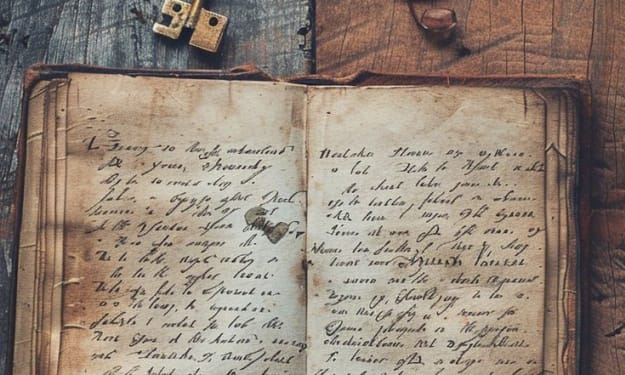
M Mehran Aisha never cared much for antiques, but when she inherited her uncle’s house, she stumbled upon something she couldn’t ignore. In the back of a closet, hidden beneath moth-eaten coats, she found a leather-bound journal. The cover was worn, the pages yellowed, but the handwriting inside was neat and deliberate. At first glance, it looked ordinary—a man’s thoughts about his daily life. But as Aisha read deeper, she realized this wasn’t just a journal. It was a confession. --- Chapter Two: The Confession Her uncle’s words spilled across the pages: “I see the boy every night at the edge of my bed. He doesn’t speak. He only stares. I know he’s real, though everyone says he’s only in my mind.” Aisha frowned. Her uncle had lived alone for years. She flipped to another entry. “The journal keeps him away. When I write, he disappears. When I stop, he comes closer.” The hair on her arms rose. Why had her uncle never mentioned this? --- Chapter Three: The Pattern Curiosity turned into obsession. Aisha read for hours. Every entry described the same boy—pale, silent, with dark hollow eyes. Her uncle detailed a chilling pattern: the boy appeared when he stopped writing, always growing nearer, as though waiting for the chance to finally reach him. The last entry stopped mid-sentence: “He’s here at the—” The pen trailed off. No more words followed. --- Chapter Four: The First Night That night, Aisha couldn’t sleep. The words of the journal looped in her head. Sometime past midnight, she felt it—a presence. The air shifted, heavy and cold. Slowly, she turned toward the corner of her bedroom. A small shadow stood there. Her chest tightened. The room spun. But when she blinked, the shadow was gone. --- Chapter Five: The Urge to Write The next morning, Aisha sat at the kitchen table with the journal in front of her. She wasn’t sure why, but she picked up a pen and began to write. “Last night, I saw him. Just a glimpse. But I know he was there.” As soon as the words hit the page, the heaviness in her chest lifted. The house seemed lighter, less suffocating. For reasons she couldn’t explain, the act of writing soothed her fear. --- Chapter Six: The Return Days passed. She told herself it was nonsense, but every time she put the journal aside, the presence returned. One night, ignoring the urge to write, she woke up to see the boy again—closer this time. His eyes met hers. They weren’t just hollow; they were hungry. She scrambled for the journal, scribbling furiously: “I see him. He’s closer. Please stay away.” The moment her pen touched the page, the boy vanished. --- Chapter Seven: The Realization By the seventh day, Aisha was writing constantly. Work emails went unanswered, calls ignored. She stayed by the journal, pouring her thoughts onto its pages. And yet… a question gnawed at her: What happens if the journal runs out of pages? She flipped to the back. Only ten blank sheets remained. Her stomach knotted. --- Chapter Eight: The Last Pages One evening, desperate, she searched the house for another journal but found nothing. She tried writing in a modern notebook, but it didn’t work. The boy appeared anyway, standing at the foot of her bed, watching, waiting. The leather-bound journal was the only one that kept him away. With shaking hands, she counted the pages again. Seven left. --- Chapter Nine: The Choice On the final night, only one page remained. Aisha sat in her room, staring at the boy who now stood inches away. His lips curved into something like a smile. Tears blurred her vision as she wrote: “I don’t want to end here. If someone finds this, keep writing. Don’t stop. Please. He’ll take me when it ends, but maybe… he won’t take you.” Her pen slid off the paper. The page was full. The ink bled into the last line. And then silence. --- Epilogue: The Inheritance Months later, the house was sold. A young couple moved in. While unpacking, the wife discovered a leather journal tucked into the kitchen drawer. She smiled at the beautiful binding, flipped to the first page, and began to read. That night, she swore she saw a boy standing in the corner of her room.
By Muhammad Mehranabout a year ago in Journal
Self Assessment for Freelancers: A Complete Filing Guide
Freelancers often navigate a complex landscape of income streams, expenses, and tax obligations. The HMRC Self Assessment system is designed to ensure that all income is reported accurately and taxes are paid on time. Understanding the nuances of the process is essential for avoiding penalties and maintaining financial clarity.
By Self Assessment Tax Returnabout a year ago in Journal
Monetizing the Fall
There’s a specific kind of video you’ve seen a thousand times — a person crying into their phone camera, breaking down on a live stream, confessing secrets they swore they’d never share, or capturing the exact moment they get fired, dumped, or canceled. And while the moment is painful, maybe even real, it’s what happens after that reveals the game:
By Randolphe Tanoguemabout a year ago in Journal
The UK Passport Backup Plan
In an era defined by global volatility—from political shifts to economic uncertainties—the concept of a "backup plan" has evolved beyond savings accounts and insurance policies. For a growing number of British citizens, the ultimate form of security is a second passport. This isn't about rejecting British identity; it's about pragmatically enhancing personal and financial resilience. A UK passport backup plan is increasingly seen not as an exit strategy, but as an essential component of a modern, globalised life.
By KAMRAN AHMADabout a year ago in Journal
Buy Cotton Fabric by the Yard in Chicago: A Complete Guide
Cotton fabric remains one of the most popular choices for sewers, crafters, and designers across Chicago. Whether you're creating a new wardrobe, working on a quilting project, or starting a textile business, finding quality cotton fabric by the yard can make or break your project.
By Fabricloreabout a year ago in Journal
The Quiet Revolution in a Noisy World
M Mehran Everywhere we look today, noise surrounds us. Phones buzz with notifications, news cycles scream for attention, and social media pushes us to share, like, and perform. In a world where silence is rare, one simple practice quietly resists the chaos: journaling. A journal doesn’t demand followers, doesn’t beg for likes, and doesn’t shout back. It waits—patiently—for us to show up. And when we do, it changes everything. --- More Than Pen and Paper I used to think journaling was nothing more than teenage scribbles—hearts drawn around crushes’ names, secret notes about high school drama. But one day, a friend handed me a small notebook on my birthday and said, “Use this when the world feels too heavy.” At first, I laughed. What could a blank book possibly do against the weight of real problems? But one night, when my thoughts refused to quiet down, I opened the notebook and started writing. The strange thing was, I didn’t plan what to say. Words spilled out as if they had been waiting for me to give them a home. By the time I closed the notebook, my chest felt lighter. That was the night I realized: journaling is more than pen and paper. It’s medicine. --- The Practice of Presence Most of us move through our days on autopilot—scrolling, working, rushing, worrying. Journaling interrupts that cycle. The moment you sit down with a notebook, you are forced to slow down. You are present. There’s no algorithm deciding what you should think about, no advertisements competing for attention. Just you and the page. In fact, psychologists often describe journaling as a mindfulness practice. Writing grounds you in the current moment. When you record how you feel, you stop running from emotions and start facing them. That simple act of presence is powerful in a culture built on distraction. --- Journals as Honest Spaces The world trains us to curate. We post only the best photos, share only the happiest updates, hide our struggles behind a polished version of ourselves. But journals? They invite honesty. You don’t need to pretend in your journal. You can be angry, insecure, ambitious, heartbroken, or hopeful. You can confess dreams you’re afraid to say aloud or fears that sound irrational. The page does not judge. I think that’s why so many people describe journaling as “a conversation with yourself.” It’s a dialogue where you can finally stop editing who you are. And once you stop editing, you start healing. --- The Science of Writing It Out There’s more to journaling than intuition—science backs it up. Studies show that expressive writing can: Reduce stress by helping the brain process emotions. Improve problem-solving by clarifying thoughts. Strengthen memory and learning. Even boost the immune system by lowering stress hormones. But beyond the research, most journalers will tell you this: it just feels good. When your mind feels like a crowded room, writing turns the volume down. --- Creativity Without Pressure One of the most underrated gifts of journaling is how it sparks creativity. A blank page invites play. Some days you may write lists. Other days you may doodle, paste photos, or jot down random words. There are no rules, no deadlines, no audience. Ironically, some of the world’s most famous writers, artists, and inventors used journals not because they were creating masterpieces—but because they were playing. Leonardo da Vinci’s journals were filled with sketches, half-baked ideas, and observations. Those “messy” pages became the birthplace of genius. When we free ourselves from the pressure to be perfect, we make space for creativity to bloom. That’s what a journal offers: permission to be imperfect. --- A Bridge to Tomorrow If you’ve ever stumbled upon old notebooks, you know the strange magic of meeting your past self. You laugh at old worries, smile at forgotten victories, and sometimes cry at memories that still sting. Journals don’t just record who we are in the moment; they become bridges between past, present, and future. They remind us how far we’ve come, and they quietly encourage us to keep going. I once reread an entry from five years ago where I wrote, “I’ll never be brave enough to move to a new city.” Ironically, I read that entry while unpacking boxes in my new apartment—proof that our journals often see us grow before we even notice it ourselves. --- The Legacy We Leave Behind Here’s a thought: what happens to our journals after we’re gone? Many will stay private forever, tucked away in drawers or boxes. But sometimes, journals become legacies. They give voice to people long after they’ve passed. Anne Frank’s diary continues to teach the world about resilience, empathy, and hope. Countless other journals have become historical treasures, revealing what textbooks often leave out: the human heart behind events. Even if no one else reads them, journals leave a legacy for our future selves. They whisper, “This is who you were. Look how far you’ve come.” --- Starting Is Simple If you’ve never journaled, here’s the secret: you don’t need a fancy notebook or poetic words. Start messy. Write down one thought, one feeling, or even just one word. Write without worrying about grammar, spelling, or structure. Tear out the page if you don’t like it. Journaling isn’t about creating something beautiful—it’s about creating something true. And once you begin, don’t be surprised if you find yourself reaching for your notebook again. Because the more you give your thoughts a place to land, the more you’ll want to return. --- The Quiet Revolution In a noisy world, journaling is a quiet revolution. It is rebellion against distraction, a stand for honesty, a practice of presence. It asks for nothing but your time, and in return, it gives you clarity, healing, creativity, and memory. One day, the digital world will move on to the next trend. Apps will vanish. Platforms will disappear. But journals—those humble pages filled with ink—will remain. Because unlike noise, truth never goes out of style.
By Muhammad Mehranabout a year ago in Journal
Why the Los Angeles Dodgers X Sergio Perez Hoodie Is a Must-Have. AI-Generated.
Buy here: Los Angeles Dodgers X Sergio Perez Hoodie In the world of sports, there are few things more exciting than a crossover. When two different worlds—two different fanbases—collide in a shared moment of celebration, it creates a powerful sense of community. This is exactly what’s happening with the new Los Angeles Dodgers X Sergio Perez hoodie. It’s a piece of apparel that brings together the passion of Formula 1 racing with the timeless tradition of Major League Baseball, and it's quickly becoming a symbol of global sports culture.
By Andrew Bartonabout a year ago in Journal
Best Places to Find Viscose Fabric in Ireland
Viscose fabric has become a top choice for fashion designers and home sewers across Ireland. This semi-synthetic fabric combines the comfort of natural fibers with the durability of synthetic materials, making it perfect for clothing, home décor, and various textile projects.
By Fabricloreabout a year ago in Journal